
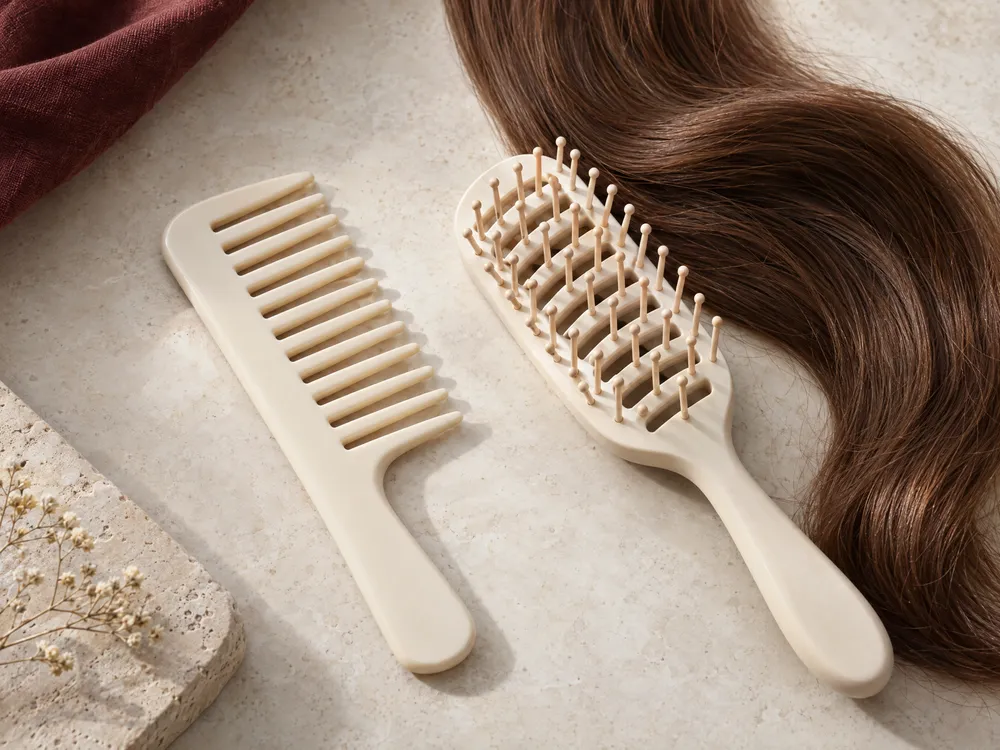

Wig brush and comb choices
The useful comparison is not ‘brush versus comb’ in the abstract. It is which tool gives you enough control for the tangle and length in front of you, without encouraging you to pull through the entire wig. Begin with the item’s own care guidance; then consider tooth spacing, handle control and how much shaping the style needs.
Check the wig brush and comb design
A wide-tooth comb separates strands with space between the teeth, making it easier to work through a small knot gradually. It offers control, but can still snag fibre or pull at the base. Use a light hand and stop if it catches; the tool label alone does not confirm suitability.
A wig brush covers more hair with each stroke and may suit a style whose instructions allow brushing. Work in small sections with controlled strokes. A wig detangling brush is a product description, not proof that it suits every fibre or construction. If unsure, check the item's care directions before using it.
For a light tangle, fingers can help locate crossed strands before you choose a tool. Hold the hair above the knot and use short movements, working from the ends. Avoid pulling a brush from crown to ends in one long pass.
The American Cancer Society advises minimal brushing for short wigs; for long straight wigs, its guidance describes light wig-conditioner spray and brushing from the ends first. This illustrates how length and style affect handling, not a rule for every piece. Follow the individual wig's directions. American Cancer Society guidance is general information, not product-specific advice.
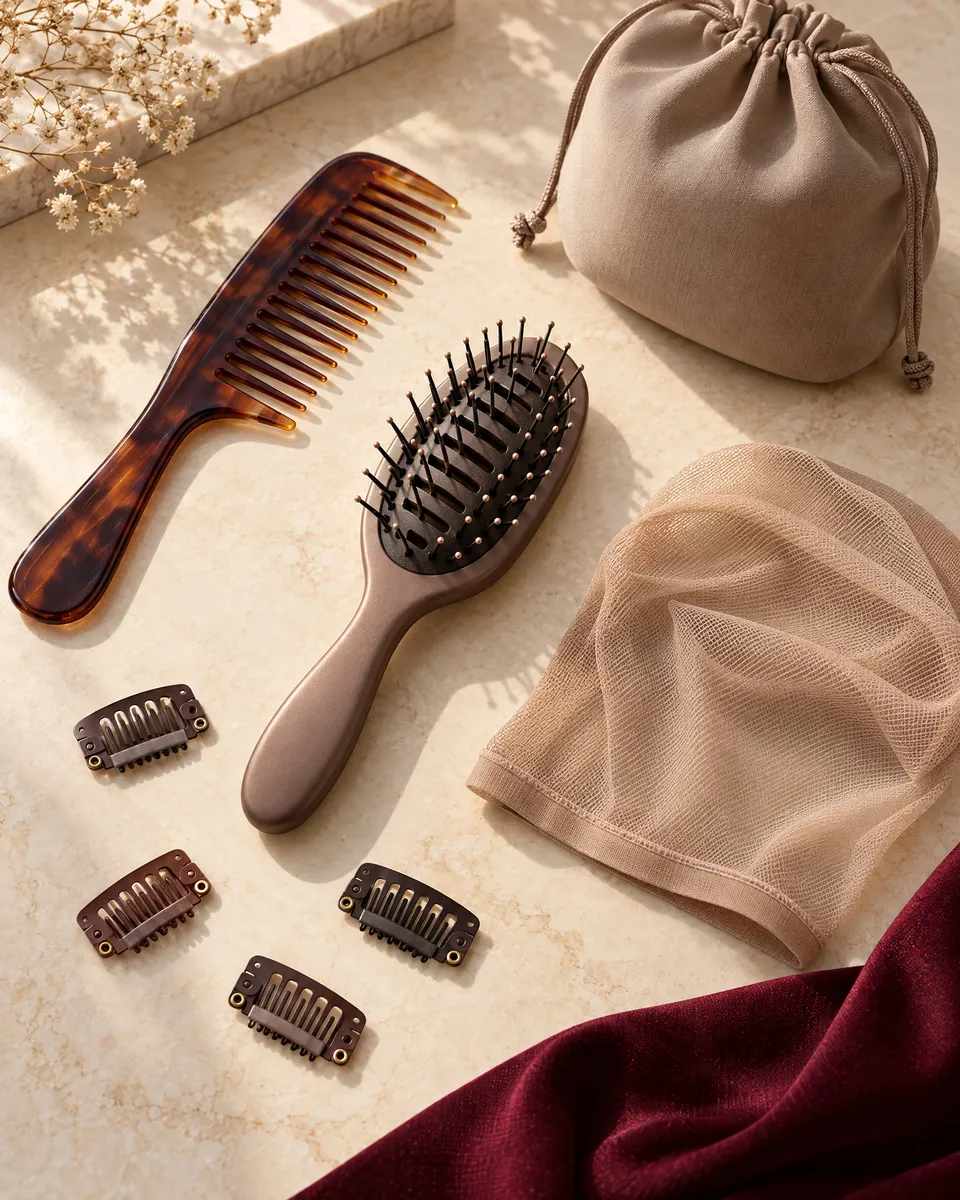
Match a wig brush to fibre and care instructions
The fibre name is only the first check. The finished style, length and maker’s instructions also matter, so avoid transferring a routine from one wig to another just because both are labelled synthetic or both contain human hair. If care instructions are missing or unclear, pause before adding a product or applying extra force.
Questions to ask before choosing a wig brush
Start with the fibre and the exact item guidance. Synthetic fibres can have different care limits from human hair, and styles within one fibre category may also differ. Check whether brushing, combing or finger styling is recommended and whether the instructions name a wig-care product. Do not assume a regular hairbrush or a tool marketed for synthetic wigs is suitable without that check.
Then consider the shape and the task. A short shaped style, long straight hair, waves and curls may need different handling. Work only on the area that needs attention; stop if the texture changes, fibre snags or the base moves. Do not use heat unless that wig's instructions explicitly permit it. Brush choice alone does not establish heat resistance.
Use three checks: read the care directions; match the tool to the fibre and style; try a gentle pass on a small, inconspicuous section. If it snags or changes the finish, stop rather than pressing harder. For a wet wig, follow its drying instructions before brushing; do not infer a drying rule from another item.
Keep product choice separate from tool choice. See wig conditioner and wig detangler spray only where the item's guidance allows those products. For washing context, consult wig shampoo rather than assuming a household formula is suitable.

Browse wig brush guidance alongside other accessories
A brush belongs to the care routine, but it is only one part of wearing and maintaining a wig. Think about the sequence: prepare the hairpiece, put it on, make any fit adjustments, and then detangle or refresh the style in line with its care directions. Separating these tasks helps you choose the right accessory for the job.
Compare wig brush guidance with related accessories
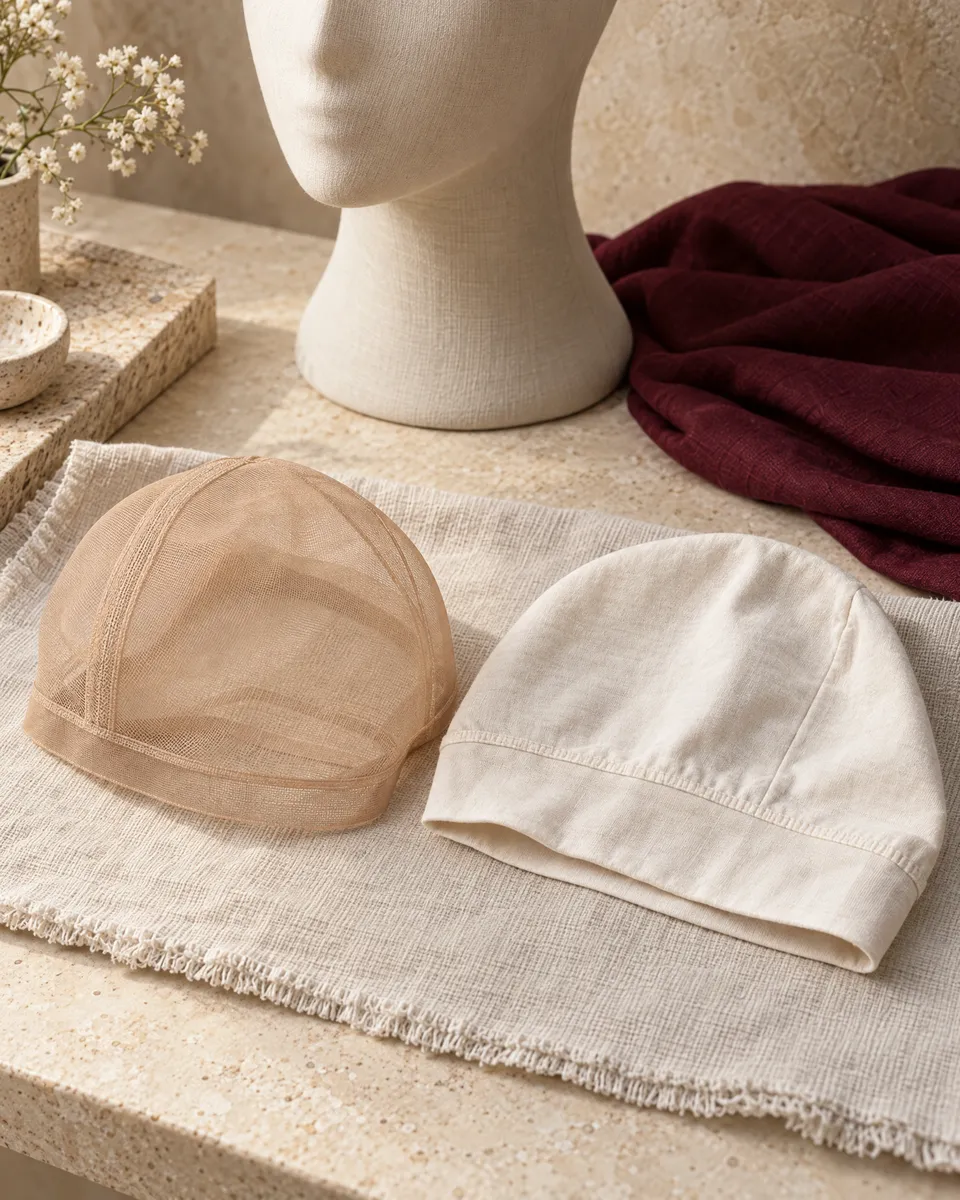
A cap or liner sits between the head and the wig; a grip band relates to how the piece sits during wear. Neither is a detangling tool. Compare wig caps and liners and the wig grip band for wearing accessories, separately from fibre care.
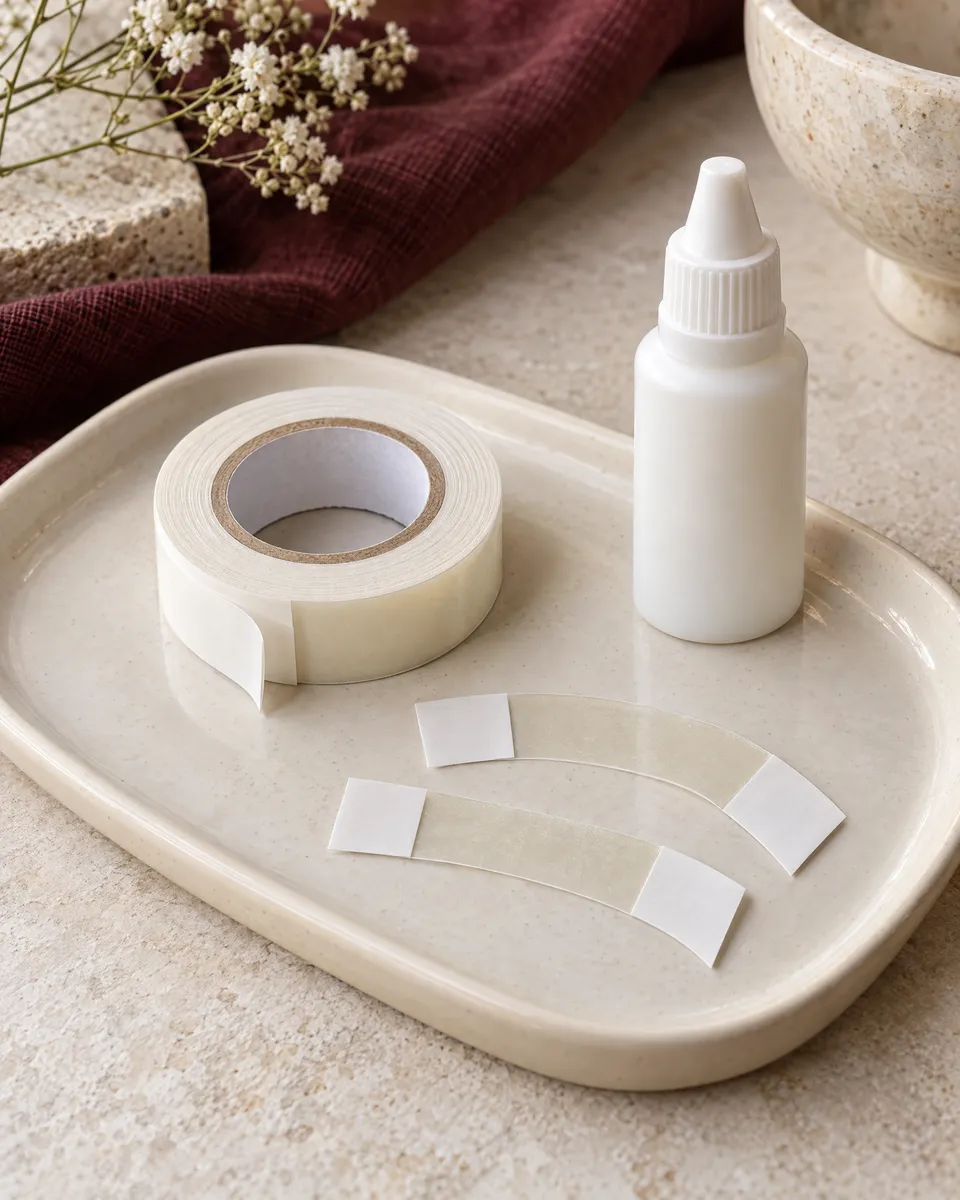
Tape, adhesive and remover relate to attachment or removal, not detangling. Compare wig tape or wig adhesive for attachment topics, and wig adhesive remover for removal. Use each item as directed; these categories do not tell you which brush to choose.
Identify the task first: detangle, wash, adjust fit or manage an attachment. Then use guidance for that category and confirm item-specific details. Return to wig accessories Hong Kong to browse related topics. When asking about a specific wig, include its name or a clear description so the enquiry can focus on the right item.
OWNSTRAND Wigs' private salon is at Unit 2103, 50 Hoi Yuen Road, Kwun Tong, Hong Kong (利寶時中心). For brush guidance, share the wig's name or description and any care wording you have checked. WhatsApp +852 5933 4697 is for enquiries, quotations and confirming supply; a message does not itself complete an order.


| Approach | Where it may help | What to check first |
|---|---|---|
| Fingers | Locating and easing a small tangle before using a tool, or lightly arranging a style where its instructions allow. | Use short, gentle movements; stop if strands pull or the base shifts. |
| Wide-tooth comb | Working through a localised knot with control, one small section at a time. | Confirm the care guidance permits combing; do not force teeth through a snag. |
| Wig brush | Smoothing a length or refreshing a style where brushing is allowed for that item. | Check fibre, style and instructions; use a controlled stroke and avoid pulling from the base. |
| Wig detangling brush | A tool marketed for detangling, when its design and the wig’s care directions are a match. | The product description is not a guarantee of universal suitability; verify for the specific wig. |
Ask about a wig brush
Tell us the style you have in mind. We can discuss the options, quotation and arrangements before you decide.
Ask about a wig brushBefore you choose
Can I use the same wig brush on every wig?
Not necessarily. Suitability depends on the fibre, the tool’s tooth or bristle design, the style and the care guidance for the specific wig. Check that item’s instructions rather than assuming one brush is right for every style. If the guidance is unclear, pause and ask about the particular wig before trying a new tool.
What should I consider when choosing a brush for synthetic wigs?
Check the synthetic wig’s own care instructions and choose a brush or comb only where the guidance allows it. Synthetic fibres and finished styles can differ, so there is no single brush for synthetic wigs that should be assumed suitable for all. Avoid heat unless the item explicitly permits it, and stop if the tool catches or changes the finish.
Is a wide-tooth comb suitable for detangling a wig?
It may be an option if the care guidance for that particular wig permits combing. Consider the fibre and tooth design, begin with a small section, and work gently rather than pulling through a knot. A wide-tooth comb is not automatically suitable just because its teeth are spaced apart.
Can OWNSTRAND confirm which wig brush to use?
You can ask about a specific item through WhatsApp at +852 5933 4697. Include the wig’s name or description and any care wording you have, so the enquiry can focus on that item’s fibre and guidance. WhatsApp is for enquiries, quotations and confirming supply; it does not itself complete an order.
Further reading
- Wigs for Hair Loss — American Cancer SocietySupports the limited general example that its styling guidance advises minimal brushing for short wigs and, for long straight wigs, light wig-conditioner spray and brushing from the ends first. Individual wig care instructions take priority; this is not an endorsement of OWNSTRAND or a rule for every product.
Still weighing up your options?
Follow a related guide to make your next decision with clearer information.
Learn where a wig grip band sits beneath a wig, what to consider when choosing one, and how it compares with caps or liners. Ask OWNSTRAND about options.
Explore wig detangler spray guidance for synthetic and other wig fibres. Check each product label for suitability and ask OWNSTRAND about options.
Find guidance on wig conditioner for synthetic and human hair wigs, including leave-in options. Ask OWNSTRAND Wigs about product suitability before choosing.

Compare wig tape strips and rolls for lace-front use, check base compatibility and product directions, and ask OWNSTRAND about available options.