

What a PU Wig Cap Term Can Tell You
PU is the abbreviation for polyurethane, but the word identifies a material rather than a complete cap design. A specification is most useful when it states both the material and its position. If a listing gives only a broad label, do not infer that the entire inside of the wig uses that material or that every maker uses the term in precisely the same way.
Checking a PU Wig Cap Specification
Read the construction from the largest area down to the details. First find out whether the listing describes the whole base, a top or parting area, an edge, or only a strip around the perimeter. Then ask what the rest of the cap is made from and how the hair is attached in the area you care about. A “wig cap with PU perimeter”, for example, signals a perimeter feature; it should not be casually rewritten as a cap made entirely of polyurethane. The phrase “PU wig base” may sound broader, but the listing still needs to define which base area is meant.
A useful specification identifies the polyurethane’s extent, position relative to the hairline or crown, and adjoining construction. If unclear, request an item-specific explanation; a close-up image alone may not establish exact composition, coverage or supply. When comparing online, ask about the exact item rather than relying on a category label.
Separate material questions from fit questions. Coverage, circumference and how the wig is secured are distinct matters, so a material label cannot establish that a cap will fit comfortably. Check wig cap sizes and the measurement guidance for the particular item. The American Cancer Society’s general wig-selection guidance discusses choosing a size that fits and trying options; that supports checking fit as its own decision, not assuming that a PU edge determines fit or comfort. Individual products and wearing needs still vary.
Where Polyurethane May Be Used
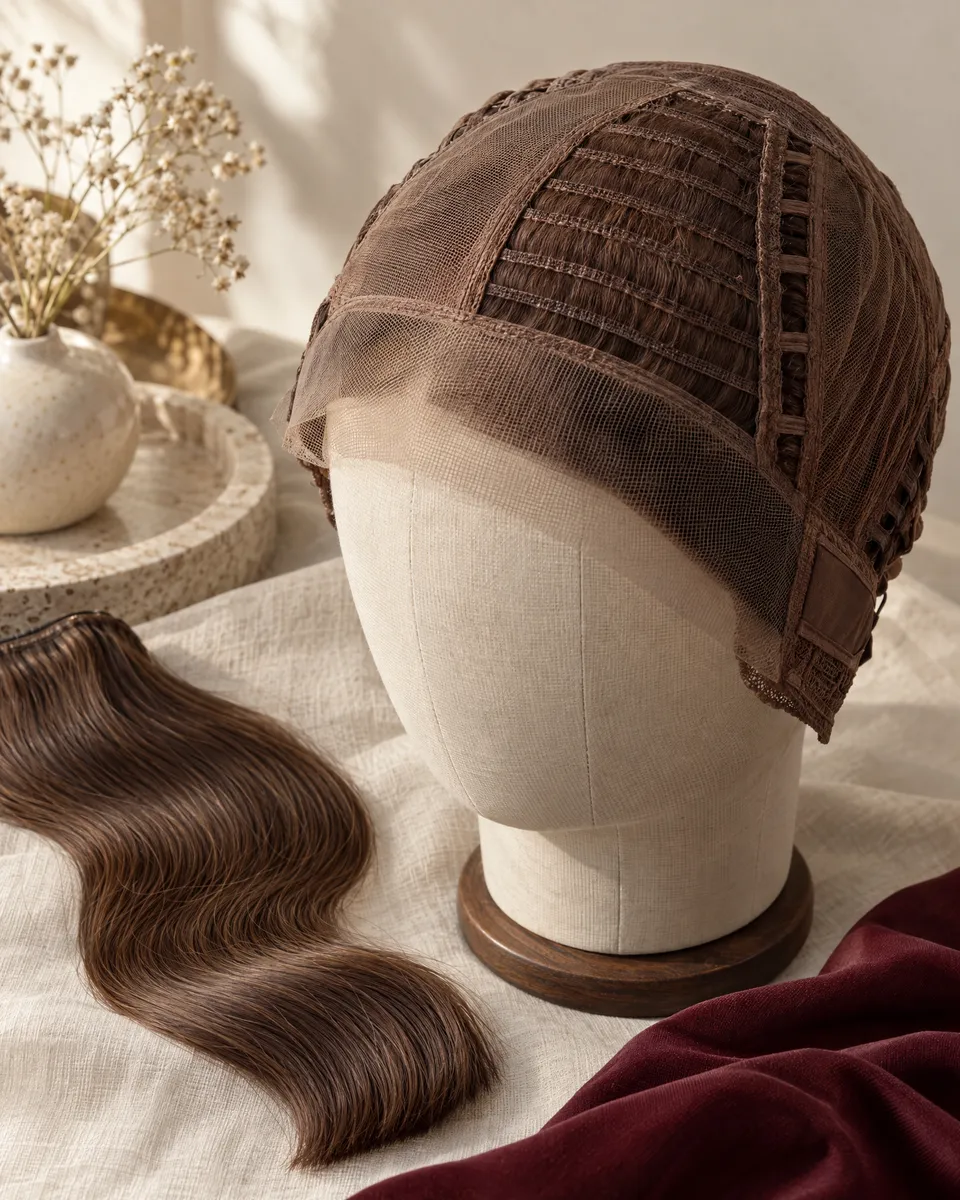
Polyurethane may form a narrow perimeter, selected sections or a broader base area. Ask how the described area relates to the rest of the cap; do not assume it reaches the front hairline, crown or entire cap unless stated.
Compare with an open wefted wig cap or a breathable wig cap by checking the actual open and covered areas. These labels do not guarantee a particular feel or suitability; ask how the specific construction relates to your intended styling.
Compare location, extent, adjoining construction and intended styling—not simply “PU versus no PU”. If the seller cannot say whether PU is just at the perimeter or extends across a base area, the label is not enough for a like-for-like comparison.
How Skin Top Wig Descriptions Can Vary
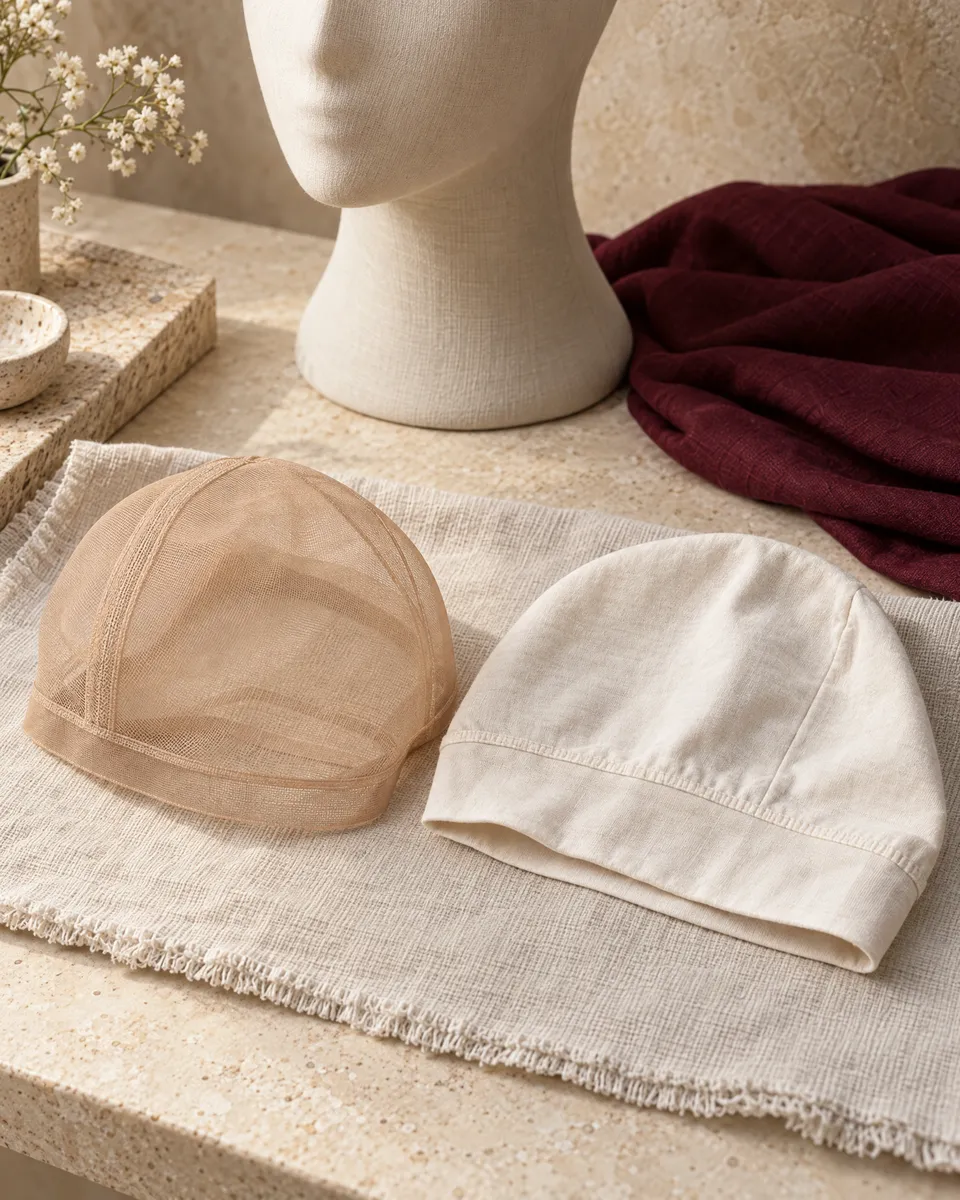
“Skin top” sounds descriptive, but different listings may use it for different effects or parts of a cap. Treat it as a term to clarify, not as a guaranteed synonym for polyurethane, a particular scalp-like finish or a complete base construction. The distinction is especially useful when comparing it with other named top constructions.
Confirming What a Skin Top Wig Refers To
Ask the seller to point to the area called the “skin top” and identify its material. Does the description mean a top area where hair is presented through a base, a particular parting zone, a material layer, or an appearance term? Which part of the cap is covered, and what construction is used at the sides, back and front? Until those details are stated, the phrase alone does not tell you how the wig is built. This avoids assuming that every polyurethane skin top wig uses the same material, footprint or finish.
Compare stated designs, not similar-sounding names. A silk top wig, full lace wig, monofilament wigs and hand tied wig each raise distinct construction questions; none is an automatic synonym or performance equivalent for “skin top”. Ask for item-level details.
Describe your preferred parting, visible hairline and finished style so the seller can relate them to the construction. This does not replace the specification or predict results for every wearer. Fibre is a separate decision: human hair synthetic blend wigs concerns fibre choice, not cap construction.

Questions to Ask Before Comparing Cap Materials
A short, consistent set of questions makes it easier to compare two descriptions without filling in missing details yourself. Ask about the construction first, then about fit and styling, and finally confirm that the answer applies to the exact item being discussed.



| What to check | Question to ask | Why it matters |
|---|---|---|
| Material | Is the stated area polyurethane, another material, or an appearance description? | A label alone may not identify the material used. |
| Location | Is it at the perimeter, front, parting area, crown or a broader base section? | The same material can describe different parts of different caps. |
| Extent | How much of the cap uses that construction, and what makes up the rest? | A limited edge feature is not the same as a full-base description. |
| Hair attachment and finish | How is hair attached in that area, and how is the edge finished? | These details help distinguish designs that share a broad label. |
| Fit and intended styling | What sizing information applies, and what styling or care limits are item-specific? | Material terminology cannot confirm fit, suitability or care instructions. |
| Exact item and supply | Does this answer refer to the item I am considering, and can its supply be confirmed? | General examples do not establish current stock or availability. |
Compare breathable wig cap construction
Tell us the style you have in mind. We can discuss the options, quotation and arrangements before you decide.
breathable wig capBefore you choose
What does PU mean in a wig cap description?
PU is short for polyurethane. In a wig-cap description it may refer to a perimeter or a particular base area, rather than the entire cap. Check where the material is used, how much of the cap it covers and what construction makes up the rest. If the wording is broad, ask for details for the exact item before comparing it with another cap.
Does “skin top” always mean a polyurethane wig cap?
No. “Skin top” does not have one universal definition that should be assumed to mean polyurethane or one standard construction. Ask the seller to identify the material and point out which area is being described. A useful answer distinguishes material, placement and coverage instead of relying on the name alone.
How can I compare a wig cap with a PU perimeter and a skin top wig?
Compare the stated material, its location and extent, adjoining cap construction, hair attachment and the styling you have in mind. Ask whether each description refers to the same part of the cap and to the exact items under consideration. A perimeter feature and a loosely described skin top are not automatically equivalent; fit and care details should be checked separately.
Does a PU wig base guarantee a natural-looking hairline or a comfortable fit?
No material name by itself guarantees a particular appearance, fit or comfort. The front construction, coverage, size and how the cap sits all matter, and individual results differ. Ask what the exact item includes and check fitting information independently; do not infer a hairline feature from the phrase “PU wig base” unless it is specifically stated. For product selection, WhatsApp +852 5933 4697.
Further reading
- American Cancer Society — Wigs for Hair LossGeneral support for treating fit and sizing as a separate consideration when choosing a wig; cited for the practical advice to check item-specific fit rather than infer it from a cap-material label. This is general selection guidance, not an endorsement of OWNSTRAND or a claim that any particular wig suits every wearer.
Still weighing up your options?
Follow a related guide to make your next decision with clearer information.

Learn about wig cap sizes and how to measure head circumference for a wig. Use your measurement as a starting point, then check the brand chart and fit.

A silk top wig can be described by its top construction, but details vary by model. Compare terms with lace or monofilament tops, then ask OWNSTRAND about a style.
Explore full lace wig cap construction, coverage and fitting considerations. Compare it with lace front options, then contact OWNSTRAND Wigs to ask about styles.
Explore monofilament wigs and learn how mono sections affect parting and crown coverage. Compare construction details and ask OWNSTRAND about a style.