
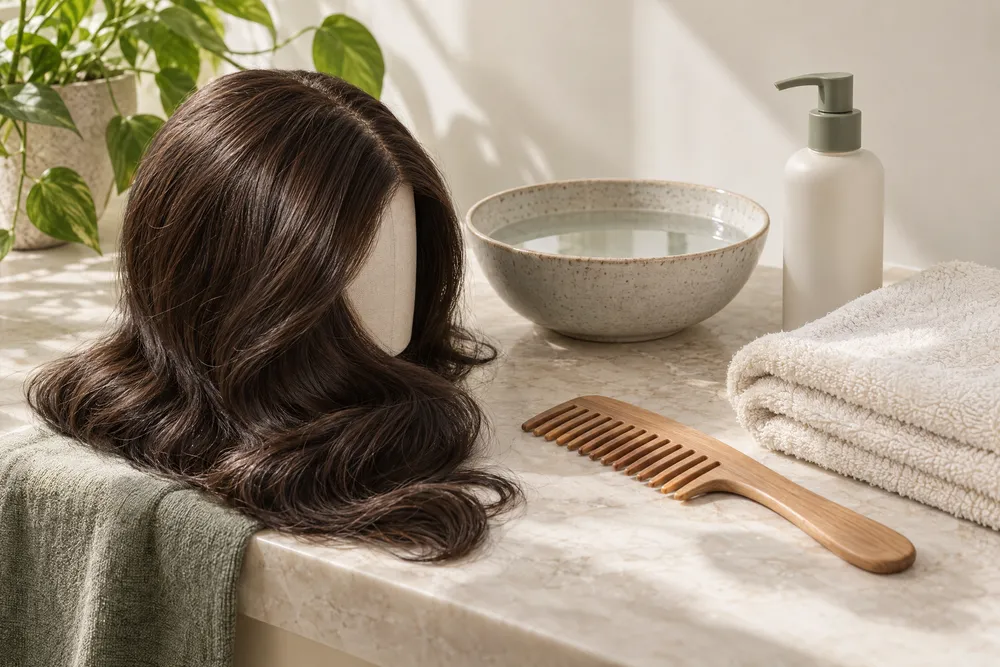
Can you use heat on a human hair wig? Start with the care instructions
The short answer is: sometimes, and only within the guidance for the individual wig. Human hair describes the fibre, not a universal heat rating. If the care label or maker’s instructions do not clearly allow thermal styling, pause and ask for guidance rather than testing the wig on a hidden section.
Can you use heat on a human hair wig? What to check first
Look for the care information supplied with the wig and check whether it addresses heated tools, curling, straightening and any limits or exclusions. Processing and construction vary, so two wigs made with human hair may not respond alike. Previous colour or chemical work can also be a reason to avoid guessing: if you are considering changing colour as well as styling, read can you dye a human hair wig and settle the care questions before either process.
The American Cancer Society’s Wigs for Hair Loss guide covers fibre choices and the importance of checking a wig’s stated heat tolerance. That is a useful selection check, not a guarantee about every human-hair piece or an instruction for a particular model. Follow the instructions for your own wig and the styling tool. If either set of directions is missing, unclear or conflicts with the other, the cautious choice is to leave heat off until you can clarify.
Before styling, make three practical checks: First, can you find wig-specific care directions that allow heat? Second, do the tool and any styling product have instructions you can follow? Third, is the wig clean, dry and in a condition the maker says is suitable for styling? If any answer is uncertain, postpone the session. For broader maintenance, browse our wig care guides and how to wash a wig advice; cleaning products and methods should also follow the wig’s directions.
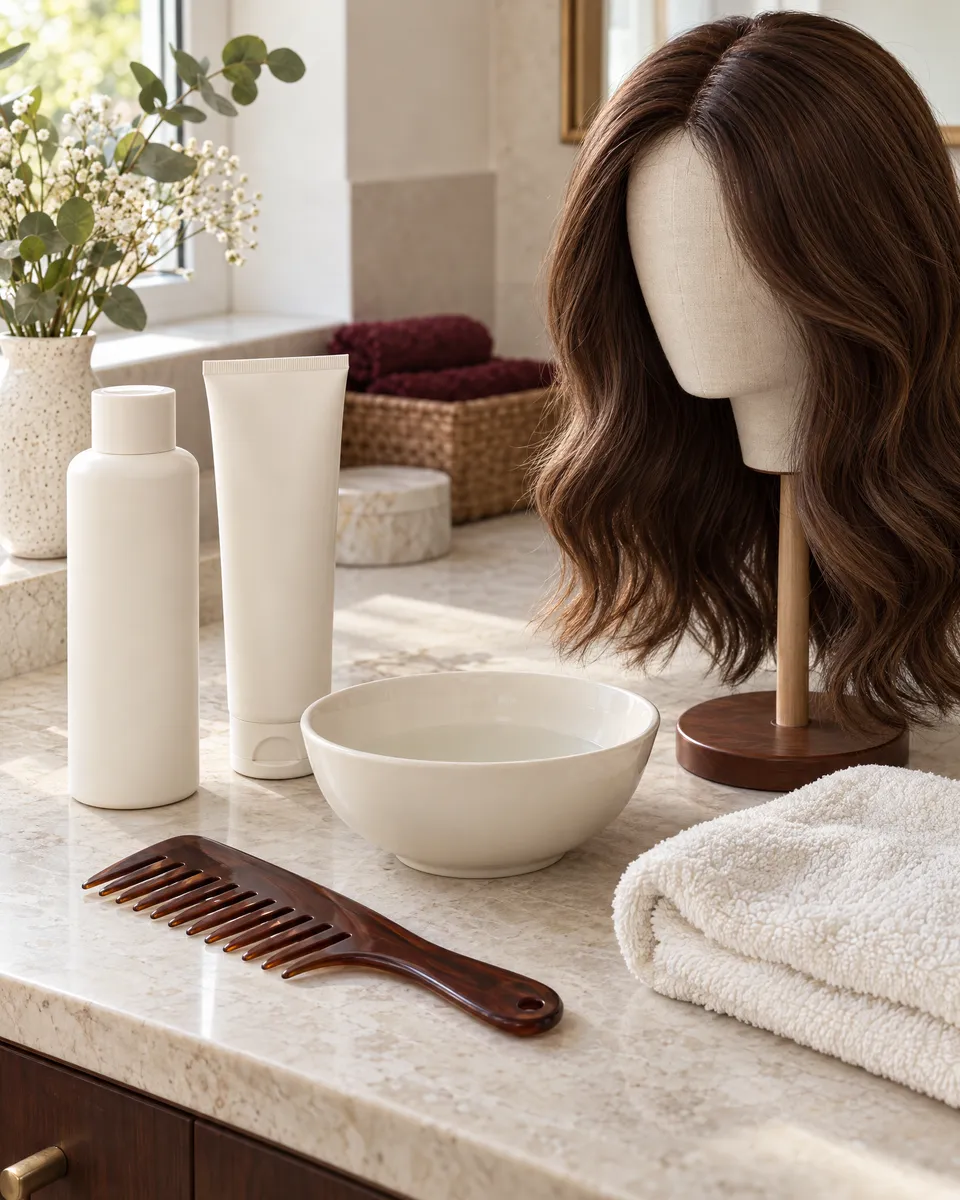
Check the wig’s processing and heat-styling guidance
A wig’s response is shaped by more than the label on its fibre. Treat care directions as specific to the piece in your hands, and use a heat protectant only when both the wig guidance and the product instructions support that choice.
Using heat protectant and choosing a cautious approach
A human hair wig heat protectant is not permission to use heat if the wig instructions say otherwise. Nor is it a shield that makes damage impossible. Check whether the protectant is suitable for wig hair and follow its own application directions; avoid substituting a product intended for another use simply because its label says “heat protection”. If compatibility is unclear, ask the wig maker or retailer before applying it. Use only the approach the wig’s care guidance permits, and stop if you notice an unexpected change in texture, shape or feel.
Hong Kong’s warm, humid weather can make a carefully styled finish behave differently once you step outside. That does not mean more heat is the answer: avoid repeated restyling just to chase a look that has shifted with the weather. Our wig frizz in humidity guide offers related care considerations. Store the wig as its own care instructions recommend; see how to store a wig for storage guidance.
Build care into the decision, not just the styling session. Frequent manipulation can make upkeep more demanding, and tangles should be handled gently rather than pulled through. If brushing or detangling is part of your routine, our human hair wig tangling guide is a useful companion. If the care label is lost, the model is unfamiliar, or the wig has undergone a change that is not covered by its original instructions, pause and seek product-specific advice. Guesswork about a tool or protectant can cost you the look you wanted to preserve.

Before curling or using a flat iron
Choose your finish first, then check whether the wig’s own care guidance supports the method. A soft bend, defined curl and sleek straight look call for different styling actions, but none should be attempted unless the instructions permit heat.
How to curl or flat iron without assuming every wig is alike
If you are deciding how to curl a human hair wig, start with the shape you want and the wig’s styling directions. A curling iron or wand wraps hair around a heated surface; a flat iron presses hair between heated plates. Those are different techniques, but neither is automatically safer for every wig. Do not invent a temperature, timing or number of passes. If the maker gives an approved method, follow it exactly; if no method is provided, do not trial-and-error the wig. The same rule applies when you search for a flat iron human hair wig routine: tool choice does not replace product-specific permission.
A simple decision comparison can help you choose what to do next without treating it as a heat-setting chart:
If you are still choosing a piece, be candid about how often you want to change its shape. Ask for the written care guidance alongside any discussion of style, fibre and upkeep. When comparing a wig with other fibres, distinguish heat-friendly synthetic options from human hair and check the individual product’s instructions for each. Getting wet is another separate care question: consult can you shower with a wig on rather than assuming heat guidance also covers water. For wear expectations and maintenance trade-offs, see how long does a wig last; the care routine matters, but there is no single lifespan that applies to every wearer and wig.



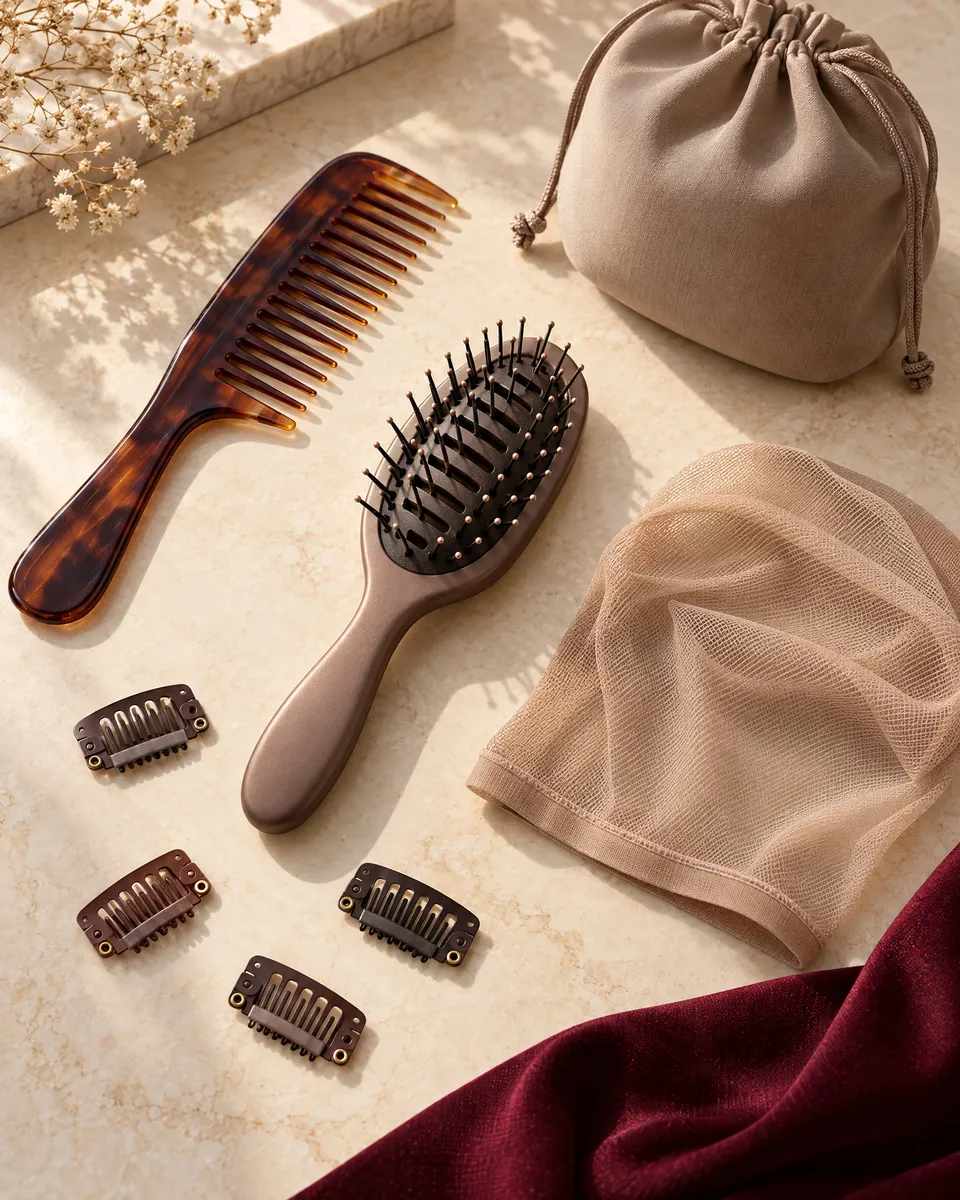
| Your situation | What to check | Cautious next step |
|---|---|---|
| The care instructions explicitly allow heat | Any specified tool, method or product limits | Follow the wig and tool directions; do not add your own setting. |
| The instructions are missing or do not mention heat | Whether the maker can provide guidance for this exact wig | Hold off rather than testing heat on the wig. |
| You want to apply heat protectant | Whether it is suitable for the wig and how its label says to use it | Use only if both product and wig guidance allow; protection is not a guarantee. |
| You are choosing between curls and a straight finish | Whether the permitted method covers a curling tool or flat iron | Choose the look only after confirming the method; do not assume the tools are interchangeable. |
| The wig has been processed or its condition has changed | Whether its current care guidance still applies | Ask for piece-specific advice before adding heat or another chemical process. |
Ask OWNSTRAND about a wig-care question
Tell us the style you have in mind. We can discuss the options, quotation and arrangements before you decide.
Ask OWNSTRAND about a wig-care questionBefore you choose
Can you use heat on a human hair wig?
Sometimes, but not without limits. Processing can affect how a human hair wig responds, so check the specific wig’s care instructions before using a curling iron or flat iron. If the directions are unclear or do not address heat, pause and ask for guidance rather than experimenting.
Should I use heat protectant on a human hair wig?
Use a heat protectant only if it is suitable for the wig and both the wig-care directions and product label allow it. It is not a guarantee against heat damage and does not replace the wig’s instructions. If suitability is uncertain, check before applying it.
How do I curl or flat iron a human hair wig?
First confirm that the wig’s care guidance permits heat styling and whether it covers the tool and method you want. Follow the maker’s directions for the wig and styling tool; do not assume a method, temperature or routine is suitable for every human hair wig.
Does human hair mean a wig can handle any heat setting?
No. Human hair does not mean unlimited heat tolerance. Processing and product-specific instructions matter, so do not choose a setting based on fibre alone or copy a setting used on another wig. For product selection, WhatsApp +852 5933 4697.
Further reading
- American Cancer Society — Wigs for Hair LossSupports the specific general-care point that buyers should check a wig’s stated heat tolerance and consider fibre when selecting a wig. It is general guidance, not an assessment of a particular wig or an endorsement of OWNSTRAND.
Still weighing up your options?
Follow a related guide to make your next decision with clearer information.
Can you shower with a wig on? Follow the wig maker’s fibre-specific care instructions; remove it unless water exposure is allowed. Ask us if you need help.
Browse practical wig care guides from OWNSTRAND Wigs, including washing, storage, detangling and everyday wear considerations for different fibres.

Learn how to wash a wig and how often to wash a wig, with fibre-aware steps and practical Hong Kong care tips. Ask OWNSTRAND about your wig.
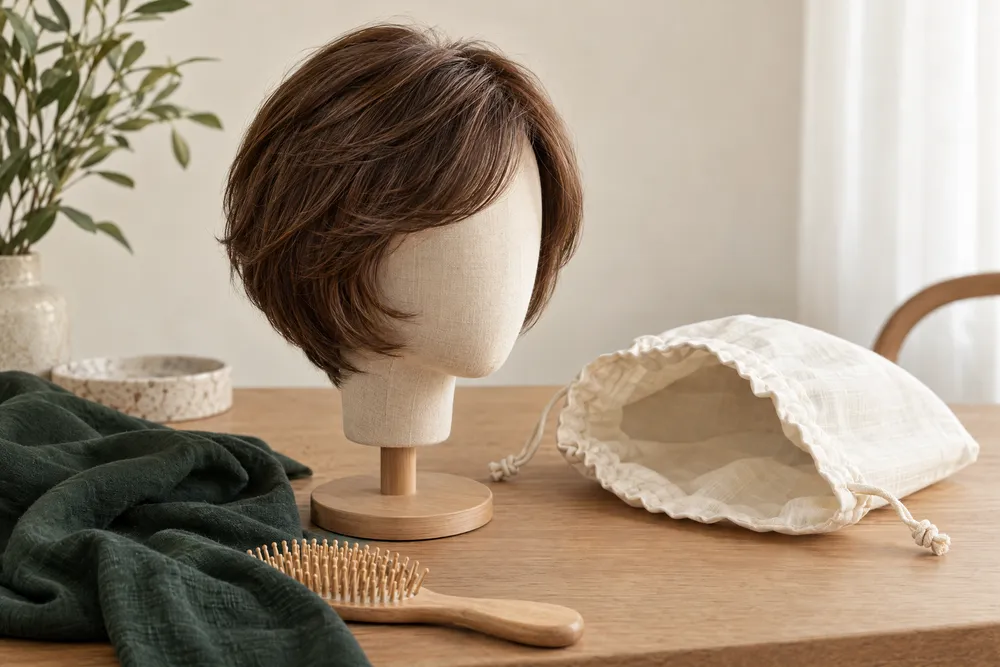
Learn how to store a wig between wears and when a wig stand for storage may help. Compare drying and travel options, then ask OWNSTRAND about suitability.