

How to Blend a Hair Topper with Natural Hair: Begin with Placement
Placement sets the foundation for blending. First identify the area you want covered and the direction in which your own hair naturally falls. A topper positioned to address the part or crown can look more coherent than one placed simply as far forward or back as possible. Keep the piece’s own fit and attachment guidance in view throughout; a styling guide cannot replace instructions for a particular design.
How to Blend a Hair Topper with Natural Hair Around the Part
Start with dry, detangled hair arranged as you usually wear it. Locate your natural part, then set the topper so its parting direction works with that line rather than cutting across it unexpectedly. If the part moves during the day, assess where it sits most often and arrange the surrounding hair around that usual position. Small shifts can change the silhouette, so compare the front, crown and both sides before settling on placement.
Check the coverage boundary from more than one angle. The base should cover the area for which it is intended without requiring you to pull surrounding hair tightly across an edge. If your concern is a part that is becoming wider, the hair topper for widening part guide is a useful way to think about coverage goals. The hair topper base size guide can help you consider how base dimensions relate to the area you want to cover; the right choice still depends on the specific item and your own head and hair.
Once positioned, bring a small amount of your own hair into the part or over the transition only if the style allows it. Avoid stretching strands thinly across a large gap: this can expose the base and make the transition look less even. Instead, let the topper and natural hair sit in their own fall, and adjust the overall part or direction in modest steps. If the desired coverage extends well beyond the crown, compare a hair topper vs wig before assuming a partial piece will meet the brief.
Compare Colour and Density Without Assuming an Exact Match
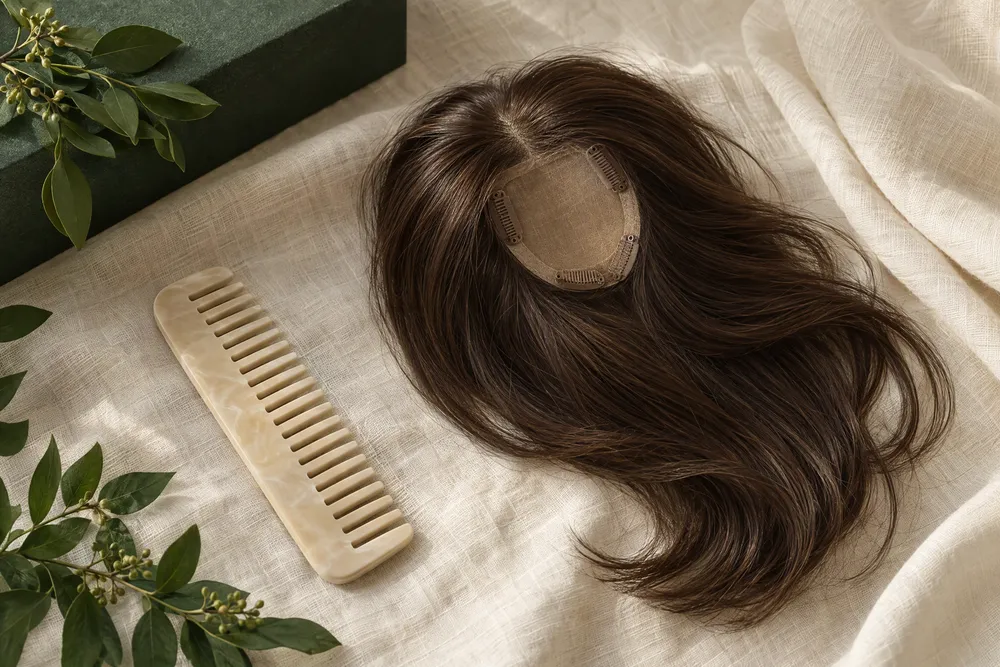
A close-looking shade on a phone can appear different beside your own hair. Compare colour and volume together in steady light, and judge the complete shape rather than seeking a single perfect swatch. It is reasonable to want a harmonious result; it is not possible to promise an exact match from a photograph or description alone.
Compare Hair Topper Colour in Consistent Lighting
Look at your hair and the topper in the same lighting, preferably near a window or outdoors when practical. Move away from mixed indoor lighting that casts a warm or cool tint, and recheck at another time if your usual surroundings differ. The American Cancer Society recommends using natural light when comparing a hair swatch with a wig colour; that supports checking shades in comparable light, not a guarantee that any product will match exactly. American Cancer Society guidance on choosing and wearing a wig.
Compare the overall impression from the roots, mid-lengths and ends rather than isolating one strand. Natural hair may show more than one tone, including grey or lighter lengths, while a topper can reflect light differently because of its fibre, finish and direction. A shade that seems slightly different up close may still sit comfortably in the overall style, while a small undertone difference can be more noticeable in bright daylight. Use photographs as a reminder of your preferred direction, not as colour proof. For more ways to think about shade families, see wig color matching and black wigs; neither replaces viewing the specific piece under comparable conditions.
Density is about the outline as much as the number of visible strands. If your own hair is fine, a markedly fuller topper can create a step in volume at the sides or back. If the piece is too flat for the surrounding style, the crown may look disconnected instead. Check the profile at eye level, then gently arrange the boundary hair to see whether the silhouette feels continuous. Avoid assuming that a heavier piece will conceal more naturally; coverage and density are separate considerations.
When grey is part of the look you want to preserve, describe its distribution as well as its approximate proportion. A custom wig grey percentage discussion may be relevant if you are exploring a custom wig; it does not mean every topper can be ordered with a particular grey blend. Similarly, if you want a tied-up look rather than crown coverage, a scrunchie hairpiece is a different styling route, not a topper substitute.

Style the Parting and Edges Gently
Then refine the blend with small styling changes. Avoid repeated pulling or heavy reshaping. Work with the attachment and care directions supplied for the actual piece, particularly before applying heat or products.
Keep Fine Hair Comfortable Around the Attachment Area
Fine hair can be easier to disturb when it is repeatedly combed, tugged or pinned under an attachment. Brush or comb gently, support the hair close to the area you are arranging, and avoid dragging a tool through the base or across attachment points. If the piece uses clips or another fastening method, follow its specific placement instructions and do not force it into a position that feels uncomfortable. If anything causes persistent discomfort, stop and seek advice from a suitably qualified professional; this styling guidance is not a medical assessment.
For a polished transition, settle the topper first and then style the surrounding hair in its natural direction. A soft side sweep, a part that continues the wearer’s usual line, or a light arrangement around the crown may help connect the shapes without concealing the base by force. Use heat only when the maker’s instructions confirm that the particular piece allows it, and follow the stated care directions. The materials and construction of different pieces vary, so do not assume that a tool or styling product suitable for your own hair is suitable for the topper.
Take a final look in ordinary daylight and under the lighting where you expect to wear the style. Notice whether the part looks continuous, the sides feel balanced and the transition remains comfortable when you turn your head. If the piece shifts or the edge becomes visible, return to placement and base coverage rather than adding more tension to your natural hair. A small adjustment to the angle or the surrounding style may be more useful than trying to make the topper disappear completely.
If you are comparing options before choosing, the hair topper prices page can help frame what to ask about when requesting a quote. Availability, exact colour, base details and supply need to be confirmed for the specific item rather than inferred from a general guide. OWNSTRAND’s approach is that your hair and your choice should guide the style; the goal is a considered look that feels like yours, not a universal standard of density or colour.


| What to check | How to assess it | What to adjust |
|---|---|---|
| Placement and part | Follow the usual direction of your part and view the base from the front, crown and sides. | Make a small position change; do not pull natural hair tightly across the edge. |
| Colour impression | Compare topper and natural hair together in consistent natural light, looking at the whole length. | Reassess in comparable light and treat photos as reference rather than proof of an exact shade. |
| Density and outline | Check the silhouette at eye level and look for a sudden change in volume beside the base. | Arrange surrounding hair gently or reconsider whether the coverage and fullness suit the look. |
| Comfort and care | Notice movement and comfort around the attachment area and check the piece’s instructions. | Stop if it feels uncomfortable; use only care or styling methods approved for that piece. |
Ask OWNSTRAND about hair topper options on WhatsApp
Tell us the style you have in mind. We can discuss the options, quotation and arrangements before you decide.
Ask OWNSTRAND about hair topper options on WhatsAppBefore you choose
How can I blend a hair topper with my natural hair?
Position the topper to follow your natural part, then assess how its colour impression and density sit with your own hair in consistent lighting. Make small styling adjustments and follow the instructions for the specific piece. Check the overall shape from several angles rather than trying to hide an edge by pulling your hair tightly.
How do I compare a hair topper colour with my natural hair?
Compare the overall appearance in consistent natural light and consider how your own hair looks in the same conditions. The American Cancer Society also recommends natural light for comparing a hair swatch with a wig colour. Photos and screens can alter colour appearance, so a visual comparison cannot guarantee an exact shade match.
Can a hair topper blend with fine hair?
The overall result depends on the piece, its placement and the wearer’s hair. Handle fine hair gently, avoid unnecessary pulling, and follow the attachment guidance for the specific topper. Check for a visible volume step and stop if the attachment feels uncomfortable.
Why does hair topper density matter when blending?
A noticeable difference in volume can make the transition between the topper and your own hair more apparent. Consider the overall silhouette and the amount of hair around the base; an exact density match is not guaranteed. For product selection, WhatsApp +852 5933 4697.
Further reading
- American Cancer Society — Choosing and Wearing a WigSupports the specific general advice to compare a wig colour with a hair swatch in natural light; cited in the colour-comparison section without implying endorsement of OWNSTRAND or any particular product.
Still weighing up your options?
Follow a related guide to make your next decision with clearer information.

Compare a hair topper vs wig by coverage, attachment and blending needs. Learn what to consider, then ask OWNSTRAND about suitable options in Hong Kong.

Use this wig color matching guide and wig color chart to compare shades across lighting. Screens can vary; WhatsApp us to ask about a specific style.

Compare hair topper prices in Hong Kong by style, fit and confirmed specifications. Ask OWNSTRAND Wigs on WhatsApp to check a quote and supply.

Explore custom wig grey percentage options with OWNSTRAND Wigs in Hong Kong. Discuss a natural grey blend, available choices and colour matching by enquiry.