

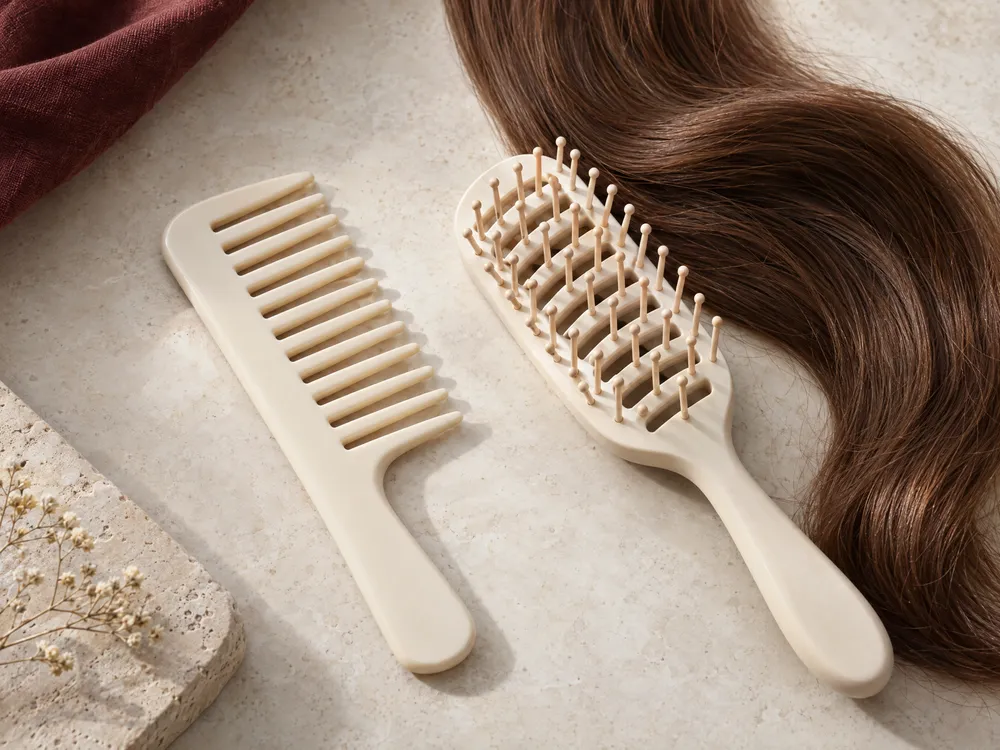

Wig detangler spray: match care to the fibre
A detangling product is only a sensible choice when its intended use matches the wig in front of you. Fibre type is the first check, but it is not the only one: the cap, finish and the maker’s care advice can also affect how you handle the piece. If you are unsure what fibre you have, pause before applying a leave-in formula rather than guessing from appearance.
How to choose a wig detangler spray for the fibre type
Read the product label for an explicit statement about the fibres it covers. A product labelled for natural hair is not automatically suitable for wigs; “wig” alone does not tell you whether it covers synthetic fibre, human hair or both. Formulas and instructions vary, so let the stated suitability decide whether it belongs in your care routine.
For a synthetic piece, look specifically for wording that includes synthetic wigs or synthetic fibres. If it does not, do not infer compatibility from a general detangling claim. Human-hair wigs also need care that follows the maker’s instructions; avoid assuming that a product suitable for one human-hair piece suits every construction or finish. The American Cancer Society’s guide to wigs for hair loss discusses fibre choice and care considerations, supporting the practical point that a wig’s material and its care guidance should be considered together—not that any particular spray is endorsed.
What to check on a detangler label
Before buying or using a wig detangler conditioner, check 3 things: which fibres the product names, whether it is leave-in or must be rinsed out, and the application directions or cautions. Also look for instructions about where to apply it and any surfaces or materials to avoid. If the label is vague, missing, or does not address your wig type, choose a different care approach until you can check with the maker or seller.
A conditioner and a detangling spray are not interchangeable just because both sound moisturising. A rinse-out product has a different use pattern from a leave-in detangler for wigs; do not leave a rinse-out formula in place or rinse a leave-in product unless its directions say so. For more context, compare wig conditioner with wig shampoo and the separate guide to conditioner for wigs. These care categories are not a substitute for checking the exact bottle and wig instructions.

Choosing a detangler for synthetic wigs
Synthetic fibre deserves a deliberate compatibility check, not a quick spray-and-see experiment. Product claims can differ, and a synthetic wig may have its own care limits. Keep the label and any care card together with the piece if you can; those instructions are a better guide than a routine copied from natural hair care.
Where to begin when easing a knot
First identify the knot’s location and how severe it is. A few loose tangles through the ends call for a different level of patience from a dense knot close to the cap, where tugging could strain the fibre attachment. Set the wig securely on a suitable stand or hold it in a way that supports the section, then separate a small amount of fibre at a time. Only use a detangling spray for synthetic wigs if the label explicitly says it is suitable, and follow its directions exactly.
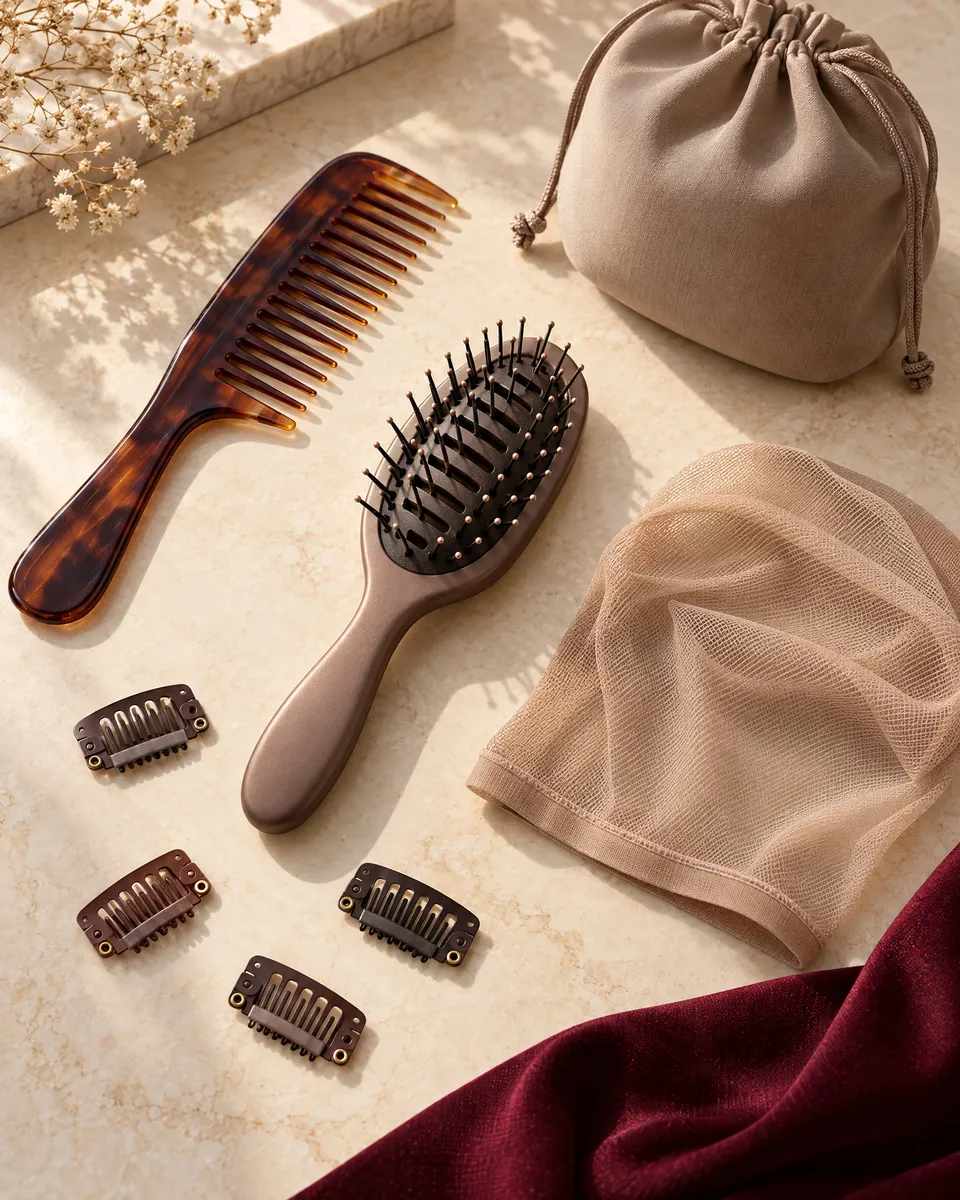
Use a brush or comb only if the wig maker’s care instructions permit that tool. Start at the ends and work towards the knot, supporting the section to avoid pulling against the cap. If the product instructions require a particular application method, follow them rather than soaking the wig or spraying near the base by habit. Stop if the fibre becomes tacky, looks altered, sheds unusually or the knot tightens. For recurring knots at the nape, see the focused advice on synthetic wig tangling.

Check the label before using a leave-in detangler
A leave-in product remains on the fibres after application, so its directions matter beyond the moment of detangling. Before using one, make sure you understand the intended fibre, amount or method stated on the label, and whether the wig maker gives separate instructions. Do not combine products or add extra steps simply because the first pass did not give the result you hoped for.
When to pause and review the care instructions
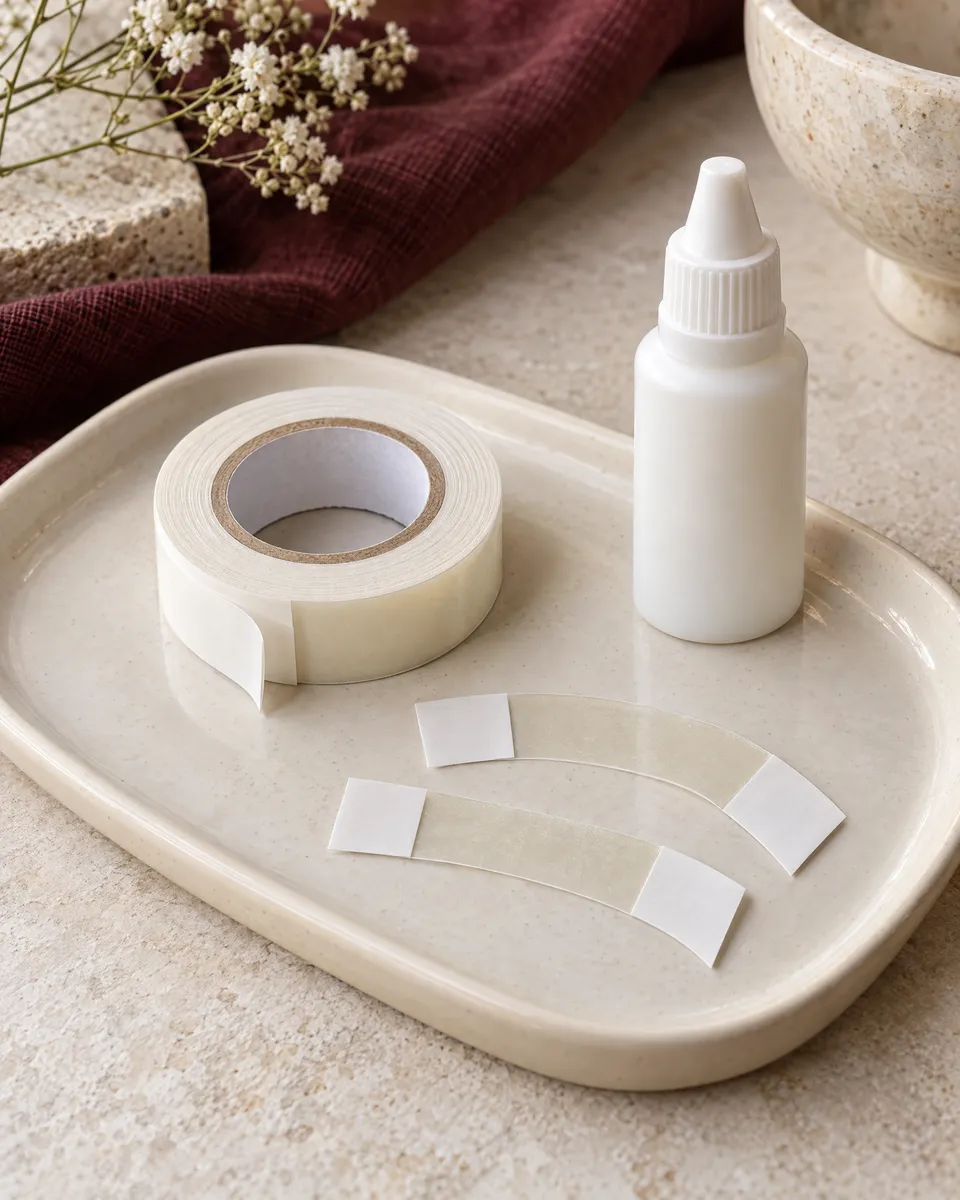
Pause when the fibre type is unknown, the label does not mention your wig, or the piece has a special finish or construction with separate care advice. Pause as well if there is adhesive, tape or another product close to the area you plan to treat; a fibre detangler is not an adhesive remover. Consult the wig’s care instructions before working near the base, and keep detangling separate from choices about how the wig is secured. Guides to wig caps and liners, a wig grip band and wig tape cover distinct wearing considerations, not substitutes for fibre-care directions.
If the wig is valuable, delicate, significantly matted or showing signs of wear, forcing a knot may make the problem worse. Ask the maker or the seller familiar with that piece what care method is appropriate. OWNSTRAND can be contacted to ask about care options, but a specific product’s suitability should be checked against its own label and the wig’s instructions. You can browse the wider wig accessories Hong Kong guide for related care topics.

Gentle steps for detangling wig fibres
A calm, small-section approach gives you more control than trying to clear a whole wig in a hurry. The sequence below is a general handling guide, not a replacement for product directions or the wig maker’s care card; if those instructions differ, follow them.

| What you notice | What to check | A careful next step |
|---|---|---|
| Loose tangles in the lengths | Fibre type, product suitability and the label’s application directions | Support a small section and detangle gradually with a permitted tool. |
| A synthetic wig with knots | Explicit wording that the product is suitable for synthetic fibres | If the label does not say so, do not apply it; review the wig care instructions. |
| A tight knot close to the cap | Whether working on the area could pull at the fibre attachment | Avoid force; stop and ask the maker or seller familiar with the piece. |
| A leave-in spray or conditioner | Whether it is leave-in or rinse-out and any stated cautions | Use only as directed; do not substitute one product category for another. |
| Unclear fibre or changed-looking fibres | The wig’s care card and the product label | Pause rather than testing an unknown product on the wig. |
Ask about wig care options on WhatsApp
Tell us the style you have in mind. We can discuss the options, quotation and arrangements before you decide.
Ask about wig care options on WhatsAppBefore you choose
What is wig detangler spray used for?
It is a leave-in care product intended to help ease tangles. Formulations vary, so check the label for the fibres and use instructions it covers. It does not guarantee that a knot will come out or that a wig will remain undamaged.
Can I use wig detangler spray on a synthetic wig?
Use it on synthetic fibres only when the product label says it is suitable for them. Follow the stated directions, and do not assume every detangling spray works with every synthetic wig.
How should I apply a detangling product to a wig?
Follow both the product label and the wig maker’s care instructions. Work gently on a supported, small section with a tool allowed by those instructions. Stop if the fibres or construction respond unexpectedly.
Does wig detangler spray guarantee that a wig will not be damaged?
No. Suitability depends on the product, fibre, wig construction and how the directions are followed. Check the label first, handle knots gently and pause if anything looks or feels different.
Further reading
- American Cancer Society — Wigs for Hair LossThe article’s discussion of wig fibre choice and care considerations supports the general statement that care decisions should take material and the wig’s instructions into account; it does not endorse any detangling product or imply that a particular product is suitable for every wig.
Still weighing up your options?
Follow a related guide to make your next decision with clearer information.
Learn where a wig grip band sits beneath a wig, what to consider when choosing one, and how it compares with caps or liners. Ask OWNSTRAND about options.
Find guidance on wig conditioner for synthetic and human hair wigs, including leave-in options. Ask OWNSTRAND Wigs about product suitability before choosing.
Compare wig shampoo options for synthetic and human hair, and check which care products suit your wig before choosing. Contact OWNSTRAND to ask about availability.
Learn how to use conditioner for wigs, including synthetic styles and leave-in sprays. Follow the product label, keep product away from knots and ask us if unsure.