



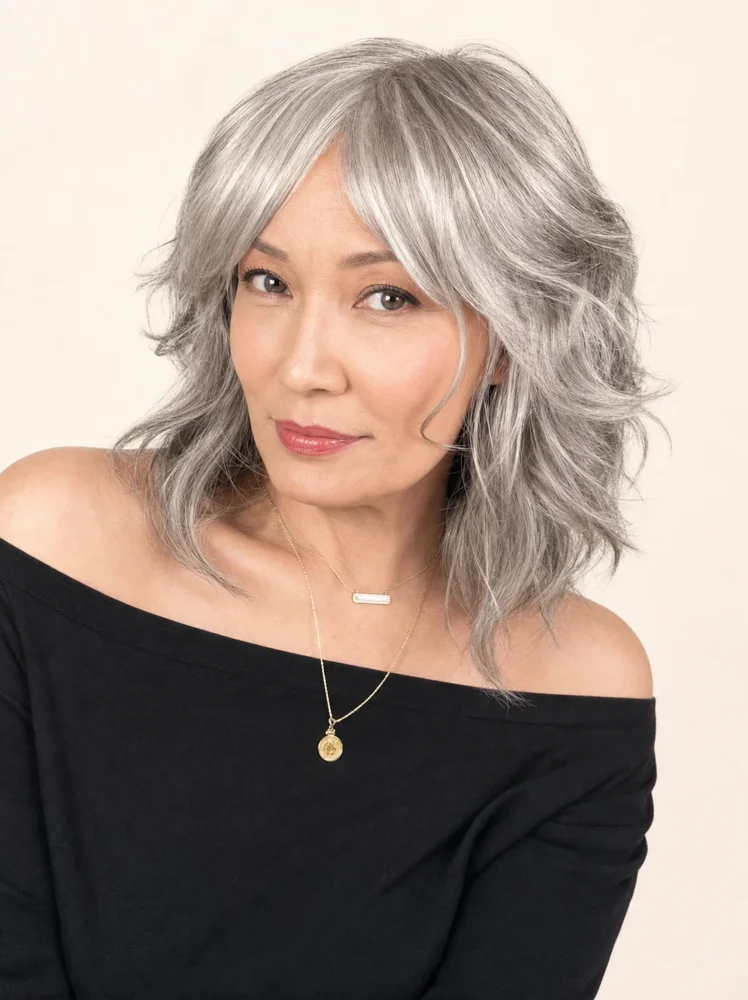
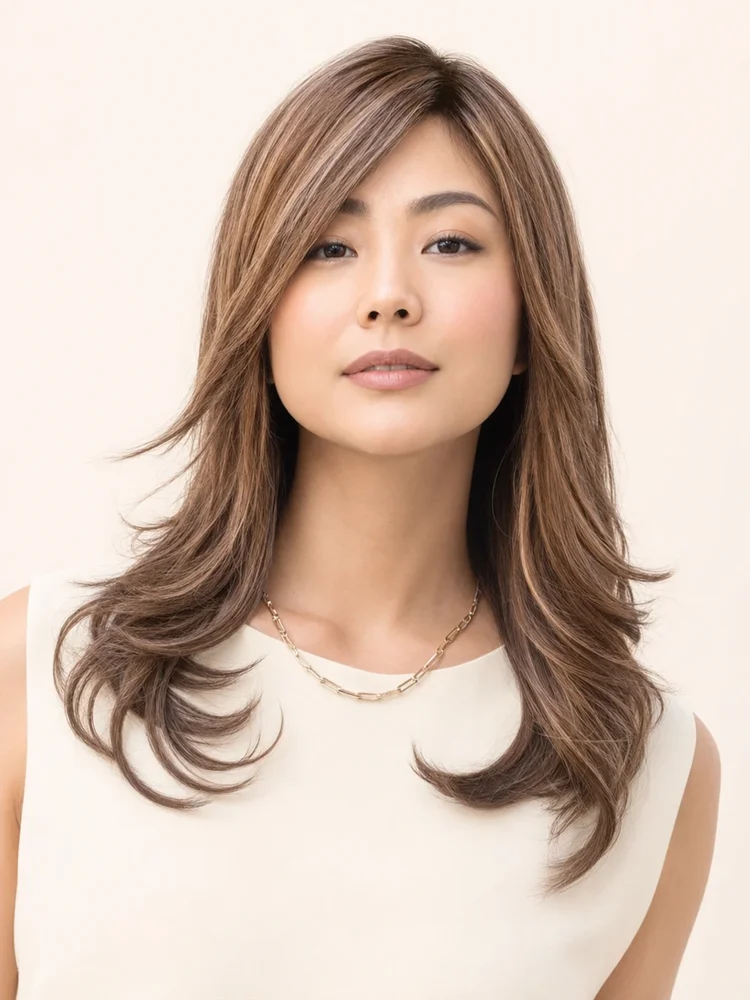
Hair topper vs wig: compare coverage and blending
The practical difference between a hair topper and a wig is the area each is designed to cover. This affects where the piece sits, what needs to blend around it and how you assess the result in a mirror. A useful comparison begins with your own coverage goal rather than with a label or a particular style photograph.
Hair topper vs wig: a quick comparison
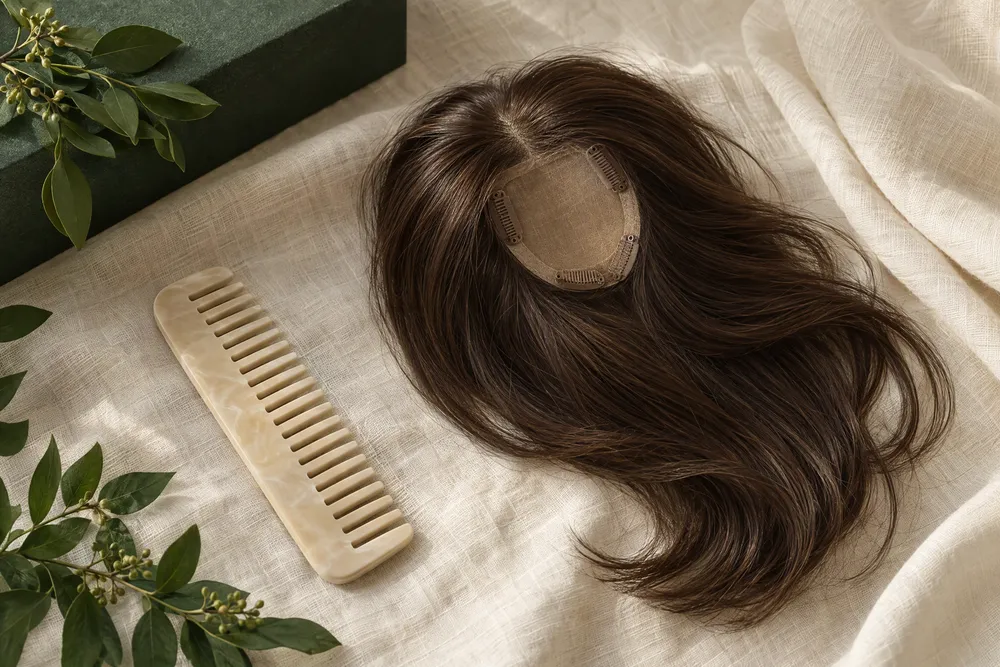
A topper adds hair over a selected zone while your own hair remains visible and contributes to the finished look. A full wig covers the head. A topper is therefore a focused option to compare for a part, crown or other limited area; a wig is worth considering when you want coverage that does not rely on blending around a local piece. The area and hairstyle you want—not the label alone—should guide the comparison.
For a part or crown area, compare hair topper for widening part with the precise zone you want to cover. The hair topper base size guide helps you consider whether the base covers that zone while leaving an edge that can blend. A base that is too small may miss the target; a larger one may put its edge where blending is harder.
Look at the shade and texture of hair that will remain visible, and consider the transition from more than one angle. A topper may let you retain your own length and shape if there is suitable hair around the selected area. See how to blend a hair topper with natural hair for more on this styling consideration.
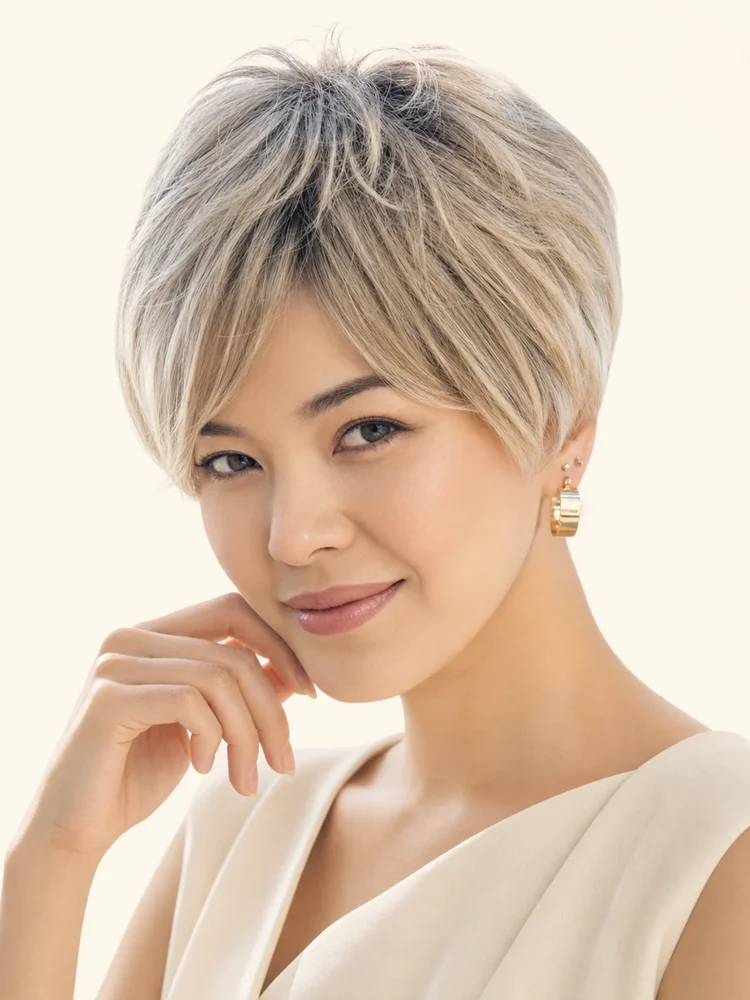
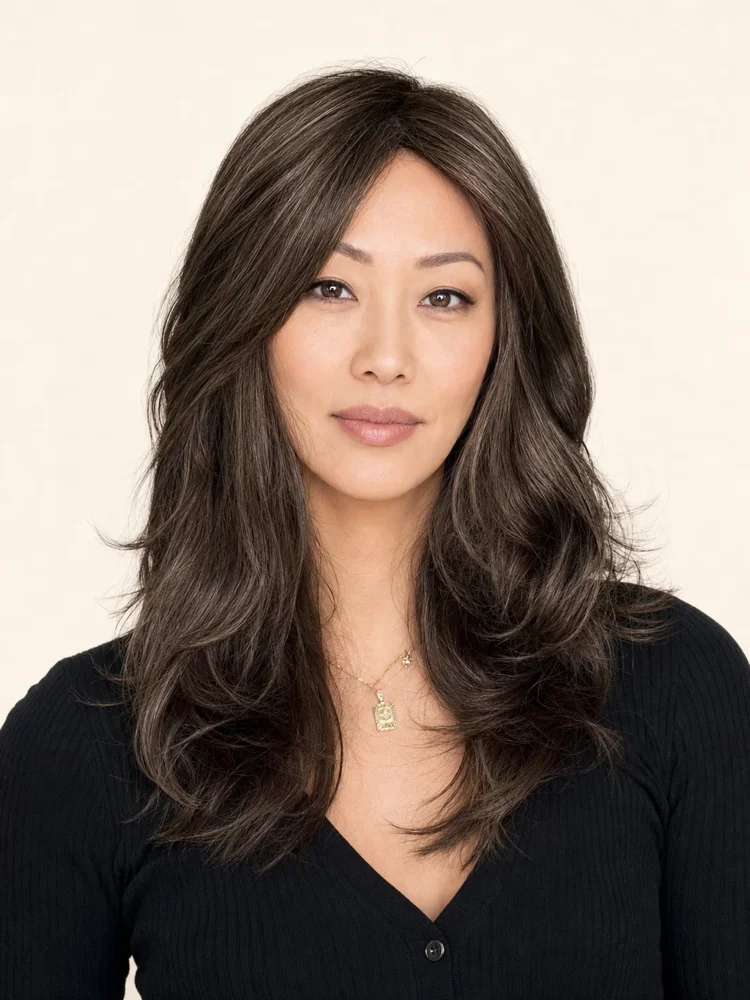
With full coverage, focus instead on the overall silhouette, front edge and how the style frames your face. Construction terms can describe different features, so check the particular item rather than assuming a term guarantees a result. Compare lace front vs full lace wig for two approaches.

How a topper attaches and works with your own hair
A topper is not simply a smaller wig: it has to sit over the chosen area and work with the hair left around it. Attachment, base size and the available blending hair all influence whether partial coverage matches your everyday styling preferences. Thinking through those points can make a topper-versus-wig comparison more specific.
When a topper may suit a local coverage need
A topper may suit a local coverage goal when you want your own hair to remain part of the style. Describe the zone—the part, crown or another area—then consider the surrounding hair’s length, texture and shade. If your goal extends well beyond one zone, compare a full wig rather than expecting a local piece to provide head coverage.
Attachment also matters. Ask how the specific piece is secured, put on and removed, and whether it works with the hairstyle you want. The amount and placement of hair around or beneath a base may affect attachment; do not assume one method suits every person or product. If the target area is larger than the base or there is little hair where it needs to sit, compare alternatives carefully.
Use three checks: map the area you want covered; see whether the base can cover it and leave a workable blend; and consider whether you are comfortable styling your own hair with the piece. These are fit and appearance questions, not medical tests. A reference hairstyle can help you explain which parts you want to keep as your own.
Length, density, texture, part placement and colour transition all affect the finished look. Compare the intended shape with your haircut and usual styling, including whether you wear it tucked back or tied up. A concept image is not proof of an exact colour match or current availability. For fibre and upkeep, read human hair vs synthetic wig care.

Questions to consider before choosing fuller coverage
A full wig may make more sense when the desired coverage extends over the head or when you prefer a style that does not rely on blending a piece into surrounding hair. Before choosing one, be clear about the coverage, fit and styling routine you want; those priorities are more useful than treating “full wig” as a single construction or finish.
When a full wig may be worth considering
Compare full wigs when you want head coverage, when the blend you have in mind is not practical with surrounding hair, or when you prefer a full-wig silhouette. These are reasons to explore, not rules. Someone wanting visible natural hair around a limited area may start with a topper; someone prioritising an overall, consistent style may compare full coverage. Comfort and styling preferences also matter.
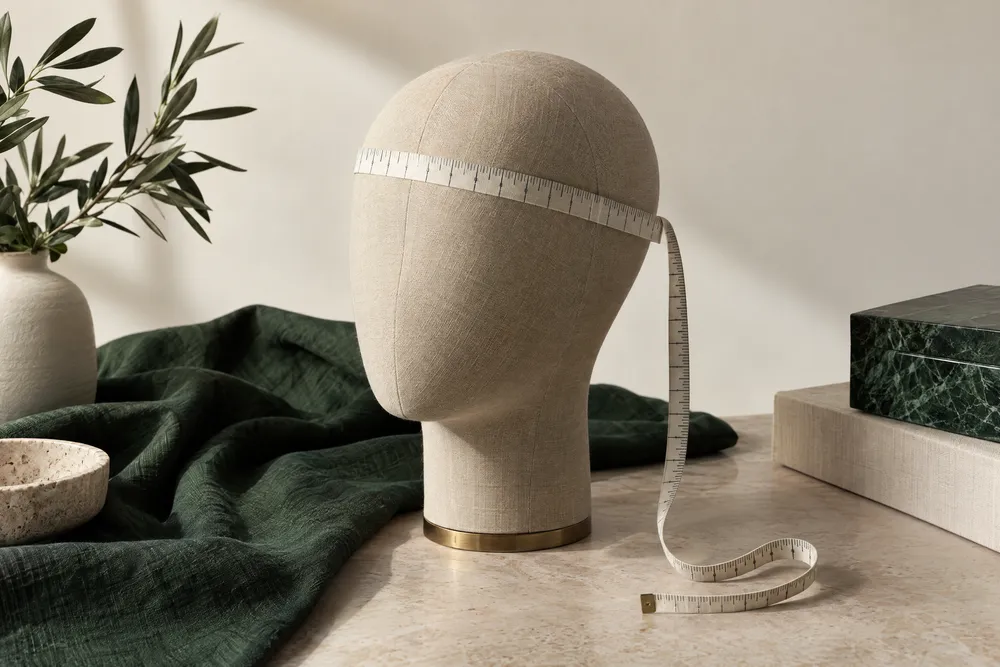
Ask how the specific piece is sized and what it covers. The American Cancer Society’s general wig guidance notes that sizing can vary by brand, so check measurements for the item rather than treating a size label as universal. Check the dimensions and fit of the individual design you are considering. For purchase routes, see custom vs ready-made wigs.
The reason for seeking coverage does not dictate the style. For a man’s crown area, see men's hairpiece for thinning crown; compare how much coverage you want, where the edge will sit and whether you want your own hair incorporated.
Material and upkeep are also relevant. Human hair and synthetic fibres can have different care needs; follow the specific product instructions rather than assuming heat tolerance. See human hair vs synthetic wigs. OWNSTRAND’s confirmed handmade custom human-hair reference options are HK$2,780 for 遞針旋 (turning-point simulated scalp), HK$3,280 for 全遞針 (full simulated scalp), and HK$5,680 for 瑞士網 (front-hairline emphasis). These local names are not automatic equivalents of foreign cap terms. Suitability and supply must be confirmed. Making takes about 3–5 working days, not including delivery; expected use of 2–3 years depends on care and is not guaranteed.
OWNSTRAND’s custom enquiry can include sample viewing and head measurement, followed by a return fitting with washing, cutting and blow-drying. This does not mean every style or colour is on hand. Our Kwun Tong salon is at Unit 2103, 50 Hoi Yuen Road, Kwun Tong, Hong Kong (利寶時中心). Ask about options, a quotation and supply arrangements before treating a style as selected.

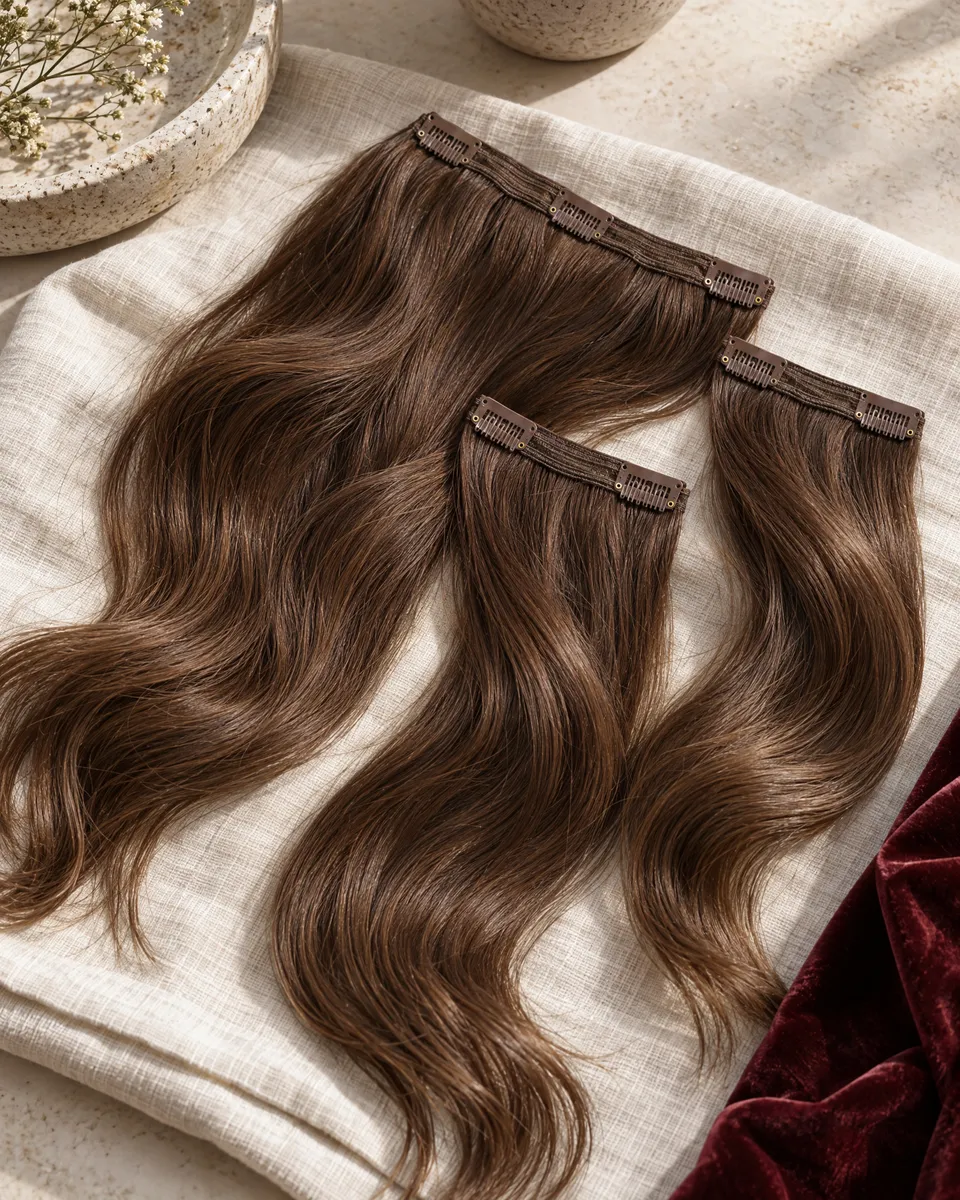

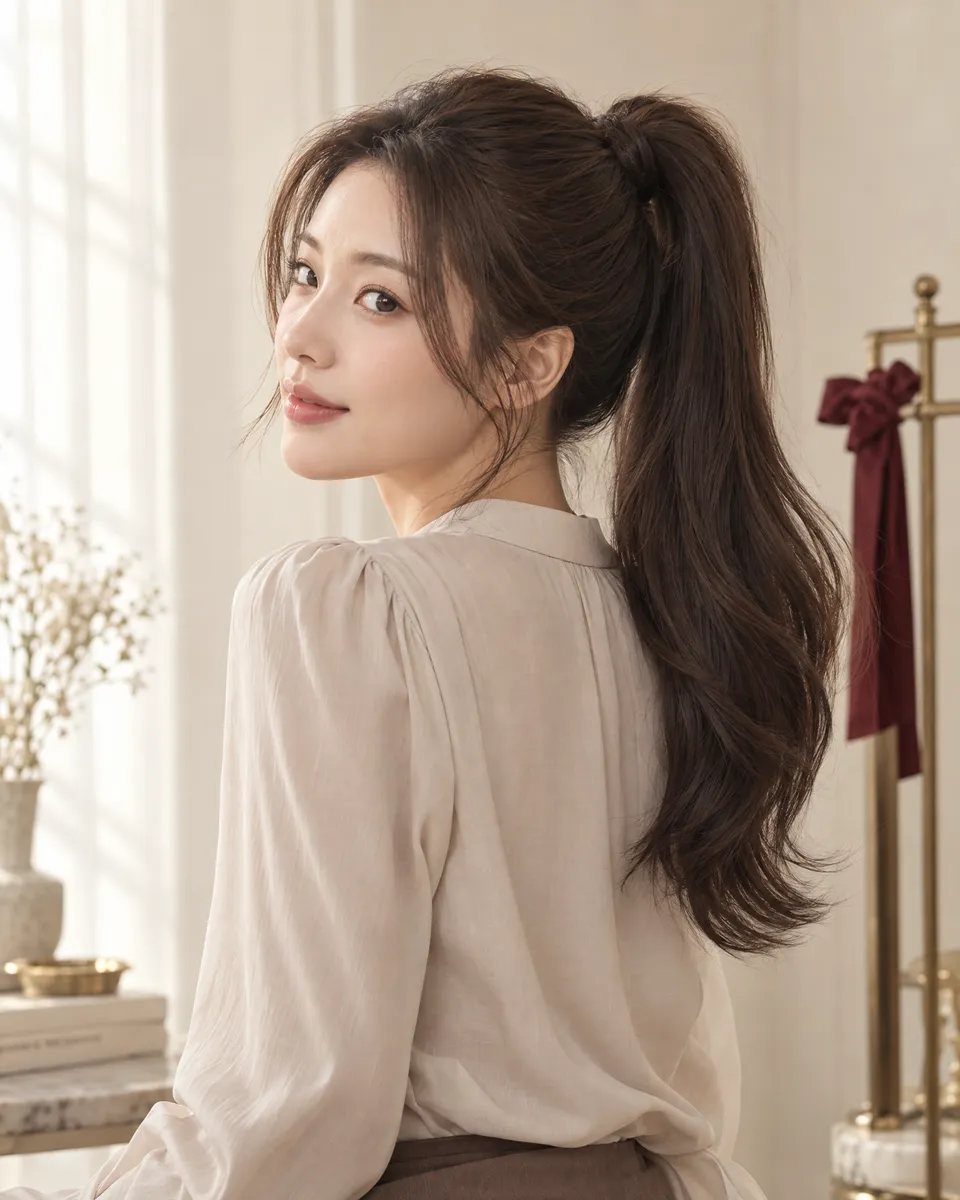
| What matters | Hair topper | Full wig |
|---|---|---|
| Coverage goal | A selected area such as the crown or part | Coverage over the head |
| Hair around the piece | Usually contributes to blending and the finished shape | Not needed to blend around a local base in the same way |
| Fit to think about | Base size relative to the target area and its edges | Overall fit and the coverage shape of the specific piece |
| Styling question | Can your own hair and the piece meet naturally in your preferred style? | Does the overall silhouette and front edge fit the look you want? |
| Helpful next step | Compare base size, attachment and blending | Compare cap details, material and care instructions |
Ask about coverage options on WhatsApp
Tell us the style you have in mind. We can discuss the options, quotation and arrangements before you decide.
Ask about coverage options on WhatsAppBefore you choose
What is the difference between a hair topper and a full wig?
A topper adds coverage to a selected area and is generally blended with existing hair. A full wig covers the head. Their coverage and blending requirements are different, so compare the area you want covered and whether you want your own hair to remain part of the style.
Is a hair topper or full wig better for thinning hair?
There is no one answer for everyone. A topper is intended for a more local area and depends on how the surrounding hair works with it; a full wig provides head coverage. Compare the area and hairstyle you want, and treat this as a styling choice rather than a medical recommendation.
When should I choose a hair topper instead of a wig?
Consider a topper when you want to cover a selected area and have suitable hair around it to blend with the piece. If you want coverage over the whole head, or do not want the look to depend on local blending, compare full-wig options instead.
Can I decide from a photograph whether a topper will blend?
A photograph can help communicate a preferred shape, but it cannot confirm fit, shade match or whether a particular item is available. Consider the area to cover, your own hair around the base and the intended style together; ask for item-specific details before making a decision.
Further reading
- American Cancer Society — Wigs for Hair LossSupports the general factual point in the full-wig section that wig sizing can vary by brand, so fit and measurements should be checked for the specific item. This is general selection guidance, not a product-specific claim or endorsement of OWNSTRAND.
Still weighing up your options?
Follow a related guide to make your next decision with clearer information.
Learn how to blend a hair topper with natural hair by checking placement, parting and density. Get styling tips and ask OWNSTRAND about options.
Compare lace front vs full lace wig coverage and styling, then learn which cap details to ask before choosing. WhatsApp us with questions.

Compare human hair vs synthetic wig care, from washing and drying to styling. Learn why fibre type matters and ask us about care for a specific wig.

Explore a men's hairpiece for thinning crown coverage, compare coverage needs and fit questions, then contact OWNSTRAND Wigs to ask about options and availability.