

What an Open Wefted Wig Cap Means
The phrase describes a way of assembling the wig base, not a complete specification for every part of it. A useful product description should make the arrangement understandable enough to compare with another cap.
Open Wefted Wig Cap: Read the Construction Description
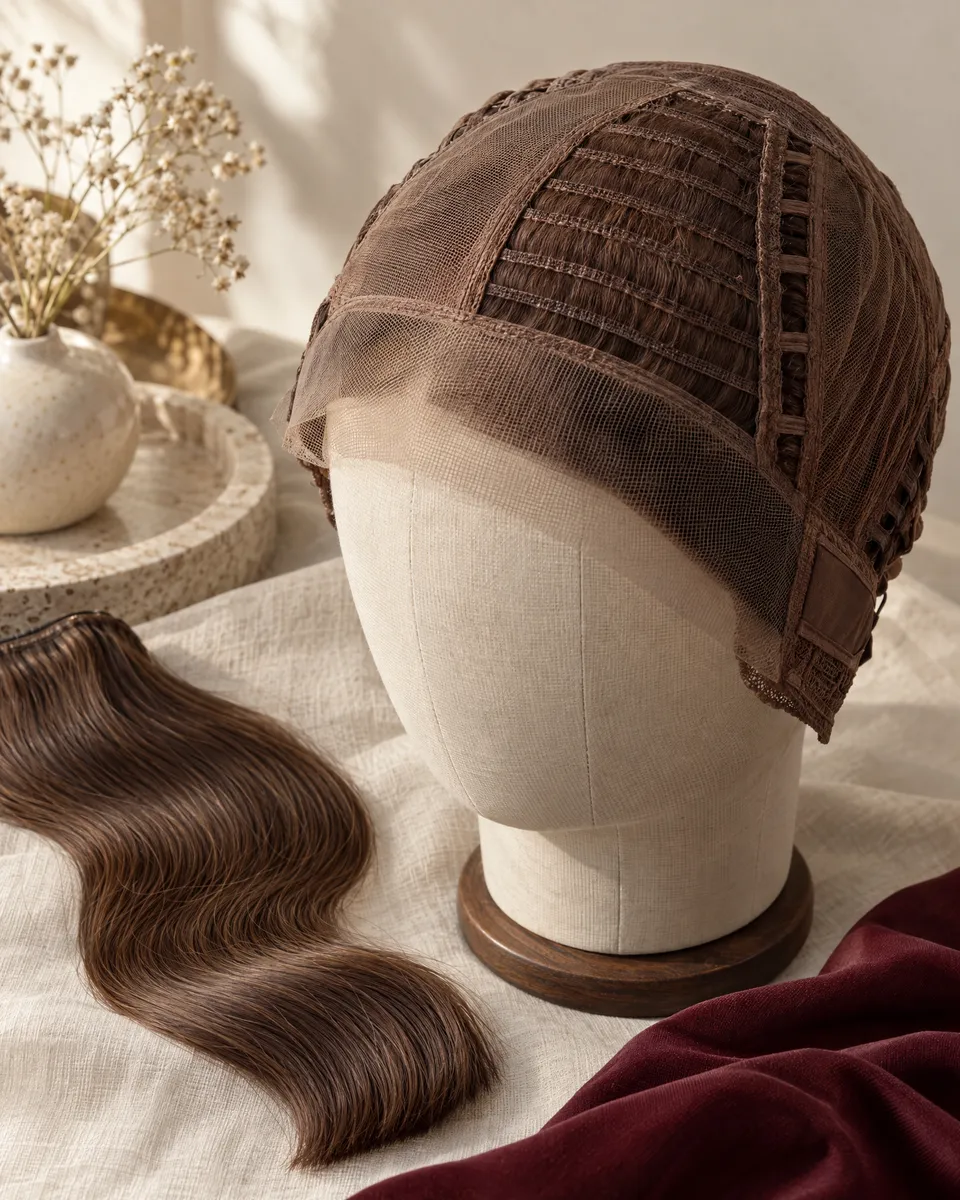
A weft is a row or strip of hair attached to a base. In an open wefted wig cap, weft rows are joined to a cap structure with sections left open between or around them. The exact layout can differ: descriptions may not tell you the same amount about row direction, spacing, perimeter, crown or front. Treat “open wefted” as a useful starting term, then look for the construction details that let you picture the actual cap rather than infer them from the name.
When a listing says “open cap wig” or “wefted wig cap”, look for a diagram or a plain-language description of where the wefts are placed and which areas are open. Ask whether the front edge, parting area and crown use the same construction as the rest of the cap, or whether those areas are finished differently. This is not about finding one universally best cap. It is about knowing what is being compared, since an open section at one part of a cap does not establish the design of every other part.
Open sections are a construction feature, not a guarantee of comfort; experience depends on the full design, fit and wearer. For Hong Kong’s warm, humid months, compare coverage with a wig for hot humid weather without assuming a label guarantees a cooler feel. A PU wig cap is a separate construction topic, not a synonym for open wefted.
Check fit separately: an open layout cannot establish whether a cap matches your measurements or coverage preference. Follow the maker’s sizing instructions and see wig cap sizes. The American Cancer Society notes that sizing can vary by brand, so check the exact maker’s fit information; this is general selection guidance, not an endorsement or individual recommendation.
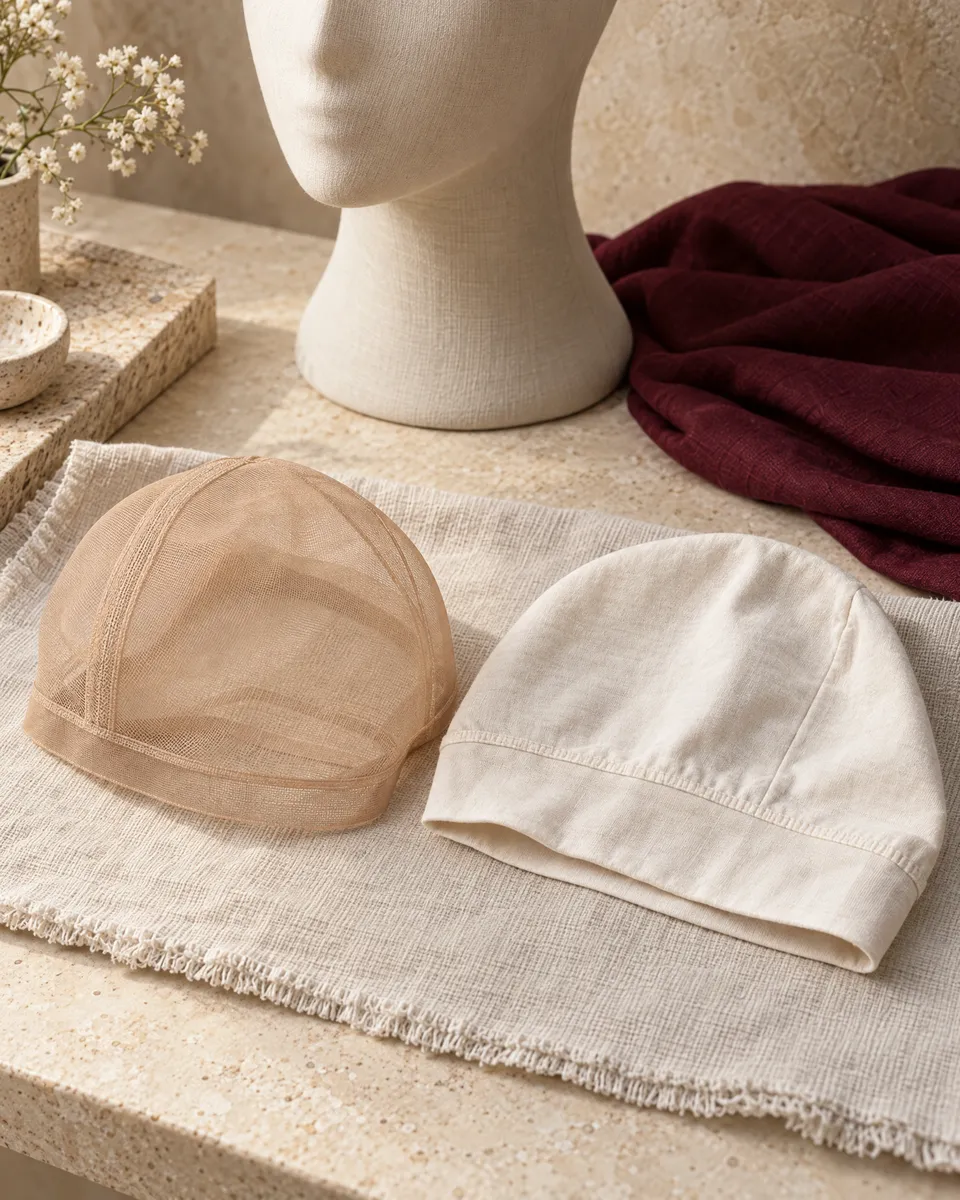
How Wig Cap Construction Terms Can Differ
The same short label can be used differently by different sellers. Separate the construction method from the finished layout, and compare the stated features rather than treating familiar terms as a standardised classification.
Compare Open Cap, Capless and Machine-Made Terms
“Open cap” often suggests open sections, while some sellers use “capless” for an open or lightweight-style cap. Capless does not mean there is no cap, and it is not a reliably interchangeable technical name for open wefted. Ask which sections are wefted and what forms the cap rather than treating either label as a diagram.
“Machine-made” describes a method, not whether a cap is open wefted or how its front and crown are built. An open-wefted description identifies wefts and open sections but not necessarily how every other component is made. Ask what each term refers to on that item.
Other construction names raise different questions. For another comparison, see monofilament wigs are another construction topic; ask which cap area uses that design. A hand tied wig refers to a different approach, while a full lace wig and a silk top wig are distinct comparison topics, not automatic equivalents or opposites of open wefted. Ask whether each term describes the whole cap or one section.
Compare descriptions by identifying the exact term, the area it describes and the construction elsewhere. A photo may help with visible details but may not show the full cap interior. Do not infer fibre, fit, durability, availability or comfort from a construction label; each needs its own product-specific information.

Questions to Ask When Comparing Wig Caps
A few focused questions can turn broad labels into details you can weigh against your own priorities. Compare like with like, and keep construction, sizing and care separate rather than asking one term to answer everything.
When to Ask About a Specific Wig Cap Design
Start with three checks: construction (where are the wefts and openings, and how are front, crown and perimeter made?); terminology (what does this seller mean by “open cap”, “capless” or “machine-made”, and which areas does it describe?); and fit (what does the maker’s sizing information say?). Use these questions for listings or a sample discussion.
Relate the answers to your preferred parting or style by asking about the stated front and crown design; do not infer it from “open wefted”. Follow care instructions for the exact item and check before using heat if permitted methods are unstated. A construction term alone cannot establish heat tolerance or care requirements.
For each candidate, note the exact wording, the areas it describes, fit details and any unanswered question. This avoids deciding on an adjective while a practical point remains unclear. Confirm important details for the specific model; do not assume an answer applies to another size or colour.
OWNSTRAND Wigs discusses selection and handmade custom human-hair enquiries at Unit 2103, 50 Hoi Yuen Road, Kwun Tong, Hong Kong (利寶時中心). Local custom-base names are not automatic equivalents of foreign cap terms. WhatsApp +852 5933 4697 is for enquiries, quotations and supply confirmation; it does not itself place an order. Ask about a ready-made item’s construction and supply before relying on its availability.



| Term in a description | What the wording can indicate | What to check for the specific wig |
|---|---|---|
| Open wefted / wefted cap | Weft rows with open sections. | Check row and opening placement; front, crown and perimeter finish. |
| Open cap | Often suggests open areas; usage varies. | Ask for the actual layout, not just the label. |
| Capless | May mean an open or lightweight-style design; not literally cap-free. | Ask what the seller means for this wig. |
| Machine-made | A method label, not a full cap-layout description. | Check whether it is open wefted and how areas are made. |
| Hand tied | A different construction approach; details vary. | Ask which sections are hand tied and how the rest is made. |
Ask about a wig cap (enquiry only)
Tell us the style you have in mind. We can discuss the options, quotation and arrangements before you decide.
Ask about a wig cap (enquiry only)Before you choose
What is an open wefted wig cap?
It uses rows of hair wefts with open sections. Layouts vary, so check row and opening placement and how the front and crown are finished. The label alone does not establish fit or comfort.
Is an open cap wig always the same as a capless wig?
No. Sellers may use both terms differently, and neither is a complete standardised description. Ask what each means for the specific wig and compare its stated construction.
Does machine-made wig cap mean open wefted?
No. “Machine-made” describes a method; “open wefted” describes wefts with open sections. Ask whether the specific wig uses that layout and how its front and crown are constructed.
How does an open wefted cap differ from a hand-tied cap?
They describe different approaches: wefts with open sections versus a hand-tied method. A wig may use different approaches in different areas, so ask which sections each term describes.
Further reading
- American Cancer Society — Wigs for Hair LossThe source notes that wig sizing can vary by brand. The article uses this general selection fact to advise checking the exact maker’s fit information; it does not imply endorsement of OWNSTRAND or suitability of a particular wig.
Still weighing up your options?
Follow a related guide to make your next decision with clearer information.
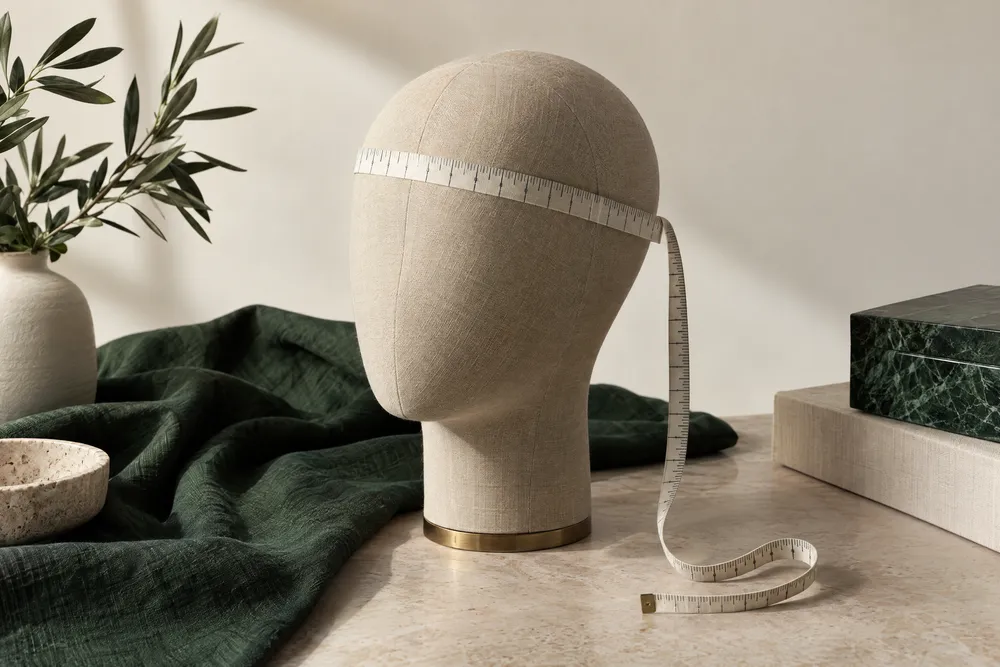
Learn about wig cap sizes and how to measure head circumference for a wig. Use your measurement as a starting point, then check the brand chart and fit.

A silk top wig can be described by its top construction, but details vary by model. Compare terms with lace or monofilament tops, then ask OWNSTRAND about a style.
Explore full lace wig cap construction, coverage and fitting considerations. Compare it with lace front options, then contact OWNSTRAND Wigs to ask about styles.
Explore monofilament wigs and learn how mono sections affect parting and crown coverage. Compare construction details and ask OWNSTRAND about a style.