
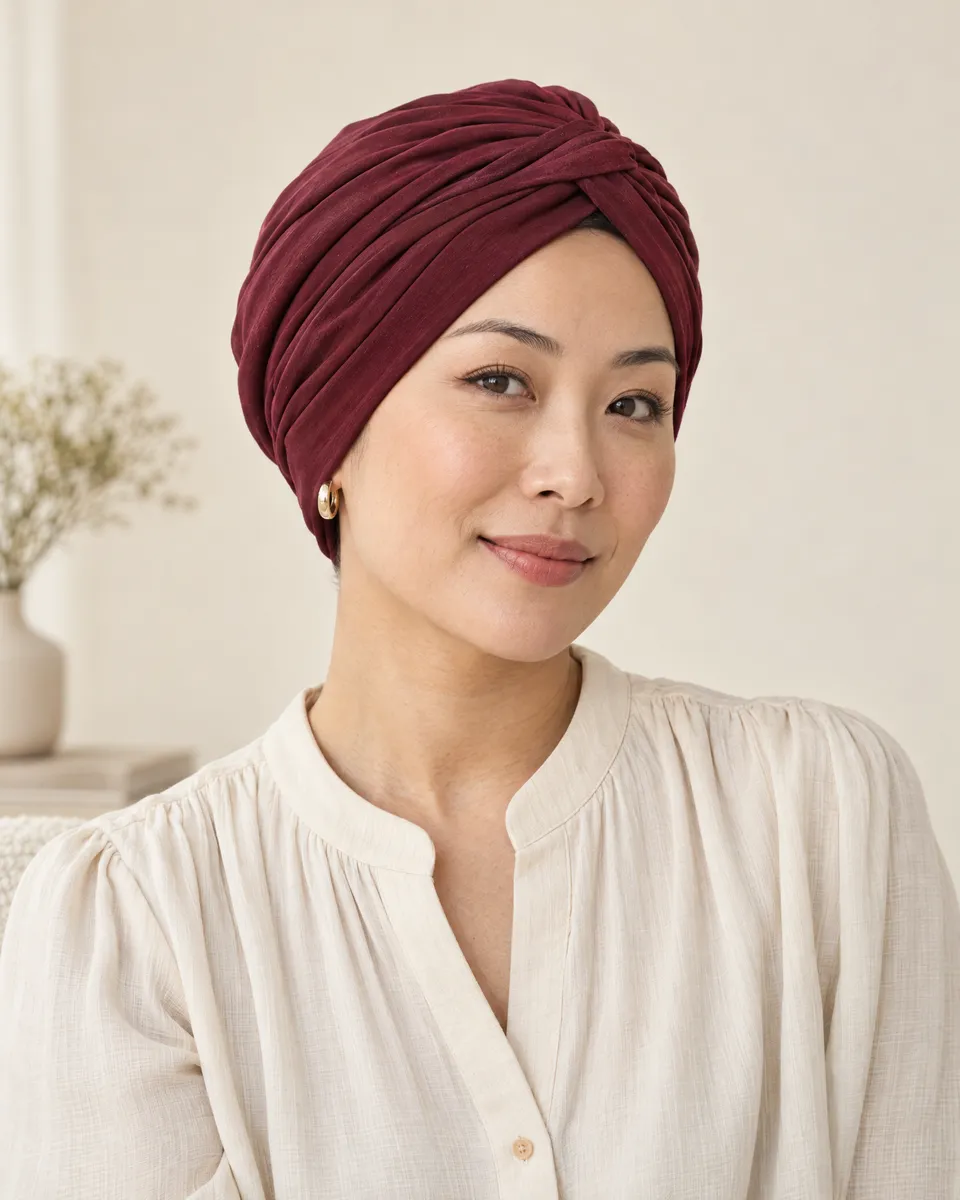


Choosing headscarves for chemotherapy
A scarf lets you choose the drape, knot and amount of fabric. Compare how it covers the areas you prefer and whether styling it feels manageable.
Headscarves for chemotherapy: coverage and styling
A chemo headscarf can be tied in different ways, while a shaped chemotherapy head wrap may already have a defined outline. A square scarf usually needs folding and tying; a long wrap offers fabric to wind around the head. If you are seeking a headscarf for hair loss, check whether it covers the crown, sides and nape as you prefer, and whether its edges stay in place. These style categories do not confirm a specific item's construction or availability.
Picture when you would wear it: at home, on a short trip or for an occasion. A draped cancer head scarf looks different from a close-fitting headwrap for hair loss. A scarf allows more styling control; a ready-shaped wrap may need fewer steps. The wig before chemotherapy guide helps compare headwear with preparing for a wig.
Decide whether you want full coverage or to leave some hair visible. Do not assume every scarf is lined, stays secure or suits a sensitive scalp; check the exact style. For another hair-loss context, alopecia wigs covers cosmetic wig choices.
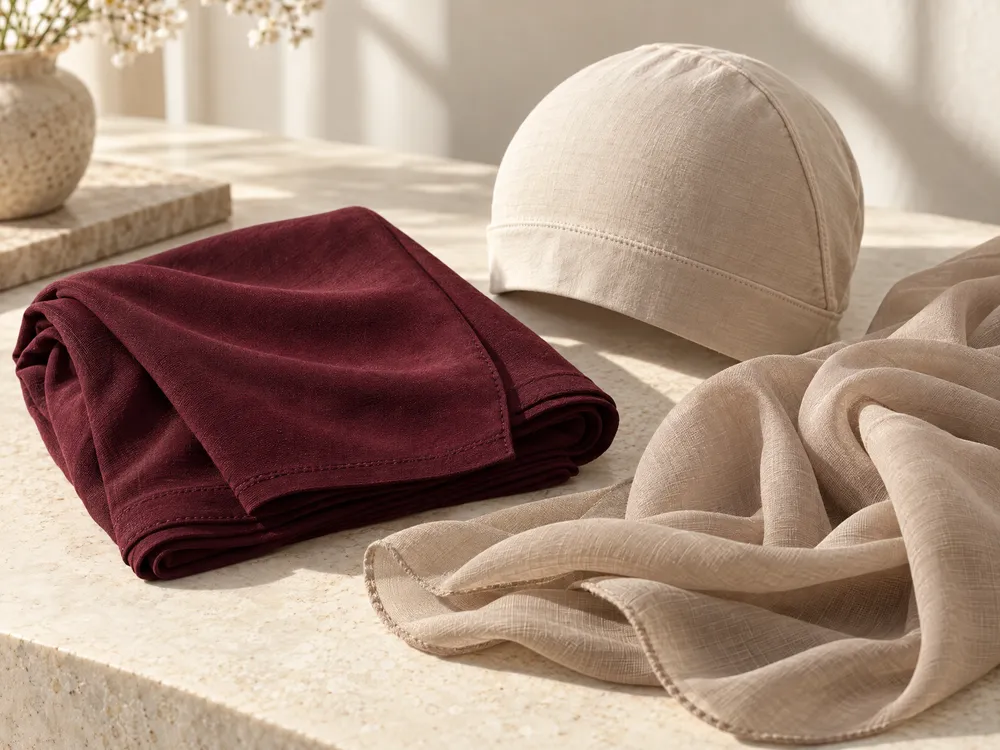
How chemo hats compare with scarves
Caps and scarves can both be everyday coverings, but differ in how much styling they require. Compare the shape and fit rather than relying on a label.
Chemo hats as an everyday headwear option
People use terms such as chemo caps, hats for cancer hair loss and cancer treatment hats for everyday headwear during treatment-related hair loss. A soft cap or chemotherapy turban may take less arranging than a scarf, while a scarf lets you shape the drape. Turban for hair loss does not specify an item's fabric, lining, stretch, fit or coverage; check those details for the style you are considering.
Fit matters because less hair can change how familiar hats sit. The American Cancer Society’s *Choosing the Right Hat* notes that a hat can fit and feel differently without hair, and recommends considering fit and comfort when trying one. Check for gaps, pressure points and whether it stays in place instead of assuming your usual size will feel the same. This general guidance does not verify any specific product or its suitability.
A ready-shaped cap may suit you if you want a repeatable way to cover your head; a scarf may suit you if you enjoy changing the folds. When trying a style, check whether its edges interfere with glasses and whether it is easy to put on and remove. No design is guaranteed to stay comfortable all day.
A hat or turban is not a scalp-cooling cap or treatment. For a separate full-head coverage option, see women's wigs; for a partial-coverage hairpiece, see toupee.
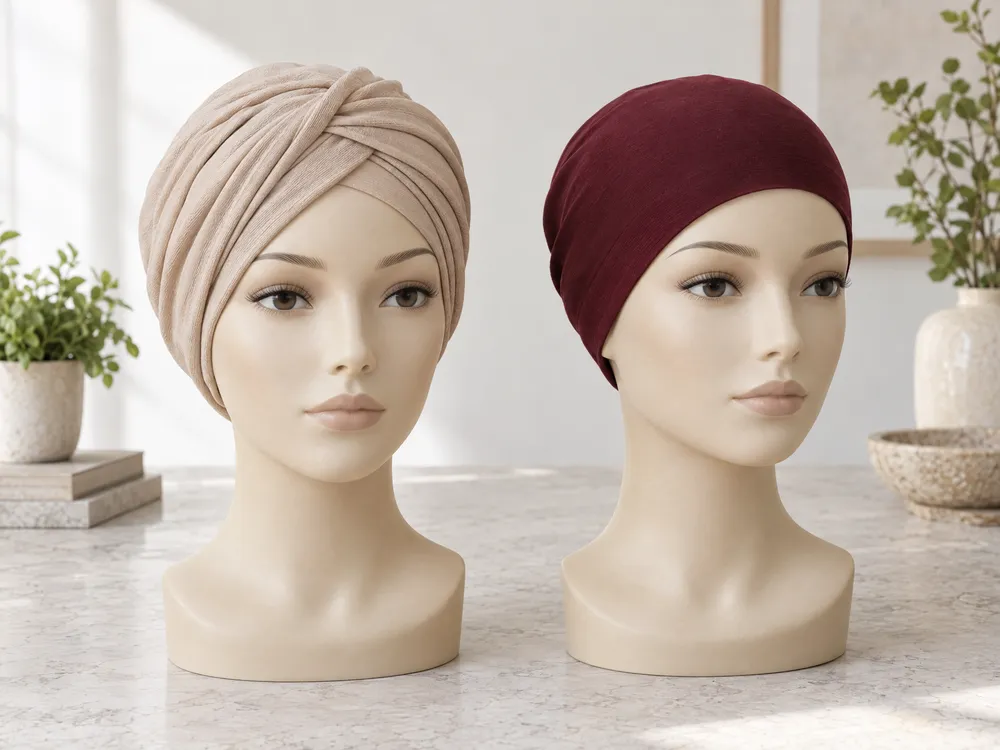
Materials and wearing considerations for head coverings
Because a head covering touches the head, check its material and construction rather than relying on broad labels such as soft or breathable.
Questions to ask when choosing a head covering
Ask what the fabric is, whether it is lined and where seams or labels sit. A soft-looking exterior does not tell you how the inside feels. If you have a sensitive scalp or skin concern, do not assume an item will suit you or is allergy-free; request its composition and construction details. The wig for sensitive scalp during chemotherapy guide discusses wigs; medical questions belong with your care team.
Check the shape and adjustment: is a cap elastic, fastened or fixed in shape? For a scarf, ask about dimensions and how it is intended to be tied. If viewing a sample, check coverage at the forehead, temples, ears and nape, and whether it shifts as you turn your head. Otherwise, ask for a clear description rather than assuming fit.
Follow the maker’s care instructions for the specific item; washing needs vary with fibre, lining and construction. Advice for another product may not apply. synthetic wigs for cancer patients discusses another appearance option, not fabric headwear. Families can read wigs for children with cancer hair loss, while assessing fit for the individual child.
Use three checks: coverage (which areas it reaches), feel and fit (what touches the scalp and how it stays in place), and care (instructions for that item). OWNSTRAND can answer enquiries about details and whether supply can be confirmed. WhatsApp +852 5933 4697 is for enquiries and quotations; a message does not confirm stock or place an order.



| Headwear format | How you arrange or wear it | Useful comparison | Ask about the specific item |
|---|---|---|---|
| Square or rectangular scarf | Fold and tie or drape the fabric yourself. | More choice over folds and the final outline; requires hands-on arranging. | Dimensions, fabric, edge finish and whether you can see a sample. |
| Long wrap or headwrap | Wind or wrap the length around the head, depending on its shape. | Can offer a wrapped look without starting from a square; the way it holds depends on design. | How it is secured, how much area it covers and any care instructions. |
| Soft cap | Put on as a shaped covering rather than tying fabric. | May be simpler to put on; compare edges, pressure and gaps when worn. | Lining, stretch or fastening details, sizing and material composition. |
| Turban-style headwear | Wear the pre-shaped outline, if the item is made in that format. | Can reduce styling steps; the term alone does not specify construction or fit. | Whether it is pre-shaped, coverage, inner finish and how to care for it. |
Ask about headwear styles and availability on WhatsApp
Tell us the style you have in mind. We can discuss the options, quotation and arrangements before you decide.
Ask about headwear styles and availability on WhatsAppBefore you choose
What headwear can I consider during chemotherapy-related hair loss?
Compare scarves, wraps, caps and turbans as everyday headwear. A scarf gives more control over folding; a shaped cap may need less styling. Check preferred coverage, fit and material for the specific style.
Are chemo hats the same as scalp-cooling treatment?
No. Here, chemo hats means hats or caps worn as everyday head coverings for appearance. They are not scalp-cooling equipment or treatment, and this page does not describe or offer scalp cooling.
How can I choose a headscarf for hair loss?
Choose your preferred coverage and decide whether to tie fabric or wear a shaped wrap. Check the exact item’s fabric, inner finish, edges and care instructions. For scalp or skin concerns, ask your care team rather than treating a general description as medical advice.
Can I check whether a particular chemo cap or turban is available?
Yes. Ask OWNSTRAND whether the particular style can be supplied. WhatsApp +852 5933 4697 is for enquiries and quotations; a message is not an order or stock confirmation.
Further reading
- American Cancer Society — Choosing the Right HatSupports the specific general statement that a hat may fit and feel differently after hair loss and that fit and comfort are worth checking when trying a hat. It is not evidence about OWNSTRAND products or a medical outcome.
Still weighing up your options?
Follow a related guide to make your next decision with clearer information.
Compare a wig or scarf for hair loss with hats and other headwear. Review coverage, styling and everyday wear considerations, then ask OWNSTRAND about options.

Explore alopecia wigs for cosmetic coverage, with practical notes on fit, materials and everyday choices. Contact OWNSTRAND to ask about options.

Compare synthetic wigs for cancer patients with human hair options during treatment, plus care and selection points. Ask OWNSTRAND about styles and availability.
Wigs for children with cancer hair loss: explore fit, comfort and style questions, then confirm suitable options and arrangements with OWNSTRAND in Hong Kong.