


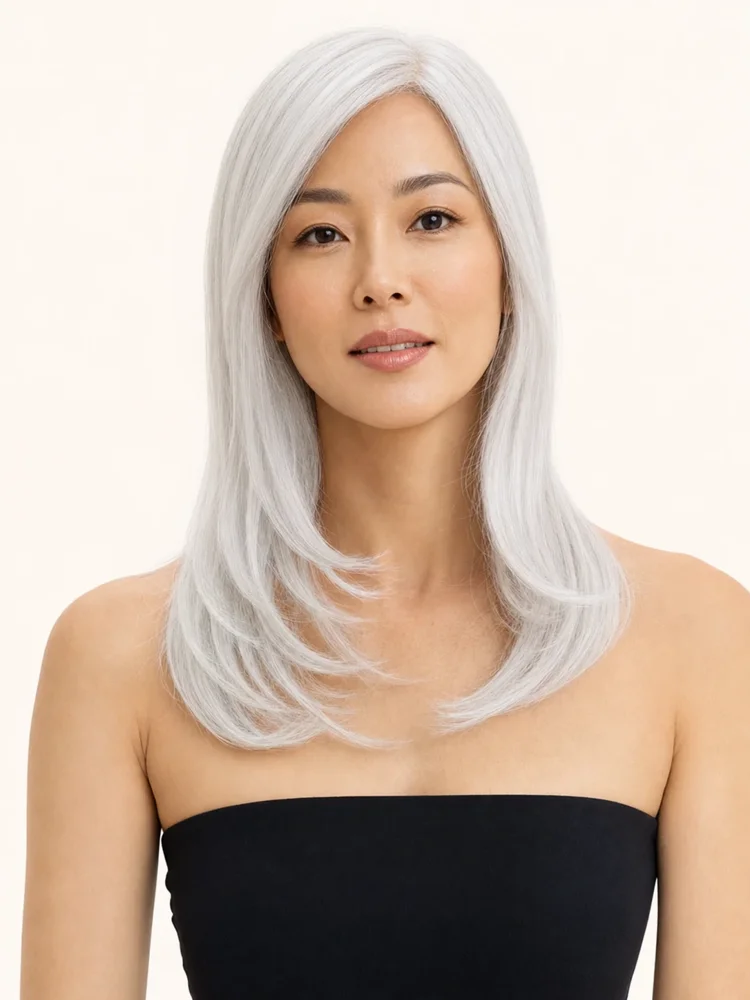
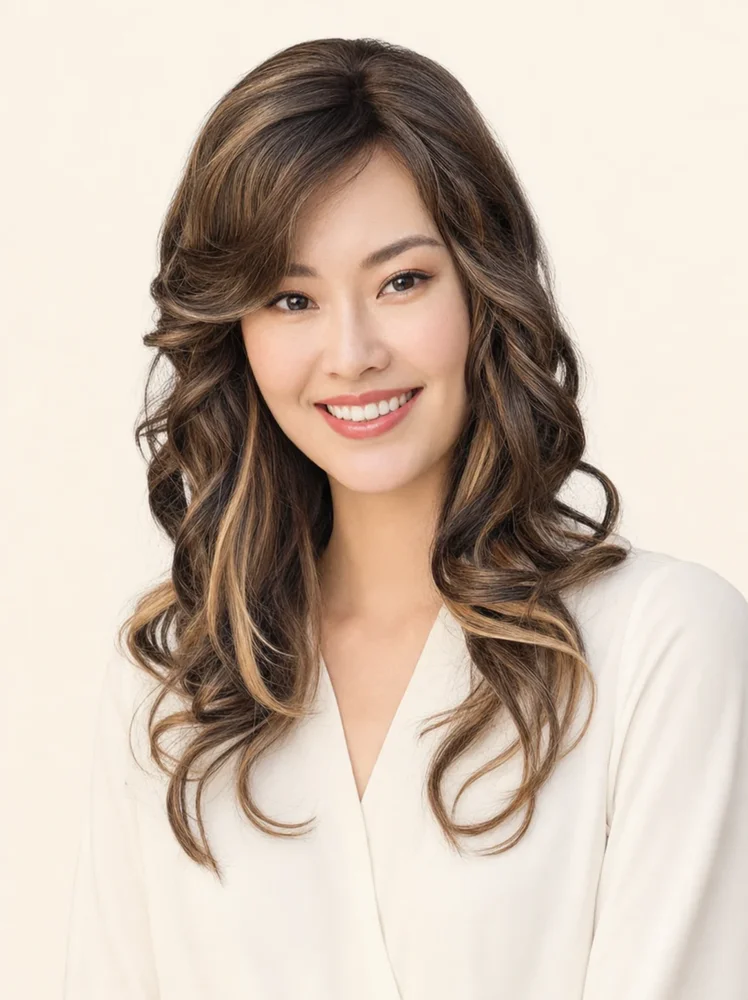
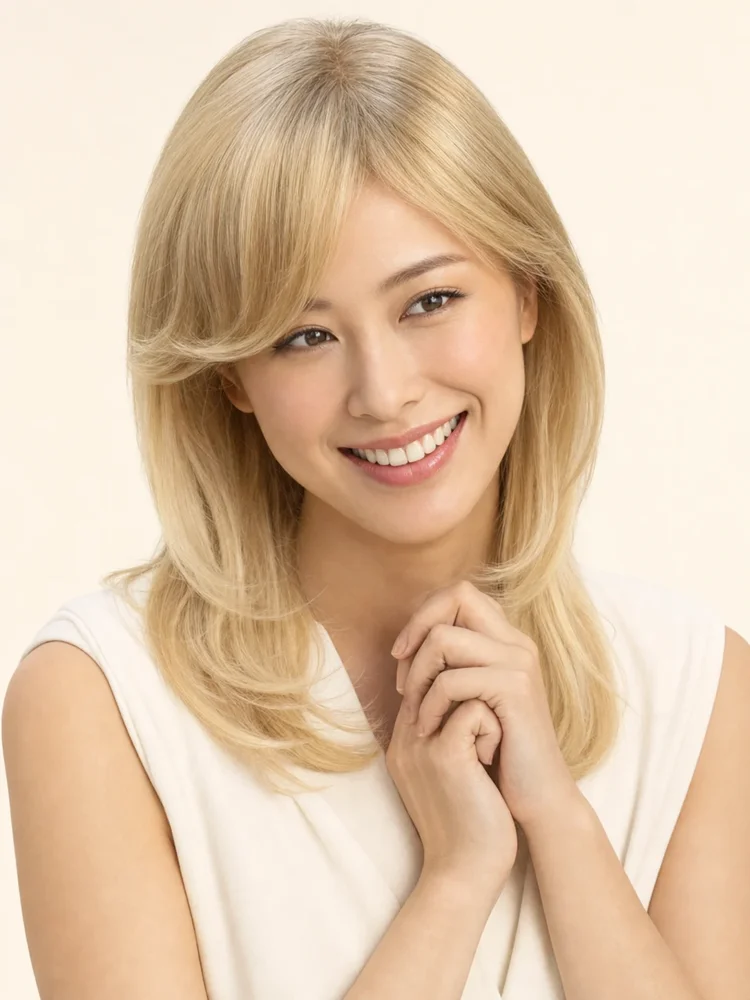
Hair topper for widening part: compare part coverage
For a part that appears wider, look at its length and position as well as its apparent width. A small part coverage hair topper may be enough when the visible concern is a short line; a longer area may call for a base that extends beyond the part so the edges can sit among surrounding hair. Match the coverage to the actual area, not a broad assumption about how much hair you need.
Check how a hair topper for widening part sits along your part
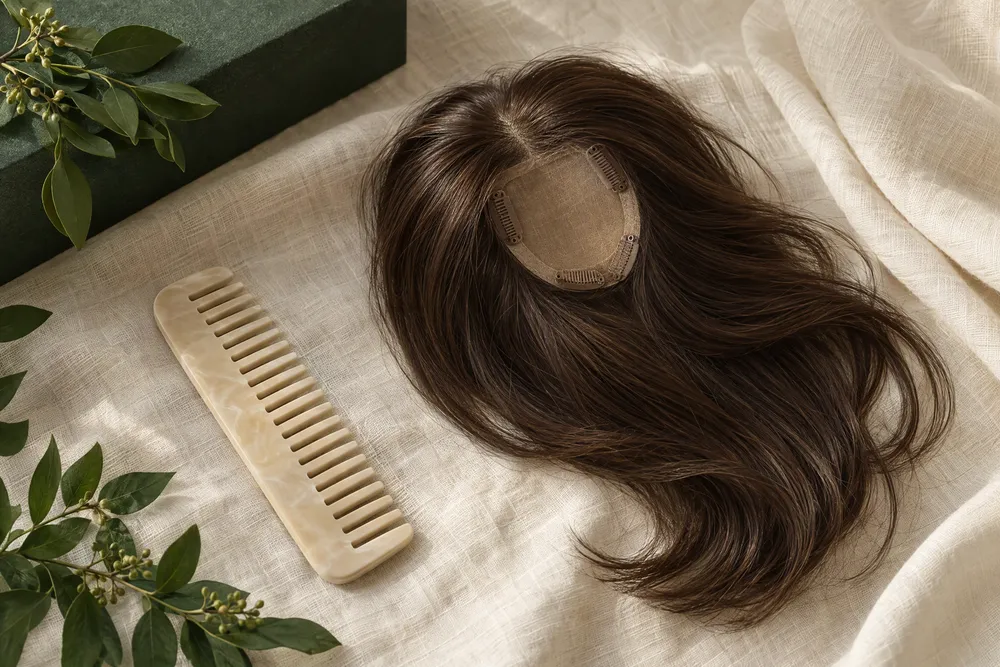
Part your hair as usual and note where the line begins and ends, and whether visible scalp continues into the crown. A hair topper for a widening part should be considered in relation to that whole visible zone. If the base only covers the centre of the line, the uncovered ends may remain noticeable. If the base is much broader than the area, the surrounding hair may need to do more work to conceal its edges. This is why comparing the base footprint with your usual part is more useful than relying on labels such as “small” or “natural”.
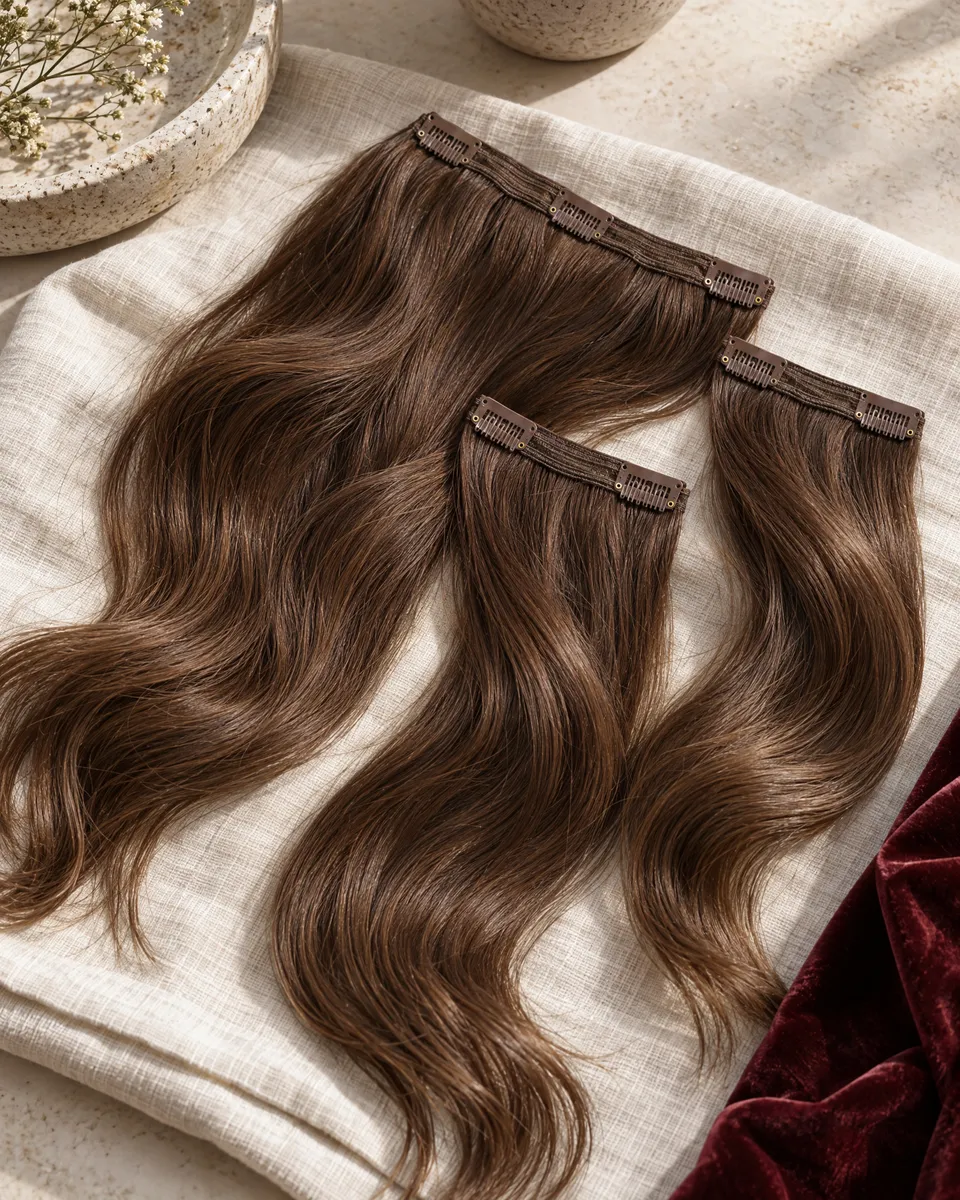
A topper for thinning part coverage may add visual density, depending on its design and the hair available for blending. Consider where attachment points would rest. Construction, dimensions and fixing details vary, so ask for the exact specifications rather than assuming every piece attaches or parts in the same way.
If the coverage question is mainly about the top, start by comparing hair toppers with options designed for broader coverage. A hair topper vs wig comparison can clarify focused versus whole-head coverage. This is cosmetic selection guidance, not clinical advice.

Hair topper for low volume: consider crown fullness
Low volume can look different from a widening part. You may want lift over a compact crown area, or a broader visual change across the top. A hair topper for low volume should be compared by the area it covers and the amount of surrounding hair that can be blended over or around its edges, not by an assumption that more coverage always creates a better result.
Compare a hair topper for low volume with your coverage needs
A crown volumizer for women may suit someone seeking a fuller-looking top while keeping a familiar hairstyle. If your part remains the main concern, focus on a piece that addresses that line. If the whole crown looks flat, compare how far a base extends towards the sides and back. A hair piece for extra volume on top may change the silhouette more than a narrow part-covering piece, so picture the outline from the front, sides and back before choosing.
Fine or flat hair is a styling context, not a diagnosis. A topper to add volume to fine hair may create visible fullness, but how convincing it looks depends on texture, colour, length and the balance between the topper and your own hair. Very different wave patterns or lengths can make the join more apparent. A consultation can focus on appearance and product details, not assess why hair has changed.
Some people search for a hair topper for postpartum hair loss or a hairpiece for postpartum thinning because they want cosmetic coverage after pregnancy. A postpartum hair topper is not a treatment and this page cannot assess hair changes or offer health advice. If you have concerns about changes in your hair or scalp, speak with an appropriate health professional. For appearance-related selection, keep the discussion practical: what area you want covered, how the piece blends, and whether its specifications and supply can be confirmed.

Choose coverage that blends with your own hair
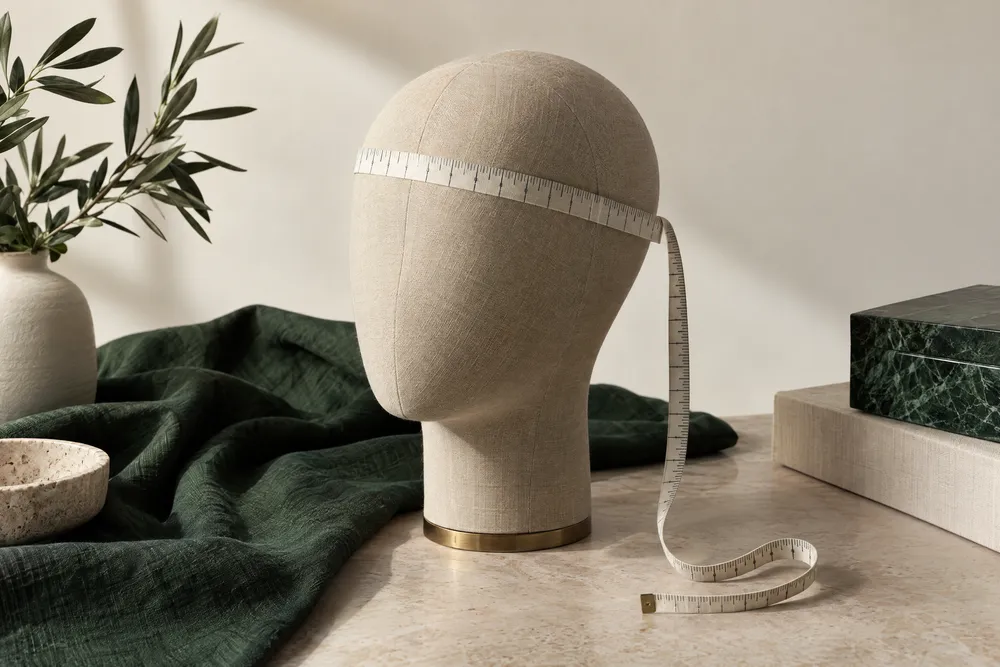
Coverage only looks coherent when the base and hair work with your existing style. Compare base size, colour and texture together. Before selecting, review the relevant hair topper base size guidance and ask what measurements or product specifications apply to the particular piece you are considering.
Consider base size, colour match and blending
Base size is a coverage decision as much as a fit detail. A base should address the area you want to cover while leaving enough of your own hair around it for a natural-looking transition, where the design requires blending. A larger base does not automatically mean better coverage. Compare its dimensions with your part or crown, and ask how its edges and attachment method work. For more on transition and styling, see how to blend a hair topper with natural hair.
Colour matching is not just a question of choosing a shade name. Compare the topper with the hair around the intended placement, including any variation from roots to lengths or grey strands. A concept colour image can help start a discussion, but it cannot establish an exact match or confirm that a shade is available. If your own hair has several tones, ask how the particular piece’s colour and texture are represented and what can be checked before deciding.
Fibre affects appearance and care. Compare a human hair topper with a synthetic hair topper using the exact item’s specifications; styling and care rules may differ. A monofilament hair topper is a specific construction term, not a synonym for every base. OWNSTRAND’s local custom-base terms should not be translated into foreign construction labels without item-specific confirmation.
Other guides cover related questions: a men's hairpiece for thinning crown and alopecia wigs address different contexts. They do not establish suitability for everyone. Confirm dimensions, construction, colour, attachment details, price and supply for the specific item.


| What you notice | Coverage to compare | Blending question to ask |
|---|---|---|
| A part that looks wider | Whether the base covers the length of the visible part, including its ends | Will surrounding hair blend around the base edges at my usual part? |
| Low volume concentrated at the crown | How far the base reaches across the top and towards the back | Will the piece add the visual fullness I want without an abrupt change in silhouette? |
| Fine or flat hair across a wider area | Whether a broader base is needed, and what hair remains for blending | How do texture, length and attachment details work with my own hair? |
| A desire for appearance coverage after pregnancy | The specific area and style, without assuming a medical cause or outcome | Can specifications and supply be confirmed for this individual piece? |
Ask about topper options on WhatsApp
Tell us the style you have in mind. We can discuss the options, quotation and arrangements before you decide.
Ask about topper options on WhatsAppBefore you choose
Can a hair topper cover a widening part?
A topper may provide visual coverage over a parting area; a hair piece to cover a wide part should extend across the visible area you want softened. Compare the base footprint with the full visible length of the part and consider whether your own hair can blend around its edges. A narrow piece may suit a focused area, while a longer visible zone may need different coverage. The result and suitability depend on the individual style, its specifications and how it works with your hair.
Can a topper make fine or flat hair look fuller at the crown?
A hair topper for more volume at the crown can add the appearance of fullness on top. Compare the crown area you want to cover with the base size, then consider colour, texture, length and the surrounding hair. A hair piece for extra volume on top will not necessarily blend like a piece chosen only for a widening part. Ask about the exact style rather than assuming a particular result.
Can I use a hair topper after pregnancy?
Some people explore a hair topper for postpartum hair loss or postpartum thinning for appearance-related coverage. This guide does not assess postpartum hair changes, diagnose a cause or offer medical advice. If you are concerned about those changes, consult an appropriate health professional. For a cosmetic choice, discuss the desired coverage, product suitability and availability for the individual style.
What should I compare before choosing a topper?
Check 3 things: whether the base covers the area you actually want to soften; whether colour, texture and length blend with the hair around it; and whether attachment details and specifications suit the intended placement. Confirm the exact item, price and supply before deciding. A category or image alone does not confirm an available product or a precise colour match.
Further reading
- American Cancer Society — Wigs for Hair LossSupports the specific general distinction used in the opening: a hair topper adds coverage and volume to thinning hair on top, while a full wig covers the entire head. This is general selection information, not an endorsement or a claim about OWNSTRAND products.
Still weighing up your options?
Follow a related guide to make your next decision with clearer information.
Learn how to blend a hair topper with natural hair by checking placement, parting and density. Get styling tips and ask OWNSTRAND about options.

Explore a men's hairpiece for thinning crown coverage, compare coverage needs and fit questions, then contact OWNSTRAND Wigs to ask about options and availability.

Explore human hair topper options, what to check about hair type and base details, and questions to ask before choosing. Contact OWNSTRAND to enquire about a style.

Explore a synthetic hair topper, compare fibre-care questions with human hair, and ask OWNSTRAND Wigs about styles and availability in Hong Kong.