
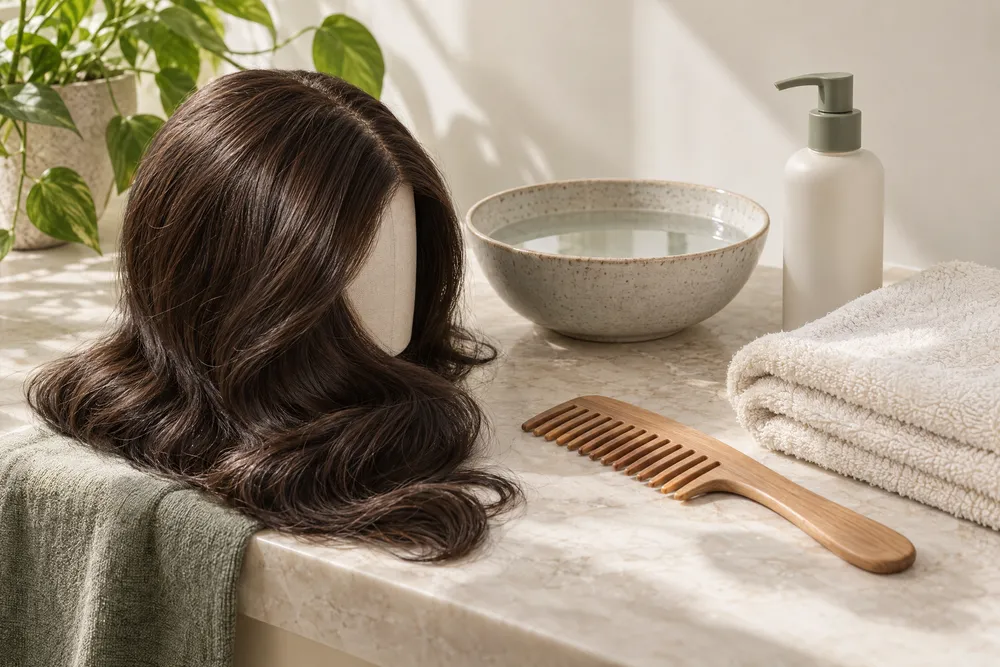
Why synthetic wig tangling happens
Synthetic fibres do not behave exactly like growing hair: repeated contact can make strands catch on one another, especially at the ends and beneath the back of the cap. Understanding where contact happens helps you choose a small, practical change instead of brushing the whole wig more often.
Reduce friction where the wig meets clothing
The nape often rests against shirt collars, jacket necklines and scarves; a longer style may also brush against its own shoulders. Repeated contact can gather fibres into a snarl, so notice when and where the snag appears. That clue is more useful than repeatedly combing a smooth section that is not catching.
Before putting on the wig, check that a scarf or hood is not trapped underneath the hair. When practical, let the nape fall over rather than inside a rough or high collar, and gently lift the hair free when removing a coat. These small adjustments reduce rubbing but cannot guarantee that tangles will never form, so check the back during wear.
Texture, length and the way a style sits all affect where friction is noticeable. If you are comparing fibre routines, human hair vs synthetic wig care outlines why the care instructions for one material should not automatically be transferred to another. For a wig made from human hair, use the separate human hair wig tangling guidance rather than assuming the same fibre-specific technique applies.

A gentle routine for knots and synthetic wig frizz
Choose a calm moment and a well-lit place so you can see what is caught. Detangling is a sequence of small releases, not one forceful stroke; if the fibre resists, pause and reassess instead of pulling through it.
A gentle approach to synthetic wig tangling
Secure the wig on a stand or support it in your hand so the hair does not tug against the cap. Separate the snag into a small section, hold the fibre above the knot, and use a wig-appropriate comb to loosen the ends first. Move upwards as they release; for a stubborn knot, separate a few fibres with your fingers. Do not yank or rake from the roots.
Keep the rest of the wig out of the way and work through one section before moving on. A few gentle passes are preferable to repeated brushing over the entire style. If the knot will not ease, stop rather than cutting or applying an unverified treatment. A wig maker or the retailer familiar with that style may be able to advise whether the texture needs a particular tool or method. For a wider routine, see the wig care guides and the practical steps for how to wash a wig; washing is a separate task and is not a substitute for releasing a dry snag carefully.
Synthetic wig frizz may look like lifted fibres, bent ends or a surface that no longer lies smoothly. It can overlap with tangling, but is not always a knot to comb out. Brushing harder for a glossy, straight finish can disturb the style further. If a section still feels rough after loose knots are removed, check the maker’s instructions before using a finishing product. Gentle care can manage the fibre, but cannot promise every texture change will reverse.
Choose a synthetic wig detangler suited to the fibres
A synthetic wig detangler is a product choice, not a universal fix. Read the label for an explicit indication that it is intended for synthetic wigs, and follow both its directions and the wig maker’s instructions. If the label is vague, or the style’s care guidance does not mention sprays, check before applying it. Do not assume that a human-hair conditioner, household fabric spray or a product suitable for a different synthetic fibre will work on this wig.
If you decide to try a suitable product, use it only as directed and avoid saturating the cap or spraying near the face. Keep the wig supported, separate the section, and then gently work through it with the recommended tool. Stop if the fibres become tacky, unusually heavy or harder to separate. The wig detangler spray guide can help you consider what to look for, while conditioner for wigs explains why a conditioner should be selected and used with care rather than added automatically.
Washing may be appropriate when the wig needs cleansing, but it is not necessary every time a knot appears. Choose a product intended for the fibre; the guide to shampoo for synthetic wigs covers that separate decision. American Cancer Society’s general wig guidance highlights checking a wig’s care directions and its stated heat suitability rather than assuming all wigs tolerate the same styling. That supports a simple rule here: use a heated tool only when the individual wig is explicitly labelled heat-friendly and its own instructions permit it. For further detail, see heat friendly synthetic wig care. Never apply heat to a non-heat-friendly synthetic wig.

Preventing tangles around the nape
Nape care works best as a brief check built into wearing and putting away the wig. It is easier to release a small snag early than to wait until several sections have rubbed together. When you take the wig off, arrange it gently for storage; the how to store a wig guide covers ways to keep the style supported between wears.


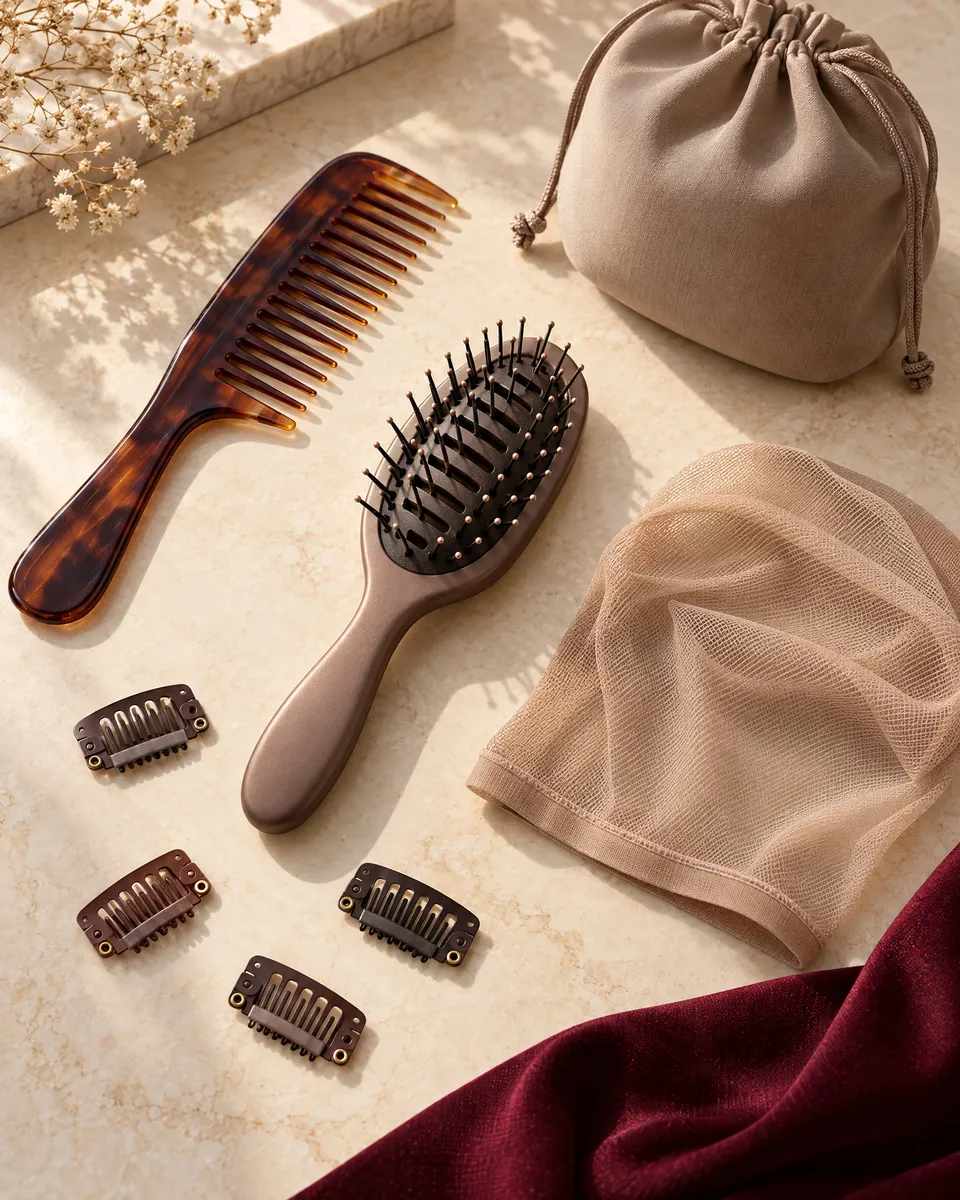
| What you notice | A gentle next step | Avoid |
|---|---|---|
| One small knot at the ends | Separate a small section, support the hair above the knot and loosen from the ends upwards with a wig-appropriate comb. | Pulling from the roots or forcing the comb through the snag. |
| Repeated snags at the nape | Check contact with collars, scarves and the wig’s own ends; free the hair from clothing and inspect the area regularly. | Brushing the full wig repeatedly when only one contact point is catching. |
| A rough or fuzzy surface without a clear knot | Pause, compare the fibre with its care instructions and choose only a product specifically permitted for that wig. | Treating every frizzy patch as a knot or using an unlabelled spray. |
| A wish to smooth or reshape the fibres | Check whether this exact wig is labelled heat-friendly and follow its maker’s heat instructions; otherwise do not use heat. | Using a hot tool because another synthetic wig tolerated it. |
Explore wig care guides
Tell us the style you have in mind. We can discuss the options, quotation and arrangements before you decide.
wig care guidesBefore you choose
How do I detangle a synthetic wig without stretching the fibres?
Work in small sections and support the hair just above the knot so the tug does not pull against the cap. Gently loosen the ends first with a comb suitable for wigs, then move upwards as the fibres separate. If a snag resists, pause and tease apart a few strands with your fingers rather than pulling the comb through it.
Can I use a detangler on a synthetic wig?
Yes, if the product is specifically intended for synthetic wigs and the individual wig’s care instructions allow it. Follow the product directions and avoid assuming that a spray made for human hair or another fibre is suitable. If you cannot establish compatibility from the label and wig instructions, check before applying it.
Why does my synthetic wig tangle at the nape?
The nape often rubs against collars, scarves or the wig’s own ends. Repeated friction can catch fibres together. Notice which garment or movement is involved, free the hair from the neckline where practical and gently release small snags before they build up.
Can I use a heated tool to smooth synthetic wig frizz?
Only use heat when the specific wig is labelled heat-friendly and its care instructions allow the tool and method. A heat-friendly label on another style does not apply to this wig. Do not use a heated tool on a non-heat-friendly synthetic wig. For product selection, WhatsApp +852 5933 4697.
Further reading
- American Cancer Society — Wigs for Hair LossSupports the specific general-care point in the article that wig care directions and stated heat suitability should be checked rather than assuming all wigs tolerate the same styling; cited as general guidance, not as an endorsement of OWNSTRAND or a claim about every wig.
Still weighing up your options?
Follow a related guide to make your next decision with clearer information.
Choose shampoo for synthetic wigs by checking the fibre and maker’s care instructions. Learn a careful washing routine, then ask us to check availability.
Browse practical wig care guides from OWNSTRAND Wigs, including washing, storage, detangling and everyday wear considerations for different fibres.

Learn how to wash a wig and how often to wash a wig, with fibre-aware steps and practical Hong Kong care tips. Ask OWNSTRAND about your wig.
Explore wig detangler spray guidance for synthetic and other wig fibres. Check each product label for suitability and ask OWNSTRAND about options.