


How a breathable wig cap construction affects airflow
Assessing breathable wig cap construction means looking at a combination of surfaces and attachment points, not simply deciding whether a layer is breathable or not. Looking at the whole construction helps you compare likely points of contact, openings and coverage without treating a general label as a guarantee of comfort.
What to look for in a breathable wig cap
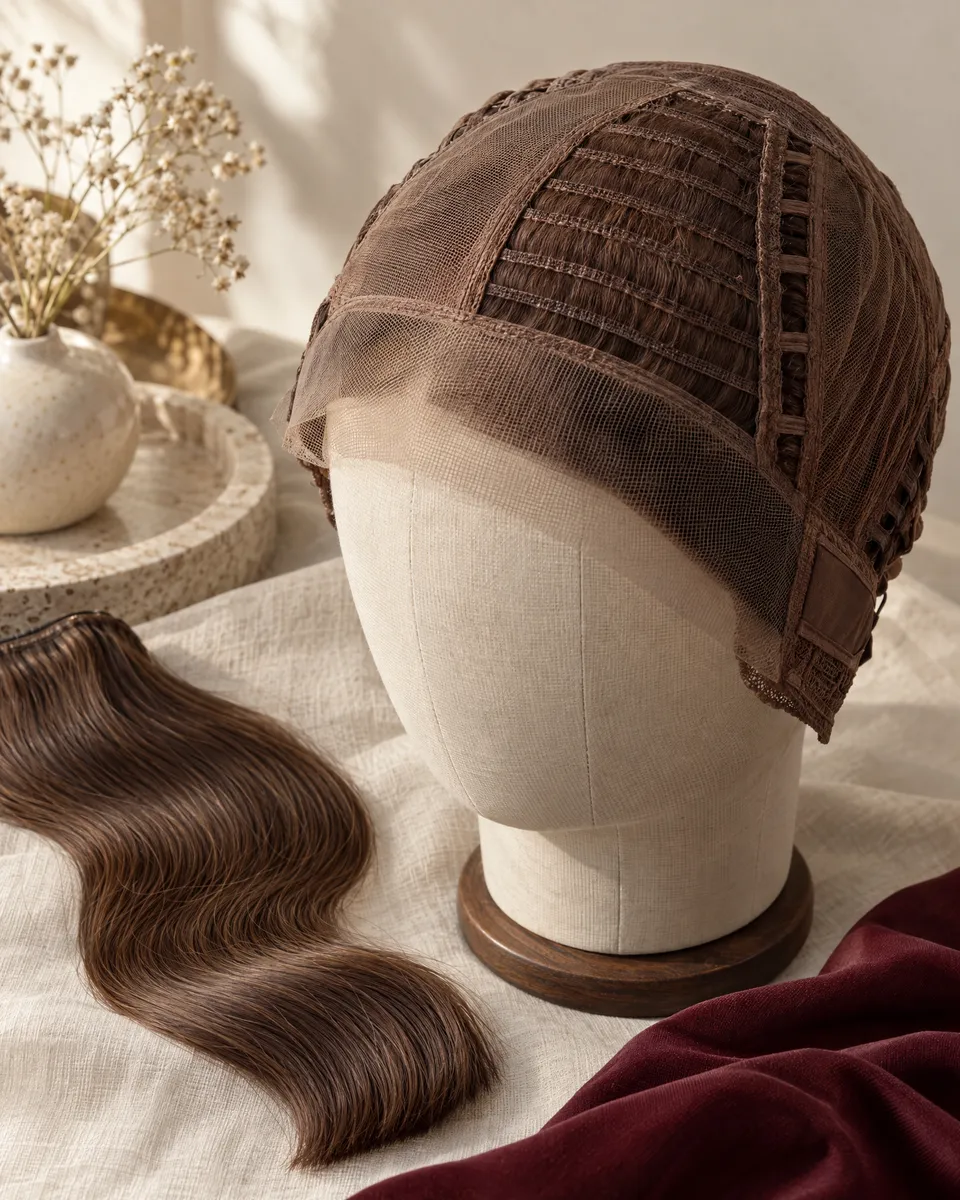
First, find out which areas are covered and which are open. Ask whether the crown, sides and back use the same construction, and whether a denser or more continuous section sits at the parting or front. This matters because a cap can have open areas in one place and a more covered surface elsewhere. A clearly described open wefted wig cap is a useful point of comparison when you want to understand how wefted, open sections differ from a more continuous cap surface; it is not proof that every such wig will feel cooler on you. A style described as a cooling wig cap or a lightweight open cap wig still needs the same close look: find out how much of its base is open, where those sections sit and how the rest is constructed.
Next, check how the hair is attached and where the cap touches your head. A full lace wig and a hand tied wig describe construction approaches worth comparing, but their names alone do not tell you the exact coverage, materials, density or fit of a particular item. Ask for those details rather than assuming that the word “lace” means the entire cap is open, or that a hand-tied construction has a particular airflow outcome.
Also consider styling needs. If you often change your part, focus on how the parting area is made and whether the hair can be arranged as you prefer. If you usually wear one set style, a broad, natural-looking part may be less important than the feel around the crown or perimeter. A silk top wig or monofilament wigs can help frame questions about top construction, but neither label should be read as a complete specification for the rest of the cap. Ask where each feature is located and what it covers.
How cap materials and density can affect comfort
Material, hair density and cap construction interact. A relatively open base may still feel warm to someone if the overall wig is dense, the fit is close, or their scalp is sensitive to the particular material. Conversely, a more covered design may feel acceptable to another wearer. These are reasons to assess the complete wig and your own preferences, not promises about how a given construction performs. Where information is available, compare the material at the crown, the perimeter and any parting area separately.
A practical check is to try the wig in the way you expect to wear it: position it as intended, move your head, and notice whether any area feels tight, shifts, or rubs. This is a comfort check, not a medical test. If you have a diagnosed scalp condition, treatment-related concerns or a history of skin reactions, seek appropriate clinical advice about your circumstances; do not infer that a style or material is suitable for you from a general “breathable” description. A PU wig cap is another construction to compare by asking which areas use PU and how they meet the rest of the cap, rather than assuming a single feature describes the whole wig.
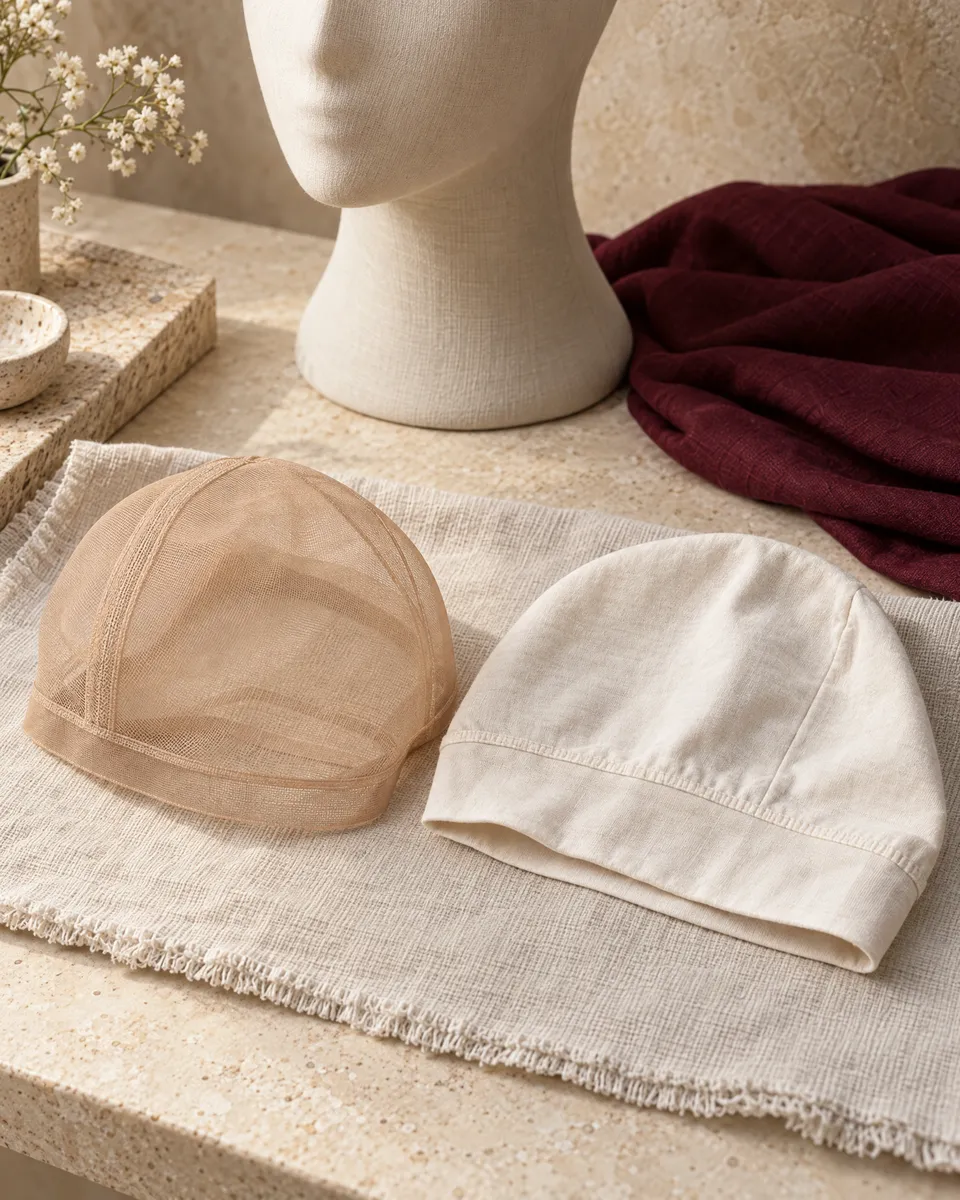
Compare cap coverage, materials and open sections
A useful comparison records what is physically present, where it sits and what you need from the wig. Use the same questions for each style; otherwise, names such as open, lace or skin can sound more informative than they are.
Questions to ask when comparing cap coverage
Ask for a description of the crown, sides, back, front edge and parting area. Which parts are covered by a continuous material, which have open spaces between attachment rows, and which use a finer or more delicate section? If a style has several constructions, ask whether those features apply across the entire base or only to one zone. A simple sketch or close view of the cap can make the explanation easier to follow, but check that it represents the specific item under discussion.
Then ask how the cap is expected to sit and what can be adjusted. Is there a size range or adjustment feature? Does the edge rest where you prefer? Will your usual parting or styling expose a section of the base? Fit affects whether coverage feels acceptable, so do not choose on airflow descriptions alone. The American Cancer Society’s wig guidance notes that sizing can differ between wig brands; this is why checking the particular cap and fit is more useful than assuming that a size label is universal. This general selection information is not an endorsement of a brand or a guarantee of fit.
A final set of questions concerns use and care: what instructions apply to the actual fibre and base, what cleaning method is permitted, and are there styling limits? Follow item-specific care information rather than applying a rule from another wig. If you are selecting from women's wigs, use the same cap questions alongside coverage and hairstyle preferences; the category itself does not establish an individual cap specification.

Choosing a wig cap for warm and humid days
For hot and humid days, narrow the choice by ranking what matters most to you, then compare the actual caps against that short list. There is no universally coolest wig cap, and everyday comfort can depend on your fit, routine and the specific construction.



| What to compare | What to ask or inspect | Why it matters to your choice |
|---|---|---|
| Coverage by area | How are the crown, sides, back, front edge and parting made? | Shows where the cap is open, covered or made from a different surface. |
| Open sections and density | Where are the spaces between attachment rows, and how dense is the hair over them? | An open section alone does not describe the overall feel or coverage. |
| Materials | What material is used in each zone, and what care instructions apply? | Different areas may have different contact and maintenance considerations. |
| Fit and adjustment | How does this particular cap size, edge and adjustment sit on your head? | A construction label cannot tell you whether the fit feels secure and comfortable. |
| Styling and routine | Will your usual part, hairstyle and daily routine work with this base? | The right balance depends on how you intend to wear the wig, not a generic ranking. |
Ask about wig cap styles on WhatsApp
Tell us the style you have in mind. We can discuss the options, quotation and arrangements before you decide.
Ask about wig cap styles on WhatsAppBefore you choose
What makes a wig cap breathable?
Breathability is not a single feature. It can depend on the materials, density, fit and construction, including which areas are covered or more open. Ask for details about the specific wig’s crown, sides, back and parting rather than relying on a broad label.
Is an open cap always cooler than a fully covered cap?
No. An open section may be one factor, but the rest of the cap, hair density, fit and individual comfort also matter. Compare the complete construction and, where possible, try the particular wig in a way that reflects how you plan to wear it.
How should I compare wig caps for hot weather?
For a wig cap for hot weather, write down your priorities for coverage, parting, fit and styling; ask what materials and open sections are used in each area; and check the item-specific care guidance. For another perspective on warm-weather choices, read our hot, humid weather guide. You can also enquire about a style with OWNSTRAND; WhatsApp is for enquiries and quotations, not an automatic order.
Does a breathable lace wig cap mean the whole cap is lace?
Not necessarily. A lace feature may apply to one area or to a particular part of the construction. Ask where lace is used, what covers the other zones and how the specific cap is made before comparing it with another style. For product selection, WhatsApp +852 5933 4697.
Further reading
- American Cancer Society — Wigs for Hair LossSupports the specific general selection fact that sizing can differ between wig brands, so a customer should check the fit of the particular cap rather than assume a universal size label. It does not endorse OWNSTRAND or establish fit for any individual wig.
Still weighing up your options?
Follow a related guide to make your next decision with clearer information.
A PU wig cap may use polyurethane at the perimeter or base; skin top has no universal meaning. Compare construction details and ask us before choosing.

Explore full lace wig cap construction, coverage and fitting considerations. Compare it with lace front options, then contact OWNSTRAND Wigs to ask about styles.
Explore what a hand tied wig means, how hand-tied construction differs from wefted caps, and what to check by style. Ask OWNSTRAND about options.

A silk top wig can be described by its top construction, but details vary by model. Compare terms with lace or monofilament tops, then ask OWNSTRAND about a style.