

What a monofilament hair topper base means
The phrase describes one construction feature, not a complete product specification. Understanding that distinction makes it easier to compare a monofilament topper base with the coverage and attachment details that matter in day-to-day use.
How a monofilament hair topper is described
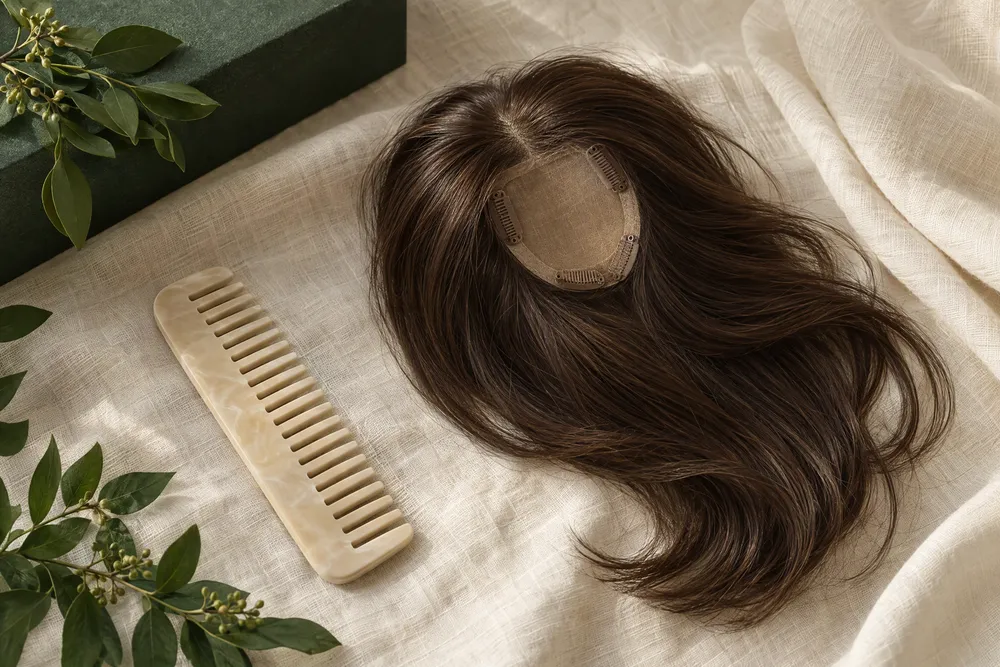
A monofilament hair topper uses a fine mesh-like base in an area where hairs are attached, commonly strand by strand. That can allow some flexibility in arranging the part, but does not guarantee a particular appearance: mesh, density, dimensions, hair direction and finishing vary by product. Ask which zone is monofilament and how the rest of the base is made.
A topper is a partial-coverage hairpiece intended to blend with existing hair; a full wig covers the head. Ask which crown or part area you want covered and how far the base extends. If your concern is a wider-looking part or reduced top volume, hair topper for widening part can help frame the coverage discussion. This is a styling comparison, not a judgement about the reason for a change.
“Monofilament crown topper” is a prompt to ask about the crown, not a standard size or shape. The monofilament area may be around the part or broader. The label does not show the coverage, fit or whether the edge will blend under your hair. Compare a maker’s diagram or measured dimensions and ask for clarification if needed.

How monofilament differs from other topper constructions
Base vocabulary can sound similar while referring to different features. Separate the construction of the base from fibre, coverage and fixing method, then compare like with like rather than assuming one term promises a particular result.
Compare base terms without assuming they are the same
Monofilament and silk top are different base descriptions. Silk top uses a layered construction intended to conceal attachment points beneath a surface layer; monofilament refers to a fine mesh area where hair is attached. Neither is a universal quality ranking. Compare the specifications for a silk top hair topper with a mono option, including base area, parting and edges; names alone do not show whether they look or feel alike.
Base construction is separate from fibre: human hair or synthetic describes the hair, not the base. Compare human hair topper and synthetic hair topper choices by their stated fibre, styling limits and care directions. Do not assume heat styling, colouring or other treatment is permitted unless the maker says so.
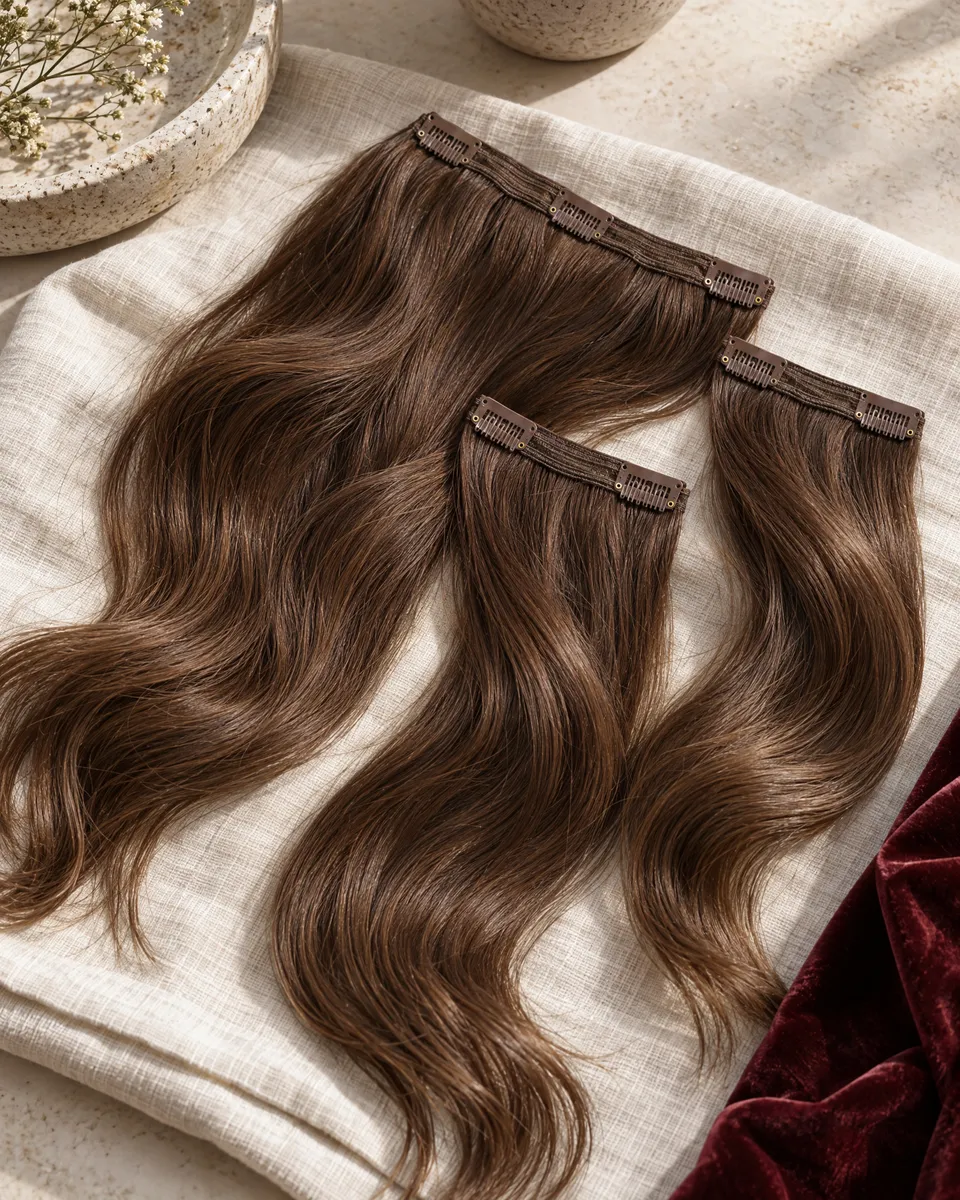
Attachment is a separate decision; monofilament does not tell you how a piece is secured. For a clip style, check the clip-in hair topper details, including clip placement and handling instructions. Consider your coverage needs and comfort without assuming one fixing method suits everyone.
A topper’s monofilament area is not the same as a monofilament part or crown in a full wig. For partial versus fuller coverage, compare hair topper vs wig and the monofilament part wig guide. The American Cancer Society notes that wig sizing can differ among manufacturers, so check actual dimensions instead of assuming familiar sizing applies. This general point is not a product specification or seller endorsement.

Questions to ask before choosing a topper
A meaningful comparison joins the base description to the areas the piece covers, how it is secured and how it should be maintained. These checks can also reveal when a product listing leaves an important detail unstated.
Check coverage, attachment and care details
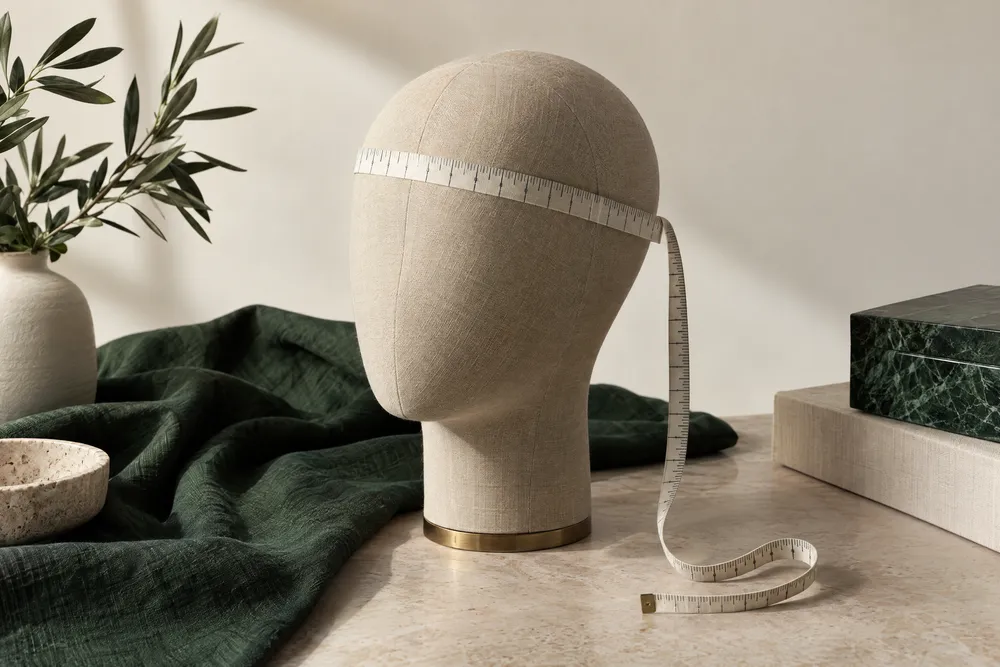
Ask for the base dimensions and which part is monofilament. Compare them with the area you want covered and the direction the base sits. Hair topper base size can help prepare this discussion. Do not assume the same term means the same footprint across brands, or that a base can be trimmed; check whether adjustment is allowed for that item.
Next, establish the attachment and what hair the piece is intended to blend with. Ask about fixing points, fibre, length and texture, and whether you can view it against your hair in suitable light. Compare colour descriptions with your own hair rather than relying only on a screen. A matching base term does not settle blend, weight or styling needs.
Request care directions before deciding: ask how to detangle, wash, dry and store the piece, and which tools or products to avoid. American Cancer Society’s general wig guidance supports checking construction and maker-specific directions; do not transfer care practices between fibres or bases automatically. Seek a product-specific answer if details are missing. For medical, scalp or skin concerns, consult an appropriately qualified professional; a product description cannot establish individual suitability.
Use three checks: (1) Which section is monofilament, and what are the base dimensions? (2) What are the fibre and attachment method, and how should they be cared for? (3) What is confirmed about this style’s quotation and supply? This separates general terminology from item-specific facts. WhatsApp +852 5933 4697 is for OWNSTRAND enquiries, quotations and supply confirmation; messaging does not place an order or prove availability.


| Detail to compare | What the term may tell you | What to verify for the specific topper |
|---|---|---|
| Monofilament base | A fine mesh area with hair commonly attached strand by strand | Where the section is, its dimensions, and how the remainder of the base is built |
| Silk-top base | A layered base description intended to conceal attachment points | Check construction and parting; not synonymous with monofilament |
| Coverage | The piece is a topper for partial coverage, but the name does not set its footprint | Measured base size, intended placement and the area it covers |
| Hair fibre | Human hair or synthetic describes the hair, not the base construction | Fibre specification, styling limits and care instructions |
| Attachment | The name monofilament does not identify how the piece is secured | Fixing method, placement and handling guidance |
Ask about a specific topper
Tell us the style you have in mind. We can discuss the options, quotation and arrangements before you decide.
Ask about a specific topperBefore you choose
What does monofilament mean in a hair topper base?
It describes a type of fine mesh base area to which hair is attached, often strand by strand. The exact size, placement and construction can vary, so check the specifications for the individual topper rather than relying on the label alone.
Is a monofilament base the same as a silk-top base?
No. Monofilament and silk top refer to different base descriptions and should not be assumed to have interchangeable construction or appearance. Compare the maker’s details for the base area, parting and finishing of each specific item.
What should I check before choosing a monofilament topper?
Check the monofilament area and full base dimensions, coverage, attachment method, hair fibre and care instructions. Ask for clarification wherever the product specification is silent, and consider how the piece will blend with your own hair.
Can OWNSTRAND confirm a particular monofilament topper option?
You can contact OWNSTRAND on WhatsApp +852 5933 4697 to ask about a specific style, its details, quotation and supply confirmation. An enquiry does not confirm availability or place an order.
Further reading
- American Cancer Society — Wigs for Hair LossSupports the general selection point in the article that wig sizes can differ among manufacturers, so buyers should verify the dimensions of a specific product. It does not establish any OWNSTRAND product specification or endorse the business.
Still weighing up your options?
Follow a related guide to make your next decision with clearer information.

Compare a hair topper vs wig by coverage, attachment and blending needs. Learn what to consider, then ask OWNSTRAND about suitable options in Hong Kong.
Explore what a silk top hair topper means, how product base terms are used, and what to verify before choosing. Ask OWNSTRAND about a specific style.

Explore human hair topper options, what to check about hair type and base details, and questions to ask before choosing. Contact OWNSTRAND to enquire about a style.

Explore a synthetic hair topper, compare fibre-care questions with human hair, and ask OWNSTRAND Wigs about styles and availability in Hong Kong.