

Decide what appearance matters before choosing details
Start with the visual result you want people to notice in ordinary conversation, rather than a product label. This keeps the enquiry about your priorities and leaves room to confirm which option is suitable in person.
Name the first impression, then the close-up concern
Write one sentence about the first impression. It may be a soft bob around the face, a familiar side part, a lower-contrast brown, or coverage that does not draw attention at the forehead. Then add one close-up concern, such as whether the front edge, parting or hair density looks too regular. These two levels stop one attractive swatch or online image from answering every question at once.
It is reasonable for appearance, comfort and practical care to sit together in the decision. Dana-Farber Cancer Institute describes a suitable wig as one that appears natural, feels comfortable and fits well, while personal budget also matters. Its guidance on choosing a wig is a useful reminder to rank those concerns rather than treating visual resemblance as the only test. When you are comparing chemotherapy wigs, say which visual feature is non-negotiable and which one you are still open to discussing.
- First impression: note the silhouette, overall length and level of colour contrast you want at speaking distance.
- Closer view: note only the areas you expect to inspect, such as the fringe, front edge, parting or crown.
- Daily setting: note whether the look is mainly for quiet indoor time, work, travel, photographs or an active day.
Set up light, mirror, photos and notes that can be compared
The purpose of preparation is not to produce a perfect portrait. It is to make the visual information repeatable enough for a later enquiry or fitting conversation.
Use simple views under one kind of light
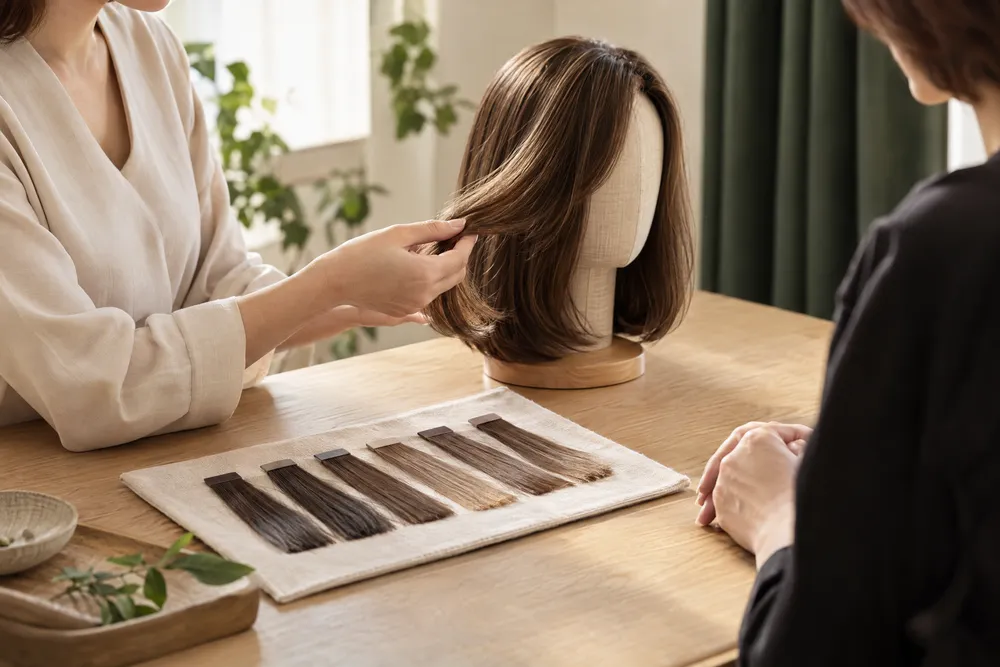
If you would like a wig to echo your present hairstyle or colour, take a front view and a three-quarter view near a window in daylight. Keep the same parting and normal styling. The American Cancer Society suggests photos of the current hairstyle and comparing a hair swatch in natural light when someone wants a close colour match. Its wig-planning advice supports using daylight as a comparison condition, not as a promise that colour will look identical in every room.
Alongside each image, add a short note: light source, whether you are wearing glasses, usual parting, and the one area the image does not show well. A mirror view can help you notice where the hairline meets the temple, but it should not be used to estimate head size. If you plan to discuss shape, tone and the visual role of a parting, custom wig samples give the conversation a practical place to ask what can actually be viewed and checked.
| What to record | What to look at | Question it helps you ask |
|---|---|---|
| Front view | Fringe, hairline height and face framing | Which front placement should be checked when I try it on? |
| Three-quarter view | Temple transition, side volume and length | Does this side profile keep the softer or sharper outline I prefer? |
| Parting note | Usual side, centre or changeable part | Can the intended part be assessed in the sample or fitting? |
| Colour note | Overall depth and any lighter pieces near the face | May we compare this tone in daylight and indoor light? |
| Daily-setting note | Work, rest, travel or active use | Which appearance point may change most in this setting? |
Observe the visible clues in a useful order
Looking at every feature at once makes it hard to tell what changed the result. Work from the overall outline toward the details that need a closer view.
Start with outline, then move to hairline, part and density
First stand back about the distance of a normal conversation. Notice length, width at the sides and whether the colour reads lighter or darker than you expect. Next, look closer at the front hairline and temples. Ask whether you want an open forehead, a soft fringe, more coverage at one side, or simply a less obvious change from your usual outline. These are appearance requests, not technical instructions about any named cap or material.
Then look at the part and crown separately. A part can appear wider under strong overhead light, while a dense crown can look different when you turn your head. Record what you see instead of assuming the photo proves a construction type. The American Cancer Society explains that different wig constructions can affect the appearance of the hairline, scalp-like parting and styling options, but the exact feature must still be checked for the individual wig. That distinction helps you ask for a visual demonstration instead of treating a construction name as a guarantee.
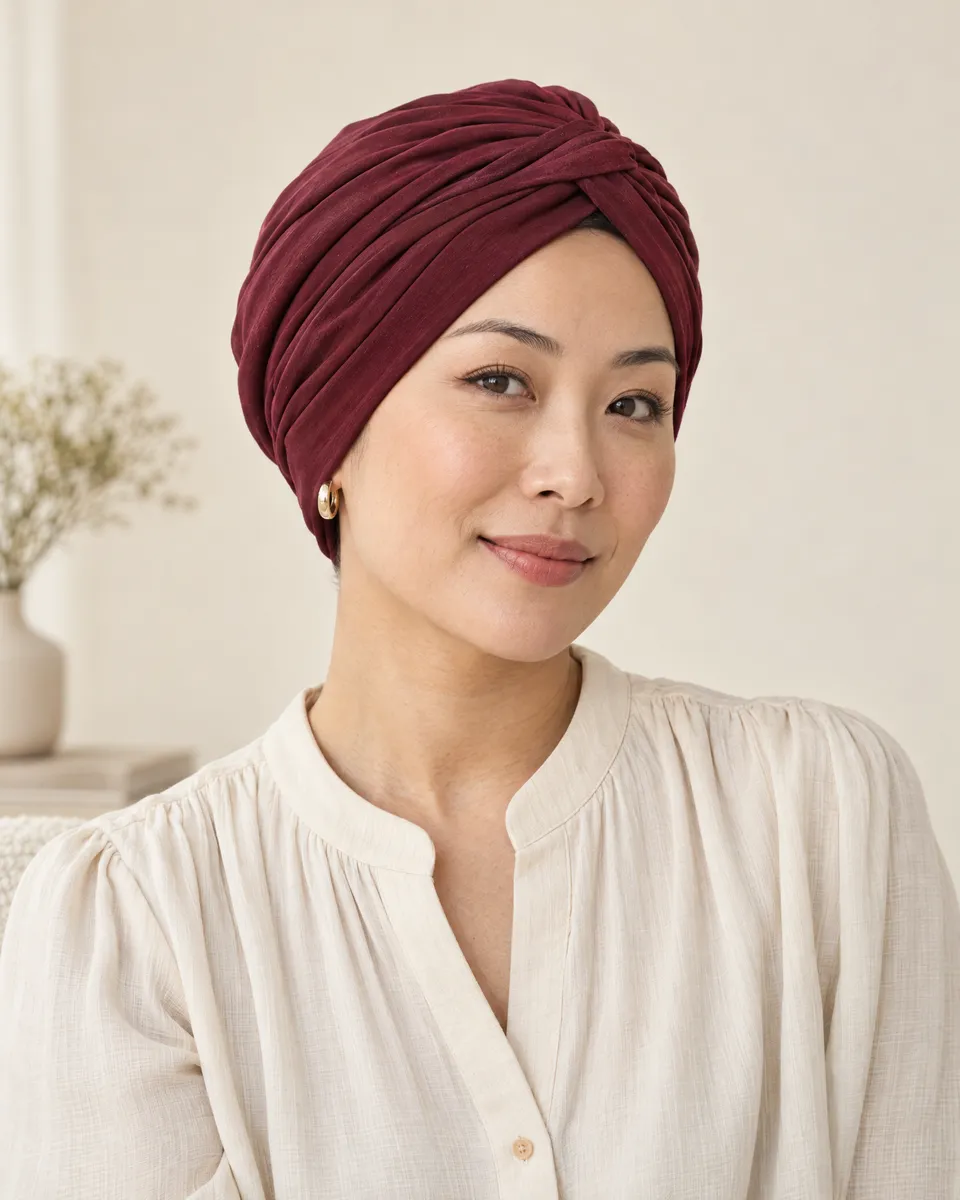
Consider a second appearance route when a full wig is not the only look you want to discuss. A hat, scarf or other covering can change the visible frame around the face and the amount of hair that needs to be shown. The choice is personal; headscarves for chemotherapy can be a relevant option to raise if you would like to compare a covered look with a hair-framing look.
- At conversation distance, check outline, colour depth and side volume before studying individual strands.
- At mirror distance, check the front edge, temples, parting and crown one at a time.
- Write “please show me” beside any detail that a photograph cannot settle.
Turn observations into selection and fitting questions
An enquiry is more productive when every concern becomes a question someone can demonstrate, explain or defer for confirmation. Avoid requests for a universal “best” choice, because priorities can conflict.
Ask for checks, not promises from a photo
Replace “Will this look completely real?” with a checkable question: “When I turn my head, can we look at the temple transition and parting under ordinary light?” Replace “Is this the right brown?” with “Can we compare the depth near my face against this unfiltered photo?” Each question identifies a viewing condition and a feature. That makes a reply more useful than a generic assurance about natural appearance.
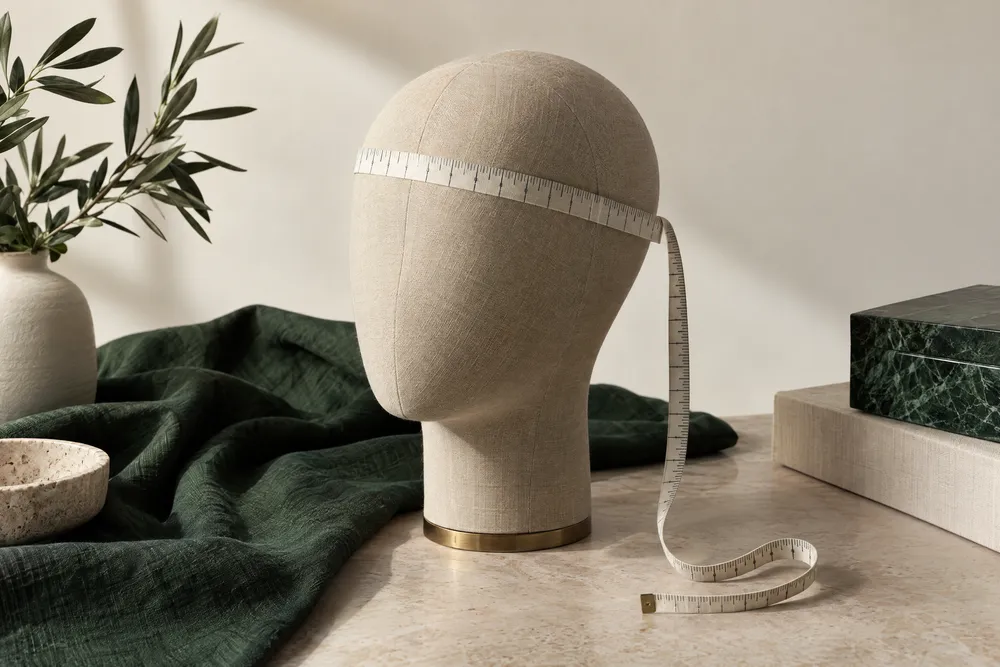
If your head shape or hair-loss stage may change, include it in the conversation. The American Cancer Society notes that a head may be smaller after hair loss and recommends checking adjustability when planning ahead. It also shows circumference, front-to-back and side-to-side as separate measurement directions. This is why photos cannot replace fitting measurements. A note such as “I want the hairline to sit softly, and I need the fit assessed separately” keeps appearance and size from being confused.
Comfort can influence appearance because a front edge that you keep adjusting will not sit as intended. Tender or sensitive scalps can also change what feels acceptable. Dana-Farber notes that a well-fitted wig often needs no attachment aid, while some people prefer extra security and may use a soft layer between scalp and wig. For a careful discussion of ordinary comfort and care questions, see itchy scalp under wig; persistent scalp concerns should be discussed with an appropriate healthcare professional.
Include your daily context without assuming one look works everywhere
A style that feels right at a desk or in a calm indoor setting may need separate checks for movement, humidity, water or heat. Mentioning these settings early helps separate appearance goals from details that need product-specific confirmation.
List the situations that could change the visual result
Choose two or three situations that genuinely occur in your week. For example, note a commute in humid weather, a long appointment, an exercise class, or a family event where photographs will be taken. Do not assume that a neat mirror result predicts every situation. Your enquiry can ask which points should be tested or cared for in that setting, without assuming that every wig shares the same heat, water or attachment properties.
For activity, movement is usually the immediate concern. If exercise is relevant, frame the question around fitting and security rather than an appearance claim: “What should I confirm before I exercise in this?” The guide on wearing a wig to the gym provides a focused next step for discussing movement and practical checks. It should not be read as proof that any unconfirmed wig will stay in place for your own activity.
Water needs its own question, not an assumption based on a gym discussion. Before a pool, beach or similar plan, ask what the specific wig and any chosen securing method are designed to tolerate. The question can you swim in a wig is a useful way to separate this situation from ordinary wear. Ask for confirmation for the item being considered rather than extending a general answer across all wigs.
Recognise false signals and what photos cannot confirm
A photo is good at preserving a preferred outline and colour direction. It is weak evidence for comfort, exact fit, movement, stock status, delivery timing or material performance.
Treat lighting and screen colour as clues, not verdicts
Window light can reduce the colour cast produced by some indoor bulbs, yet even a daylight photo depends on camera processing and screen settings. A dark room, strong overhead light, beauty filter or image compression can make a parting appear deeper, the hairline sharper or the colour warmer than it will look in person. Keep the image unfiltered, retain the original where possible and label the light rather than trying to correct it later.
Humidity is another reason to record the situation rather than promise a fixed finish. Fibre behaviour, styling routine and the individual piece all matter. If you expect Hong Kong humidity to be a regular concern, wig frizz in humidity is a useful starting point for care questions. It does not establish that every wig, fibre type or finish will react in the same way, so the enquiry should ask about the specific option.
Photos also cannot determine when a custom request will be ready. If a particular appearance detail requires a custom discussion, say that your goal is to understand the sequence: viewing, measurements, making and fitting. The page on custom wig lead time Hong Kong can help you frame the timing question. It is better to ask for the current expected process than to infer availability or a completion date from a reference image.
- A photo can preserve a preferred colour direction and silhouette.
- A photo cannot verify scalp comfort, exact sizing, security during movement or a specific care limit.
- A product label, online image or construction term should prompt a check, not replace one.
Bring a compact checklist to the next enquiry
A short record respects your energy and gives the conversation an order. You do not need to decide every feature beforehand; the goal is to state what you have seen, what matters most and what needs confirmation.
Use a five-part note rather than a long wish list
Bring two unfiltered reference views, one sentence on the look you want at ordinary distance, and no more than three close-up priorities. Add one note about comfort or daily setting, then finish with the questions you want answered in person. For example: “I prefer a soft side outline and lower-contrast brown; please show me the front and parting in ordinary light; I need to understand fitting for regular commuting.” This is specific without claiming that a photo has settled the answer.
If you are choosing after or during treatment, the decision can also carry emotional weight. There is no obligation to recreate a former style, and there is no single correct visual priority. Cancer Research UK notes that people may choose wigs, hats or scarves as different head-covering options during treatment. Its information on wigs, hats and scarves supports keeping those options open while you work out what feels most like you.
Use the enquiry to compare visible options calmly and ask what can be confirmed for your needs. OWNSTRAND can discuss the appearance notes you have prepared, while suitability, sample availability, construction details and timing should be checked directly for the option under consideration.
| Appearance priority | What to record first | Useful enquiry question |
|---|---|---|
| Familiar outline | Front and three-quarter images with usual parting | Which length and side volume should I view first? |
| Softer front | Whether you prefer fringe, open forehead or temple coverage | Can we assess the front placement in ordinary light? |
| Natural-looking colour | Current or preferred depth and lighter areas near the face | May we compare this tone without relying on a filtered image? |
| Parting and crown | Usual part and the area you notice in overhead light | Can the parting and crown be viewed separately during fitting? |
| Everyday confidence | One or two real situations such as commuting or an event | What needs checking for this specific use context before I rely on it? |
Ask OWNSTRAND on WhatsApp
Tell us the style you have in mind. We can discuss the options, quotation and arrangements before you decide.
Ask OWNSTRAND on WhatsAppBefore you choose
What should I record before chemotherapy wig appearance priorities for an enquiry?
Record two unfiltered views in similar daylight, your usual parting, the outline and colour direction you prefer, and up to three close-up features to check. Add one daily-use note and turn each concern into a question that can be demonstrated in person.
Which visual checks make chemotherapy wig appearance priorities for an enquiry more useful?
Check the overall silhouette first, then the front edge, temples, parting, crown and colour near the face. Note the viewing distance and light. This separates what a reference image shows from what needs a fitting or product-specific answer.
How can I turn chemotherapy wig appearance priorities for an enquiry into clear enquiry questions?
Name one feature, one viewing condition and one decision you need help with. For example, ask to view the front and parting in ordinary light, or ask what should be confirmed for a commute. Questions framed this way are clearer than asking whether a photo guarantees a natural result.
Further reading
- American Cancer Society: Wigs for Hair LossSupports planning ahead with hairstyle photos and natural-light colour comparison, separate head measurements, adjustability, fitting guidance and the distinction between wig constructions.
- Dana-Farber Cancer Institute: How to Choose a WigSupports treating natural appearance, comfort and fit as related selection factors and notes that tender scalps or a desire for additional security can be discussed during choosing.
- Cancer Research UK: Where to get wigs, hats and scarvesSupports recognising wigs, hats and scarves as different head-covering choices and avoiding an assumption that there is only one suitable appearance route.