
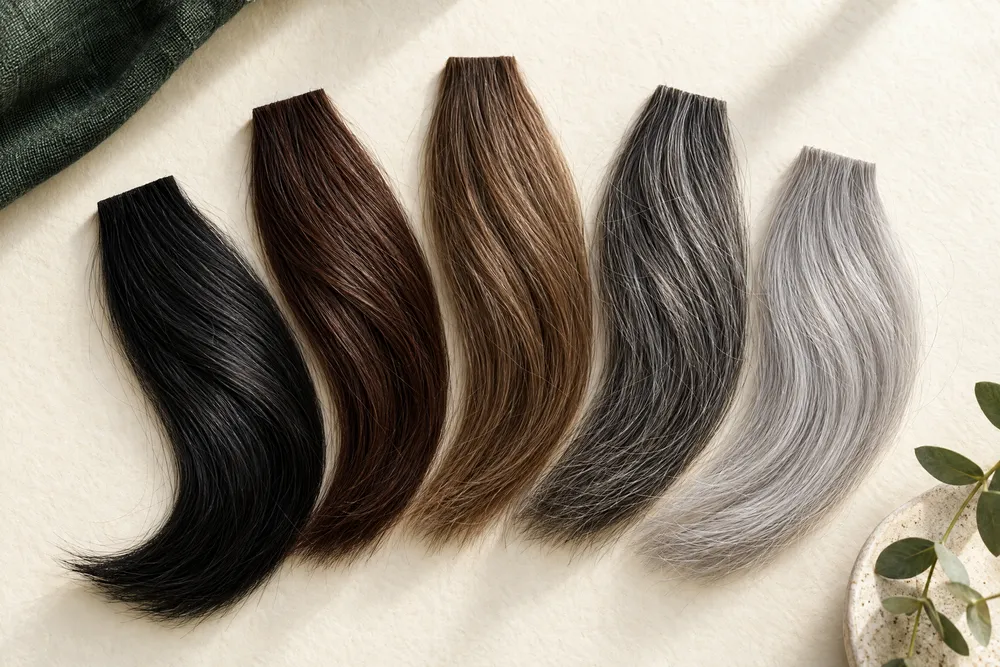
1. Identify the natural hair that will actually sit beside the piece
Begin with the hairstyle you intend to wear, not your whole head's average colour. The useful comparison is between neighbouring sections that remain visible together.
Name the joining zone before naming the brown
For a crown topper, the joining zone may run from its ends into your side lengths. With a wig, it might be a narrow strip near the ears. Natural roots, older coloured lengths and lighter ends can differ, so a sample held only beside your roots may answer the wrong question. Place the proposed brown beside the section it will touch in your usual style.
Tucking hair behind the ears or tying it can reveal a different boundary. Compare both styles if you use them. Do not sacrifice suitable coverage merely to conceal a shade difference.
For the front boundary, OWNSTRAND's guide to natural hairline wigs adds shape and hairline considerations. Colour compatibility cannot substitute for an appropriate outline or fit.
- Identify the exposed section: fringe, temples, sides or lengths below the topper.
- Check the loose style and the tucked or tied style you actually use.
- Choose the most important joining zone if different areas have different colours.
2. Use depth as the first filter
Depth means how light or dark the brown reads overall. Vit So's natural-hair guide to brown hair colour provides useful depth vocabulary, but its colouring discussion is not a prediction for a wig or topper.
Set aside browns that are plainly too light or dark
Compare the body of the sample with the exposed hair, rather than judging only a shiny strand. Ask a simple question: does the piece look like a lighter layer placed over darker hair, or a darker layer placed over lighter hair? If that difference dominates, choosing a warmer or cooler version may not solve what bothers you.
Keep the closest-looking depth and one slightly deeper or lighter alternative. A manufacturer's brown code identifies its own option, not the exact appearance of your hair; the physical comparison matters more than the number.
When browsing brown wigs, separate the overall base from any brighter strands or dark roots. A mixed shade may appear medium brown from a distance yet have a dark edge at the joining zone. That edge needs its own comparison.
3. Distinguish gentle warmth from a lighter brown
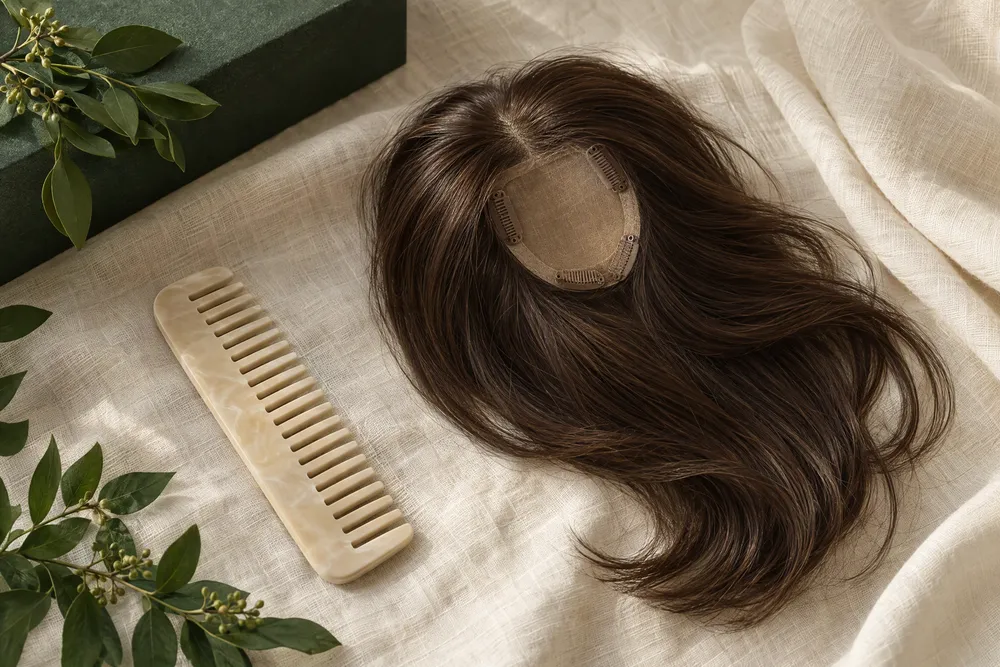
Once depth is close, compare the reflection. Vit So's guide to chocolate brown hair shows why a rich-sounding name still needs a description of its visible warmth and brown base.
Say whether the warmth looks red, golden or simply soft
A warm sample might sit comfortably beside reddish natural lengths but look quite separate beside a muted brown fringe. Another warm brown may lean more golden than red. Describe what you see at the boundary rather than declaring that all chocolate shades will blend. These names overlap across references and suppliers.
In a hypothetical example, deep roots lead into reddish ends. A deep warm piece might relate to those ends better than a lighter neutral one. But if most of the boundary meets the roots, their depth remains the more useful reference.
Use a negative reference too. Saying 'this depth, but less red at the sides' is clearer than adding chocolate, chestnut and caramel to one request. Do not assume warmth means brightness, or that every warm brown needs the same treatment on natural hair.
4. Choose cool brown without accidentally choosing light brown
A cooler reflection and a lighter base are separate choices. Vit So's natural-hair reference for ash brown hair colour is useful for describing muted, smoky brown rather than treating ash as one fixed depth.
Compare cool and warm samples at similar depth
If a pale ash sample is beside a deep warm one, you are changing two variables at once. Try a nearer-depth cool option first. You can then see whether reduced reddish or golden reflection helps the joining zone without introducing a much lighter block of hair.
Cool does not necessarily mean visible silver, and it does not mean grey coverage. If white strands remain around the temples, consider their distribution separately. A uniform cool brown may still look markedly different from brown hair threaded with white, even when its brown component seems close.
If warm and smoky options both feel pronounced, compare a less strongly toned brown. OWNSTRAND's wig colour matching guide explains how swatches and charts narrow options; they cannot certify an exact match.
5. Give the visible contrast a clear limit
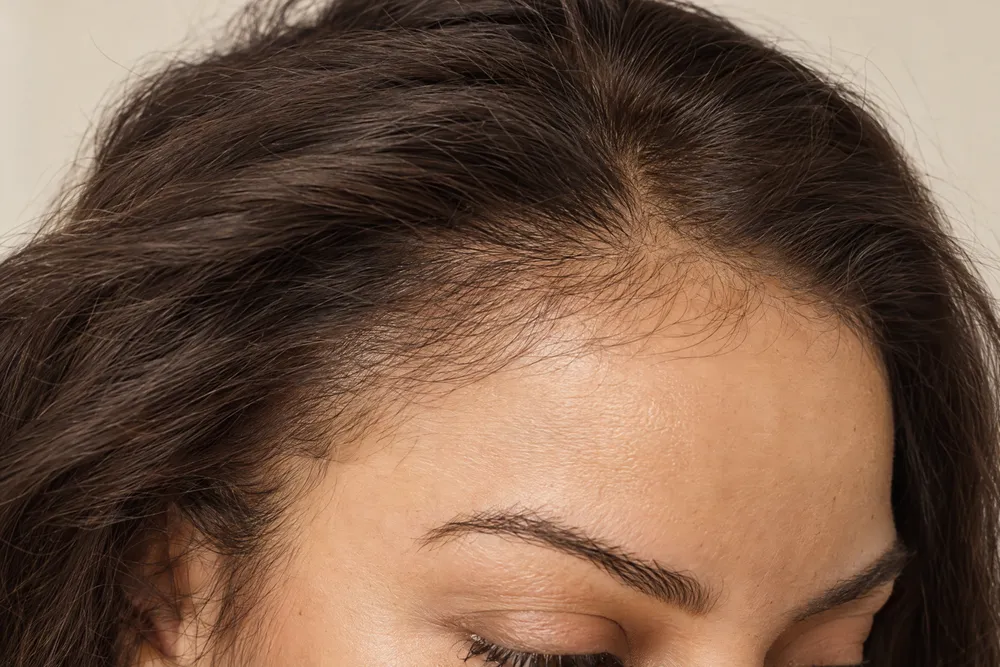
The third decision is preference: must the boundary look quiet, or would a deliberate brown contrast suit the style? Neither answer is a universal definition of natural-looking hair.
Judge contrast where it joins, not only from the front
For a low-contrast goal, a fairly even relationship across a broad joining zone may matter more than a favourite undertone. For a dimensional goal, you might accept brighter surface strands while keeping the area beside your own hair deeper. A pleasing front view does not establish that the side boundary works equally well.
In another hypothetical example, a medium smoky topper meets deep, warm side lengths. If the lighter band bothers the wearer, a deeper smoky sample is worth comparing. If intentional contrast appeals, the lighter option can remain. Neither choice requires pretending the colours are identical.
Also consider texture and density. A smooth, dense section can look different beside finer, less glossy natural hair even at a close colour depth. If the boundary still draws attention after the shade comparison, ask whether the styling or distribution of hair is contributing. More colour change is not always the relevant response.
- State your limit: barely noticeable boundary, gentle dimension or deliberate contrast.
- Compare the sides and back as well as the face-framing view.
- Keep one nearer-depth alternative when a favourite sample exceeds that limit.
6. Use the shade-choice matrix to decide the next comparison
The matrix below is a decision aid, not a colour chart. Read it in order: depth first, undertone second, then the contrast you accept.
Change one variable in the next sample
Change only the feature causing concern in the next comparison: keep the depth while testing less red reflection, or keep the undertone while testing a deeper base. This helps explain why one option works better.
Stop when the difference is acceptable in your intended style. Check which piece and shade options the sample represents. This guide's illustrations are concepts, not calibrated undertone swatches or client results.
7. Decide whether changing natural hair is worth the trade-off
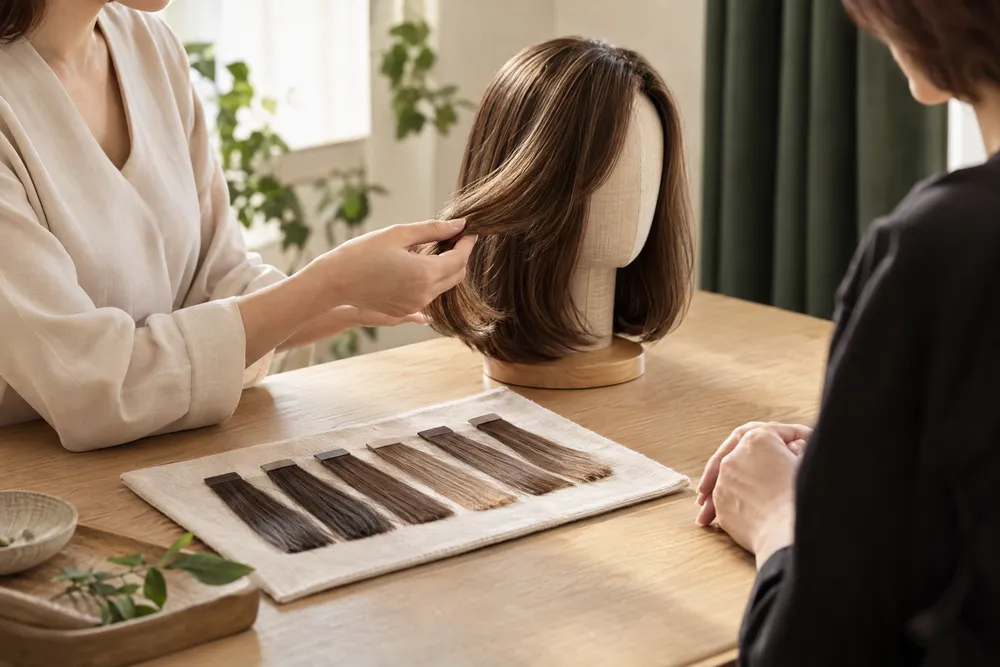
Selecting a nearer shade and altering the exposed natural hair are different routes. Compare the commitment of each before assuming that dye is the easiest way to make them meet.
Keep the natural-hair plan separate from the piece
Changing your own lengths introduces questions about previous colour, condition and future regrowth. The American Academy of Dermatology's colouring guidance explains that greater lightening can cause more damage than staying nearer the natural shade. This supports discussing the size of the change; it does not establish a safe formula or suitability for your hair.
Could another piece shade satisfy the goal without altering your hair? If not, discuss a natural-hair adjustment and future maintenance. Mention old dye, lightened ends and other chemical work, even on apparently uniform brown hair.
Disclose previous dye reactions before considering another product. The NHS guidance on hair dye reactions advises following instructions and not continuing after a test reaction. A history of reactions warrants medical advice, not reassurance from a gentle-sounding brown name.
None of this supplies instructions for a synthetic piece. Even colouring a human hair wig needs a separate assessment of the actual piece and its treatment history. Do not carry a natural-hair dye plan across to a wig, its base or attachments.
8. Bring a boundary-specific request to the enquiry
If you are considering altering the exposed natural hair, use a hair colour consultation enquiry to ask about feasibility, preparation and the scope of work. It is not confirmation that a salon will modify your wig or topper.
Explain the preferred sample and the compromise
For example: 'My topper meets my deep brown sides, but its sample looks too red. Could we assess a nearer tone, alongside choosing another piece shade?' Add your treatment history and contrast limit. Adapt this request to your situation.
For piece selection, OWNSTRAND's custom wig samples page explains the sample-viewing discussion. Ask which comparisons can be made for your intended piece rather than assuming every catalogue shade is present.
Natural-hair feasibility enquiries at Vit So concern its separate location at 252 Hollywood Road, Sheung Wan, telephone or WhatsApp +852 5305 7561. Confirm consultation arrangements, any fee, the quotation and appointment time before travelling. Keep those details separate from OWNSTRAND's Kwun Tong fitting and selection arrangements.
| Visible relationship | Depth first | Undertone second | Contrast limit and next step |
|---|---|---|---|
| Deep brown sides; piece looks light | Compare a deeper base | Retain your preferred warmth or coolness | For a quiet join, test depth before changing tone. |
| Similar depth; piece looks reddish | Keep the current depth | Compare less red or more neutral reflection | Check whether the softer warmth meets your limit. |
| Similar depth; smoky piece feels separate | Keep the depth comparison | Try softer coolness or a balanced brown | Reject strong smokiness if you want a quiet join. |
| Brown sides contain white strands | Assess the overall mixture | Do not equate ash with white strands | Discuss distribution as well as the brown component. |
| Dark neighbour; brighter surface strands desired | Inspect the joining edge | Choose the preferred strand reflection | Keep deliberate dimension only if the boundary suits you. |
Ask OWNSTRAND about selection and fitting
Tell us the style you have in mind. We can discuss the options, quotation and arrangements before you decide.
Ask OWNSTRAND about selection and fittingBefore you choose
Should I match the topper to my roots or my ends?
Use the natural hair beside the topper in your intended style, which may be side lengths rather than roots. If several colours meet it, prioritise the main joining zone and compare the complete hairstyle.
If my hair has a reddish sheen, must I choose a warm piece?
No. Compare a warm sample at a similar depth, but reject excessive red if it bothers you. A softer, more neutral brown could fit your contrast preference better.
Can a matching colour number remove the need to see a sample?
No. A manufacturer's number cannot certify a match to your hair or another brand. Ask which physical sample is available and whether it represents the intended piece.
Further reading
- Coloring and perming tips for healthier-looking hair — American Academy of DermatologySupports weighing substantial lightening and possible damage when discussing changes to exposed natural hair; not a wig-colouring method or a brand endorsement.
- Hair dye reactions — NHSSupports disclosing previous reactions, following product instructions and not continuing after a test reaction; does not establish any salon testing policy.