
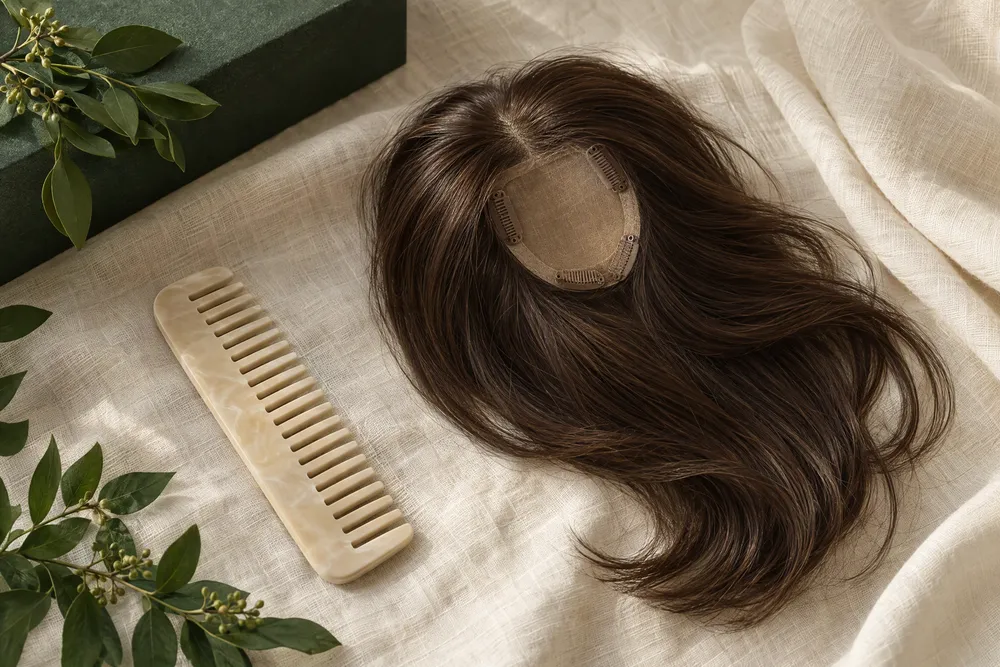
Find the visible join, not just the base edge
The first reference point is where the two sources of hair are seen together. This can sit well below the edge of the base, particularly when the hairpiece has long falling strands.
Separate coverage from the hair that hangs over it
Put on the piece in its usual position and let both sets of hair settle without arranging them into an ideal photograph. Look from the side and back as well as the front. Note where the hairpiece still forms the outer surface and where your own hair becomes the main visible layer. These positions need not be identical around the head.
The guide to hair topper base size helps distinguish a coverage footprint from the overall hairstyle. Do not choose a smaller base or move it away from the area needing coverage simply to reveal more colour. Fit and appropriate attachment come first; the colour design must work around them.
A long transition may be hidden at the back yet conspicuous where natural hair emerges higher at the sides. Record the earliest exposed natural section in each view, not only the lowest point.
Decide how much uninterrupted dark hair to keep
A dark section between the overlap and the first lightness gives you a way to separate two decisions: matching the piece near the join and introducing contrast farther down.
Keep continuity before adding brightness
For an explanation of painted placement, Vit So's balayage page offers vocabulary for discussing retained depth and where lightness appears. Here, the additional constraint is an existing hairpiece: the proposed natural-hair colour needs to be considered alongside that unchanged piece, not as a whole-head reference copied directly.
An uninterrupted dark section means that the natural hair immediately visible beside the piece remains dark across the area you want to blend. It is not a prescribed width or a guarantee that the join disappears. A piece with a different warmth, density or shine may still look separate even when both are described as dark brown.
Use hair topper colour match with natural hair to organise that comparison. If the join already bothers you, discuss the mismatch before introducing another contrast below it. Keeping the surrounding natural section unchanged is a useful option while you decide whether the piece itself is the right match.
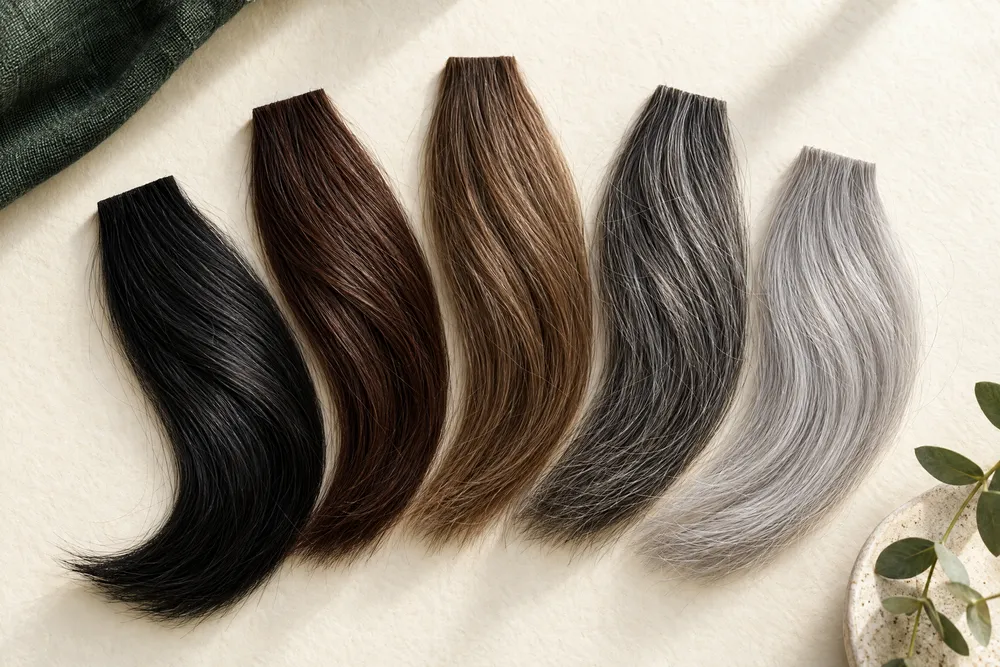
Choose a lower gradient when the ends have room
A lower start reserves the upper natural section for continuity and places the colour change in the uncovered lengths. It works as an idea only when those lengths are long enough to carry the effect you want.
Judge the transition and the lighter ends separately
The term ombre hair describes a dark-to-light distribution. Show where your piece ends alongside the reference: a low gradient in long hair may occupy nearly all the exposed length in a shorter style.
Consider a hypothetical shoulder-length wearer whose piece overlaps most of the middle lengths. The remaining natural ends offer little space for a dark section, a gradual transition and a broad lighter finish. That wearer might prefer a modest change at the tips, or retain the dark look, rather than compressing a dramatic reference into a narrow visible strip.
Check your planned trim before settling the start. Removing the lightest tips can leave mostly the transitional brown and change the impression considerably. Ask to discuss the final haircut and colour distribution together, while keeping the piece's length as a separate fitting decision.
- Mark where natural hair becomes visible in your usual loose style.
- Mark how much length you expect to retain after trimming.
- Identify the first lightness and the brightest ends as two separate points.
- Check whether the falling hairpiece would hide either point from the front or back.
Compare scattered lines with a continuous lighter bottom
You may want movement through dark hair rather than an entire lower outline that looks lighter. In that case, the spacing of visible lines matters as much as their starting height.
Follow the lines in your normal texture
Vit So's balayage vs highlights comparison helps distinguish individual lighter strands from broader brightness. Use it to name what you see, not to prescribe the application method. For this hairpiece decision, ask whether the natural lines begin below the dark joining section and whether dark strands remain between them.
Scattered lines can leave some dark hair visible all the way to the ends. However, very pale lines against a deep base may attract more attention than a broader but closer brown gradient. Fine does not automatically mean discreet. Decide whether you want to notice separate strands indoors or simply a change when the hair moves.
Straight hair reveals a line's starting point; waves turn strands in and out of view. Compare references with your daily texture, including an ear tuck. A line hidden at rest may sit beside the piece when you change the hair's direction.
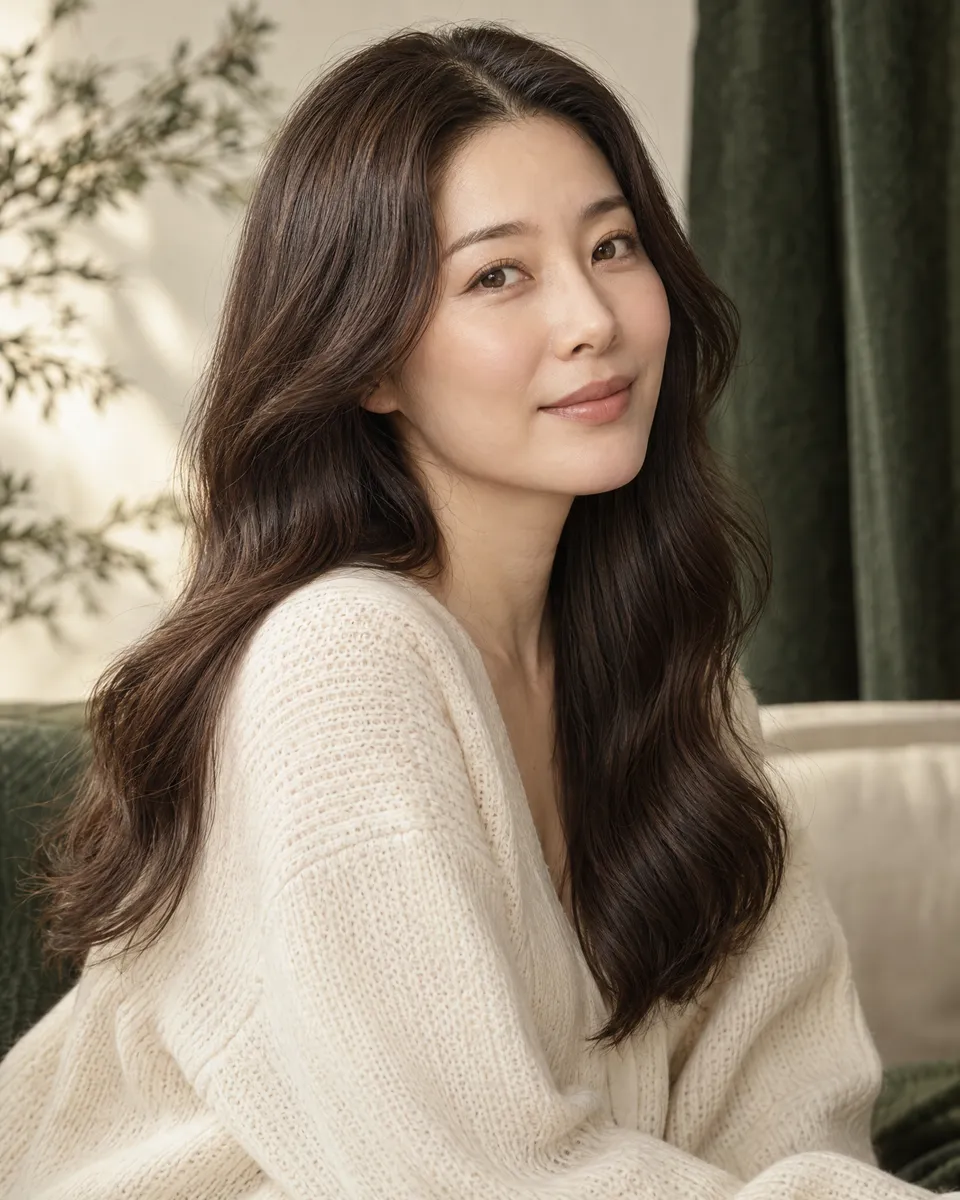
Set contrast expectations for the natural dark lengths
Starting low does not necessarily make colour subtle. The difference in depth between the dark upper hair and the lighter ends can dominate the look even when the transition is gradual.
Separate the desired appearance from feasible lightening
The reference on balayage on dark hair is relevant to contrast expectations for your own lengths. A mostly dark hairstyle with visible brown accents is a different goal from a dark top above pale ends. State which impression you want before choosing a shade from a photograph.
Natural dark hair and lengths carrying old dark dye are different starting situations. Share previous colour, lightening and texture treatments, including uncertain details. The American Academy of Dermatology advises that greater lightening can cause more damage and that cosmetic treatments can leave hair dry and brittle. A soft-looking boundary is not evidence of a gentle chemical process.
Compare the actual piece and natural hair together through wig colour matching, rather than treating two screen swatches as proof of a match. If the proposed brightness is unsuitable, decide whether a closer brown contrast would still appeal to you. Keeping the same lower placement with less brightness is one possible preference; keeping everything dark is another.
Test the proposed start against three everyday views
A useful placement note survives more than one flattering angle. Evaluate the loose outline, the exposed side and the hairstyle you use for commuting or work.
Make a visual brief without changing the hair
Use current photographs and mark approximate positions on copies: the exposed join, the first proposed lightness and the intended lighter ends. This is a visual planning exercise, not a preview of an achievable result. Keep the original photographs unedited so the stylist can see your current colour.
For a topper blending check, compare window light with ordinary office light using the same parting. Do not compare curled hair in daylight with straight hair under a ceiling lamp and attribute every difference to colour. Cameras can shift tone, so include what you notice in the mirror.
Check your usual collar and a comfortable tied-back style if the attachment allows it. Tying hair back can expose natural sides near the join. Revise a plan that fails in daily wear rather than relying on loose hair to hide it.
- Take a loose front-and-back view to show how far the piece overlaps the natural hair.
- Take the normally exposed side view, including an everyday ear tuck if you use one.
- Show your normal work hairstyle without pulling the piece into an unfamiliar position.
- Write down whether each concern is the join, the start height, the amount of light hair or its tone.
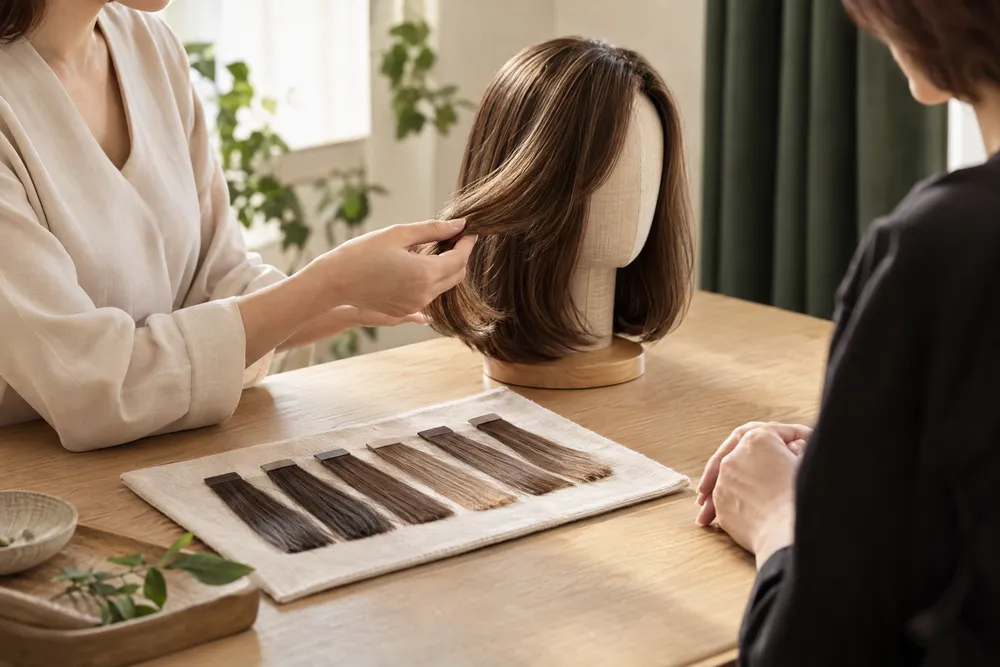
Confirm separate plans for the hairpiece and natural hair
Once you have a preferred distribution, send a clear enquiry that identifies which component would change. Coverage, natural-hair colouring and any hairpiece work are not interchangeable service requests.
Ask about scope before choosing an appointment
A useful brief says: keep the existing piece unchanged, retain dark natural hair at the exposed join, and discuss lower lightness on the visible lengths. Add your normal hairstyle, planned trim and treatment history. Ask whether that design is suitable and which work, preparation and total quotation it would require.
Tell the natural-hair stylist about past product reactions before making arrangements. NHS guidance advises following dye instructions and not continuing if a reaction occurs after testing. Ask what testing the proposed products require; if you have had a reaction, seek appropriate medical advice rather than treating a colour reference or a previous uneventful appointment as clearance.
OWNSTRAND's hairpiece selection and fitting enquiry is through its Kwun Tong store, Room 2103, 50 Hoi Yuen Road, WhatsApp +852 5933 4697. Vit So is a separate service location at 252 Hollywood Road, Sheung Wan, +852 5305 7561; confirm the natural-hair colour scope there. Do not assume either enquiry includes chemical work on your existing piece.
Review the distribution after growth or a trim
Keep your original placement notes for later comparison. Growth can move natural lightness farther from the scalp, while a trim removes some of the lighter ends. A change in tone is a different concern from wanting the lightness higher. Recheck the piece's overlap before asking for another colour appointment, especially if its fit or styling has changed.
| Direction | What to examine | Main trade-off |
|---|---|---|
| Lower gradient | Enough uncovered length for a dark section, transition and lighter tips | Preserves upper depth but may be hidden by long hairpiece strands |
| Scattered lighter lines | Their first visible point, spacing and contrast in your normal texture | Retains dark strands below, but pale individual lines can stand out |
| Uninterrupted dark join | Natural hair stays dark where it is exposed beside the piece | Prioritises continuity; a separate tone or density mismatch still needs attention |
| Retain the dark lengths | Whether more colour is actually needed to achieve your preferred outline | Avoids introducing a new contrast, but does not provide lighter-end interest |
Ask OWNSTRAND about selection and fitting
Tell us the style you have in mind. We can discuss the options, quotation and arrangements before you decide.
Ask OWNSTRAND about selection and fittingBefore you choose
Should the gradient start exactly where the hairpiece base ends?
Not automatically. Hair from the piece may hang far below the base, and the natural hair can be exposed at different heights around the head. Identify the visible overlap in your normal hairstyle, preserve the continuity you want there, and then assess the uncovered length below it.
What if my existing hairpiece already has lighter ends?
Compare where its lighter ends sit beside your natural hair, including their tone and brightness. Do not assume one dye or lightening process can be applied to both components. Any requested alteration to the piece needs separate suitability and service confirmation.
Can I keep the piece dark and still choose noticeable lighter natural ends?
That can be a visual preference. Decide whether the result should read as one blended dark upper section above lighter ends or as distinct scattered accents. Check the contrast from the sides and back, then discuss achievable brightness on your actual natural hair. The dark piece remains unchanged; the colour plan does not guarantee an invisible join.
Further reading
- Coloring and perming tips for healthier-looking hair — American Academy of DermatologySupports the general caution that greater natural-hair lightening can cause more damage and cosmetic treatments can leave hair dry and brittle; it does not prescribe gradient height or assess a hairpiece.
- Hair dye reactions — NHSSupports following dye instructions, discussing testing and past reactions, and stopping use after a reaction; not a guarantee of salon suitability or guidance for treating wig fibres.