

Set a grow-out destination before changing today's shape
Before arranging a haircut, describe the natural length you are working towards. Vit So's service guide separates cutting from finish-only styling; explain your grow-out goal rather than requesting the shortest possible hair beneath a wig.
Choose one useful next landmark
Your next goal might be sides that stay behind the ears, a front section that reaches a low gathering point, or a loose shape you feel comfortable wearing at home. Pick the nearest useful goal. An eventual long hairstyle is less helpful at today's appointment than knowing which short sections must be left alone.
Take front, side and back photographs with the hair dry and resting normally. Identify what bothers you: a long nape tail, an uneven edge or a crown that stands up. Then identify what you can tolerate temporarily. Bringing every section back to the shortest section may produce a neater outline now but remove length needed for your next stage.
Record cap fit as a separate baseline
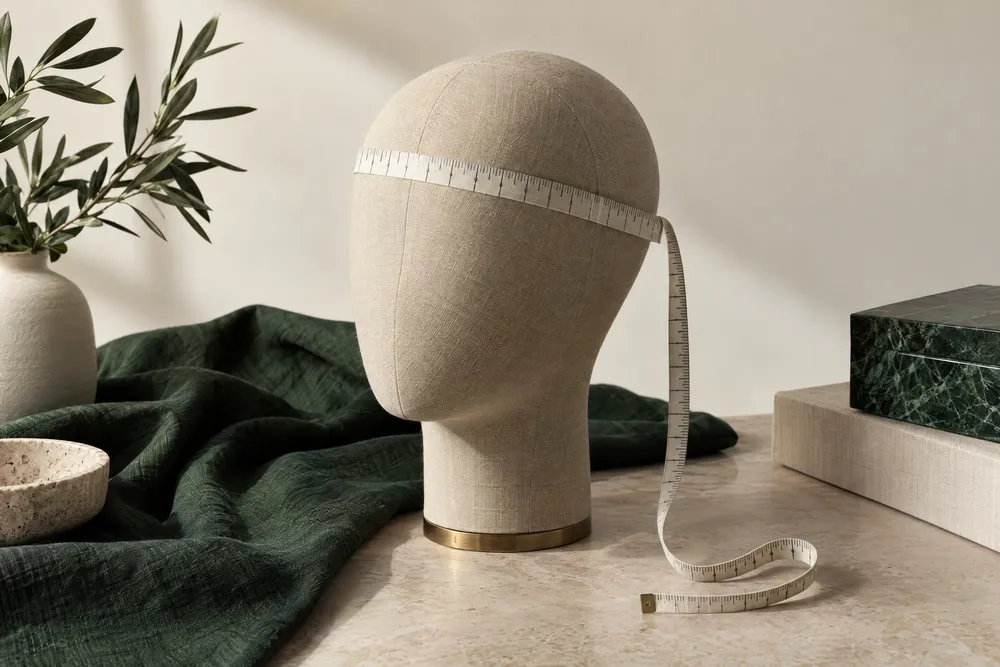
Note your usual liner, preparation method and strap position alongside the photographs. OWNSTRAND's guide to wig cap sizes helps frame the sizing questions. Head measurement and the distribution of hair beneath the cap are different observations; keep both in your notes.
- Write the next function you want: ear tuck, loose gathering or a wearable loose outline.
- Mark the front, sides, crown and nape separately; do not give one length limit for the whole head.
- Show the maximum removal you would accept and ask what would change if that boundary is kept.
Stage one: short regrowth that cannot yet be gathered
Short regrowth can point in several directions and still be part of a workable grow-out. At this stage, the minimum-length boundary is usually about preserving emerging coverage and direction, not creating a tiny ponytail.
Keep the crown and sides moving towards the next shape
Show how the hair lies without stretching it flat. A side that begins to bend towards the ear may be useful even while it looks untidy. Ask whether that section can remain untouched while a clearly overhanging edge elsewhere is tidied. Do not assume that all short lengths need refreshing together.
If the crown is shorter than the back, discuss whether a local change at the back would make the proportions easier to wear. The trade-off should be explicit: how much back length would go, and does that matter to your eventual outline? Keeping everything is one option; sacrificing selected length for a more comfortable loose shape is another.
Use a coverage boundary rather than a fixed measurement
Point to the shortest dry front position you would accept and name any ear-area coverage to retain. If those areas have not reached your landmark, let them continue growing. There is no universal minimum in centimetres that makes short regrowth suitable beneath every wig.

Stage two: ear-length hair that nearly tucks away
At ear length, a hair trim should have a stated limit: which edges may be refreshed, and which sections must remain long enough to move behind the ear. The linked service page treats a trim as an agreed scope, not a separately confirmed cheaper appointment.
Test the tuck in the ordinary dry shape
Try the side section with your normal parting and glasses, if worn. Does it sit behind the ear without being pulled tightly, or only when stretched? Waves and curls may sit differently when dry. Demonstrate the actual movement you need before agreeing to shorten either the side edge or the pieces in front of it.
An ear-length outer line does not mean every front piece has reached the ear. A short face-framing section may still fall forward. Ask to preserve its route towards the tuck while discussing any unrelated uneven ends. If the tuck is only just possible, leaving it longer may be more useful than making both sides look perfectly matched today.
Reduce a fold before removing hair
Under a full wig, ear-length hair may bunch where you previously laid short regrowth flat. Check whether you are folding several sections into one spot. Review wig caps and liners as preparation accessories, not as a promise to flatten every hair type. Test a comfortable distribution before treating local bulk as a cutting problem.
Stage three: lengths that can be gathered loosely
Once hair can gather, preserve reach from each area to the position you actually use. A length that works for a low gathering point may not work for a higher one, and the shortest pieces often decide whether the arrangement is comfortable.
Let the front and nape set the minimum
Demonstrate the gathering position without pulling the front taut. Show whether you accept loose pieces or need them contained. Protect the front and nape lengths individually; retaining the longest back ends alone does not preserve the whole arrangement. Ask whether proposed layers would release pieces you currently rely on.
Try spreading longer hair into a low-profile arrangement instead of placing all of it in one bulky knot. The workable method depends on your hair and cap. If a method only stays together when tightened until it hurts, it is not a useful length test. The American Academy of Dermatology advises pulling hair back loosely beneath a covering.
Do not use strap tension to compensate for a lump
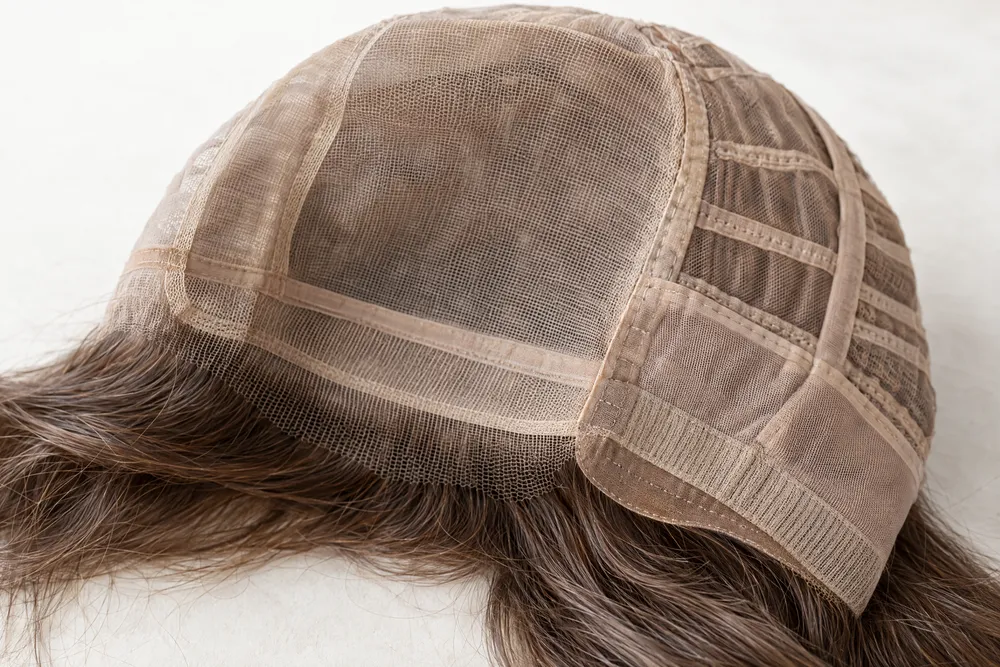
Check hair distribution first, then inspect the cap's adjustment system. The guide to adjustable wig straps explains the fit questions worth asking. Making the straps tighter may change pressure without resolving a concentrated fold of hair. Keep the natural-hair plan and the cap adjustment decision separate.
Know when a small refresh needs a wider cut consultation
A women's haircut consultation becomes the more relevant discussion when you want to change how the front, crown and outer edge relate. That is different from asking to tidy selected ends while keeping a recognisable shape.
Describe the decision, not just the amount removed
Small removal can make a large practical difference. Shortening a barely tuckable side may remove its function, whereas tidying a longer back edge might not. Explain the function you refuse to lose and ask which service and charge cover the work.
A wider consultation is sensible if you want a new loose silhouette, different front coverage or revised layers. Bring a reference for the natural hair, separate from the wig reference. A medium-length wig does not require medium-length natural hair underneath, and its displayed layers are not instructions for cutting your own hair.
Use a hypothetical case to make the trade-off clear
Suppose the back can gather but the front falls out. Cutting shorter front layers for a lighter look would move that wearer away from full gathering. Keeping the front and refreshing only an agreed back edge might better serve the immediate goal. This is a decision example, not a client result or a technique recommendation.
Review changing bulk without confusing it with wig density
Natural hair beneath the cap and the hair attached to the wig are separate layers. More fullness underneath may change how the cap sits; it does not mean the wig's own density has increased.
Change one preparation variable at a time
Compare the same wig with your usual preparation first. Note where you feel pressure and whether the ear tabs or front position seem different. Then change only the hair arrangement or only the liner. Several simultaneous changes make it difficult to identify what helped.
If the fit remains uncomfortable, ask about the particular cap and available assessment rather than cutting natural hair immediately. OWNSTRAND's custom wig fit and adjustment information concerns fitting discussions; it does not establish that every existing wig can be altered. Bring the actual piece and your normal preparation details when enquiring.
- Record where pressure occurs before changing the straps.
- Redistribute an obvious fold without pulling the hair tighter.
- Repeat the comparison with one change and note the result.
- Stop a painful arrangement; seek a fitting discussion if comfort remains unresolved.
Care for retained length and review by function, not dates
A grow-out plan also needs ordinary natural-hair care. Use handling changes and your next length function to decide what to review, rather than assuming everyone needs the same trim interval or reaches each stage on schedule.
Keep the natural-hair routine distinct from wig washing
The AAD recommends washing according to dirt, oil and hair type, applying shampoo to the scalp and using conditioner after washing. Its conditioner advice differs for fine or straight hair and dry or curly hair. Follow the needs of your natural hair rather than copying a wig-care routine or adding heavy products solely to make hair lie flat.
Detangle gently from the ends upwards and absorb moisture rather than rubbing vigorously. Limit excessive heat instead of repeatedly straightening every section for cap preparation. These habits support handling the length you retain; they are not a promise of faster growth. Wig fibres and cap materials still need their own care instructions.
Bring a changed function to the next enquiry
Review when a side begins to tuck, the front reaches your gathering point, or the cap preparation stops feeling comfortable. If you notice pain, scalp stinging or patches of hair loss, do not treat that as an ordinary awkward stage. Change the pulling arrangement and seek appropriate medical advice for hair loss or persistent symptoms; a salon or wig-fitting discussion cannot diagnose the cause.
| Current natural length | Minimum-length boundary to show | Possible shape-preserving discussion | Separate wig-fit check |
|---|---|---|---|
| Short regrowth | Dry front and side coverage that must remain; developing crown length | Selected uneven edges, without resetting all sections to the shortest one | Usual liner and cap position over the normal dry arrangement |
| Around the ears | Side and front reach for a comfortable ear tuck | Local edge refresh while preserving pieces still growing towards the tuck | Hair folding near the ears and the effect of the liner |
| Loosely gatherable lengths | Front and nape reach to the actual gathering position | Agreed perimeter changes without losing essential shorter pieces | Concentrated knots or folds before changing strap tension |
Ask OWNSTRAND about selection and fitting
Tell us the style you have in mind. We can discuss the options, quotation and arrangements before you decide.
Ask OWNSTRAND about selection and fittingBefore you choose
Should I trim every section whenever the nape looks untidy?
Not automatically. The nape may need a different discussion from the crown or front. Identify the edge bothering you and protect the sections needed for your next function. Ask what a local refresh would change before agreeing to remove length elsewhere.
Must my natural hair be long enough for braids before I can wear a wig?
Braids are not a universal minimum-length requirement. The practical question is whether your hair can be arranged comfortably beneath the particular cap without pulling. Short hair may lie in its own direction; longer hair may need gentle redistribution. Confirm preparation for your actual piece rather than forcing one method.
If the wig feels tighter during regrowth, do I need a new wig?
Not necessarily, but do not assume an adjustment will solve it either. Compare hair distribution, liner and cap settings separately. If discomfort remains, enquire about the particular wig's fit and limits. Avoid cutting natural hair or buying a replacement before identifying the issue.
Further reading
- American Academy of Dermatology: Hairstyles that pull can lead to hair lossSupports loosely pulling hair back beneath a covering, avoiding repeated tight styling, responding to pain or scalp symptoms and seeking assessment for hair loss. It does not establish grow-out stage timings or cap-specific outcomes.
- American Academy of Dermatology: Tips for healthy hairSupports hair-type-aware washing and conditioner placement, gentle detangling, moisture absorption and limiting excessive heat on natural hair.