

Start with the connection that actually changes
Your natural sides keep growing; a hairpiece does not grow from follicles. This creates a changing relationship even when you wear the same top shape every day.
Separate coverage from the haircut perimeter
A men's hairpiece may cover the top while leaving the side panels and nape visible. Look at where the top's hair falls over those panels, rather than treating the ear edge as the whole blending area. A neat perimeter can coexist with too much fullness higher up; equally, the upper connection can remain good after small hairs appear around the ears.
The Cleveland Clinic's hair-growth overview describes average growth of four to six inches a year. That gives biological context, not a haircut timetable. The same added length looks different on closely cut sides, a fuller taper and outward-growing hair.
For a men's hairpiece for thinning crown, also observe the rear connection below the covered crown. Decide which change bothers you first: a fuzzy ear edge, a wider temple panel or a heavier rear outline. Those are separate reasons for returning.
A crisp fade makes small regrowth easier to notice
Vit So's fade haircut guide compares the transition across the sides and back. For a hairpiece wearer, the useful question is how that transition looks as the natural sides become darker and fuller.
Refresh the outline without automatically raising it
A close lower area beside a fuller top creates visible contrast. As natural hair returns, the pale lower area can look less distinct and the perimeter less defined. If your priority is that freshly separated look, you may want a refresh before someone who prefers a softer outline. That is a preference threshold, not evidence that your hair grows faster.
Compare the highest short boundary with your first satisfactory photograph. Asking to ‘make it clean again’ at every visit can become a request to take the shortened area higher. Beside an unchanged piece, that changes the design instead of simply maintaining it. State whether the boundary should stay in the same place.
An ear-edge tidy may be enough when the gradient and upper-side connection still work. If the whole side panel has lost the intended transition, discuss reshaping that panel. The word fade does not confirm bare-skin finishing, particular tools or suitability for your retained hair.
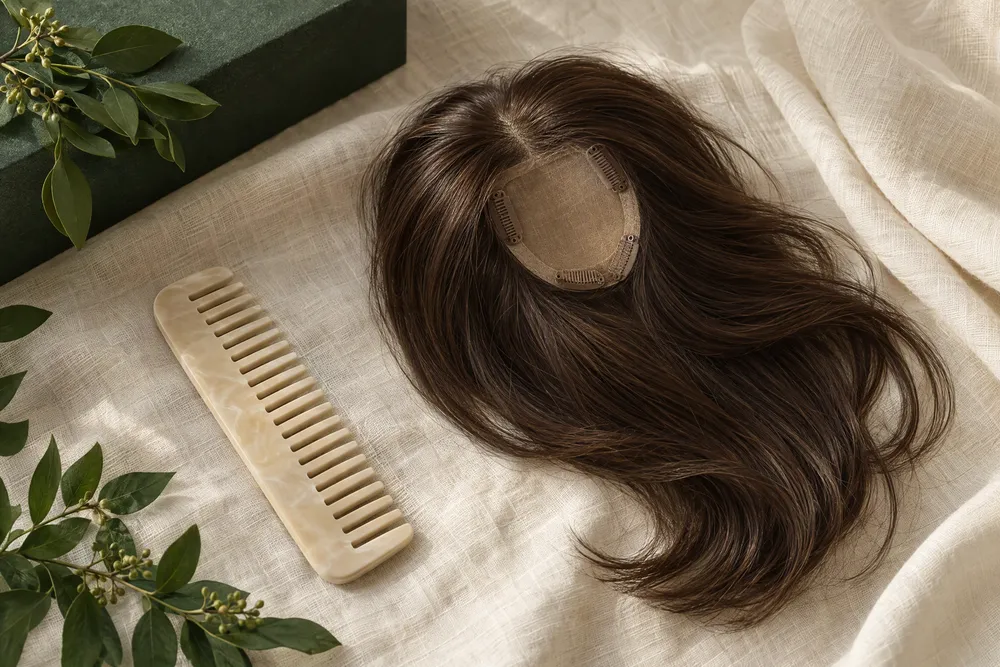
Longer tapered sides trade sharp contrast for retained shape
The taper haircut comparison is useful when you want local shortening near the sideburns and nape while preserving more hair above them.
Keep helpful length, then watch where it spreads
A fuller upper side can give the top somewhere to meet visually. Regrowth may be less conspicuous than in a closely cut gradient, but it can still collect above the ears or form an outward ledge beneath the piece. Retained length is useful only while it contributes to the outline you want.
Do not judge the taper only with the top brushed high. Let the piece sit in your usual direction and put your glasses on. Look for hair bunching against the arms or turning out behind the ear. Those contact points can make an otherwise acceptable side feel inconvenient.
Use men’s hair system side-profile photos as a starting point for viewing the connection from the side. You might keep the upper length and tidy only the edge, or reshape an expanding panel while preserving the longer design. A taper is not a guarantee of fewer visits; it gives you a different shape to evaluate.
Delay the cut when length is helping, not merely accumulating
For natural-side work, Vit So's men's haircut page asks what should stay and what should change. That distinction is especially helpful when you are intentionally moving away from very short sides.
Set an acceptable grow-out stage
Waiting can make sense if the upper sides are still too short for your preferred softer connection and you can live with the current edge. It is less useful when you already dislike increasing width and are hoping another increase will fix it. Say what the extra length is intended to achieve.
For example, in a hypothetical grow-out, a man likes the first cut's shape but finds the side-to-top contrast too strong. At the next review, the added upper-side fullness looks better and only the nape is untidy. He can ask whether a local nape refresh would preserve that progress instead of repeating the first cut everywhere.
Keep a stop condition: hair repeatedly catches on glasses, the rear connection becomes bulky, or your ordinary finish no longer holds the shape you accept. These are practical reasons to reassess. None sets a safe clipping or attachment length, and a delay in cutting is not permission to postpone necessary piece care.
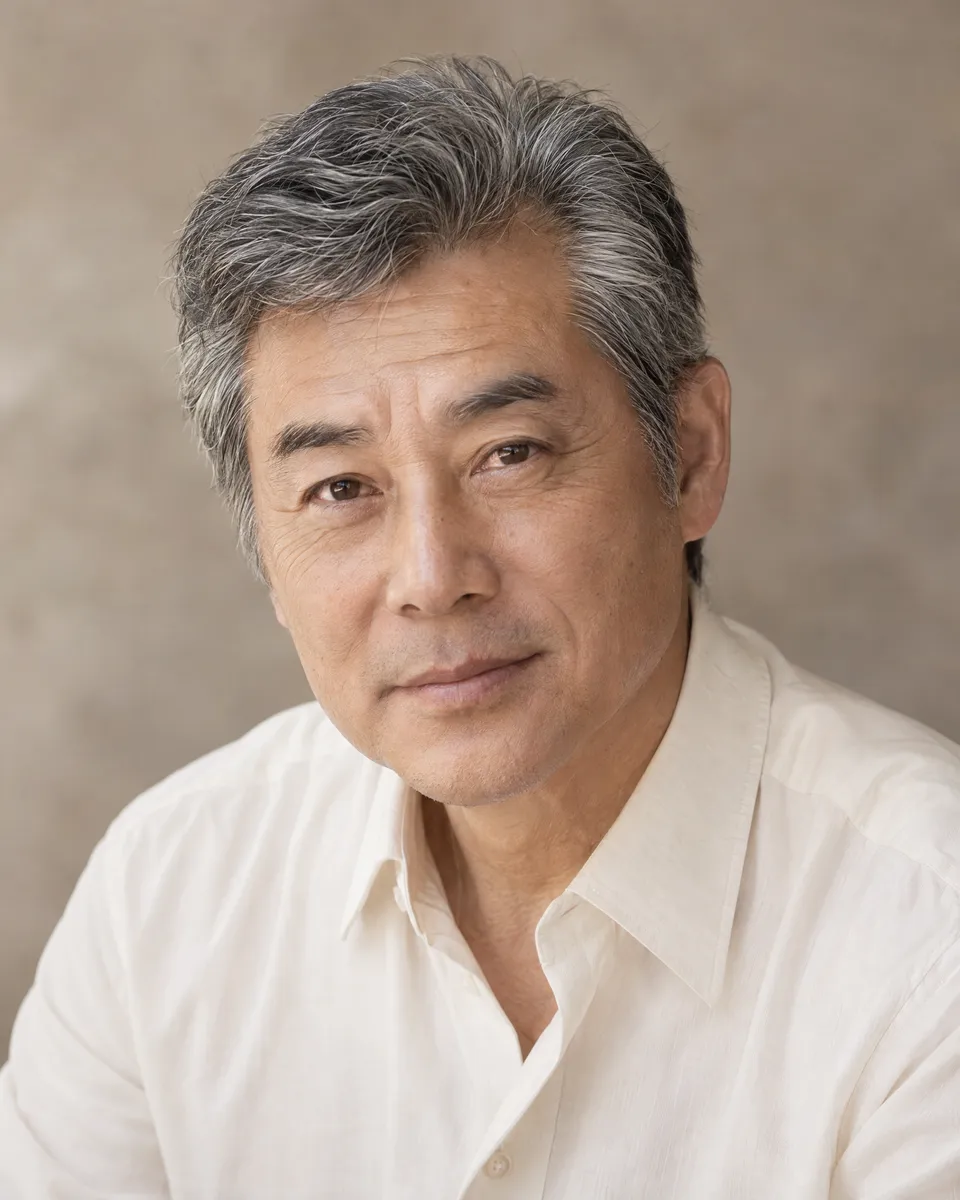
Build a regrowth record across successive visits
Use your own changing outline as the reference. A sequence of comparable photographs is more informative than comparing your current sides with somebody else's newly styled haircut.
Record the first problem, not just the appointment date
After a satisfactory cut, save front, side and rear photographs with the piece in its normal position. Use similar light, camera distance and drying routine for later checks. Include glasses if you wear them. The baseline should show a finish you can reproduce, not only a salon arrangement.
At the next visit, explain what changed first and what still looked good. After the following cut, repeat the comparison. If each cycle ends because of ear-edge growth while the upper connection stays comfortable, ask about outline-led upkeep. If each ends with a widening side panel, discuss the retained shape rather than booking the same edge tidy indefinitely.
Consider a hypothetical three-visit sequence. At the first visit, a man records a clear ear edge and comfortable upper-side fullness. Before the second, only the nape has become distracting; he asks to preserve the side panel while discussing a local refresh. Before the third, the edge is still acceptable but the area below the piece spreads outward in his normal dry finish. He now asks about panel shaping, not another nape tidy. The changing request follows the observed problem. It does not assume that all three visits need identical work, that the top needs shortening, or that the same appointment gap will suit the next cycle.
Check contrast before blaming length
Natural grey hairs may become more noticeable as the sides lengthen, particularly in bright light. That does not automatically mean the sides need cutting. Our guide to how to blend a hair topper with natural hair helps separate tone, density and length. If the silhouette still works but the colour relationship does not, describe that difference rather than using a shorter cut as the default answer.
- Save a baseline in your normal dry finish, including both sides and the rear.
- When the shape starts bothering you, photograph the specific area and note the date.
- Bring both stages to the next discussion and request the smallest change that addresses the problem.
Do not mistake a different finish for new growth
The side outline can look wider because the hair has been arranged differently, even before much length has changed. Compare like with like before asking for more to be cut.
Separate cut shape from drying direction
A polished finish may guide natural side hair downward while your home routine lets it turn outward. Test the ordinary finish you are willing to repeat. If that fixes the apparent extra width, you have identified a styling question; if the panel still spreads, you have clearer evidence for a cutting discussion.
Vit So's men's wash cut and blow dry service names washing, cutting and blow-drying. Ask which part of the proposed natural-side shape comes from retained length and which comes from arranging it. The listing does not by itself confirm washing the piece, removing attachments or resetting a hair system.
The AAD's healthy-hair tips advise gentle towel handling, limiting heat and using low or medium settings. These recommendations concern natural hair. Follow the piece's own instructions separately; do not assume scalp-hair advice is suitable for its fibre, base or knots.
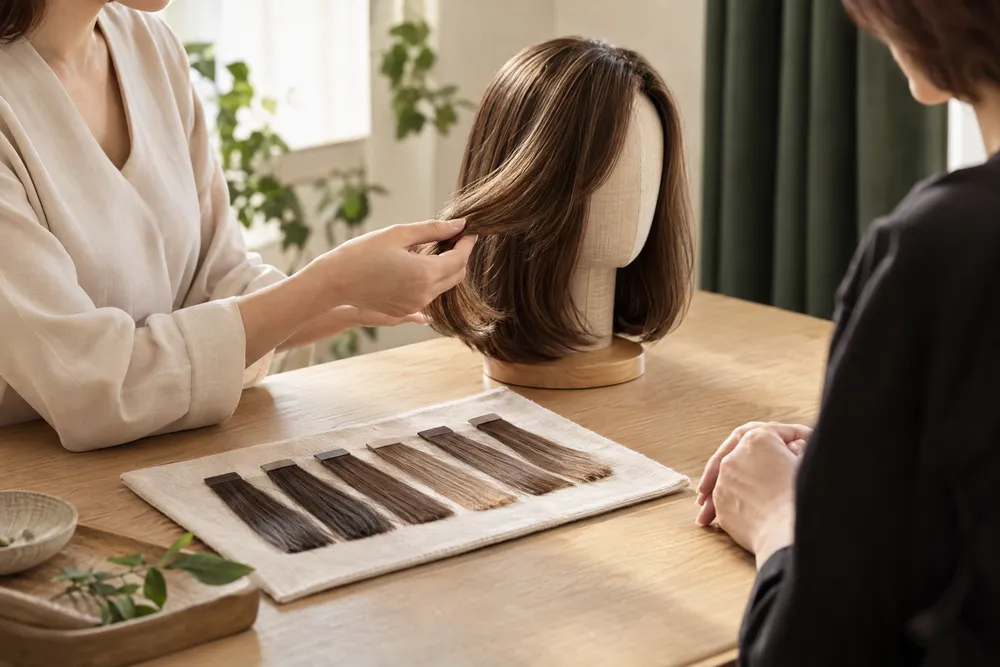
Budget for the agreed cutting scope, not a vague maintenance visit
When comparing men's haircut prices, read the named wash, cut and finish scope. A natural-side refresh and hairpiece maintenance are not interchangeable budget items.
Keep the two cost questions separate
Ask whether a side-only refresh is available and how it is quoted; fewer areas to cut do not prove there is a discounted service. State that the top is a hairpiece and ask whether the proposed natural-side work can be accommodated. Any piece cleaning, fit review, attachment work or piece cutting needs separate confirmation with the relevant provider.
The OWNSTRAND guide to men's hairpiece cost Hong Kong helps organise questions about the piece itself. For your recurring budget, record the agreed charge for each actual task and how often your own observations lead you to request it. Choosing a softer outline may change cutting preferences, but it does not establish lower care costs or a longer piece lifespan.
Vit So is at 252 Hollywood Road, Sheung Wan, with enquiries at +852 5305 7561. OWNSTRAND's sole shop is /en-hk/, with WhatsApp +852 5933 4697. These are separate locations, not two branches of one salon. Confirm the intended provider and appointment before travelling.
- Describe the natural area to change and the hairpiece shape that should stay unchanged.
- Ask about washing and finishing arrangements rather than assuming the piece is included.
- Confirm availability and the charge for the agreed side work; list any separate piece tasks.
- Keep the confirmed scope so the next quote can be compared on the same basis.
| What you see | What still works | Discussion to have |
|---|---|---|
| Fuzzy ear or nape edge | Upper sides and top connection remain balanced | Ask about a local outline refresh. |
| Fade contrast has softened | Transition position still suits you | Discuss restoring the gradient without raising its boundary. |
| Fullness forms a ledge above the ears | Top length remains right | Assess side-panel reshaping, not only edge tidying. |
| Extra length improves the softer connection | Daily handling remains manageable | Continue the grow-out, with a defined review trigger. |
Ask OWNSTRAND about selection and fitting
Tell us the style you have in mind. We can discuss the options, quotation and arrangements before you decide.
Ask OWNSTRAND about selection and fittingBefore you choose
Should every natural-side cut include cutting the hairpiece?
No. Natural regrowth is not evidence that the piece needs shortening. Explain that its current length should remain unchanged. If you dislike the top shape itself, discuss that as separate work with a provider who confirms they can assess the particular piece.
Can I schedule a cut ahead of an important event?
Yes, but use your own regrowth record and a previously acceptable shape as the starting point. Describe the event date when enquiring, confirm availability and allow for checking the everyday finish. Avoid making an untested, much closer outline the automatic event choice.
What if one side looks wider than the other?
Compare both sides after the same drying routine and check glasses contact and natural growth direction. Photograph the difference. Do not assume both sides need the same amount removed, or that moving the piece will solve it; ask for an assessment of the changing natural outline.
Further reading
- How To Make Your Hair Grow Faster — Cleveland ClinicProvides broad context on average natural-hair growth and growth cycles, not a recommended haircut interval.
- Tips for healthy hair — American Academy of DermatologySupports gentle natural-hair handling and limited heat with low or medium settings; not hairpiece-specific care instructions.