
Locate the exposed natural hair before choosing a colour
Start with the area that actually needs to blend. Your crown, side lengths and bottom edge may have different colours, different treatment histories and different handling needs.
Distinguish a visible join from a condition concern
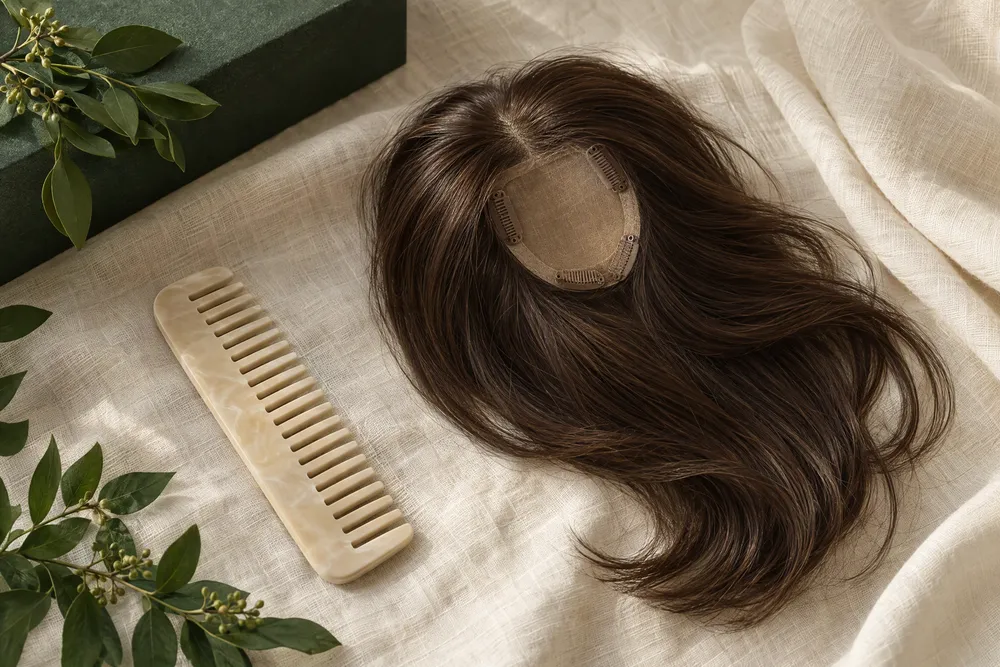
Wear your usual piece and identify which natural sections show when you turn your head. A colour difference at the shoulder is not necessarily a reason to process everything below the crown. Write down whether the concern is a warmer tone, a lighter band or an untidy outline. These are different requests.
For the visual side, read how to blend a hair topper with natural hair. Consider length and density alongside tone before assuming colour is the only variable. That comparison helps describe the join; it cannot establish what fragile ends can tolerate.
Describe ordinary handling rather than testing strength
Note where a comb catches during your normal routine and whether you notice short snapped pieces. Say if this happens mainly in old lightened areas or across all exposed lengths. Do not repeatedly stretch, pull or comb a strand to see whether it survives. An observation made without added stress is enough for the initial enquiry.
Build a history of the ends, not just your last appointment
A recent dark colour does not describe everything still present in a long end. Older processing may remain in the same section, even when the current shade looks fairly uniform.
Record what happened to each section
Use approximate dates if that is all you have. Include salon work and home products, with names or packaging photographs where available. An honest unknown is more useful than guessing that a forgotten treatment was gentle. Separate untouched growth from lengths that have been coloured, lightened, permed or straightened.
Also describe your usual heated styling. For example, the lower lengths may receive repeated straightener passes to blend with a smooth topper, while the roots are usually left alone. This gives the stylist a clearer picture than saying the whole head is dry.
- List past bleach, colour removal, permanent or semi-permanent colour, perms, straightening and smoothing products that may remain on the ends.
- Identify the areas treated each time: roots only, highlights, lower lengths or the whole head.
- Record when catching or breakage began, including any change after a particular service or styling habit.
- Add current shampoo, conditioner, masks and leave-in products, plus the finish each leaves after rinsing and drying.
- Disclose previous dye reactions and black henna tattoos; keep this skin history separate from the condition of the hair lengths.
Choose whether the immediate plan should pause
If ordinary detangling is producing repeated breakage, raise that before agreeing a colour service. The useful comparison is between changing the ends now, caring for them without colour and keeping the present shade while you clarify the history.
Make the deadline flexible before the length
An event date can make a colour change feel urgent. Decide whether keeping your existing length matters more than matching a reference exactly. If it does, say so at the first enquiry. Ask what non-colour arrangements could make the present join acceptable, rather than reserving an ambitious result before anyone has assessed the ends.
In a hypothetical example, a wearer has warmer natural ends under a cool brown topper and notices snapping after brushing. Their first request is to preserve length and discuss the snapping. The cooler shade becomes a preference, not a commitment. This is a decision example, not a client result.
Waiting needs a purpose, not a countdown
The American Academy of Dermatology recommends reducing damaging handling and allowing more time between colour touch-ups. That general advice is not a set waiting period that makes your ends ready. Use a pause to clarify processing history, discuss gentler handling and decide what would need reassessment before revisiting the change.
Give natural-end care its own measurable goal
Vit So's hair treatment page describes cosmetic care for lengths and ends. Use it to frame questions about manageability, not as evidence that a service restores damaged hair or makes colouring safe.
Ask for easier handling, not a repaired starting point
A concrete care goal might be less resistance during gentle detangling without a coated root area. Explain whether you want to retain waves and whether rich products leave fine hair flat. Ask which sections would receive care and what the proposed products and steps involve. A smoothing label alone does not tell you whether the process changes the bend.
Compare the feel after an ordinary wash and your usual drying method, rather than judging only a polished finish. Softness and shine are useful cosmetic observations. They do not answer how much further processing a section can tolerate.
Keep the piece's routine separate
AAD advice supports conditioner after shampoo, gentle combing, avoiding towel rubbing and reducing heated styling on natural hair. Do not transfer that routine automatically to your piece. OWNSTRAND's human hair vs synthetic wig care guide helps distinguish material-specific care questions. Even a human-hair piece needs its own construction and processing details checked.
Ask what the pre-colour assessment must resolve
The same service page lists pre-colour hair treatment as a protection-related care item. Ask how it would fit a proposed natural-hair service only after the colour plan and the fragile areas have been discussed.
Separate three questions that a soft finish cannot answer
First, what is known about the condition and processing history of the exact ends? Second, what steps would be needed to approach the desired shade? Third, what product-specific skin-reaction precautions apply? These questions concern different aspects of the decision; no single visual check answers all three.
Ask how the stylist would assess the proposed work and whether any product-directed checks are required before proceeding. Clarify their purpose and limits. A photograph is useful for locating a colour band but cannot certify tolerance. This guide does not prescribe a home chemical test or a strand-pulling test.
Keep reactions out of the cosmetic-care discussion
The NHS identifies burning, itching and blisters as possible dye-reaction symptoms, which can be delayed. Disclose any previous reaction before discussing products, even if your ends now feel comfortable. Ask about the manufacturer's allergy-alert instructions and seek healthcare advice for a previous or current reaction rather than asking a conditioner to solve it. Breathing difficulty or sudden mouth or throat swelling needs emergency help.
- Ask whether the proposed shade requires lightening or other steps on already processed ends.
- Ask which natural sections would be coloured and which would be left unchanged.
- Ask what would lead to postponing, reducing or declining the proposed work.
- Clarify the purpose, products and application areas of any protection step without assuming a named repair system.
- Confirm whether protection is included in the proposed package, and request the total scope and quotation.
Send a brief that keeps preferences and limits visible
A useful enquiry fits the essential history and your priorities together. It should give enough information to begin a conversation without pretending that a message replaces an in-person assessment.
Describe the desired change in ordinary terms
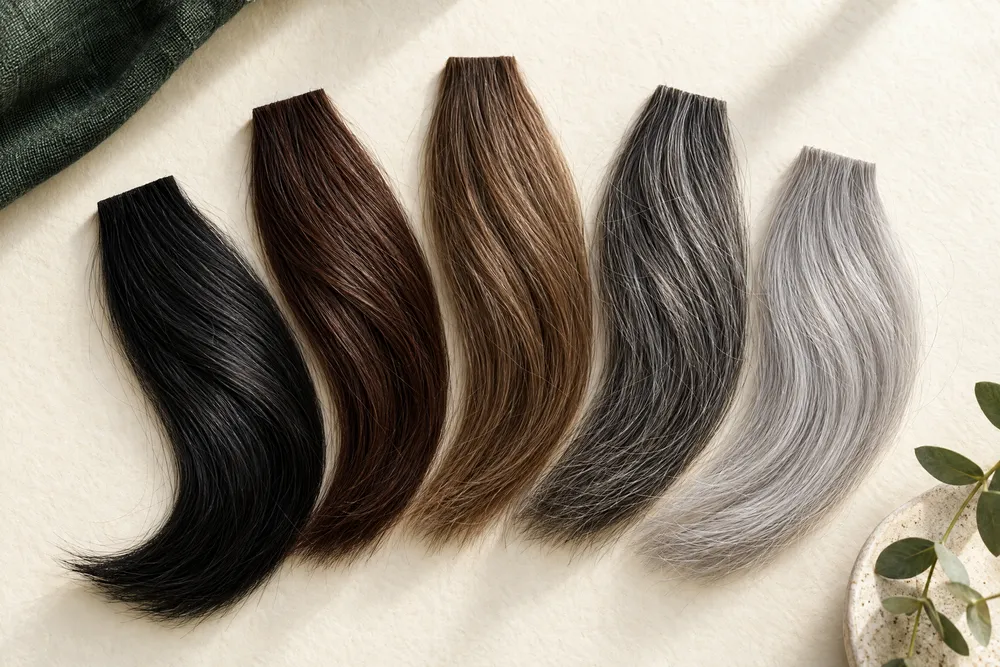
State whether you want the ends darker, less warm or simply less noticeably different from the piece. Include what you will not trade away, such as current length or natural movement. Add whether you can accept keeping the present shade. This helps prevent a dramatic reference photograph from overshadowing a modest blending goal.
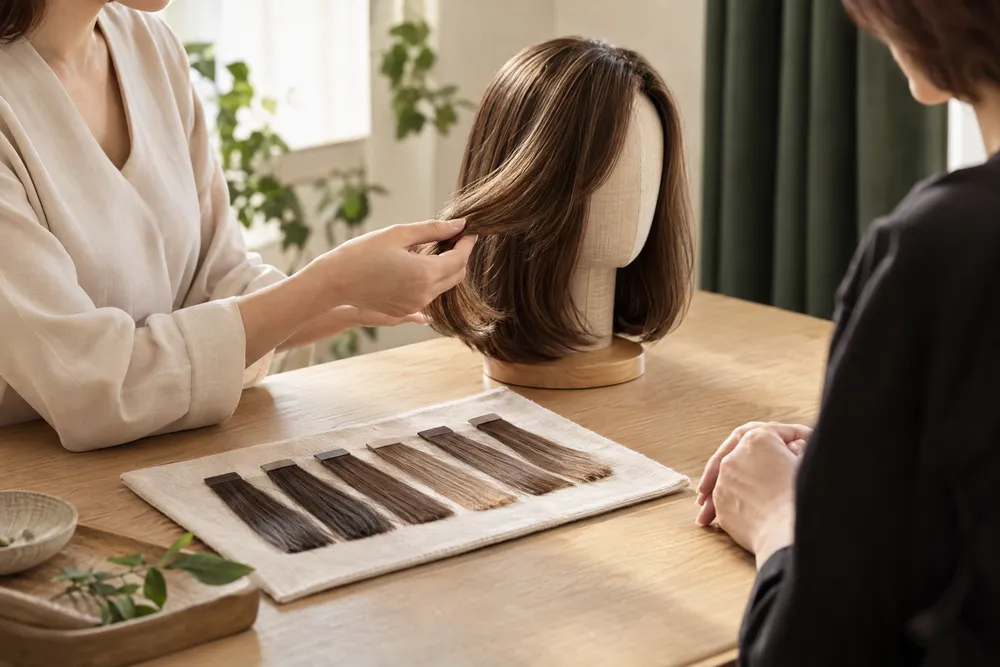
Use a wig colour photo checklist for clear visual references. Include the piece worn normally and the exposed natural lengths, without filters. Label which hair is yours. Photographs communicate appearance and location; product names and treatment dates provide a different kind of information.
Keep booking questions specific
Ask whether an assessment or standalone care visit can be arranged, what washing or finishing is included and when any further decision would be made. Confirm arrangements before travelling. Vit So's natural-hair enquiry location is 252 Hollywood Road, Sheung Wan, Hong Kong; telephone +852 5305 7561. Do not assume that an enquiry confirms a booking or a colour service.

Keep a workable look while colour remains undecided
Postponing a chemical change does not require settling every styling question at once. Work with the current shade and coverage arrangement while keeping the natural ends' concerns visible.
Compare the piece against the hair you have today
Use wig colour matching to organise tone comparisons, especially if you are already considering a different piece. Do not buy a new shade on the assumption that fragile ends can later be dyed to match it. If you keep the existing piece, ask about its fit and outline rather than repeatedly using heat on your own ends to force the blend.
OWNSTRAND enquiries concern wig selection and fitting, not clearance for natural-hair colouring. Its only store is /en-hk/; WhatsApp +852 5933 4697. Keep this visit separate from the Sheung Wan natural-hair discussion.
| Route | What it helps decide | What remains unresolved |
|---|---|---|
| Pause the planned colour | Prioritise current length, record history and discuss repeated breakage. | Waiting alone does not establish readiness or guarantee stronger ends. |
| Discuss natural-end care only | Define a cosmetic goal such as easier gentle detangling without unwanted heaviness. | A softer feel does not establish tolerance for lightening or dye. |
| Request an assessment before deciding | Clarify proposed processing, affected sections, product instructions and reasons to stop. | The plan may need changing or declining; protection is not a universal guarantee. |
Ask OWNSTRAND about selection and fitting
Tell us the style you have in mind. We can discuss the options, quotation and arrangements before you decide.
Ask OWNSTRAND about selection and fittingBefore you choose
If my ends feel softer after a mask, can I book colour?
Report the improved feel, but do not treat it as clearance. The remaining processing history, any normal-handling breakage and the intended colour steps still need discussion. You can ask about assessment first and leave the colour decision open.
Is colouring only the last few centimetres automatically gentler?
A smaller area does not answer whether that area can tolerate the proposed process. Those centimetres may retain several earlier services. Describe the exact section and desired shade, then ask whether it should be left unchanged rather than assuming a limited application settles suitability.
Should I bring my topper to the natural-hair enquiry?
Ask first whether bringing it is useful for the colour comparison. Clear photographs and its material details can also help explain the intended join. Bringing a piece does not mean its fibres will be coloured or treated; confirm the natural-hair scope separately.
Further reading
- American Academy of Dermatology: How to stop damaging your hairGeneral natural-hair advice on conditioning, gentle detangling, towel handling, reduced heat and spacing chemical work; not individual colour-readiness assessment or product endorsement.
- NHS: Hair dye reactionsSupports recognising possible dye-reaction symptoms, disclosing previous reactions and black henna exposure, following product instructions and seeking appropriate healthcare or emergency help; not a guarantee that fragile ends are ready for colour.