
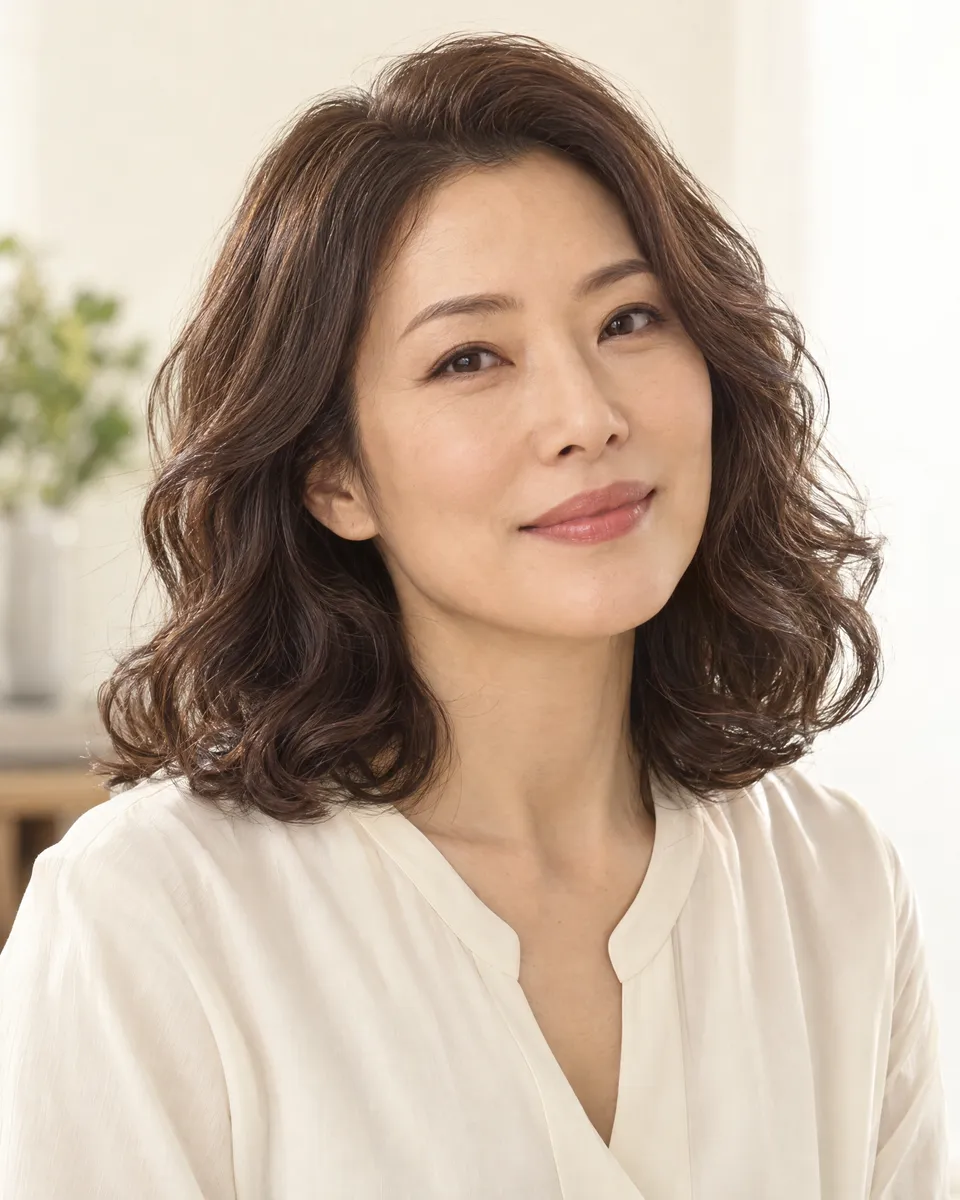
Describe the roughness without asking for straight hair
A wave is a shape; roughness is a handling concern. One does not prove the other needs changing. Describe what you notice before choosing a salon menu name.
Locate the problem in the visible natural lengths
Look at clean, dry hair in its ordinary state. Identify whether the concern is confined to the last few centimetres, the face-framing sections or most of the lengths beneath your piece. Notice where gentle detangling meets resistance without repeatedly dragging a comb through the area.
Then describe the movement separately. You might like the bend beside your cheek, the width around your shoulders or the turned-out ends. For a blending discussion, how to blend a hair topper with natural hair helps keep the visible join in view rather than treating the lower lengths as an isolated style.
- Write one feel goal: fewer catching ends, less stiffness or easier gentle detangling.
- Write one shape boundary: keep the cheek-level wave, shoulder width or curved ends.
- Photograph the front and side with the piece normally fitted, then the visible natural hair separately if comfortable.
Begin a feel-focused enquiry with conditioning questions
When the bends are welcome but the lengths feel uncomfortable, a conditioning treatment enquiry is a way to discuss cosmetic care before considering a shape-changing procedure. Ask whether the proposed scope is aimed at handling alone.
Judge softness alongside weight and ease of use
Conditioning should be discussed through practical observations: whether the ends catch less and whether the lengths feel more manageable. A glossy photograph cannot establish permanent repair. Nor does a softer feel mean previously processed hair is ready for another chemical service.
Explain if your usual mask leaves the roots coated while the ends still feel rough. A richer finish is not automatically your preferred finish, especially when you want lightness beside a fuller hairpiece. Ask which areas receive the product and how it should be rinsed.
The American Academy of Dermatology's healthy-hair tips recommend conditioner after washing and distinguish application for fine or straight hair from dry or curly lengths. That is general guidance for growing hair, not a promise about a salon formula or instructions for your piece.

Find out what smoothing means in the proposed appointment
The comparison of hair smoothing vs hair straightening is useful when a softer feel and a flatter outline are being discussed together. The name smoothing does not identify one standard procedure or guarantee that waves remain unchanged.
Ask about the washed shape, not only the final blow-dry
A smoothing description might refer to care, a temporarily styled finish or a chemical-and-heat process that also changes the bends. Ask for the proposed product and application steps. Then ask what shape is expected after washing and drying the way you normally do.
If the answer is that the wave may relax, decide whether that is acceptable before proceeding. Some remaining movement is not necessarily the same as keeping your present wave pattern. A loose end curve can remain while the cheek-level bend you value becomes much less visible.
For a deliberately straighter outline, treated lengths and future growth also need different expectations. Do not book a lasting shape change on the assumption that stopping appointments will promptly return those lengths to their previous waves. Discuss the transition with your existing piece before agreeing.
Compare the natural hair and the piece in the same everyday view
The natural lengths can feel better yet look less compatible with the piece if their bend, fullness or end direction changes. Evaluate the whole outline, not just an attractive finish on one section.
Watch the join, then look at the silhouette
Check the join from the front and where each section starts bending from the side. A broad wave beside a straighter top section can be intentional; it does not automatically need correction.
Compare the outline at the cheeks and shoulders. Flatter lower hair may make the unchanged crown appear relatively fuller. That proportion matters more than identical shine on every strand.
An ordinary topper blending check in daylight and office light records what is already working. Keep lighting and fitting position similar later, so a different angle is not mistaken for a treatment effect.
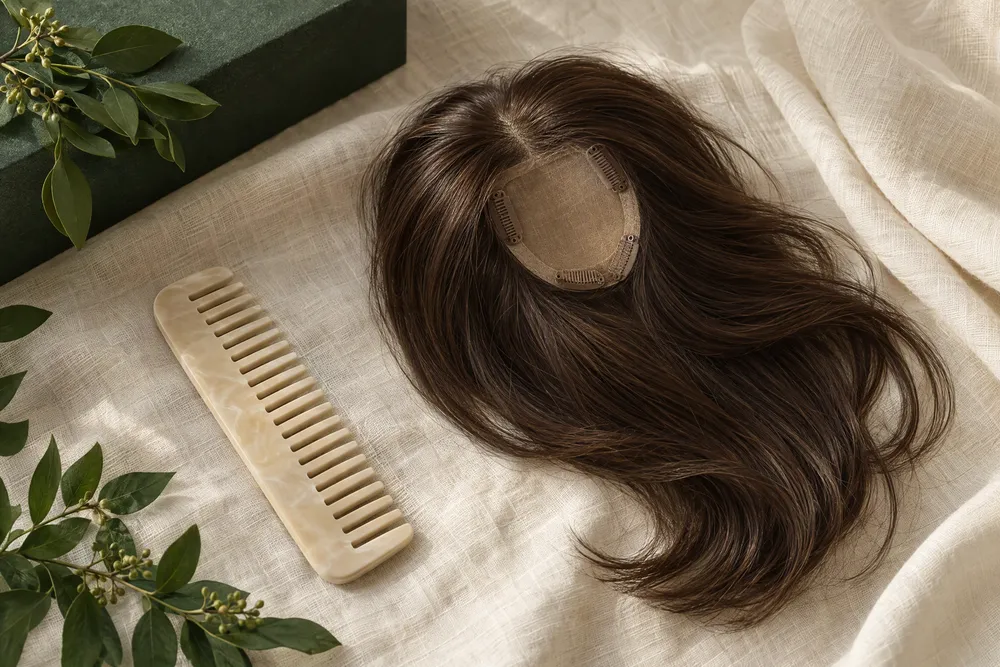
Keep natural-hair care outside the hairpiece's treatment plan
Sharing a hairstyle does not mean sharing a formula. The hair growing from your scalp and the separately constructed piece need their own suitability decisions, even when the piece is made with human hair.
Confirm material and instructions before using any product
Keep the piece's fibre description, care label and available product details ready. Use human hair vs synthetic wig care to organise material-specific questions. A natural-hair smoothing enquiry does not establish compatibility with fibres, knots, the base or attachment components.
For a removable piece, clarify the appointment arrangement before arriving; do not assume it should stay fitted during natural-hair work. If you are unsure how it is attached, ask the relevant provider rather than removing it forcefully or applying chemicals around it.
The separate guide to conditioner for wigs concerns piece care. It is not permission to transfer a natural-hair mask or salon process onto any wig. Ask OWNSTRAND about the piece's material and care limits, and ask the natural-hair provider about the exposed growing lengths.
Treat repeatedly catching ends as an observation to discuss
More smoothing is not the automatic next step when the same ends remain difficult. Locate the recurring concern and explain what happened during normal handling.
Bring the history of the lengths, not just the latest service
For a dry hair treatment enquiry, locate roughness in older lightened sections, all the natural lengths or just the tips. Share previous colour, bleach, perms, straightening and home products, noting unknown names. Older processing can remain beneath newer colour.
Ask about care, handling or a small trim before another shape change. State how much length you would accept losing. Do not test fragile strands by repeatedly stretching them.
Catching within the piece needs its own care plan. The guide to how to detangle a human hair wig applies to an appropriate human-hair piece, not a diagnosis of growing hair. Report repeated snapping or scalp discomfort rather than treating either as an ordinary styling inconvenience.
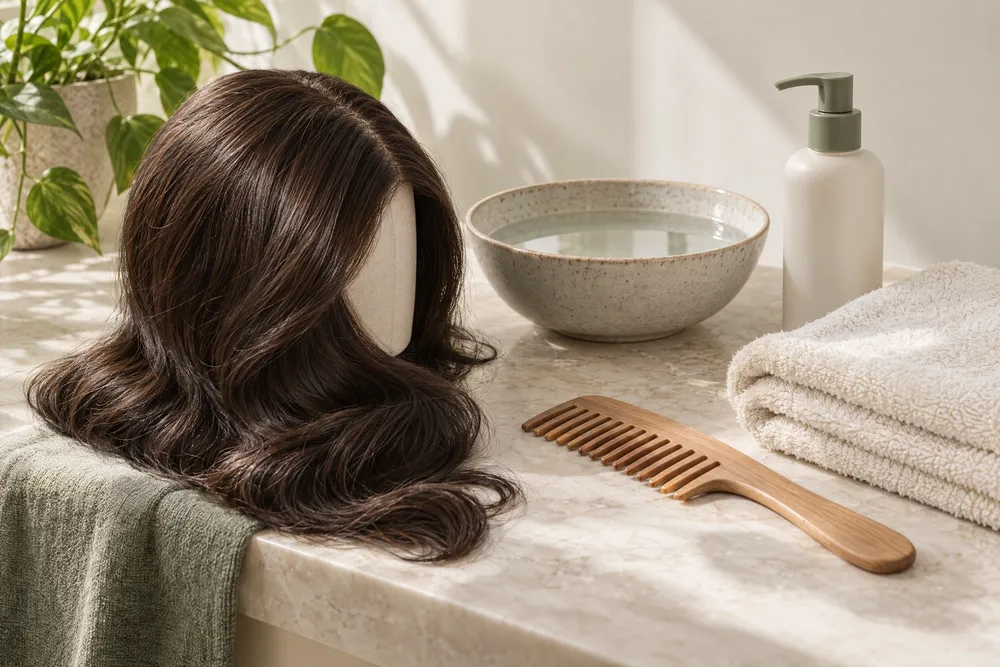
Use a wave-retention brief before agreeing to the process
Bring a short brief that prioritises your existing pattern. It should make the unwanted change as clear as the improvement you hope for.
Resolve the product and service questions first
The FDA's information on smoothing products advises checking ingredients and precautions because some products release formaldehyde when heated. It explicitly notes that not all smoothing products contain it. Ask about the actual formula, heat steps and ventilation rather than judging safety by a silky-sounding label.
Confirm what the appointment includes, whether washing or finishing is separate, and the total quote. Do not borrow a first-wash waiting period from a different treatment. If product use causes a bad reaction, stop and seek healthcare advice rather than continuing for the sake of the finish.
- Say: I want easier handling, but I want these visible bends kept.
- Ask whether the proposed care intends to change shape and how much relaxation is expected.
- Request the product name, relevant precautions and instructions for your normal wash-and-dry routine.
- Confirm how the separate piece will be kept out of the natural-hair work.
- Agree the scope and total quote before confirming an appointment.
Assess the next ordinary wash without pulling the waves straight
A salon finish and a home routine are different conditions. Judge the goal using the routine you actually intend to maintain, while following the specific aftercare you were given.
Record feel and outline in two separate notes
After the permitted wash, note catching areas and photograph the dry outline without stretching the waves. Record products and drying method. A smooth brush blow-dry does not show the pattern under your usual routine.
AAD recommends gentle moisture absorption and limiting heat for growing hair, with detangling advice varying by pattern. Avoid extra heat passes to compensate for an unwanted outcome.
Consider a hypothetical decision: someone likes a cheek-level S-bend below a crown piece but dislikes catching tips. Easier handling with the bend retained meets the brief. If the bend relaxes unexpectedly, report that shape change separately from any softness improvement before deciding the next step.
| What you want | What you do not want | Question before proceeding |
|---|---|---|
| Easier gentle detangling at the natural ends | A straighter outline chosen merely because the ends feel rough | Is the proposed scope conditioning-focused or shape-changing? |
| The present cheek-level or shoulder-level wave | A looser pattern described only as some movement | Which visible bends are expected to remain after my normal wash and drying? |
| Comfortable lengths with a light finish | Coated roots or a flattened lower silhouette | Which areas receive care, and what weight might the finish add? |
| A join that still works with the piece | Natural lengths changing without considering the top section | Can we discuss the complete outline using my ordinary fitted-piece photos? |
| Separate suitable care for each material | Natural-hair chemicals transferred onto the piece | Who will confirm the piece's limits and the appointment arrangement? |
| A routine you can maintain | A polished result requiring daily straightening you did not plan | What should the finish look like with my usual drying method? |
Ask OWNSTRAND about selection and fitting
Tell us the style you have in mind. We can discuss the options, quotation and arrangements before you decide.
Ask OWNSTRAND about selection and fittingBefore you choose
If my natural waves already match the piece, should I ask for straightening?
Not simply because the ends feel rough. Start with a feel-focused enquiry and show the existing match. A straighter shape is a separate choice that may change the join and overall proportions.
Does a softer feel mean damaged lengths are permanently repaired?
No. Cosmetic conditioning can make handling easier, but softness does not establish permanent restoration or suitability for further chemical work. Explain recurring catching and any breakage before discussing another procedure.
Can the salon use the same smoothing product on my human-hair piece?
Do not assume so. Human-hair material alone does not establish compatibility with the piece's processing, knots, base or attachments. Confirm the specific piece's limits separately; this natural-hair discussion is not authorisation to chemically treat it.
Further reading
- Tips for healthy hair — American Academy of DermatologySupports conditioner application by growing-hair type, gentler detangling and moisture absorption, and limiting heat; not hairpiece instructions or a guarantee of wave retention.
- Formaldehyde in Hair Smoothing Products: What You Should Know — US FDASupports asking about actual ingredients, heat steps and precautions because some smoothing products release formaldehyde; the FDA notes not all contain it.