

Decide what a successful parting must do
A neat opening immediately after styling and a wearable opening several hours later are different results. Define the second one before buying products or arranging chemical work.
Choose a usable opening, not perfect symmetry
Specify how much forehead should show and whether the ends must stay clear of your glasses. You might accept one side sitting closer to the brow, but dislike hair dropping into your eyes at a screen. That is a more useful brief than asking for two identical halves.
Set your own acceptable reset: perhaps one gentle adjustment after travelling, but not rebuilding the fringe before every meeting. These are personal limits, not universal standards for a well-styled head of hair.
Separate the part from the bend
You may like a central opening without wanting a curled fringe or extra height. Vit So's middle part perm discussion helps distinguish forehead direction from a shaped curve and suggests comparing cut-and-styling options before an assessed perm. Use it to describe the feature you want, not to assume chemical work is necessary.
Record the dry direction before changing it
Start with your own hair on an ordinary wash day, without the wig or a hairpiece covering the area. Do not use force to create the baseline you wish you had.
Photograph where the front actually separates
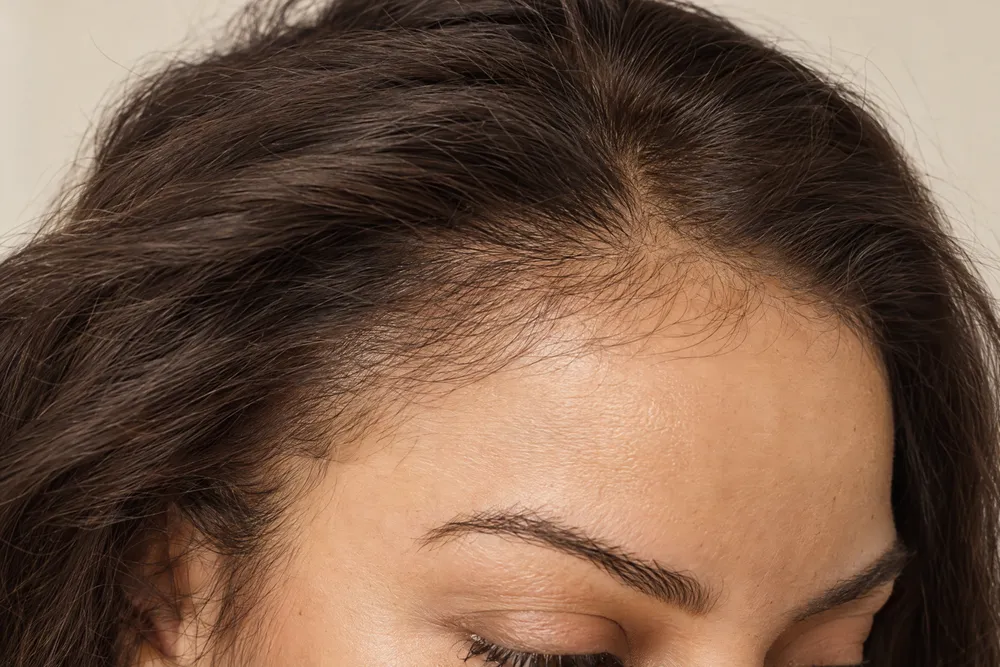
After your usual gentle drying, look at the front, both sides and crown. Note whether the opening forms naturally, whether the roots cross it, and where the ends fall. Crown direction and the opening above your forehead may not follow one straight line.
Take another photograph with a gently arranged opening. Keep the camera position and lighting similar so a different angle does not masquerade as better hold. A wig reference photo checklist is also useful for identifying exactly what you like in the wig version rather than copying its entire silhouette.
Compare exact centre with slightly off-centre
Try a small shift if the exact centre needs repeated pushing. Judge how it sits around your face, not how accurately it divides the scalp. If the fringe is too short to travel towards the temples, or long enough to fall into your eyes, record that as a cutting question rather than a failed styling skill.
Rehearse with less force, not more heat
Use a few ordinary wash days as comparison points. This is not a daily heated training programme, and repeated styling does not promise to permanently change the direction in which hair grows.
Keep the trial easy enough to repeat
Absorb excess water without vigorously rubbing the fringe. Arrange the opening gently and allow air drying where practical. If you use a dryer, guide the front towards the preferred direction using the lowest heat rather than stretching it taut. Keep hot airflow away from a worn wig or hairpiece.
The American Academy of Dermatology's hair-damage guidance advises air drying when possible, the lowest heat setting and less frequent heat-tool use. A rehearse-first approach should reduce unnecessary correction, not add multiple hot passes every morning.
Change one variable at a time
Compare the same opening using a similar routine first. If you later try a different part position or a suitable styling product, change only that detail. Otherwise, you cannot tell whether the improvement came from direction, product or simply a quieter day. Stop rather than pulling harder if arranging it causes discomfort.
- Before styling, save one dry baseline photo and note the natural opening.
- Record the arranging time and any heat or product used, without adding extra sessions for the test.
- Check after your usual commute and again later, noting what moved and whether you touched it.
- On the next comparable wash day, repeat the simplest routine before changing a single detail.
Score the effort after real interruptions
The rehearsal becomes useful when you compare effort as well as photographs. A finish that survives a quiet hour at home has not yet answered your everyday question.
Log the part that fails, not just 'messy hair'
Write whether the roots crossed the opening, one side fell forward or the ends lost their curve. Note rain, sweating, a cap or other interruptions. Check after safely removing headwear; never loosen a required helmet to protect a hairstyle. A photograph before correction helps distinguish the original problem from what your hands changed.
Also record whether the relaxed result still looks acceptable. If you like it without a precise curve, your target may be a softer opening rather than longer-lasting sculpted strands.
Use your own time ceiling
In a hypothetical example, a man allows a few minutes before work and one quick reset after the MTR journey. His shifted part stays comfortable, while the exact centre needs repeated attention. Continuing the shifted version is a reasonable decision even if the original reference looked more symmetrical. This is a decision example, not a client outcome or measured success rate.
Check whether your wig already solves the appearance question
A wig can provide a preferred parted look without changing your natural hair. First establish whether the opening belongs to the wig, your own fringe or a blend between them.
Ask where the cap allows the part to sit
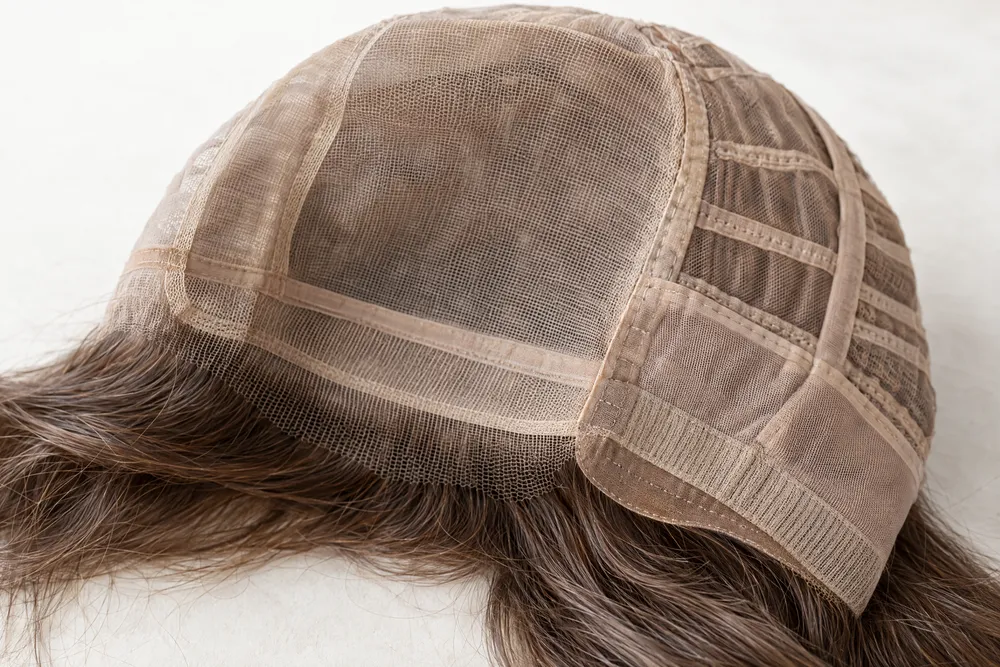
Do not assume every wig can be reparted anywhere. The monofilament part wig guide distinguishes a part area from crown and top construction. Check the actual piece's permitted parting position before attempting to move the opening or purchasing another style.
If your preferred opening exposes more forehead, compare the front edge too. The natural hairline wigs guide helps frame that appearance check. With a partial piece, inspect where its front lengths meet your own sides; matching the direction matters more than making both materials behave identically.
Keep the material rules separate
Read human hair vs synthetic wigs before treating a fibre label as permission to reshape the piece. Natural-hair perm advice does not apply to synthetic fibres. Even human hair in a wig is not blanket approval for chemicals on its processed lengths, knots or base.
Follow the instructions for your actual piece and use human hair vs synthetic wig care to organise questions. Do not transfer the natural-hair dryer rehearsal to a wig; confirm any permitted heat and styling method separately.
Choose between continued styling and a natural-hair consultation
After several comparable observations, identify what remains difficult. The next step should answer that specific difficulty rather than make the biggest possible change.
Bring the failed direction, not only the desired photograph
If the shape works but the repeated arranging exceeds your time ceiling, a men's perm consultation can explore whether assessed movement in retained natural hair would help. Show the unstyled opening, the result you can achieve and the area that repeatedly collapses. Ask whether length or weight could be adjusted first.
Explain whether you want only the fringe changed while the sides stay as they are. A broader treatment is not automatically more useful. Ask what styling would still be required afterwards, especially following exercise or headwear.
Let hair history change the plan
List bleaching, colouring, straightening and previous perms, including home products and approximate dates. Mention roughness or snapping rather than judging suitability from shine. The Canadian Dermatology Association's Hair Care advice explains that perming chemicals weaken hair and advises against applying such products to already damaged hair. Assessment may mean postponement, not a stronger process.
Compare the full commitment before agreeing to a service
Use Vit So's perm cost information to ask which entry matches the assessed work. Compare the complete visit and later routine, not simply a lower headline charge.
Confirm the package rather than filling in missing inclusions
The published haircut and perm package reference names a men's combination of wash, cut, blow-dry, full-head perm and pre-service protection. That does not establish the same contents for a standalone partial treatment or every middle-part request. Ask whether the named combination actually fits your plan and which additions need their own quote.
Pre-service protection is an inclusion, not proof of damage-free processing. Confirm the retained fringe length and finishing instruction as well as the applicable charge. A cheaper arrangement is not better value if it changes hair you wanted to keep untouched.
Keep the two enquiries distinct
For natural-hair work, Vit So is at 252 Hollywood Road, Sheung Wan, Hong Kong; telephone +852 5305 7561. For wig selection and fit questions, OWNSTRAND is in Kwun Tong, with WhatsApp +852 5933 4697. These are separate service locations, not interchangeable branches. Do not treat a natural-hair quotation as permission or a price for altering a wig.
- Ask which natural-hair areas would be treated and which would stay unchanged.
- Confirm cutting, washing, finishing and protection inclusions, plus separately quoted additions.
- Check the complete appointment allowance and the routine needed after the first permitted wash.
- Decide whether the proposed commitment offers something your manageable styling or current wig does not.
| Route | Evidence that supports it | Commitment to compare |
|---|---|---|
| Continue non-permanent styling | A dry opening you like remains usable within your time ceiling. | Repeated arranging, suitable products and any necessary low-heat use. |
| Request a natural-hair perm consultation | The shape appeals, but the same retained area needs repeated correction. | Suitability, treatment coverage, cutting inclusions and remaining home styling. |
| Keep two separate looks | The wig supplies the preferred opening while natural hair suits a simpler routine. | Wig fit and material-specific care, without requiring matching natural-hair processing. |
Ask OWNSTRAND about selection and fitting
Tell us the style you have in mind. We can discuss the options, quotation and arrangements before you decide.
Ask OWNSTRAND about selection and fittingBefore you choose
Will repeatedly combing a centre part make it permanent?
Do not rely on that promise. Repetition can help you learn a manageable arranging routine, but it does not establish a permanent change in growth direction. Judge the dry result and resets across ordinary days rather than increasing brushing or heat to force a straight line.
If only one side falls forward, do I need a full-head treatment?
Not automatically. Record which roots or ends move, then discuss retained length, weight and drying direction. If chemical work is considered, ask why the proposed coverage addresses that one-sided problem and how it connects to hair left unchanged.
Should my natural hair match the middle part in my wig?
Only if you want both looks and accept their different routines. You can wear a parted wig and keep your own hair simpler. For a partial piece, check the visible join and direction of surrounding hair, but never assume matching appearance requires matching chemical treatment.
Further reading
- 10 hair care habits that can damage your hair — American Academy of DermatologySupports gentle handling, absorbing water rather than rubbing, air drying when possible, lowest heat and reduced heat-tool frequency; does not predict parting hold.
- Hair Care — Canadian Dermatology AssociationSupports minimising heat styling and checking existing damage before chemical processing; states perming chemicals weaken hair and increase susceptibility to breakage.