

1. Give your own hair a job that is not concealment
Before choosing a shorter length, describe what makes a wig-free day enjoyable. Wanting a light-looking outline, a visible ear or a loose ponytail leads to different choices even when all three reference photographs look tidy.
Choose one priority and one acceptable inconvenience
Rank morning shaping, ear exposure and flexibility as hair grows. Do not give every condition equal importance. If you dislike arranging the front before work, that should outweigh a neckline you only admire in weekend photographs. If being able to gather your hair matters most, a slightly longer outline may be worth the extra detangling.
Then name something you can accept: ends with a natural bend, ears partly covered, or a softer edge between trims. Asking for a sharp short perimeter, no styling and unlimited grow-out flexibility hides a conflict rather than resolving it.
2. Build a weekday-versus-weekend decision grid
For natural-hair planning, Vit So's guide to a haircut for a busy lifestyle helps distinguish drying from shaping. Use that distinction to compare an ordinary work morning with a weekend when you may choose more styling, rather than assuming short hair is always quicker.
Test the routine you will actually repeat
Record one weekday and one weekend routine before making a change. Note which work is removing moisture and which is creating an outline: turning the ends, lifting the crown or positioning the fringe. A cut that leaves less hair to dry may still ask for front shaping you do not enjoy.
Treat the grid as directions to discuss, not predictions of minutes saved. Texture, density and root direction affect the result. An open ear makes outline growth visible; retained length provides a fallback but may meet your collar. Test with your usual work shirt, not only an open-neck weekend top.
- On a normal wash day, photograph the front, each side and back after your usual drying method; do not add a special finish for the pictures.
- Write down the one area you rearrange most, and whether you are willing to keep that step on a rushed weekday.
- Try your usual glasses and ear-tuck or loose tie, then note which pieces fall forward without pulling them tighter.
- Mark your must-keep function in the grid and eliminate any choice that cannot reasonably preserve it.
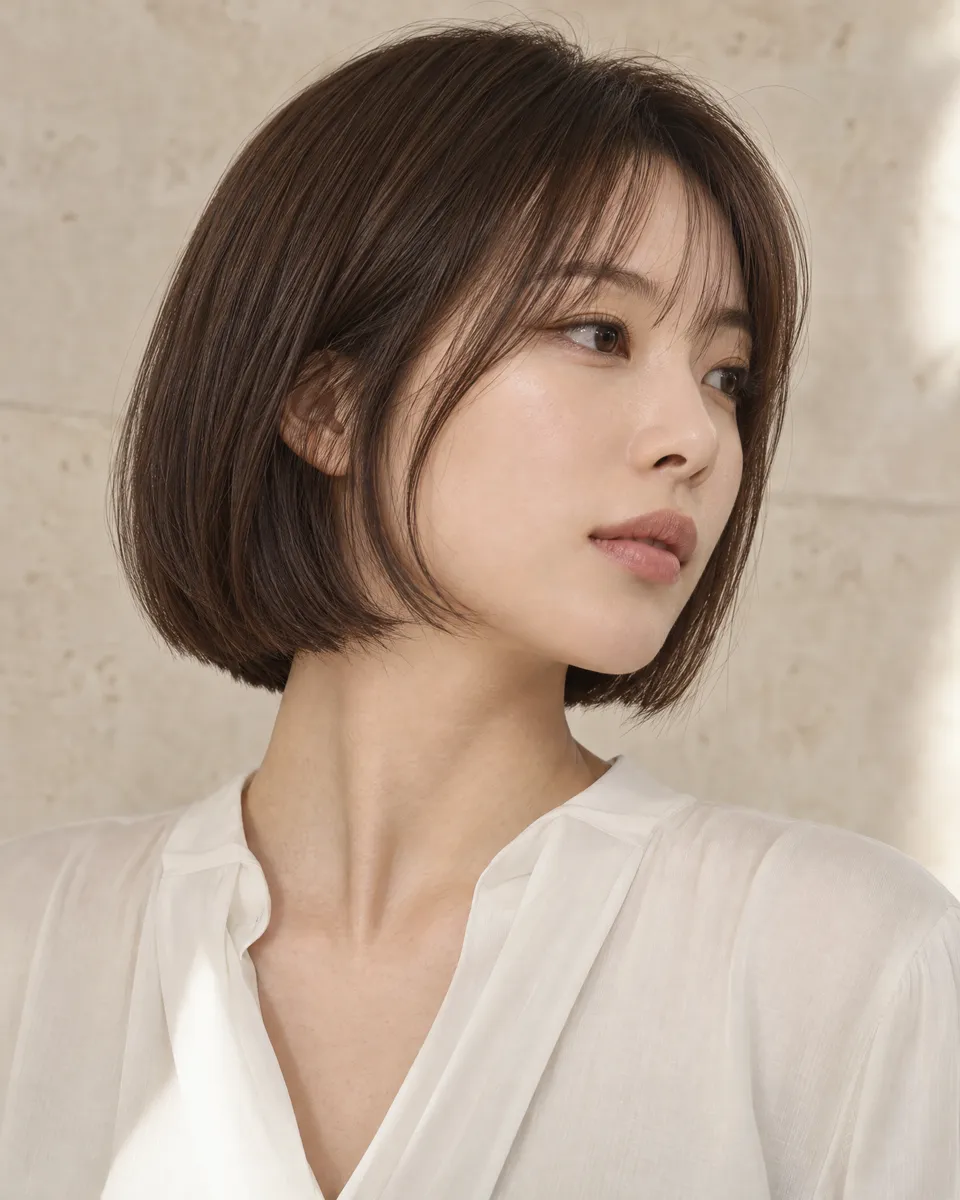
3. Choose a bob when a clear outline matters more than tying back
A natural bob haircut can give your own-hair days a distinct perimeter without copying a wig. Compare where its dry ends land and how the sides behave, rather than selecting it because a short reference appears effortless.
Check the ear-tucked and untucked versions
On a weekday, a jaw-level outline may be useful if you enjoy wearing your hair loose and do not need a ponytail. However, the side pieces must reach far enough if tucking is your way of keeping them off your face. A photograph with both sides tucked cannot tell you what happens when those pieces fall forward.
For the weekend, consider whether you like the resting edge as much as a rounded blow-dried finish. You can keep occasional styling optional by choosing a natural version you already enjoy. If every outward bend bothers you, that preference belongs in the effort column, not under an expectation that the cut will prevent bends.
For grow-out, identify the first boundary you care about: ends reaching a collar, a heavier back or a less defined line. Accepting a softer perimeter offers more flexibility than insisting that the fresh-cut edge stay unchanged.
4. Keep a lob when the fallback arrangement is your priority
The lob haircut reading is useful when you want a longer bob-like frame with more retained length. Its name does not guarantee a ponytail: the shortest front sections and your actual tie position decide whether that fallback works.
Protect the pieces that make a loose tie possible
For a weekday with little shaping time, demonstrate your normal low tie before agreeing the shortest lengths. Decide whether loose front pieces are welcome or a nuisance. A back that reaches an elastic is not enough if the front requires several clips you would rather not use.
At the weekend, you can wear the longer frame loose without needing to turn it into another style. Shoulder contact may change the direction of the ends; judge whether you enjoy that movement or want to arrange it. Retaining length buys options, not an automatic reduction in care.
A lob can be a useful choice when your next goal may be longer hair. Protecting the outer lengths keeps that direction available.
Keep a fallback tie loose. The AAD's advice on hairstyles that pull recommends avoiding repeated pulling and loosening tight arrangements. Do not solve escaping pieces by increasing tension; preserve suitable length or discuss another comfortable arrangement instead.
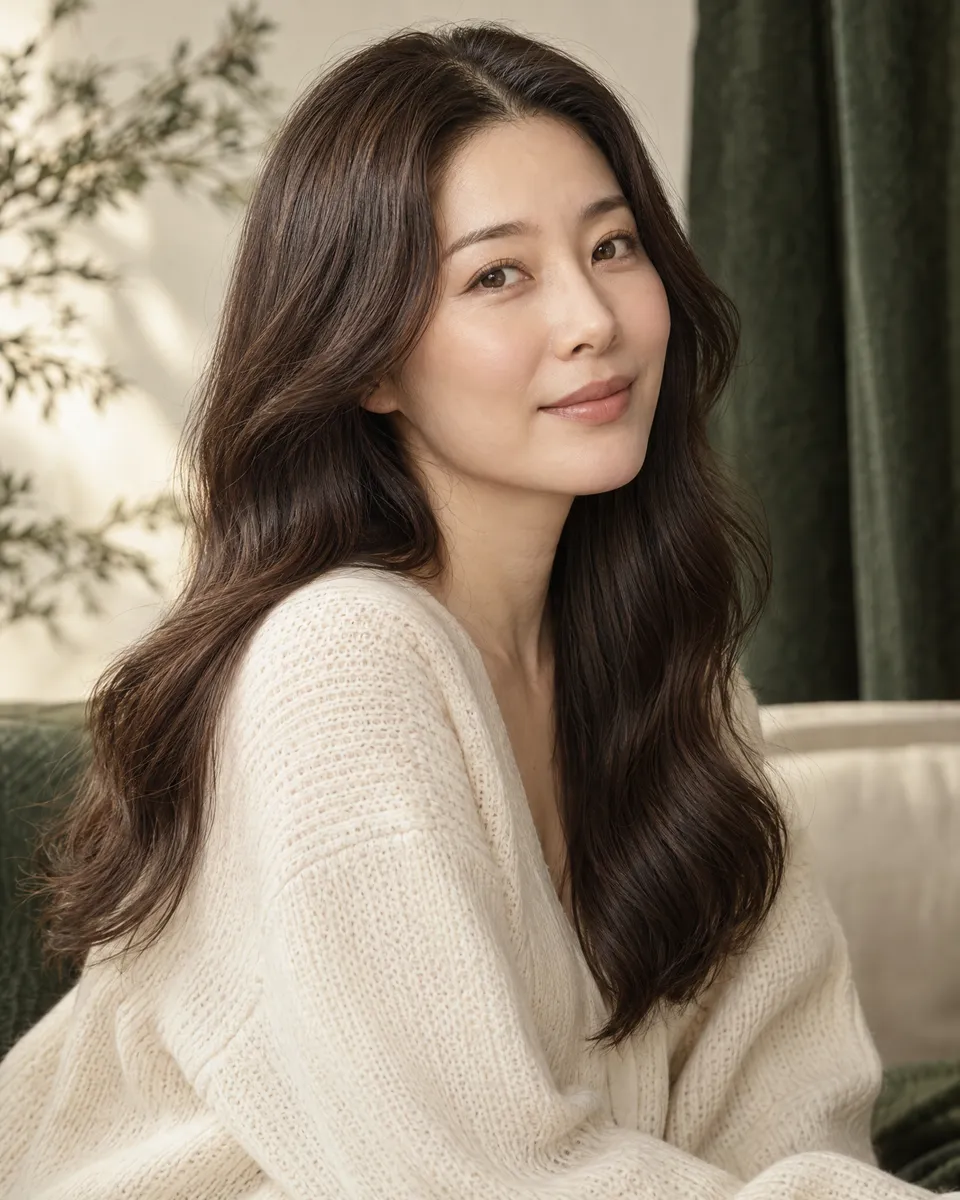
5. Choose a pixie for an open ear, not a promise of no work
Vit So's pixie cut guide separates the ear area, front, crown and neckline. That is a useful way to plan visible natural hair: you can want a close side while keeping selected top or front length, without asking every zone to be equally short.
Decide whether you prefer daily arranging or outline upkeep
An exposed ear can suit someone who dislikes hair resting against frames or earrings. But a cropped side is not the same as a longer side tucked away. Look at the hair resting naturally, and specify whether the whole ear, only the lower edge or an ear-front piece should remain visible.
For weekday effort, inspect the crown and fringe after normal drying. A short shape may make a persistent lift or split more noticeable. If you are willing to reposition that area, the routine may suit you; if not, discuss retained length or a resting finish that accepts its direction.
For an active weekend, check how you would keep the front away without your familiar ponytail. A soft band or clip may be an option if the actual length allows it, but it is another item to manage. Do not choose the shortest front solely because it looks convenient in a still photograph.
Grow-out requires decisions by zone. If you later want a bob-like outline, ask which top and side lengths should be protected while the nape is adjusted. Constantly shortening everything to restore the original pixie can work against that next goal.
6. Let the full wig provide a genuinely different look
Once the natural shape has its own purpose, you can compare long wigs for a separate silhouette. A long full wig over a natural short cut is a change of appearance, not a standard the shorter hair must meet.
Separate appearance choices from packing and fit
As a hypothetical example, you might wear a natural bob to work and a long full wig for dinners. Judge the bob by its weekday routine and the wig by its own fit and care, not by whether they match.
Shortening natural hair changes packing beneath a cap, not the correct wig cap sizes. Assess the actual wig with your usual packing method. A fit problem is not, by itself, a reason to choose a pixie.
Check glasses with wigs separately. An exposed natural ear does not establish comfort where cap edges and frame arms meet. Natural hair tucked neatly behind an ear says nothing about the wig's ear tabs.
On wig-free days, follow suitable guidance on how to store a wig rather than leaving it among styling tools. Natural-hair and wig routines can share a calendar, but heat limits and product instructions remain specific to the hair or fibre involved.

7. Take a two-look brief to the right enquiry
Bring separate notes for the natural cut and the full wig. This prevents a preference for one look from quietly becoming an instruction to reproduce it in the other, and helps you distinguish a haircut discussion from a wig-fitting question.
Agree the everyday finish and the next growing stage
Ask to understand the repeatable routine, not only the polished finish. The AAD's healthy-hair tips support gentle moisture absorption, limiting heat tools and using low or medium heat with heat protection. These are natural-hair care principles, not permission to apply the same treatment to a wig.
The linked Vit So readings concern natural-hair shape decisions; they do not establish a service for altering your wig. Vit So is at 252 Hollywood Road, Sheung Wan, telephone +852 5305 7561. OWNSTRAND's wig enquiries are handled separately in Kwun Tong. Confirm the proposed work and appointment rather than assuming one enquiry covers both.
- Label one reference 'natural hair, ordinary weekday' and the other 'full wig, separate look'; note the feature you like in each.
- State which natural lengths must remain for ear-tucking, activity or a future longer outline.
- Ask which step creates the everyday finish and which step is only optional weekend styling.
- For the wig, share its actual material, cap details and fitting concern instead of requesting natural-hair chemical processing.
- After trying your agreed home routine, photograph only the troublesome area and describe what changed before asking for an adjustment.
| Choice | Weekday effort to test | Weekend option | Ear exposure | Grow-out flexibility |
|---|---|---|---|---|
| Natural bob | Test resting edge and tucking. | Loose or optionally shaped. | Covered or tucked; length-dependent. | Accept softening or collar contact. |
| Natural lob | Test loose tie and front pieces. | Loose frame or activity tie. | Covered when loose; test tucking. | Protect outer lengths for longer hair. |
| Natural pixie | Test crown and fringe direction. | Open side; check front clearance. | Specify exposed ear or ear-front piece. | Preserve top and sides for a bob. |
| Different long full wig | Allow for fitting and separate care. | Enjoy a contrasting silhouette. | Check cap edges with frames. | No wig growth; packing may change. |
Ask OWNSTRAND about selection and fitting
Tell us the style you have in mind. We can discuss the options, quotation and arrangements before you decide.
Ask OWNSTRAND about selection and fittingBefore you choose
Do I need to cut my natural hair short to alternate with a full wig?
No. Decide whether you enjoy its present length, then assess packing beneath the actual cap. Removing length is not a substitute for checking fit; longer natural hair may preserve functions you value on wig-free days.
What if I want my own hair visible on Saturday but do not want a second styling routine?
Choose a natural outline you like after the same drying method you use during the week. Weekend variety can come from wearing it loose instead of tucked or loosely tied. You do not need a specially styled weekend version for the haircut to earn its place.
Should I shorten everything again when my pixie starts to feel fuller?
Only if maintaining the original short outline remains your goal. If you are moving towards a bob or longer shape, identify whether the discomfort is at the nape, ears or front. Discuss that zone while protecting the lengths needed for the next stage, rather than restarting the entire cut.
Further reading
- American Academy of Dermatology: Tips for healthy hairSupports gentle moisture absorption, limiting heat styling and low or medium heat with heat protection for natural hair; not a wig-material heat specification.
- American Academy of Dermatology: Hairstyles that pull can lead to hair lossSupports keeping fallback ties and hair beneath coverings loose rather than repeatedly pulling; does not establish a health benefit from a particular haircut.