
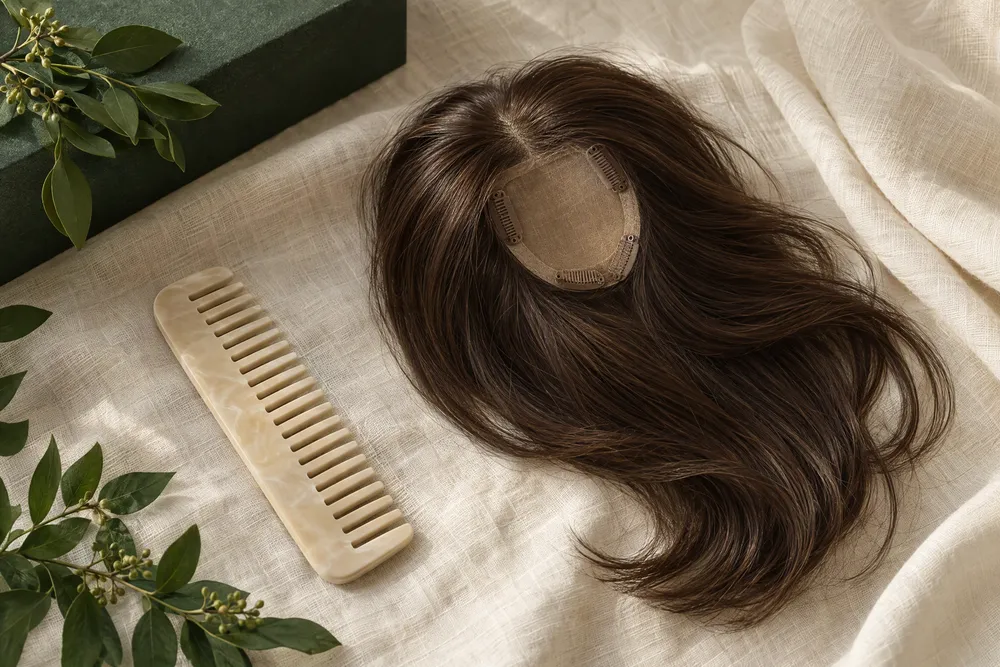
Separate the topper, new growth and old dyed lengths
Treat these as three areas with different roles. Vit So's hair colour page is relevant when discussing your natural roots and previously treated lengths; it is not evidence that a salon tint can recolour the topper.
Identify the mismatch before naming a shade
Take a dry-hair view with the piece in its normal position, then a separate view of the natural hair without it. Look at the exposed temples, side lengths and nape. Decide whether the problem is darker regrowth, faded warmer ends, or a topper whose depth was always slightly different. These lead to different enquiries.
The dyed section moves farther from the scalp as new hair emerges; it does not become untreated hair. Keeping the topper fixed is a planning choice, not a claim that its appearance never changes with wear.
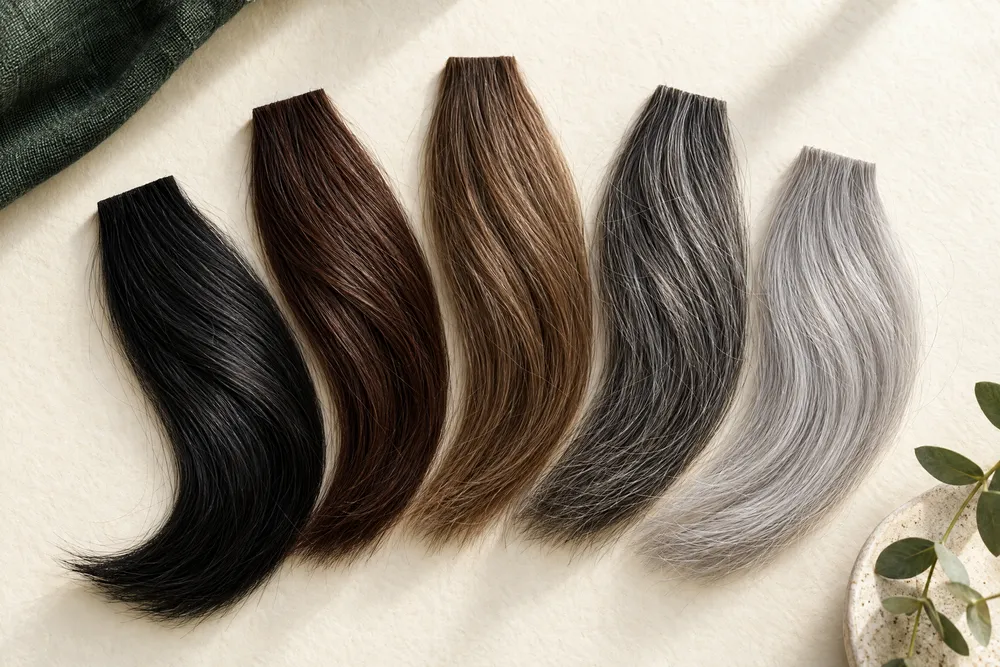
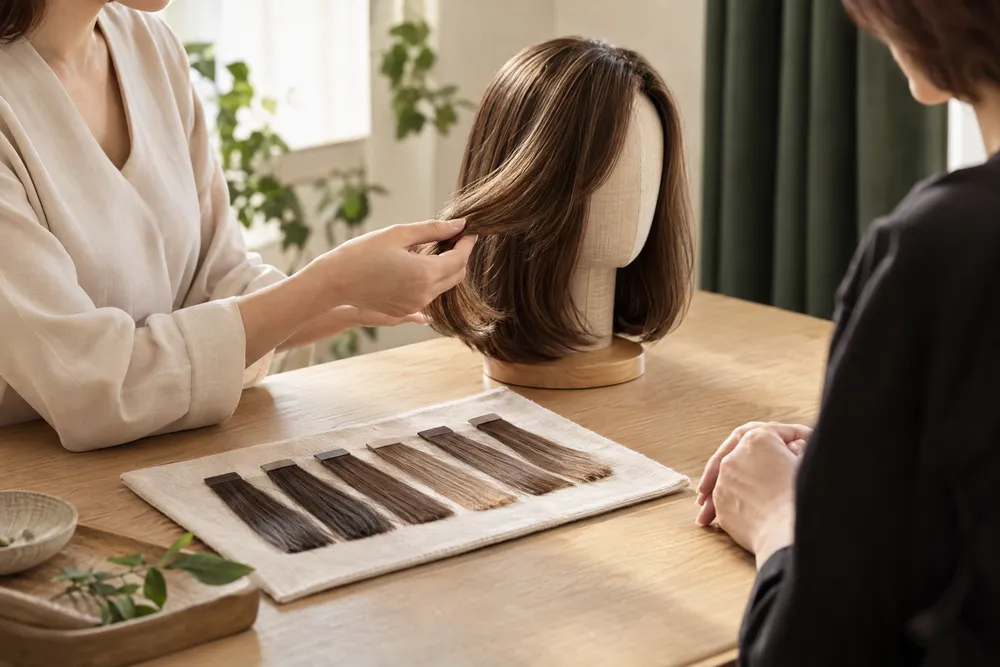
Use wig colour matching to compare the actual piece against the areas beside it. A shade code or a close-up of shiny ends cannot tell you how the whole outline will look. Describe depth and warmth separately: 'the sides look darker' is more useful than 'the brown is wrong'.
Stage one: observe where darker regrowth becomes visible
Waiting can be a deliberate option when the new colour is still mostly covered and the exposed lengths remain acceptable. It needs a review point, not a vague promise to tolerate the transition indefinitely.
Build a repeatable visibility record
Check the front and both sides with the same parting and usual placement. Include the hairstyle you actually wear to work: loose lengths, tucked sides or a low tie-back. A contrast hidden when hair hangs down may become clearer when a side is swept behind the ear.
Read the hair topper colour match with natural hair guidance alongside colour observations. Visible overlap and density also affect the blend. Do not shift the base into an unsuitable position just to cover a colour boundary; preserve secure, comfortable fitting as the first requirement.
- Photograph the front, side overlap and nape in soft daylight without a filter.
- Add one normal indoor view and keep the parting and topper position consistent.
- Write one review trigger, such as darker hair showing at both temples in your everyday arrangement.
Stage two: choose between waiting and adjusting natural hair
The important trade-off is whether to preserve today's blend or move towards your natural depth. Repeating the old shade may improve continuity now but postpone the point at which the dyed lengths can be left behind.
Avoid restarting a cycle you intend to end
For a natural-hair hair tinting enquiry, explain whether you want to maintain the present tinted shade or reduce dependence on it. Ask what would happen to the untreated regrowth and existing lengths separately. An overall colour goal does not establish that every area should receive the same treatment.
Waiting preserves a clear distinction between untouched new hair and older treated hair. It may mean accepting a period of visible contrast. An assessed adjustment might soften the transition, but it introduces another treatment and another maintenance decision. Neither route is automatically better; judge it against your willingness to see regrowth and your plans for keeping length.
For example, imagine warm brown shoulder-length hair beneath a similar topper, with deeper natural brown returning. Preserving shoulder length might justify a temporary two-tone period. If that difference feels unwelcome, a natural-hair assessment can explore alternatives without promising to change the fixed topper.
Assess a no-bleach option against both natural-hair zones
When considering no bleach hair colour, make avoiding bleach an explicit boundary. Ask for an assessment of what is appropriate on your natural hair, rather than interpreting the phrase as a matching method for the piece.
Keep chemical suitability separate from colour preference
Untouched darker regrowth and previously tinted lengths have different histories. Share past lightening, home dye, straightening or perming, including uncertainty about products. Ask whether the aim is to retain depth, change reflection or become lighter, and which differences would remain if the proposed work avoids bleach. A deeper alternative is only useful if you actually want it.
No-bleach does not mean no chemicals or no risk of a reaction. The NHS hair dye reactions guidance explains that some dyes can irritate skin or cause allergy. Disclose previous reactions and follow the relevant product-testing instructions; do not proceed after a reaction. Seek healthcare advice about previous or current symptoms instead of experimenting with alternatives.
Keep the topper outside this natural-hair treatment plan. For a synthetic hair topper, natural-hair dye products are not a colour-adjustment route. A human-hair label also does not establish that a whole piece, its base or its existing processed hair is suitable for salon colouring. Ask the supplier about that specific item rather than transferring natural-hair chemistry to it.

Stage three: plan the cut around the overlap you need
Removing older dyed ends changes both colour distribution and the amount of natural hair beneath the topper. A shorter cut can bring the grow-out endpoint closer, but length used for blending should not be treated as disposable.
Set a retained-length boundary before cutting
Show where the natural hair meets the topper's hanging lengths at the sides and back. Explain whether you need enough hair for a low ponytail or prefer loose wear. Agree what length must remain before discussing how much old colour could be removed. Cutting out a colour band and preserving a familiar outline may conflict.
Arrange the future natural-hair cutting enquiry around the piece you actually wear. Ask how its presence can be considered during assessment, and confirm handling arrangements in advance. Do not assume that cutting the natural hair includes trimming, washing or altering the topper. Those are separate questions for the relevant provider.
Condition can change the priority order. The American Academy of Dermatology's colouring advice notes that cosmetic treatments can leave hair dry and brittle. If retained ends feel rough or break easily, report that before proposing another colour change. This supports a cautious assessment, not a promise that care products can undo previous processing.
Coordinate a future cut-and-colour enquiry without assuming inclusions
If both natural-hair shape and colour need attention, ask: does the listed haircut and colour package apply to the assessed natural-hair work, and which cutting, colour, care and finishing steps would it include? Keep package scope as a confirmation question, not an expected solution.
Ask for the intermediate look as well as the final aim
Send the visibility record, treatment timeline and retained-length boundary together. Explain that the topper is being kept unchanged and that you are willing to discuss more than one stage. Ask what contrast might remain after the proposed natural-hair work, what would be reviewed later and whether an additional appointment might be needed.
Discuss service order and time before committing. Ask for work beyond the confirmed combination to be described separately; changing natural hair and adjusting a purchased piece remain different enquiries.
- Send current roots-to-ends photos plus normal topper-on views; label which hair is natural.
- State your no-bleach preference, desired endpoint, budget and minimum retained length.
- Ask which areas would be treated, what would stay unchanged and how the intermediate colour would look.
- Confirm the applicable inclusions, additional work and appointment arrangements before travelling.
Keep a now, next and later colour map
Put each decision on one page so the next enquiry does not start again from a shade photograph. The map should show what stays fixed now and what might reasonably change later.
Choose an endpoint that does not depend on old dyed ends
Under 'now', record the current piece, exposed darker areas and acceptable contrast. Under 'next', note your review trigger and whether you will wait, request a natural-hair assessment or discuss a limited trim. Under 'later', describe the natural depth and length you hope to retain once older colour has been removed.
If that endpoint differs substantially from the topper you own, use a future custom hair topper Hong Kong enquiry to discuss selection and fitting priorities. Ask about suitable possibilities rather than assuming replacement, recolouring or alteration is available for your specific piece. Keep today's useful topper separate from tomorrow's preferred colour direction.
OWNSTRAND's selection and fitting enquiries are in Kwun Tong; Vit So's natural-hair enquiries are in Sheung Wan. They share ownership but have separate locations and scopes. Keep the agreed plan available for each relevant enquiry.
| Route | What it preserves | Trade-off to assess | Next checkpoint |
|---|---|---|---|
| Wait through grow-out | Untouched new growth and current length | Visible contrast may increase around exposed sides | Review when your recorded visibility trigger appears |
| Assess a natural-hair adjustment without bleach | A stated boundary on the proposed colour process | Old dye and natural roots need separate assessment; the topper stays outside the plan | Agree the areas treated and acceptable remaining contrast |
| Discuss gradual trims | A chosen minimum length and usable overlap | Removing old colour also removes hair used for blending | Recheck side and nape overlap before each further cut |
| Plan a future cut-and-colour enquiry | A coordinated natural-hair shape and colour brief | Inclusions, additional work and multiple stages need confirmation | Review the intermediate look and later endpoint separately |
Ask OWNSTRAND about selection and fitting
Tell us the style you have in mind. We can discuss the options, quotation and arrangements before you decide.
Ask OWNSTRAND about selection and fittingBefore you choose
How long until the old colour is gone?
There is no useful universal deadline. The answer depends on how much previously dyed length remains, how quickly your own hair grows and how much you are willing to trim while preserving overlap. Fading is not the same as removing the treated section. Use length and visibility checkpoints instead of a fixed month count.
Should I choose a new topper shade now or wait?
Choose against the colour you intend to keep, not automatically against the old ends. If the natural-hair endpoint is still undecided, first compare the current regrowth and discuss the transition. A future selection enquiry can then use that intended depth, while fitting and material requirements remain separate priorities.
Can I temporarily hide the darker boundary by changing my parting?
An ordinary parting or loose-side arrangement may change what is visible, but it is not a colour correction. Stay within the placement and styling suitable for your piece, and do not pull clips onto unsuitable hair or sacrifice comfort to conceal regrowth. Record the arrangement you can comfortably repeat before judging whether it buys useful waiting time.
Further reading
- NHS: Hair dye reactionsSupports the natural-hair dye reaction discussion, disclosure of previous symptoms, following relevant product/testing instructions and not continuing after a reaction. It does not establish topper colouring suitability.
- American Academy of Dermatology: Coloring and perming tips for healthier-looking hairSupports discussing dryness and brittleness from cosmetic hair treatments before further processing retained natural lengths; not a guarantee of colour matching or repair.