

Locate three different edges before choosing a fringe
The fringe ends, the hairpiece base edge and the haircut's side division are different boundaries. Confusing them can lead to cutting the wrong area to solve a visibility problem.
Map the centre and both front corners
The fringe edge is where the hair ends against your forehead. The base edge is where the hairpiece itself ends. A top-to-side division is a change in hair length, which may be entirely on retained natural hair. A neat haircut division does not prove that the base edge is well positioned.
For a men's frontal hairpiece, identify where coverage is needed before discussing a shorter front. With the piece correctly fitted, ask to see the centre and both corners. Note whether a strand gap reveals ordinary skin, the base edge or a transition between different hair densities. Those observations call for different decisions.
Keep fitting separate from the cut
If the base sits unevenly or shifts, a heavier fringe may conceal the symptom in one position without resolving the fit. Do not move the unit backwards simply to place the edge behind more hair. Record the fitted position first, then compare how the hair falls over it. The existing base shape and attachment arrangement set constraints that a haircut alone cannot change.
A forward crop needs coverage across the edge, not just over the forehead
Vit So's textured crop haircut guide explains fuller versus broken fringe lines and forward top direction. That is useful haircut reading for retained natural hair, not confirmation that an existing frontal unit can be reshaped into every pictured crop.
Compare a continuous front with separated pieces
A fuller line can place more hair across the front, while deliberately separated pieces leave spaces. The important question is where those spaces land relative to the base edge. A fringe can show forehead below its ends yet cover the join above; a longer fringe can still reveal the join through a gap near its roots.
Assess wig density alongside the fall of the existing front. More fullness is not automatically better: a dense top above fine retained sides can create another obvious contrast. Equally, thinning the front for airy texture may remove strands you were using for coverage. Discuss which region would change before agreeing to any reduction.
Leave room to assess the dry front
If a qualified provider considers the particular piece suitable for cutting, keep enough initial length to assess its dry fall before further shortening. Do not copy a wet fringe measurement or another person's brow position. A short central edge with lighter corners may suit the reference but expose precisely the corner you wanted covered. Choose the corner coverage explicitly.
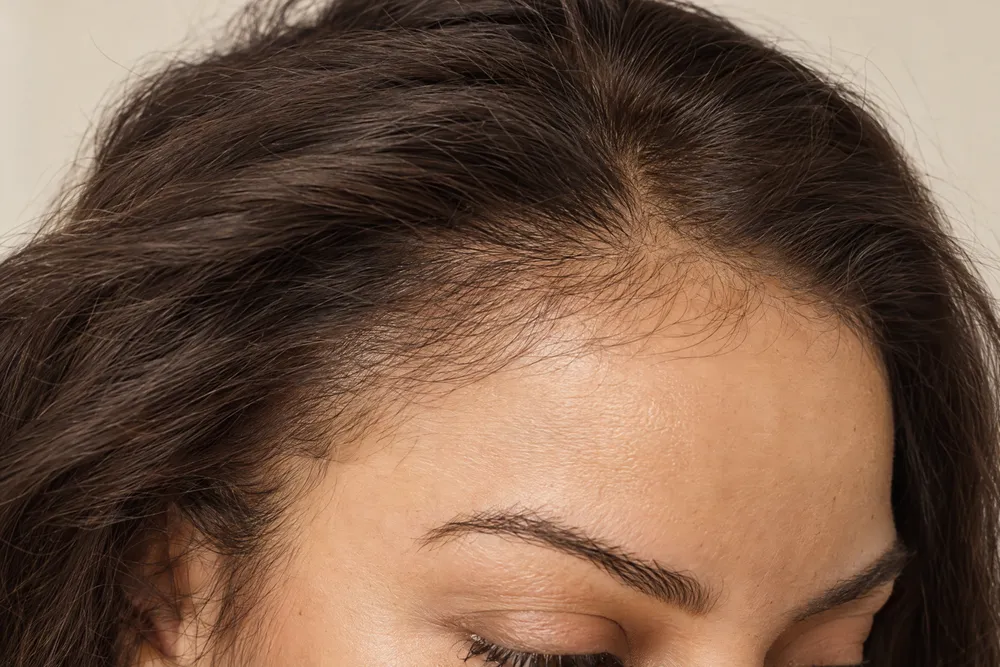
Short top shapes offer different amounts of movable coverage
The comparison in short hairstyles for men separates nearly uniform shortness, front lift and side-parting length. Use those differences to describe your natural-hair haircut while checking what the current piece can already do.
Decide whether the front should fall, lift or part
A very close top leaves little movable hair to draw across an edge. A crew-like front can retain some lift, but lifting it may expose the forehead and join. A side sweep keeps more styling room, yet may reveal one front corner while covering the other. Short therefore describes length, not a consistent level of concealment.
Try the ordinary direction of your existing hairpiece before choosing a reference. If it naturally falls forward, ask what happens when the front is lifted. If it opens to one side, ask whether a forward finish is achievable without forcing it. Do not assume that cutting the retained sides will change the unit's implanted hair direction.
Choose an acceptable unstyled version
A hypothetical wearer may like a raised front in a photograph but want coverage on an ordinary office morning. If the relaxed front opens across the base, that reference does not meet their main requirement. The useful compromise might be a compact outline with a forward front, rather than more hold or a closer cut. Decide which version you need most often.
Undercut contrast can draw attention to a different join
An undercut haircut creates top-to-side contrast, with a disconnected or softer length transition. Its deliberately visible haircut boundary should not be confused with the frontal hairpiece base edge.
Set the highest short area on retained hair
Shortening your natural sides changes the background against which the piece is seen. A fuller unit above very close sides can look intentionally contrasted, but it can also make an unwanted ledge more prominent. Check the temple in profile and head-on. Making the lower sides even shorter does not necessarily resolve heavy upper weight.
Point out the highest area you are willing to have cut short. If natural hair currently contributes to blending beside the unit, removing it is a significant choice. Keep that coverage until the proposed boundary has been discussed with the piece in its fitted position. A reference with dense natural temples may not represent your available blending hair.
Test the top resting and moved aside
Compare the overhang when it lies down with the view when it moves away during your usual styling. You may welcome an exposed haircut division at the side but still want the front base covered. Write those as separate requests. Read about men's hair system base types for construction terminology, then confirm the actual piece rather than inferring its edge from a generic label.
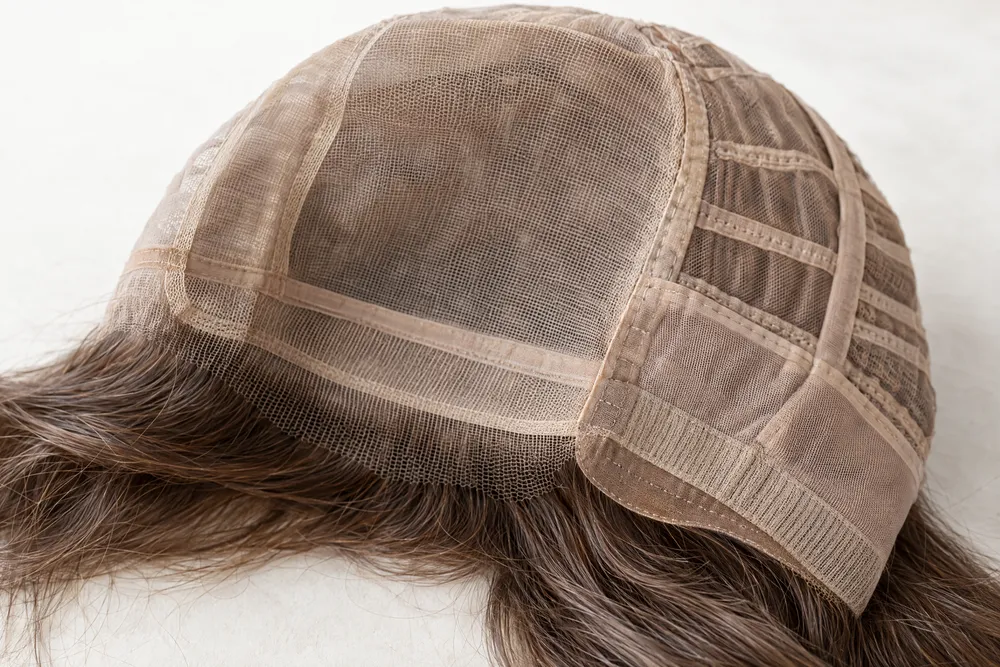
Two-block separation depends on the upper overlap
A two block haircut keeps a fuller upper shape over shorter sides and back. The haircut reference helps explain proportions, but a frontal piece and retained natural hair do not necessarily form one freely adjustable upper section.
Separate side overlap from front opening
Longer upper hair may cover a shorter side panel at rest. That tells you little about the front: a middle opening can expose the central edge while a forward fringe covers it. Check each area independently instead of assuming that a full-looking top hides every boundary.
If your unit covers only the frontal region, some upper-side and crown hair may remain your own. Ask which strands create the overhang and which belong to the piece. Adjusting the natural upper sides is different from reducing the hairpiece front. Keep the requested side width, front length and crown fullness separate in the consultation.
Protect the option you use daily
For a hypothetical wearer who alternates between a forward fringe and a soft part, both arrangements need assessment. A front shortened for a compact crop may lose the length needed to sweep aside. Conversely, retaining parting length may mean more hair on the forehead when worn forward. Prioritise the everyday direction and accept that the occasional alternative may expose more edge.
Run a movement check without forcing the fringe into place
A settled mirror view is a starting point. Follow it with the movements you make during a Hong Kong workday, using the fitted piece and your ordinary styling routine.
Observe what appears and how it settles again
Use normal viewing distance in front and side views, then a closer view to identify a specific concern. Avoid making a harsh close-up the only judgement. men’s hair system side-profile photos can help you prepare consistent angles rather than compare differently lit images.
Record whether the centre or corner becomes visible and whether the hair settles back without repeated arranging. This is a practical observation, not a durability test: do not pull the attachment, aim a strong fan at it or loosen the piece. If the base moves, stop and discuss fit instead of treating that as merely a styling problem.
Keep natural-hair care and unit instructions distinct
The American Academy of Dermatology advises gentle moisture absorption and limiting heated styling on natural hair, with low or medium heat and heat protection. Cancer Research UK advises checking manufacturer instructions before direct heat on synthetic wigs because tools can damage the fibres. Neither is permission to heat your particular piece. A coverage plan that needs repeated forceful restyling deserves reconsideration.
- Check the front at rest with your head level, including both corners.
- Turn naturally each way and look down as you would at a phone.
- Put on your usual glasses and observe any change in fringe placement.
- Use your normal gentle reset, then note whether coverage returns.
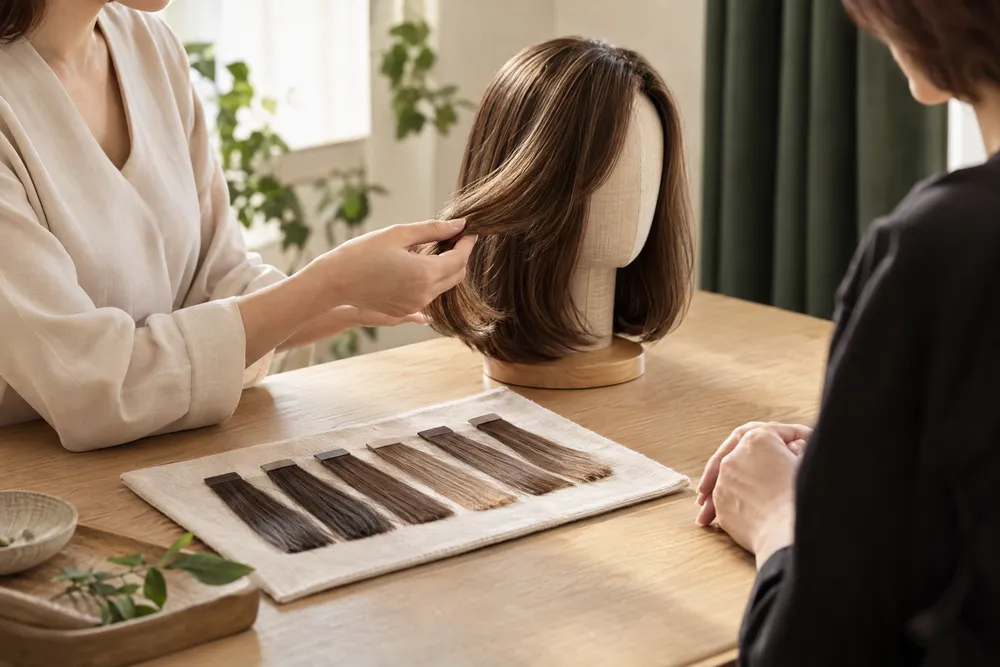
Make keeping or exposing the front an explicit consultation choice
Bring your observations to a discussion about custom wig fit and adjustment. An existing piece needs its own suitability assessment; a custom-order completion process is not a promise to alter every unit.
Write a front-edge brief before cutting
If coverage is your priority, say which area should stay covered during normal movement and which occasional exposure you can accept. If an open forehead is your priority, ask to view the fitted front without relying on a fringe. Intentionally exposing the hairline means evaluating the edge honestly, not declaring it invisible.
Ask the provider to identify the proposed work on your own hair and on the piece separately. Agree on what stays before anything is removed. Keep a front and side record of the accepted shape so a later tidy-up does not unintentionally change the balance.
Confirm the right location and service scope
OWNSTRAND handles enquiries at Room 2103, 50 Hoi Yuen Road, Kwun Tong, WhatsApp +852 5933 4697. Vit So is a separate service location at 252 Hollywood Road, Sheung Wan, +852 5305 7561. The linked guides explain haircut choices; confirm any retained-natural-hair work and hairpiece work separately, rather than assuming one booking covers both.
- Mark the centre and corner coverage you want to preserve or intentionally reveal.
- Identify which upper and side strands are natural hair and which belong to the piece.
- Agree on front length and upper-side coverage before choosing stronger contrast.
- Confirm who will assess the unit, what may be altered and the applicable quote.
| Direction | Edge position to inspect | Trade-off to discuss |
|---|---|---|
| Forward crop | Centre and corners beneath separated strands | Keep coverage weight without an unwanted solid fringe. |
| Compact lifted top | Front edge when hair moves upwards | Less forehead coverage may be part of the chosen finish. |
| Undercut contrast | Temple overlap and frontal base independently | Closer natural sides can emphasise upper weight. |
| Fuller two-block shape | Side overhang and central front opening | Parting flexibility may need more retained front length. |
Ask OWNSTRAND about selection and fitting
Tell us the style you have in mind. We can discuss the options, quotation and arrangements before you decide.
Ask OWNSTRAND about selection and fittingBefore you choose
Does a longer fringe always hide the join better?
No. Length below the edge is not the same as continuous coverage across it. Longer strands can separate near the roots or sweep away from a corner. Compare their actual fall and reset after movement before deciding whether more length would help.
Can I keep the existing piece and only cut my natural sides?
That may be a useful discussion if the current front already works. First identify the natural hair contributing to the side blend. Removing too much can change the contrast around the piece even though the piece itself has not been cut.
Should I add stronger product when the edge shows after travelling?
First check whether the hair has separated or the fitted base has moved. Product cannot correct an unsuitable base position. For strand separation, ask about a compatible, simple routine for the particular unit instead of adding more hold without understanding the cause.
Further reading
- Tips for healthy hair — American Academy of DermatologySupports gentle moisture absorption and limiting heat styling on retained natural hair; it does not establish hairpiece concealment or a unit-specific heat setting.
- Wigs, hats and scarves — Cancer Research UKSupports checking manufacturer instructions before direct heat on synthetic wigs and following supplier care instructions; UK funding, lifespan and production-time guidance is not applied to OWNSTRAND.