

Map the bright areas before judging a trim
On natural hair, the name of a colour technique does not tell you which portions will remain. Vit So's hair highlights page is useful for describing strand width, dark gaps and placement before discussing your own cut.
Separate retained colour from visible colour
Look at one highlighted strand from its darker upper portion towards the tip. If the bright area begins above the proposed end line, some lightened hair may remain after trimming. If brightness is concentrated entirely below that line, the cut removes it. This is a placement question, not a reason to choose a stronger shade.
Check the covering layers: retained colour can become hidden under darker hair, while shortening a dark outer layer may expose lighter hair underneath. Compare front, profile and back views.
Use the outline comparisons in OWNSTRAND's short wigs guide to clarify the length you actually prefer. A chin-length bob and a compact crop offer different amounts of visible hair; neither should be chosen solely to preserve an accent you no longer enjoy.
Judge contrast without confusing fine with subtle
The term babylights describes finer highlighted sections and can help explain a softer-looking strand pattern. It does not guarantee that those lines will remain after your next cut or that the overall colour will look quiet.
Keep the darker gaps in the comparison
A narrow pale line can stand out against a dark base. Several closely spaced fine lines can make a short top appear broadly lighter. After a trim, there may be less bright length, yet the remaining light section can still be conspicuous because the surrounding outline is compact.
Describe your goal plainly: a predominantly dark bob with occasional light strands, an obvious front accent, or an overall brighter top. This gives a clearer limit than asking for the finest sections. Say whether the darker end line of your current shape matters to you.
When comparing highlighted wigs, inspect the same relationship between light strands and retained depth. A colour name or online photograph alone does not establish the distribution on the particular style being considered. Ask to compare the visible pattern, not to reproduce a salon technique on the wig.

Make the next haircut a design constraint
Reading about highlights for short hair can help you identify the bob edge, front lengths and layers to discuss. The important step is applying that vocabulary to the hair you will keep, rather than assuming a coloured line survives because the style is short.
Test a small trim and a shape change separately
Consider a hypothetical bob with brightness only in the final 8 mm of its ends. Removing 12 mm from those same strands removes that accent. Lightness extending further upwards on another strand could remain. These numbers illustrate placement, not a measurement rule for your haircut.
A routine outline tidy and a change to graduation are also different decisions. The latter can alter which layers face outward, even where the front length stays similar. Ask the stylist to show which sections would be shortened, then discuss what brightness would remain in the normal dry fall.
Choose what matters when shape and colour compete
If the shorter outline is your priority, accept that an end-focused accent may need to change or disappear. If keeping a particular front strand matters more, explain that before the cut is agreed. Do not silently postpone a haircut you want just to keep colour in unwanted length.
- Show the next intended outline on a photograph, including the nape and front ends.
- Identify the bright areas you would like to retain and those you are comfortable losing.
- Ask which covering layers change, not only how much comes off the perimeter.
- Agree whether the haircut or the visible colour accent takes priority if both cannot stay.
Compare a non-growing wig without calling it permanent
A pre-coloured short wig removes the biological regrowth variable. It does not remove every source of change, and it is not a resettable version of natural hair.
Distinguish a designed root from new growth
On natural hair, newly grown length has not received the previous highlighting treatment. The position of the older lightened lengths therefore changes relative to the scalp as hair grows. On a wig, no new length emerges from the cap. The darker area in rooted wigs is part of the supplied colour design, not a root boundary that grows down over time.
A stable starting arrangement between wears can be useful. However, handling, styling, wear and changes in tone can affect appearance. No-growth does not mean no-care or guarantee that every strand stays in the same visible position.
Removed wig length will not grow back. Bright tips can be lost just as bright natural ends can. Before shortening a fringe or bob edge, inspect the exact piece and ask whether the alteration is appropriate. A general style photograph cannot answer that question.
Check the natural hair beside a topper after cutting
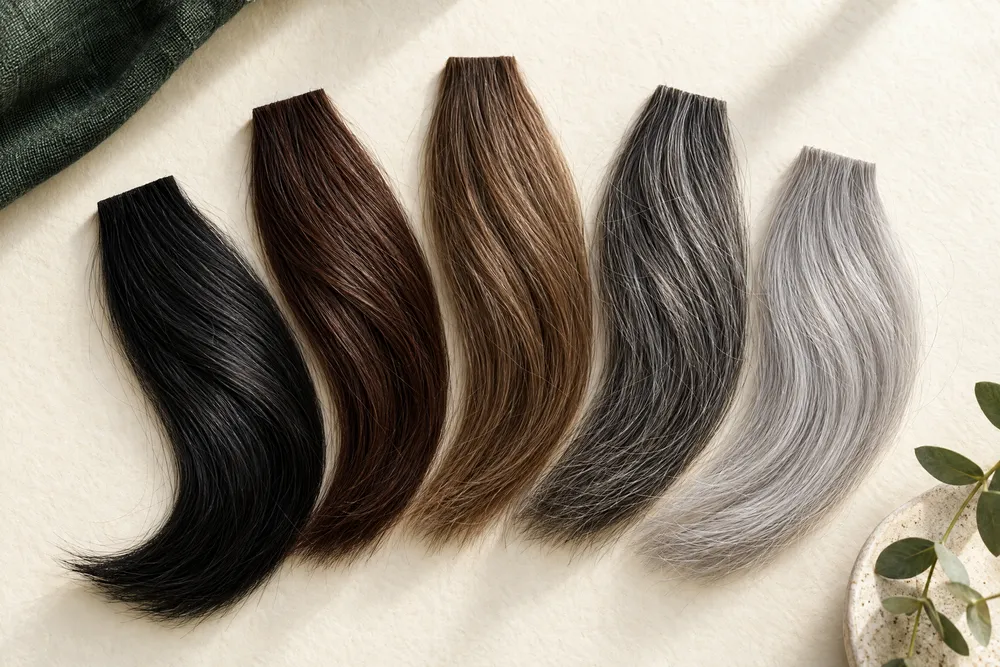
A topper and exposed natural hair do not change on the same timetable. A match that looks convincing today may look different after the sides or fringe are shortened, without anything being wrong with the piece.
Compare the meeting point, not just two colour samples
Imagine a hypothetical short topper with light strands near its outer edge, worn over natural sides with brighter tips. A trim removes those natural tips but leaves the topper unchanged. The meeting point may then show more contrast. The issue is unequal colour distribution after cutting, rather than automatically the wrong shade.
Use the questions in hair topper colour match with natural hair to inspect exposed areas and density together. Check the piece in its usual fitted position, with the sides falling normally and with your everyday ear tuck. Moving it to hide a mismatch can introduce a different fit problem.
Consistent lighting helps separate tone from placement. OWNSTRAND's wig colour matching guide introduces sample and screen comparisons. Add before-and-after trim photos in similar light; do not compare a newly exposed dark section with a strongly lit earlier photograph.
Keep colour upkeep separate from haircut upkeep
A smaller visible accent after a trim does not automatically mean fresh lightening is needed. First decide whether you dislike the placement, the tone or simply the amount that remains.
Assess retained natural strands before repeating processing
You may be happy to keep a darker short outline while existing brightness gradually reduces. You may instead want advice about a warmer tone on retained strands. Those choices differ from creating new lighter sections. Discuss them separately, especially if the ends feel rough or break during handling.
The American Academy of Dermatology's colouring guidance explains that chemical treatments can leave natural hair dry and brittle, and greater lightening changes can increase damage. That supports checking the condition and colour history of the hair being retained, not treating every haircut as a reason to lighten again.
Tell the colour provider about previous dye reactions. NHS guidance advises following dye instructions and stopping use after a reaction; a hair-strand test should not be treated as proof that allergy is impossible. Seek medical advice for a reaction rather than trying another colour to correct the appearance.
For the wig, start with human hair vs synthetic wigs and the instructions for the actual piece. Natural-hair lightening advice is not a process for synthetic fibre, and a human-hair label alone does not establish that further colouring is suitable.
Bring three views and one clear priority to an enquiry
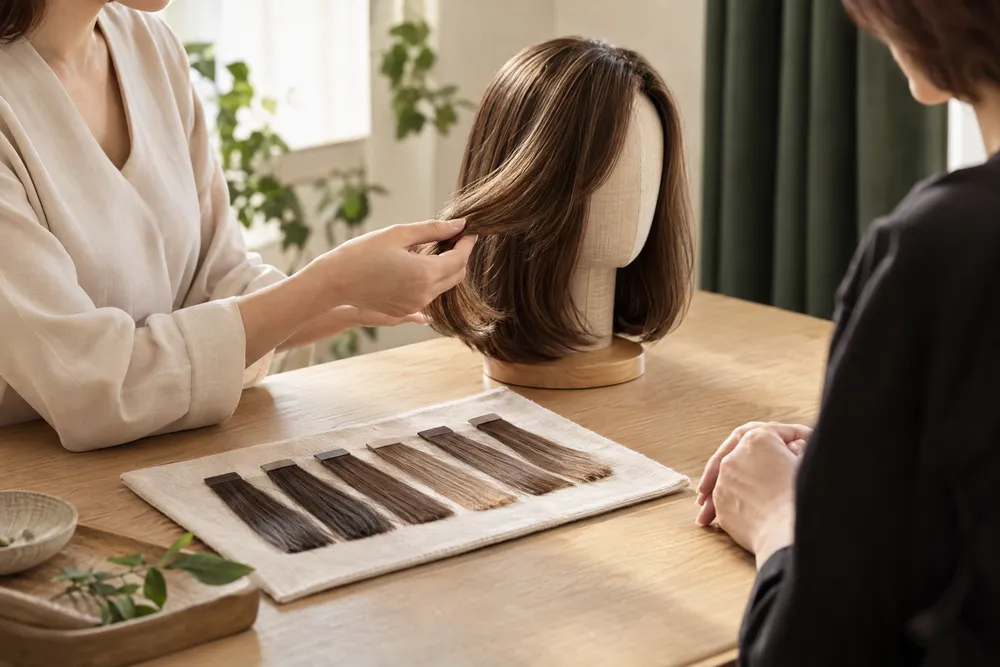
A useful enquiry shows the present colour, the intended haircut and the appearance you want between cuts. It need not contain dozens of inspiration pictures.
Ask for a comparison, not a guaranteed surviving line
Photograph the front, side and back in your usual dry style. Mark the approximate next outline on a copy, without cutting anything yourself. Add one reference and explain whether its attraction is placement, contrast or shape. Include brightness you would find too strong if that clarifies your limit.
For a wig enquiry, identify the exact piece and ask about supplied colour, material and fitting before alteration. For natural hair, send colour history and ask how the cut affects retained sections. These are separate assessments, even with a similar visual goal.
OWNSTRAND wig enquiries go to its sole shop at Room 2103, 50 Hoi Yuen Road, Kwun Tong, via WhatsApp +852 5933 4697. Vit So's natural-hair colour enquiries are for 252 Hollywood Road, Sheung Wan, at +852 5305 7561. The Sheung Wan location is not an OWNSTRAND branch; confirm the applicable work and appointment with the relevant business.
- Send the current front, side and back, with a fitted topper shown where relevant.
- State the next cut you want and which bright areas matter most to you.
- Explain your normal parting, ear tuck and finish so visibility can be compared fairly.
- Confirm the assessed scope, quotation and any proposed alteration before agreeing to proceed.
| Starting situation | What to inspect | Decision before the next cut |
|---|---|---|
| Natural hair with bright tips | Whether lightness is below the proposed end line | Accept losing the accent or discuss different retained placement |
| Natural hair with lightness further up a strand | Remaining colour and the layers that cover it | Check the normal dry view, not only remaining strand length |
| Pre-coloured short wig | Bright areas on the exact piece and the length to be removed | Do not rely on regrowth to restore a cut section |
| Topper with highlighted natural sides | The meeting point after natural bright tips are removed | Compare fitted blending before changing either colour |
Ask OWNSTRAND about selection and fitting
Tell us the style you have in mind. We can discuss the options, quotation and arrangements before you decide.
Ask OWNSTRAND about selection and fittingBefore you choose
Does cutting highlighted ends make natural roots darker?
Cutting removes length; it does not recolour the roots. The remaining style may look darker because less lightened hair is visible, while new growth has its untreated appearance. Compare the root area and retained lengths separately before requesting more colour.
Can I keep a highlighted short wig unchanged while trimming my own hair?
The wig does not need a trim just because your natural hair does. With a full wig, check the fitted outline; with a topper, reassess exposed natural sides and the meeting point. Trimming your own hair can change that visible blend even when the piece stays untouched.
Should I request cutting before colouring every time?
Not as a universal rule. Make the intended retained shape clear before colour placement is agreed, then ask the provider to confirm the sequence for the actual work. When you only need an outline tidy and still like the retained colour, another lightening appointment may not be necessary.
Further reading
- Coloring and perming tips for healthier-looking hair — American Academy of DermatologySupports considering natural-hair condition before repeat chemical processing and explains that larger lightening changes can increase damage; it does not establish highlight survival after a cut or wig processing suitability.
- Hair dye reactions — NHSSupports following actual dye instructions, discussing past reactions and stopping use after a reaction; strand appearance testing is not a guarantee against allergy.