
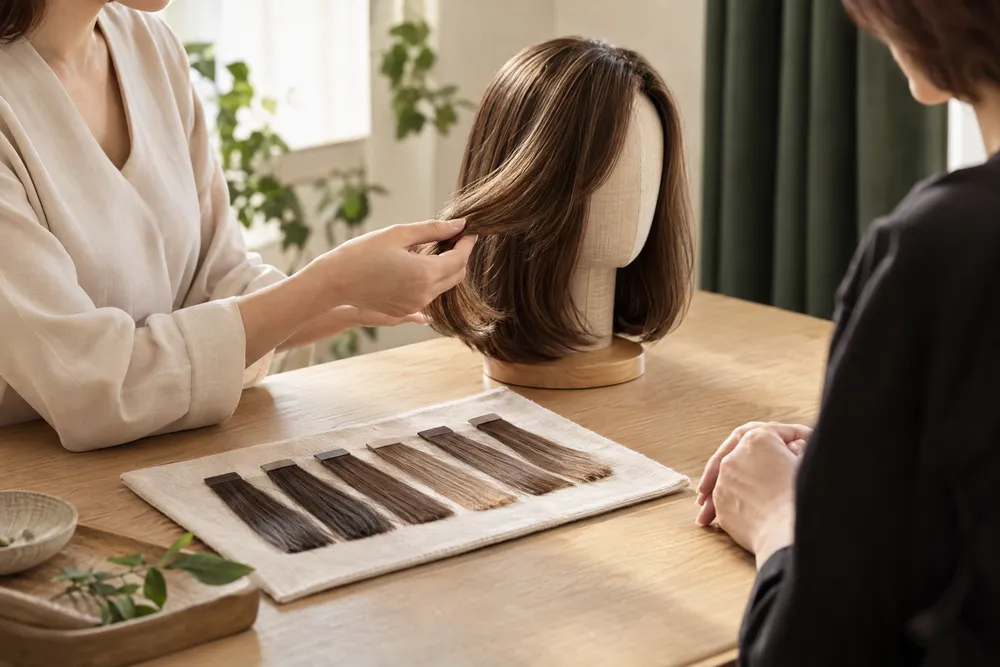
1. State exactly what today's appointment is for
When approaching a new hairdresser for your natural hair, lead with the work you want done rather than asking vaguely to make everything blend.
Make the topper a reference, not an automatic cutting task
A clear opening is: ‘I already wear this topper. Today I want my own hair tidied while keeping the piece unchanged.’ Add the main practical concern, such as uneven ends beneath the topper or natural side hair that no longer tucks comfortably behind your ears.
If you want the topper shortened too, make that a separate request before booking. Ask whether the particular unit can be assessed, who would handle it and what work they would accept. Bringing it along does not turn a natural-hair appointment into a fitting or alteration appointment.
Identify the unit without guessing its material
Bring its label, order details or original care sheet. Record the stated hair material, base dimensions, attachment method and any earlier alterations. If something is unknown, write ‘unknown’ rather than inferring human hair from its appearance. For a clip-in hair topper, note whether you normally remove and replace it yourself; that affects the visit plan.
2. Mark attachment points and two kinds of no-cut zone
A no-cut zone can mean the topper itself, but it can also mean natural hair that still performs an attachment or coverage job. Describe both rather than assuming the stylist can recognise every boundary from the finished look.
Show where the attachment meets your own hair
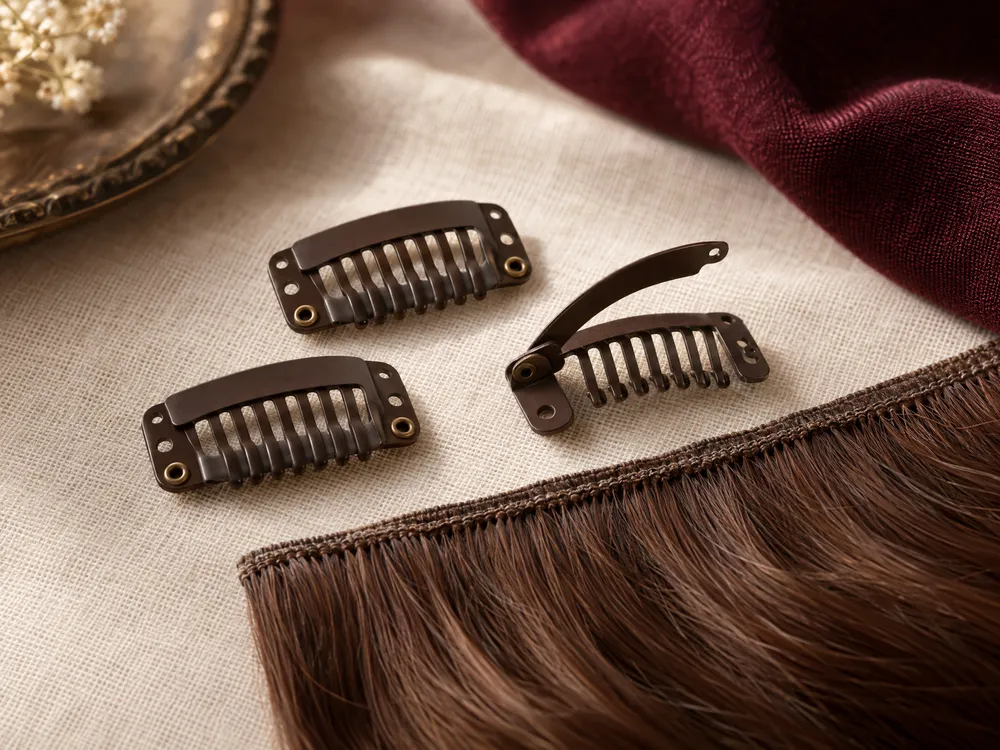
Use a labelled photo to identify clip landing zones. Show which sections you usually place into each clip, without pulling harder to demonstrate security. Do not set a universal minimum length yourself: ask the fitting provider which retained sections matter for this particular base and attachment arrangement.
For a taped, bonded or unfamiliar system, explain who normally removes it. If you cannot safely remove it yourself, settle the removal and replacement plan before the salon visit. A natural-hair stylist should not have to improvise that process at the basin.
Mention discomfort before discussing shape
Tell the stylist if an attachment area already feels sore or pulls. The AAD guidance on hairstyles that pull explains that repeated tension can lead to hair loss and identifies pain, stinging and crusts as warning signs. This is not proof that your topper caused a problem; persistent symptoms or new hair loss need medical assessment rather than a cosmetic explanation.
- Label the topper ‘unchanged today’ if no work on it has been agreed.
- Mark natural-hair sections to retain for attachment or edge coverage.
- Identify who may remove and replace the unit, including any unresolved steps.
- Flag soreness or pulling; do not conceal it by tightening the attachment.
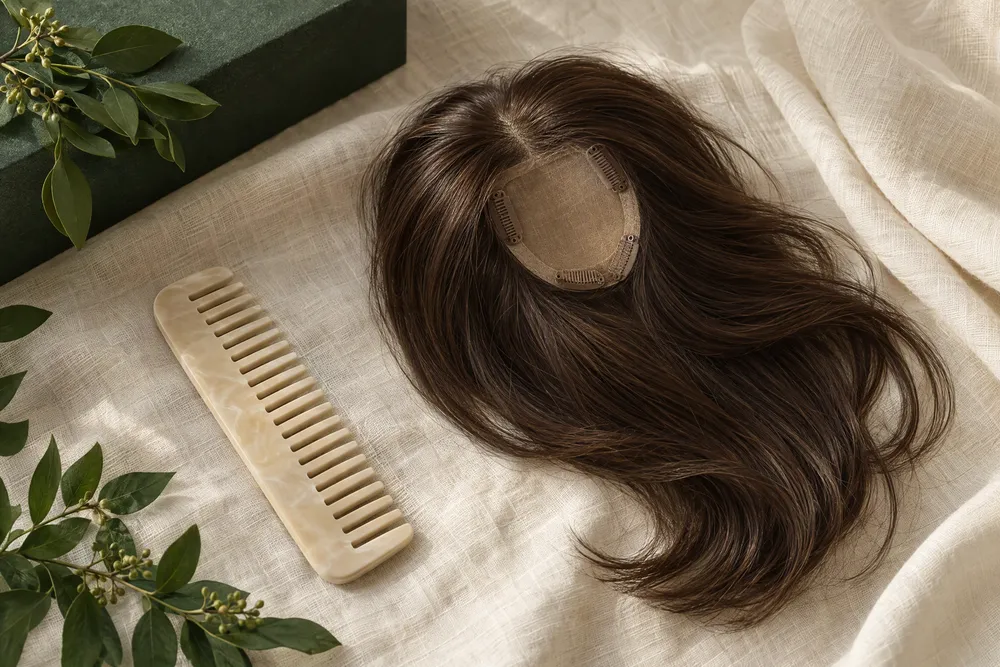
3. Record the existing blend before changing the outline
The aim is to preserve what currently works and name what does not. ‘Blend it better’ is too broad if the new stylist has never seen your everyday topper placement.
Photograph the joins, not just the overall hairstyle
Take front, side and back photos in your ordinary placement. Add views without the topper if you are comfortable sharing them. Label where your natural hair first becomes visible, where it meets the topper's ends and which front pieces belong to you. Keep the images private to the consultation rather than assuming they can be used publicly.
An existing topper blending check can help you record a transition under daylight and office lighting. Describe the observed difference: a colour contrast near the temples, a gap at the back or an abrupt length change.
Explain the shape you need with and without the topper
Say how often you wear the piece and whether you also need a presentable topper-free shape. A cut chosen only for the worn outline may not suit your preferred natural-hair look. Equally, shortening the natural sides for a standalone shape may reduce the length that currently bridges the topper's edges. Decide which compromise matters most before changing the perimeter.
4. Give cutting, product advice and later fitting different briefs
A hair stylist may be the right contact for the natural-hair shape and daily routine. That is a different decision from confirming suitable products for your constructed piece or arranging an assessment of its fit.
For the cut, describe what must survive the change
Give the desired endpoint, attachment-related retained sections and the two outlines you need. Include your natural drying pattern and whether you tie the hair back. Ask the stylist to explain the proposed change against those boundaries before cutting, especially around side sections that disappear under the topper when worn.
For products, name the surface being treated
Bring names or label photos of products you already use. Ask whether advice concerns your scalp, growing natural hair or topper lengths. The AAD's hair-care guidance supports conditioner after shampoo and lower, less frequent heat use on natural hair. It does not establish a topper's heat limit or product compatibility.
Use human hair vs synthetic wig care to organise unit-specific questions alongside its original instructions. Do not transfer a natural-hair colour, perm or straightening plan to the topper because the two are worn together.
For a later fitting, hand over what changed
Record the natural-hair areas shortened, any retained sections and the date of the cut. If you seek hair topper fitting Hong Kong information, ask whether the provider will assess your particular already-owned unit. A custom-order fitting process does not automatically include every third-party piece or alteration request.
5. Carry confirmations, not remembered assumptions
A previous provider may have advised on the unit, the natural hair or both. Preserve the distinction so the new stylist can tell what is established and what still needs an answer.
Keep the original wording attached to its purpose
Save a care sheet or message alongside the unit details and date. ‘This product was approved for the lengths of this topper’ is more useful than ‘conditioner is fine’. Similarly, approval for a previous trim does not confirm a shorter cut now. A general manufacturer instruction and a provider's assessment of your actual piece should be labelled separately.
If the earlier advice was only verbal, write what you remember and label it as a recollection. Ask for clarification on anything that could change the plan.
Turn gaps into decisions to postpone
Useful unknowns include the fibre type, heat guidance, whether clips were repositioned and whether a previous colour change involved the natural hair or the piece. Decide which unknown affects today's work. You may still discuss a modest natural-hair trim while leaving an uncertain unit untouched, provided the retained areas and removal arrangements are clear.
6. Use checkpoints before cutting and before leaving
A handover becomes useful when the stylist can connect it to hair in front of them. Build time into the agreed plan to review the ordinary worn outline, not only a freshly styled finish.
Agree on the sequence at arrival
Review the no-cut areas before washing or sectioning. Confirm whether the topper stays on for observation and who removes it for any natural-hair work. If the service does not include a worn recheck or replacement, agree how those steps will happen elsewhere before proceeding.
A hypothetical case: the side length is doing two jobs
Suppose a wearer wants shorter natural side hair because it feels untidy without the topper. Their photos show that the same sections cover the topper's side edge when worn. The useful decision is not simply ‘short or long’. They could preserve that bridging section while discussing tidier ends elsewhere, or postpone a larger change until the fitting provider can assess the unit. This is a decision example, not a client result.
- Before cutting: point to the exact sections to retain and repeat the permitted scope.
- Before finishing: compare the proposed everyday shape with your normal drying routine.
- At the agreed recheck: inspect front, sides and back in ordinary topper placement.
- Before leaving: save fresh photos and note the changes for the next provider.
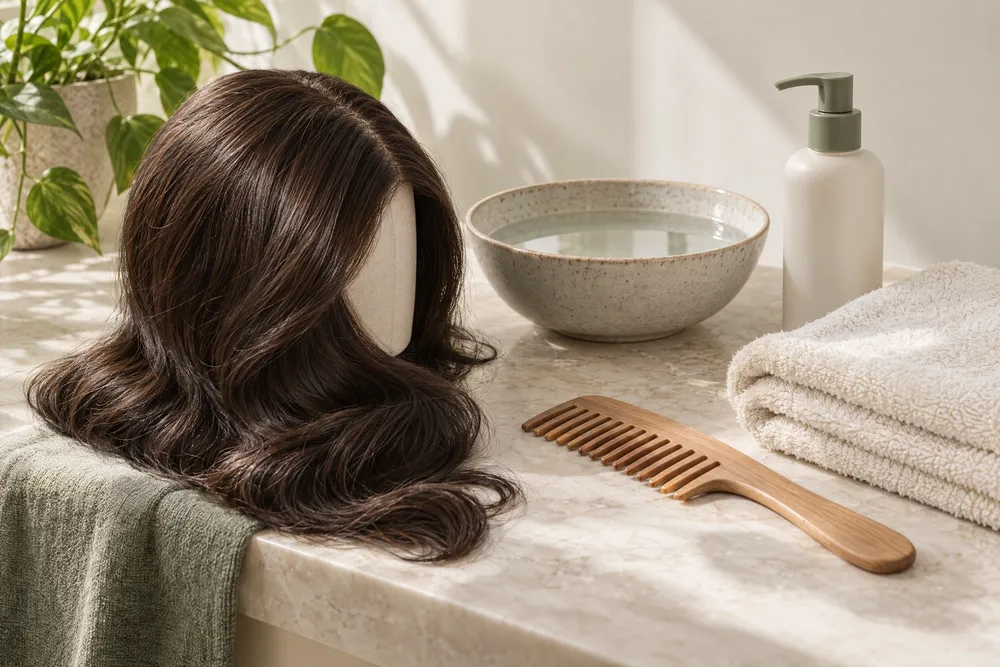
7. Send a short handover to the correct provider
A search for hair stylist hong kong can help identify a natural-hair contact, but it cannot confirm who will refit your existing topper. Send the handover first so the proposed scope can be answered before you travel.
Use a message that can receive a specific reply
Try: ‘I already own a topper and want a natural-hair trim only. It uses [attachment type]. These labelled photos show the retained attachment sections and current blend. The piece is not to be cut. Can you confirm whether you can assess this natural-hair request, how removal and replacement would be handled, and what the visit would include?’ Add unknowns rather than filling them with guesses.
Send unit-care questions to the supplier or fitting provider with the label and existing instructions. For a later fitting enquiry, include the new natural-hair photos and ask which unit work, if any, is accepted. Confirm consultation language, cost scope and appointment arrangements separately.
Keep the two locations and enquiries separate
Vit So's natural-hair service contact is 252 Hollywood Road, Sheung Wan, Hong Kong; WhatsApp +852 5305 7561. OWNSTRAND Wigs is at /en-hk/; WhatsApp +852 5933 4697. These are separate service locations, not interchangeable branches.
| Task | Bring these details | Confirm before proceeding |
|---|---|---|
| Natural-hair cut | Worn and unworn photos, retained attachment hair, existing blend, desired endpoint | Which natural-hair sections may change; who removes and replaces the unit |
| Product advice | Exact product labels, intended surface, unit material and original care instructions | Whether advice applies to scalp, natural hair or this topper; unresolved compatibility |
| Later fitting | Unit identity, attachment history, recent natural-hair changes and current worn photos | Acceptance of this already-owned piece and the specific fitting or alteration scope |
Ask OWNSTRAND about selection and fitting
Tell us the style you have in mind. We can discuss the options, quotation and arrangements before you decide.
Ask OWNSTRAND about selection and fittingBefore you choose
Must I remove my topper before the consultation?
Ask beforehand. Seeing the ordinary worn shape may be useful, while assessing natural hair may require removal. For a system you do not normally remove yourself, confirm who handles removal and replacement rather than arriving with an assumed plan.
What if I cannot contact the previous provider?
Bring the original label, care sheet and your own dated notes. Mark remembered advice as unconfirmed. Leave uncertain topper work out of the appointment and agree which natural-hair changes can be assessed with the information available.
Should my natural hair be cut shorter now for a future topper refit?
Not on speculation. Ask the later fitting provider which retained lengths matter and whether they accept this unit. Until that assessment is clear, preserve sections serving the current attachment or blend instead of cutting in anticipation of an unconfirmed refit.
Further reading
- 10 hair care habits that can damage your hair — American Academy of DermatologySupports gentle natural-hair care, conditioner after shampoo and limiting heat; not topper-specific product or temperature approval.
- Hairstyles that pull can lead to hair loss — American Academy of DermatologySupports taking repeated pulling, pain and scalp warning signs seriously and seeking medical assessment for hair-loss concerns; does not diagnose an individual topper wearer.