
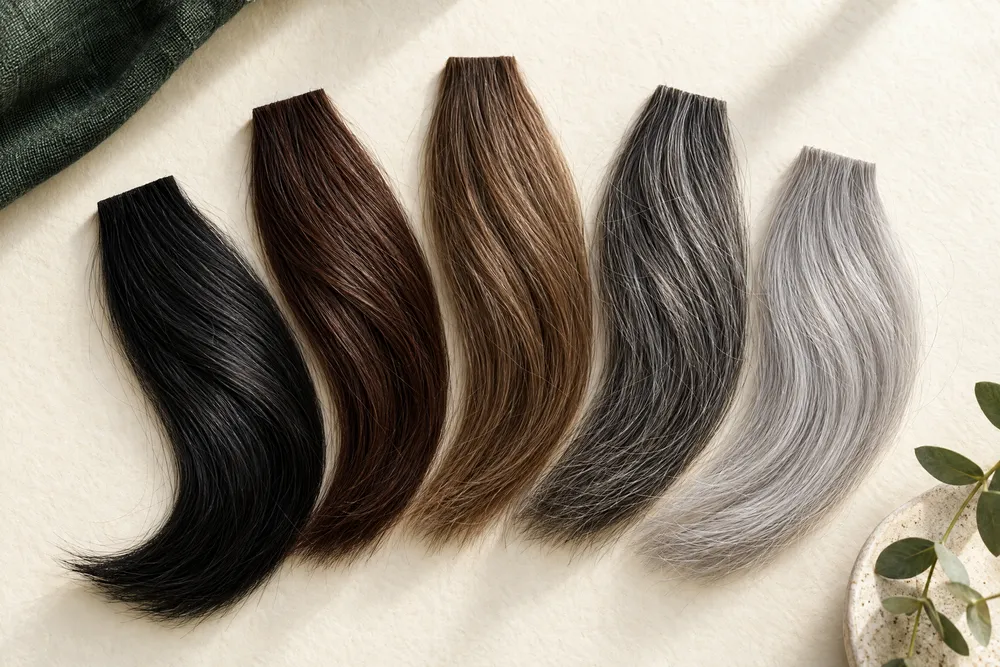
Before the transition: decide which greys you want to reveal
A lighter temple and a darker crown can belong to the same intentional hairstyle. The useful question is not how much grey you have overall, but where you want it visible while the topper supplies coverage.
Map the visible meeting points, not the whole head
Look at your usual parting, both temples and the area where the topper's lengths meet your own. Check with hair loose and tucked behind the ears. Grey underneath may scarcely affect a loose style yet become important when you tie the hair back.
Write 'keep' beside a streak you like and 'review' beside an edge that feels disconnected. Avoid counting every white strand. A concentrated pale section next to solid brown can matter more visually than many scattered greys elsewhere. OWNSTRAND's wig colour matching guide helps frame comparisons of actual colour rather than names alone.
Name the reason for stopping repeated coverage
Your priority might be keeping a familiar silver streak, reducing appointment commitments or simply seeing your natural colour. Put that reason above an exact end-date. If your plan keeps sending you back to conceal the same regrowth, it may be solving the wrong problem.
The American Academy of Dermatology's explanation of grey hair describes greying as a normal part of ageing. This transition plan concerns appearance, not changing pigment production or treating a medical condition.
Weeks 0–4: establish a baseline before changing anything
Use the first few weeks as an observation window, not a deadline for buying a greyer topper. Your current piece may still work with the natural hair visible around it.
Compare a repeatable daily view
Take a front photograph, each side and a wider view of the lengths with the topper fitted as usual. Use soft daylight, then the room where you normally get ready. Keep the phone position similar at later check-ins; a close-up under a bright bulb can exaggerate a boundary that is less obvious in conversation.
Follow a topper blending check to compare daylight and office light. Record whether the mismatch concerns darkness, warmth or placement. 'The front looks too solid beside my silver temple' is more useful than 'the colour is wrong'.
Test preserving grey before assuming it needs colour
Keep your preferred greys visible in the usual style and notice whether you like the contrast over several ordinary days. If you still want selected natural strands darker, Vit So's grey coverage page explains that separate cosmetic goal. It is relevant to natural-hair colour enquiries, not proof that the topper must be dyed.
- Photograph the fitted topper and exposed natural hair without filters or root concealer masking the area under review.
- Write one feature you want to preserve and one contrast you want to assess; keep those notes beside the baseline photographs.
- Wear your normal parting and ear-tuck before trying a different styling arrangement, so the comparison remains useful.

At your next natural-hair review: decide whether blending serves the transition
A colour appointment is optional. It should support the amount of natural silver you want to retain rather than restart full concealment by default.
Describe the retained silver before asking about a method
If a hard division between untreated roots and older dyed lengths is your main concern, discuss those zones separately. Vit So's grey blending service reading explains a mixed appearance with some white strands left visible. Tell the stylist which silver section should remain and how much surrounding lightness you would accept.
Bring the topper to the discussion only after asking whether that is appropriate. Its colour is a visual reference for the join, not an instruction to use the same dye on both. Previous home colour, henna or lightening on your own lengths belongs in the natural-hair history.
Ask what the in-between finish would require
A softer contrast does not establish maintenance-free colour. Ask which parts of the proposed finish would need future attention and whether you would be content leaving new silver growth visible. If maintaining tone creates a routine you hoped to leave behind, preserving grey without colour may better fit your priorities.
Blending is not automatically safer because it looks softer. The NHS guidance on hair dye reactions explains irritation and allergy risks and the importance of product instructions. Disclose earlier reactions; seek healthcare advice about a reaction rather than choosing another colour category as a safety shortcut.
Around months 2–3: review the join, not a grey-percentage target
Set a reminder to compare the same views again. This is a planning checkpoint, not a prediction of how quickly your hair will grow or when a replacement becomes necessary.
Separate a colour mismatch from a fit or shape mismatch
Ask whether the topper still covers the intended area and sits comfortably before judging its palette. A lifted edge, an unsuitable parting or a length difference can draw attention even when colours are close. Consult topper base measurement notes if your coverage requirements also need review.
Do not make the base larger simply to hide greys you wanted to reveal. Coverage and visible colour have different jobs. Discuss any fit adjustment with the supplier rather than pulling clips tighter to force the piece into another position.
Choose the next step using your tolerance for change
If the join remains acceptable, keep the current arrangement. If older dark lengths are the issue, discuss those lengths before assuming the topper is at fault. If the piece now reads as a solid block beside natural silver in several everyday views, start comparing future palettes.
Vit So's grey blending vs full coverage comparison can help clarify the natural-hair decision at this point. Fuller consistency and retained silver are different goals; neither tells you which topper colour or material is available.

Later in the transition: compare a different topper palette deliberately
Consider another palette when the difference repeatedly bothers you in normal wear, not when you cross an online grey-percentage threshold. There is no universal proportion that determines readiness.
Compare depth, distribution and the front separately
A greyer-looking option may still be too dark at the front or too evenly mixed through the lengths. Ask to compare the colour near the parting with the shade that will sit beside your natural temple. A blend distributed throughout a piece is not equivalent to your own concentrated white streak.
OWNSTRAND's salt and pepper wigs guide offers useful colour vocabulary. It is a full-wig shade guide, not confirmation that those palettes exist in a topper. Check the actual model, material and available colour with the supplier before making a shortlist.
Plan for a usable overlap rather than an instant replacement
Ask about swatch viewing, the full specification and fitting arrangements before ordering. Keep the current piece usable while you assess another one, where practical. Compare both in your usual hairstyle; changing length, volume and colour simultaneously makes it harder to identify what helped.
For a hypothetical reader who likes silver temples but still has dark dyed lengths, the first checkpoint might support keeping the current brown topper. Later, once those lengths change and the join feels too solid, comparing a more varied palette may become worthwhile. This is a decision example, not a customer result or timetable.
Keep the existing topper out of an assumed recolouring plan
Following a grey transition can mean changing how you wear a piece or eventually considering another palette. It does not mean the existing topper can be converted into any desired shade.
Check the particular piece before discussing alterations
Material, processing history and construction need their own assessment. The question can you dye a human hair wig is useful background for asking about limitations, not permission to colour a topper at home. Do not extend natural-hair dye or bleach methods to synthetic or mixed fibres.
Ask whether any alteration is appropriate for the specific piece and who, if anyone, can undertake it. No recolouring service is established here. A new palette comparison may be the more sensible question when the existing piece cannot be assessed or an alteration would compromise what you value about it.
- Find the piece's material and model information, plus any care instructions and known previous alterations.
- Ask about suitability and limitations before discussing a desired shade; do not buy chemicals in anticipation of approval.
- Compare any proposed alteration with a different palette, including costs, uncertainty and whether the current piece remains usable.
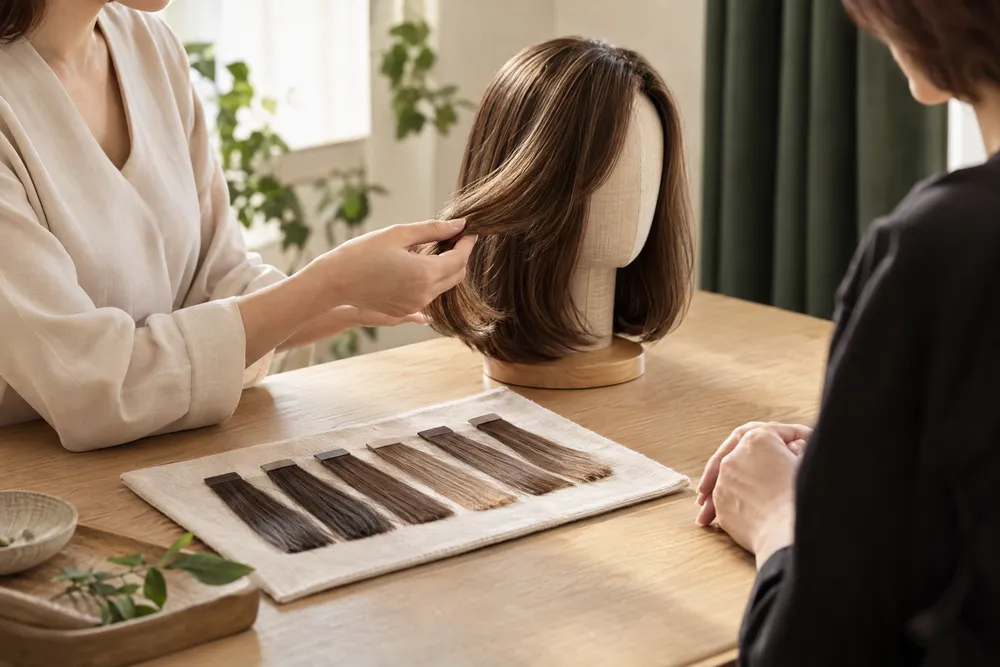
Make the next enquiry about one clear checkpoint
A useful enquiry explains what changed since the baseline and what you want to keep. You do not need a fully specified silver end-look to ask a focused question.
Bring a current problem, not only a future reference
Send comparable photographs and say whether your priority is preserving a temple streak, softening a natural-hair boundary or considering another topper palette. Include your preferred length and realistic availability for reviews. Ask what can be assessed now, what remains uncertain and which charges or arrangements require confirmation.
For topper selection and fitting enquiries, OWNSTRAND is in Kwun Tong at /en-hk/; WhatsApp +852 5933 4697. For the separate natural-hair colour discussion, Vit So is at 252 Hollywood Road, Sheung Wan; +852 5305 7561. They share the same owner but are different service locations. Confirm the relevant scope and appointment before travelling.
| What you notice | What to preserve | Useful next step |
|---|---|---|
| Silver temples look intentional beside the current topper | The grey you enjoy and comfortable coverage | Continue; compare the same views at your next reminder |
| Untreated roots and old dyed lengths form a hard boundary | Desired silver and your preferred length | Ask about natural-hair options and their upkeep |
| The topper repeatedly looks too solid beside exposed grey | Suitable fit, length and daily practicality | Compare an actual alternative palette and confirm availability |
| The join looks wrong because the base or shape is unsuitable | Comfort and the coverage area you need | Review fitting before changing colour |
Ask OWNSTRAND about selection and fitting
Tell us the style you have in mind. We can discuss the options, quotation and arrangements before you decide.
Ask OWNSTRAND about selection and fittingBefore you choose
Must I buy a greyer topper as soon as I stop colouring my roots?
No. Start by wearing the current piece with the natural grey visible and comparing the join in ordinary light. A change becomes worth exploring when the appearance or daily effort no longer suits you, not simply because you have stopped root colouring.
Can a dark-rooted topper work while my own front turns silver?
It may suit a deliberate contrast, or its darker front may feel disconnected from your temple. Compare the actual front and parting rather than relying on 'rooted' as a colour description. Available palettes differ, so check the specific piece before deciding.
Should I book all my transition appointments in advance?
Set review reminders first, then arrange relevant appointments as the next issue becomes clear. If you have an event or need another piece assessed, enquire early about availability. A reminder schedule can organise the process but cannot predict colour readiness, product availability or completion dates.
Further reading
- What causes gray hair, and can I stop it? — American Academy of DermatologySupports that greying is a normal ageing process and distinguishes cosmetic colour choices from medical treatment; does not establish topper palette or service claims.
- Hair dye reactions — NHSSupports the caution about irritation and allergy, following product instructions and seeking advice about previous reactions; does not supply wig-specific chemical instructions.