
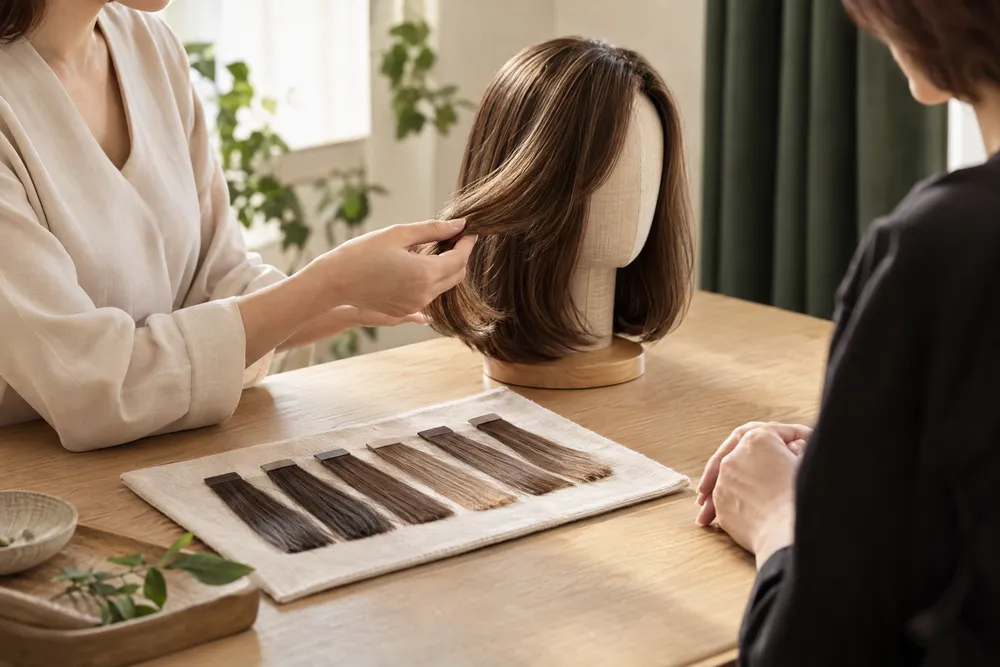
Write two haircut briefs before asking for one visit
A family visit can sound like one request while involving quite different work. Vit So's hair salon overview separates cutting and finishing from other service directions; use that distinction to explain each person's needs rather than asking for an undefined family package.
Give each person a separate reason for the cut
For your child, the reason might be a fringe blocking reading or ends that need tidying without losing a ponytail. For you, it might be natural hair bunching at the nape beneath your wig or side hair that no longer sits as intended. Identify the exact area rather than requesting that both cuts be short.
Record the shortest acceptable length for each person. Your child's school rule and your attachment needs are separate instructions. Pass both briefs to the attending adult if another parent arranged the visit.
Separate preferences from conditions that must be met
Matching times may be convenient; uninterrupted child supervision may be essential. A simple finish may be optional; a suitable wig-removal arrangement may determine whether your own service can proceed.
Describe the child's age and comfort without guessing readiness
The kids haircut information asks for exact age, retained length and comfort needs. Its published under-12 category does not establish a minimum age, specialist seating, or whether washing and drying are included.
Report what happened, not a label for the child
Say whether the child disliked the cape touching their neck, buzzing near their ears, water on their face, or loose cut hair inside clothing. These observations are more useful than calling them nervous or difficult. Include their age on the proposed visit date, especially around a twelfth birthday, and ask which service arrangements apply.
Betsi Cadwaladr University Health Board's sensory haircut guidance suggests explaining the process, discussing difficulties with the hairdresser, and bringing familiar items or spare clothing where helpful. These preparation ideas do not establish specialist salon support. Ask whether a quieter time is possible.
Give the child a small, understandable plan
Explain the steps that have actually been agreed: arriving, talking about length, sitting for cutting and checking the result. Do not promise a wash or entertainment before confirming it. Let the child point to the length they want to keep. Agree a word for a pause and explain that they should tell the stylist before turning their head.
- Send the exact age, current length and main area to tidy.
- Name any known cape, water, sound or loose-hair discomfort.
- Ask about accompaniment and any proposed familiar object before bringing it into the cutting space.
- Pack a spare top if cut hairs have bothered the child previously.
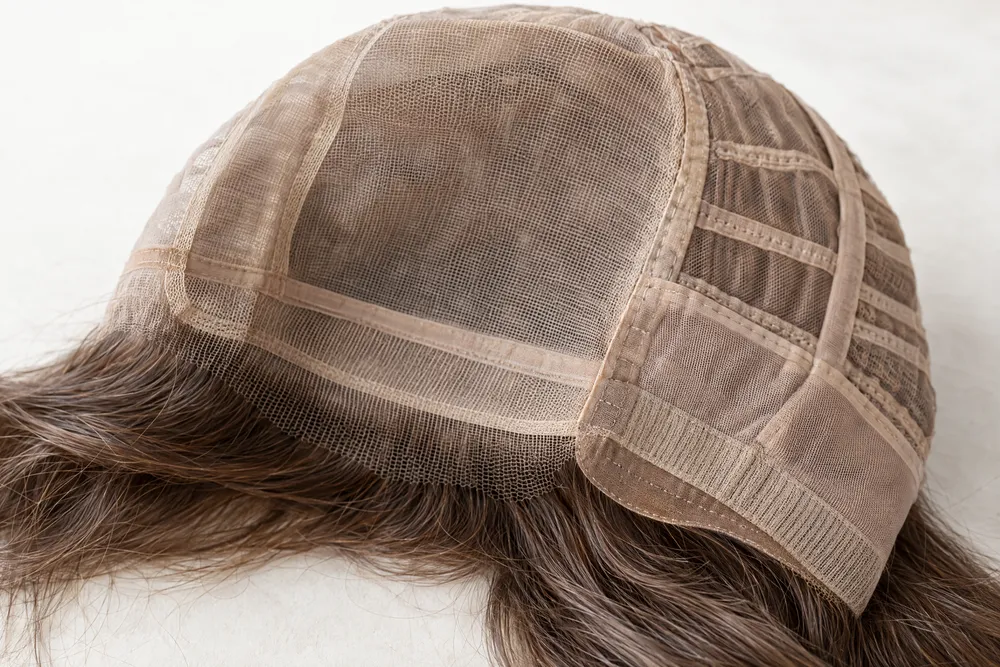
Agree your wig-removal and privacy preferences in advance
Privacy is a practical arrangement, not something to discover while your child is already in a cutting chair. Decide what you need to feel comfortable and ask whether it can be accommodated.
Identify who removes the piece and where it will go
Explain whether you normally remove your own wig and whether you need somewhere away from other visitors to do so. Ask where the dry piece could rest, who would handle it, and whether you should bring suitable storage. A private room, storage stand or removal assistance must not be assumed from a general service listing.
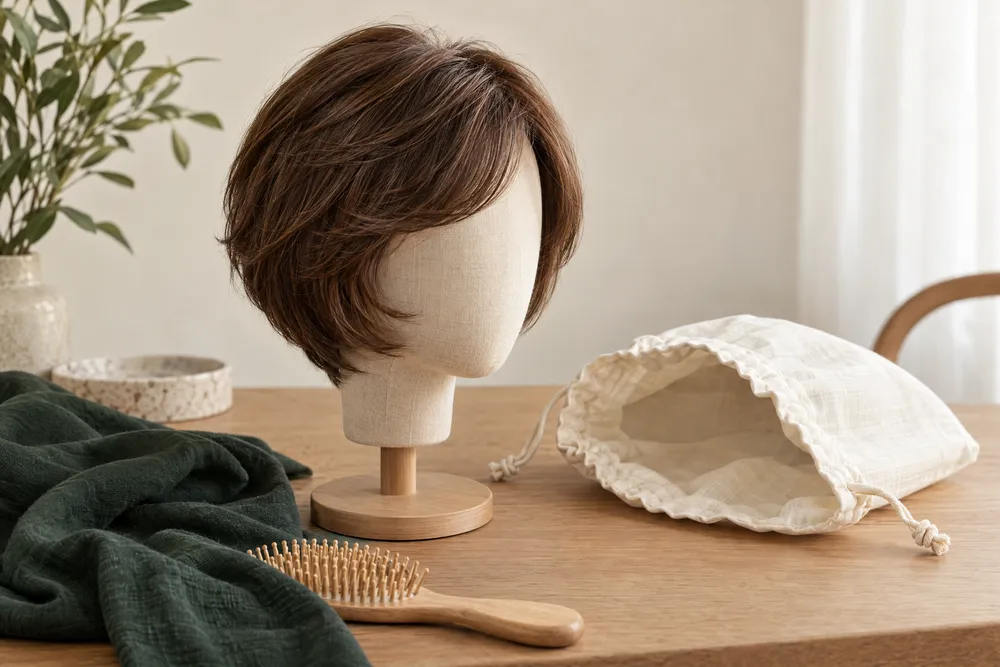
OWNSTRAND's guide to how to store a wig is useful when preparing your own storage arrangement. Keep the piece away from cut hairs, basin water and active tools. Use its own storage instructions; a bag suitable for a short dry journey is not automatically a suitable drying space for a damp wig.
Keep attachment details separate from the haircut request
If your piece uses wig clips and combs, identify the natural-hair areas used for attachment before discussing shortening them. Do not assume the same grip will remain after a cut. If removal involves adhesive or a method you cannot comfortably manage yourself, establish who can help and under what scope before agreeing the visit.
Explain simply that your wig will rest safely while your own hair is cut. No medical history is needed for that explanation. If removal remains unresolved, consider a separate adult visit.
Choose a natural-hair cut that works beneath your piece
For your own hair, the wash cut and blow dry guide distinguishes washing, cutting and a temporary finish from washing and drying alone. Make clear that your request concerns retained natural hair, not an automatic wash or alteration of the wig.
Explain how you normally arrange the hair underneath
Describe whether you tuck, part or gather your natural hair beneath the piece, and which sections must remain usable. Bring a photograph of its normal dry fall if you prefer not to uncover it during an initial discussion. Avoid asking for extensive shortening merely because the hair is usually hidden; the remaining hair may still matter for attachment or your preferred uncovered appearance.
Say whether you will replace the wig before leaving. A highly lifted or curled natural-hair finish may not suit that plan. Ask about a simpler finish and any final check with the piece; fitting or adjustment is not established as part of the haircut.
Keep three care routines distinct
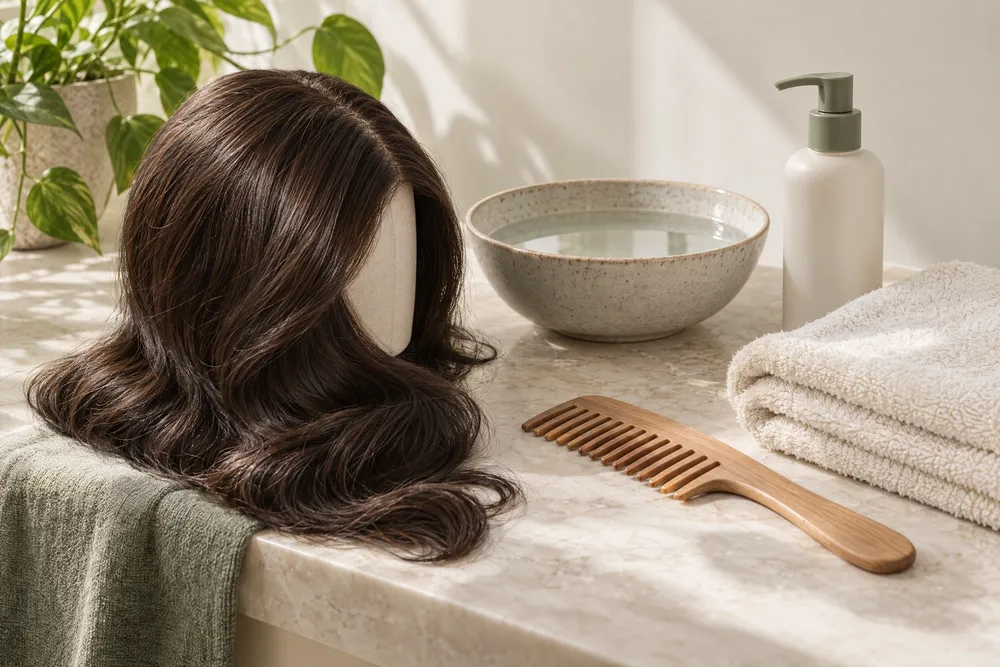
Your child's hair, your natural hair and your removable piece need separate instructions. The American Academy of Dermatology advises gentle scalp shampooing, towel absorption rather than rubbing, and gentle wide-tooth combing for children. It also suggests considering styles that do not rely on heat or chemical treatments. That supports choosing a simple home routine, not a particular salon technique.
For the piece itself, read human hair vs synthetic wig care alongside its supplied instructions. Natural-hair shampooing, blow-drying or chemical-processing advice must not simply be transferred to a wig, especially one made with synthetic fibres.
Put supervision before choosing who goes first
The best sequence is the one that leaves someone available for the child whenever attention is needed. It is not necessarily the sequence that looks shortest on a calendar.
Name the supervising adult at every stage
When your head is at a basin or you are removing and replacing your wig, you cannot assume you can also supervise a young child effectively. Salon staff performing a service should not be treated as childcare. If another responsible adult attends, agree who stays with the child while you are occupied and where they may wait, subject to the salon's arrangements.
If the second adult also wants a cut, plan supervision during their service too. Ask about the sequence: two occupied adults and two chairs may still leave a gap.
Use separate visits when one journey creates too many demands
A hypothetical parent with a five-year-old who needs close reassurance might choose the child's cut on one visit and their own wash and trim on another. A parent attending with a trusted adult might enquire about consecutive services instead. Neither example predicts appointment availability or a particular child's response; it shows how supervision can change the decision.
A child may need help or want to leave after their cut. Consider that before scheduling your service afterwards.
Send one enquiry with separate services and timing questions
When you are ready to book a hair appointment, send the two service briefs together and ask whether the requested arrangement is possible. An enquiry starts a discussion; it does not reserve combined slots.
Make the message easy to answer
For example: 'My child will be eight and needs the fringe tidied while keeping tying length. I wear a removable wig and want my natural hair washed, trimmed and simply finished. I need to discuss privacy and dry storage. Another adult would supervise my child. Could you arrange consecutive services and confirm charges and the complete time allowance?' Replace the details with your own.
Offer possible dates and give both your earliest realistic arrival and firm departure limit. Ask whether the time allowance includes discussion, your removal and replacement routine, and the child's agreed service items. Avoid building a promised duration by adding imagined cutting times.
Confirm the reply covers both people
Check separate fees and inclusions; do not assume a family discount. Discuss later changes before adding work. Confirm deposit, cancellation and rescheduling conditions, including what to do if the child is unwell.
- Confirm each person's service, retained length and included washing or finishing.
- Confirm accompaniment, privacy and storage questions with explicit answers.
- Ask whether the proposed order and complete time allowance suit your departure limit.
- Keep the agreed date, charges and any preparation or payment conditions together.
Check each result before moving to the next stage
On arrival, repeat the two briefs briefly and tell the stylist if anything has changed. The useful check is different for the child's finished cut and the parent's return to wearing a piece.
Close the child's haircut before starting your own
Check the child's fringe position and agreed tying length. Ask about comfort, remove bothersome loose hairs, and ensure the supervising adult knows what follows. Discuss any changed plan before the next service starts.
Allow attention for your own finish and replacement routine
Check your natural-hair length before replacing the piece. Follow your established wearing routine and raise new attachment concerns rather than adding tension. For a separate wig enquiry, OWNSTRAND's support person wig consultation guide clarifies a companion's role. Supporting your fitting and supervising a child are different responsibilities.
| Situation | Arrangement to discuss | Question to resolve first |
|---|---|---|
| Child needs close reassurance | Child-only visit or another responsible adult attending | Who stays available while the parent is occupied? |
| Parent needs private wig removal | Confirmed removal and storage arrangement | Where can removal happen, and who handles the dry piece? |
| Both attending adults want cuts | A sequence preserving child supervision | Is one adult available throughout? |
| Tight school or activity deadline | Reduced scope or separate dates | Can the complete confirmed visit fit the departure limit? |
Ask OWNSTRAND about selection and fitting
Tell us the style you have in mind. We can discuss the options, quotation and arrangements before you decide.
Ask OWNSTRAND about selection and fittingBefore you choose
Can the child's haircut happen while my natural hair is being washed?
Ask about the sequence and accompaniment first. Overlapping services do not automatically provide child supervision. If your child needs an adult nearby, arrange a responsible companion whose own service does not leave a gap, or discuss separate visits.
Do I need to remove my wig just to make the enquiry?
Start with written natural-hair details and suitable photographs. Ask whether assessment or the work requires removal, and state privacy needs early. Neither a photograph replacing assessment nor private facilities should be assumed.
Does a children's haircut listing mean children's wigs or medical support are provided?
No. This planning guide concerns an ordinary haircut on the child's own hair. A children's wig enquiry is a different service question, and medical concerns require appropriate healthcare advice rather than being treated as haircut preparation.
Further reading
- Teaching your child healthy hair care habits — American Academy of DermatologySupports gentle natural-hair shampooing, towel absorption, wide-tooth combing and considering children's routines that do not require heat or chemical treatments; not wig-care instructions.
- Sensory-Hair Cutting — Betsi Cadwaladr University Health Board, Children's Occupational TherapySupports discussing haircut sensitivities beforehand, explaining the process and considering familiar items or spare clothing; does not establish specialist salon support.