

Identify the fibre before any heat decision
The first check is not the dryer switch. It is the label, order record or care card that identifies the wig fibre and gives instructions for that specific piece. Human hair, ordinary synthetic fibre and heat-friendly synthetic fibre can look similar in a hotel mirror, yet they should not be treated as interchangeable. A style that held its shape well yesterday is not evidence that it can take an unknown dryer today.
Read the label before lifting the dryer
Start by locating the supplied fibre description and any stated temperature or drying instruction. The question behind can you use heat on a human hair wig is therefore a material-and-model question, not a visual judgement. TressAllure’s published Wig Care Instructions distinguish human hair, heat-friendly synthetic fibre and modacrylic synthetic fibre. Its directions use cool or low heat for blow-drying human hair, while saying not to use heated tools on its modacrylic fibre. That is useful evidence that fibre category changes the decision; it is not a universal setting for every wig brand.
When the label says ordinary synthetic, unknown synthetic or gives no heat permission, choose air-drying. Ellen Wille’s Care instructions for synthetic hair state that standard synthetic hair is heat-sensitive and should not be styled with a hairdryer, while its high-heat fibre is an explicit exception with its own regulated-temperature guidance. Treat an absent label as missing information, not as permission. Do not rely on a hotel dryer’s cool-looking nozzle, a familiar colour or the price of the wig to fill that gap.
- Find the fibre label, hang tag or original care record before packing for the trip.
- Separate an explicit heat-friendly instruction from a general synthetic description.
- If you cannot identify the fibre, use a wig stand and allow time for air-drying.
Check the hotel dryer and bathroom separately
A suitable fibre does not make every appliance or bathroom setup suitable. Look at the dryer before it is near the wig: check the casing, cable, plug, switch and air intake for obvious damage, loose parts or lint obstruction. If anything looks damaged, gets unusually hot before use, smells scorched or behaves inconsistently, do not use it. Tell the hotel instead of trying to finish the drying task.
Keep appliance safety distinct from wig care
Keep the dryer well away from the basin, bath, wet counter and damp towel. The U.S. Consumer Product Safety Commission explains in its hand-supported hair dryer guidance that integral immersion protection reduces electric-shock risk if a dryer contacts water. That does not certify a particular hotel appliance or override the room’s instructions. It simply supports a separate, practical rule: dry your hands, clear the area and do not use a questionable appliance near water.
Then inspect the controls. A dryer marked only “low” and “high” gives no reliable temperature reading, and a concentrator nozzle can focus air on one small area. Begin with the lowest airflow and heat setting that the wig’s own directions allow. Test the air away from the wig for a few seconds. If the handle, cord or airflow seems abnormal, stop. A faster hotel setup is never a reason to override a fibre instruction or an appliance concern.
- Use a dry, clear surface away from water and place the wig on a stable stand if possible.
- Check the cord, plug, body, switch and intake before use; do not use a visibly damaged dryer.
- Keep airflow moving rather than holding the nozzle in one spot.
Use a small test plan, not a full blow-dry
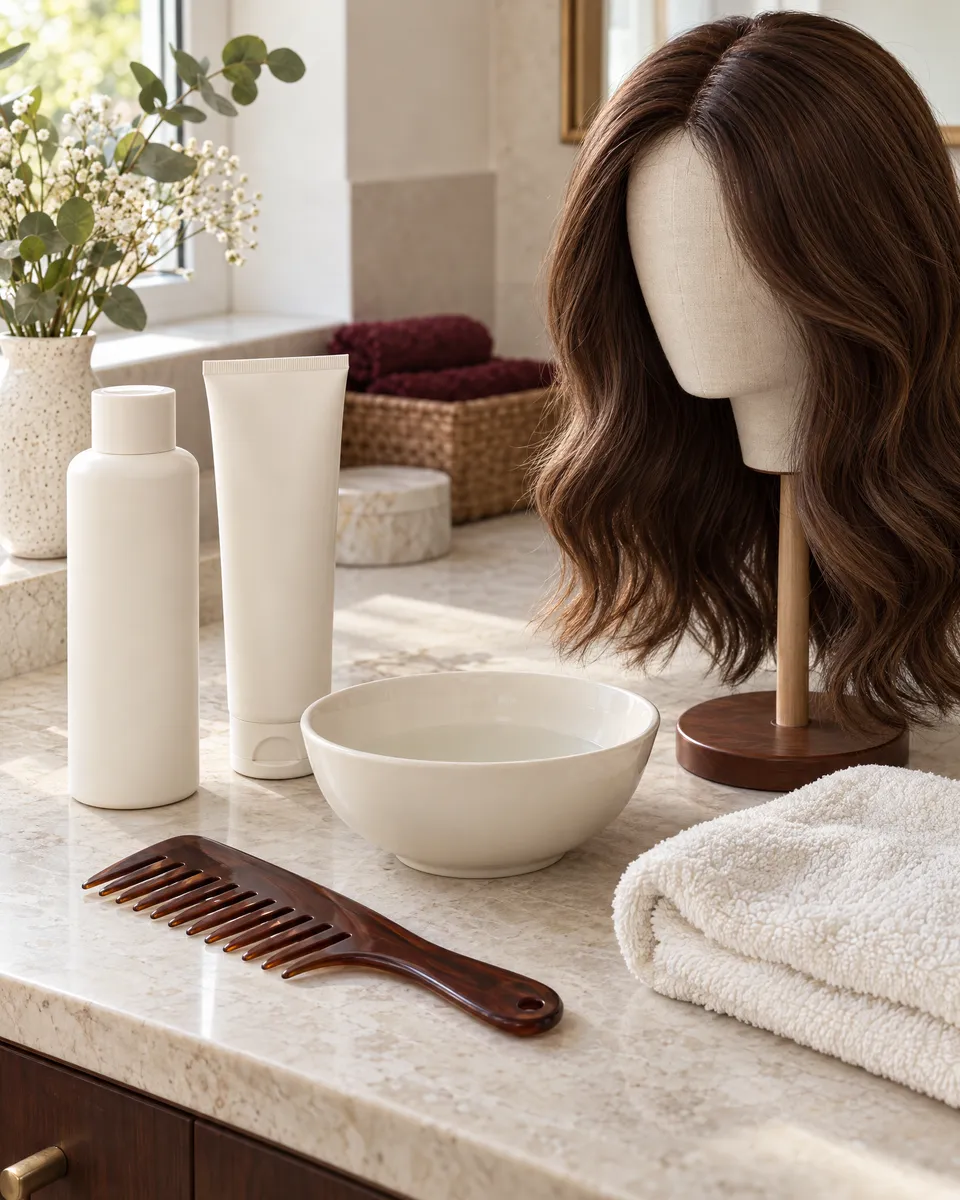
Even where the wig is confirmed as human hair or labelled for heat, a hotel dryer is still unfamiliar equipment. Work from the least intense option upward. This does not mean that a brief test proves long-term suitability. It lets you observe airflow, control and the wig’s response before you commit the visible front, crown or ends to a longer session.
Start beneath the visible layer
Place the wig on a stand where it can keep its shape. Choose a small, less-visible section, keep the dryer moving and use the distance and setting allowed by the supplied care directions. Pause if fibres feel unusually stiff, lose their intended pattern, develop frizz rapidly or if the cap becomes uncomfortable to handle. These are reasons to stop and air-dry, not signals to use more heat in an attempt to smooth the area. Never promise that a heat protectant changes a no-heat instruction into a yes.
If the wig was washed before the trip, plan the drying decision with its washing routine rather than treating the hotel dryer as the default finishing step. The care question how often to wash a wig matters because washing frequency, product residue and detangling can affect the practical condition you see before drying. Gently detangle only as the wig’s care guidance permits, then let the least risky method do the work. Avoid pulling through damp ends while hot air is directed at them.
Protect the cap, attachment and hairstyle while drying
Drying hair is only one part of the task. The wig also has a cap, attachment method and hairline construction that deserve a separate look. Direct, close airflow can disturb placement, concentrate heat at a seam or make you pull on the hair while trying to hold the style. Work with the wig supported rather than wearing it during a rushed bathroom routine when you need both hands.
Look at construction without guessing its limits
If the wig uses an open wefted wig cap, check whether air passes through the construction and whether a stand supports the shape while drying. Airflow through a cap may change how quickly the piece feels dry, but it does not confirm that the fibre accepts heat. Keep the nozzle moving over the hair length rather than directing it into one cap area, and do not use construction terminology as a substitute for the care label.
A breathable wig cap can be part of a comfort and airflow discussion, particularly in humid travel conditions. It should not be read as a promise about a particular dryer temperature or drying time. Note what you can actually observe: whether the cap is damp, whether the wig is secure on the stand and whether the hairline or parting needs gentle reshaping after air-drying. Those observations are more useful than assuming a cap feature transfers to the fibre.
For a silk top wig, keep the focus on the specific instructions for the piece and on a supported, low-tension routine. A realistic-looking part does not tell you what adhesive, knots, backing or fibre treatment is present. Avoid pressing a hot nozzle against the top or trying to flatten the part aggressively. If the part has lifted or changed appearance after moisture, take a clear photo in daylight and ask for model-specific care guidance instead of trying several unverified fixes.
- Put the wig on a stand rather than balancing it on the basin edge.
- Dry in the direction of the hair arrangement and avoid pulling at the front while it is damp.
- Keep direct hot airflow away from concentrated cap areas, seams and the hairline.
Know when drying should wait for confirmation
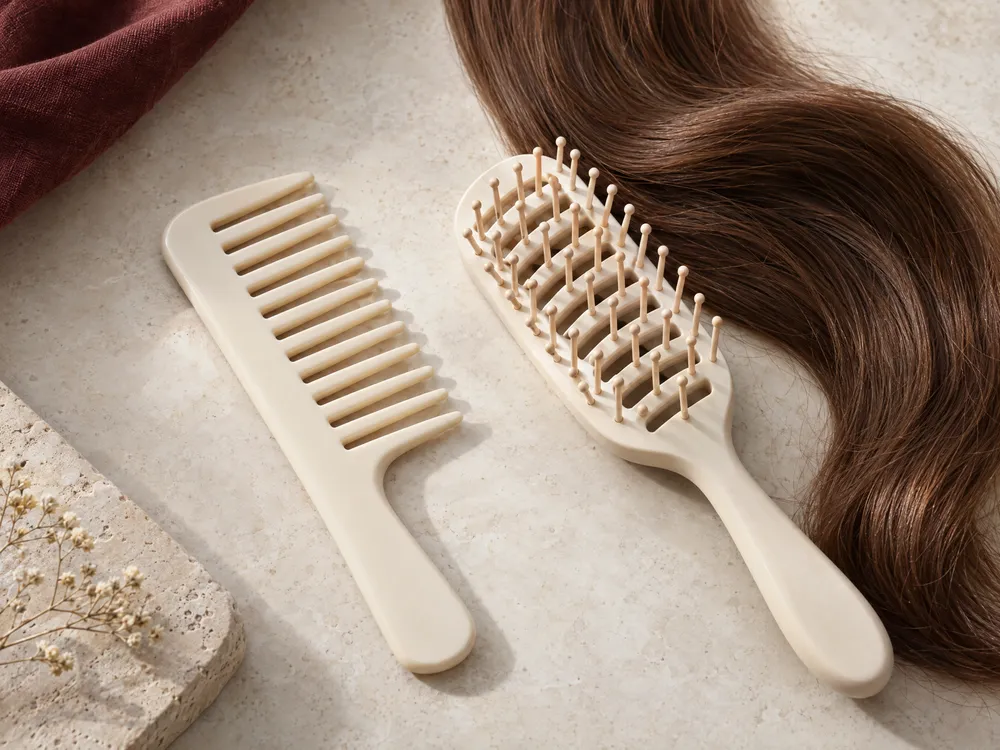
Stopping is a useful outcome, not a failed travel routine. Do not use the hotel dryer when the wig’s fibre is unknown, the care record is unavailable, the hotel appliance appears damaged, or moisture has affected an attachment area in a way you cannot identify. Set the wig on a stable stand, gently arrange it and allow time for air to circulate while you seek a more specific answer.
Do not turn a moisture problem into a heat problem
Moisture from a shower, rain or cleaning does not create the same care question as routine styling. Before deciding how to dry, consider whether the wig was intentionally washed, splashed, or exposed while being worn. The practical checks in can you shower with a wig on can help you distinguish a wearing-and-water question from a drying-method question. Blotting and supported air-drying may be the better immediate choice while you confirm what the particular cap and fibre permit.
Attachment changes the question again. With a PU wig cap, do not assume that a dryer will solve looseness or moisture at the base. Record where the issue appears, what products were used and whether it happens only after water exposure. With a glueless wig, check the wig’s own adjustment and wearing guidance rather than treating heat as a way to improve fit. These constructions require different observations, so use one photo and one clear question for each issue rather than one vague report.
- Stop if the label is missing, the fibre is unknown or the dryer itself looks unsuitable.
- Do not use heat to correct a lifted attachment, altered cap feel or uncertain fit.
- Take a well-lit photo of the affected area before changing it further.
Record details that make a care enquiry useful
A short record prevents a generic answer. Before you contact a seller or maker, write down the fibre shown on the label, the wig model if known, what happened before it became damp, the hotel dryer’s available settings and the exact area you are concerned about. Add photos in neutral daylight when possible: one overall view and one close view of the relevant area are usually clearer than a heavily filtered mirror image.
Ask one decision question at a time
Useful questions are specific: “The label says heat-friendly synthetic; does this model permit a hotel dryer on its lowest setting?” or “This human-hair wig is damp after washing; should I air-dry it or use a cool setting?” Avoid asking whether “all wigs” can take a dryer. Include whether the issue is fibre texture, a cap area, fit, an attachment, or the dryer itself. That distinction makes it easier to receive guidance that matches the actual decision rather than a broad rule.
For OWNSTRAND, state the material information you have and whether you are asking about a care step or a custom fitting concern. You can use the enquiry route below to share those details. If you cannot identify the material, say so plainly and include photos of the label or record. A clear uncertainty is safer and more useful than guessing that a wig is human hair because it looks natural or calling it heat-friendly because a previous dryer seemed to cause no visible change.
| What to check | Why it matters | Practical next step |
|---|---|---|
| Fibre label or care card | Human hair, standard synthetic and heat-friendly synthetic can have different care directions. | Follow the supplied instruction; if it is absent, air-dry and ask. |
| Heat permission and model-specific limit | A generic low/high switch does not identify a safe temperature for the wig. | Use only a setting explicitly permitted for that wig. |
| Dryer body, cable, plug and intake | Visible damage or abnormal operation is a separate appliance concern. | Do not use it; ask the hotel for assistance. |
| Water and counter area | A bathroom can place an electrical appliance near wet surfaces. | Dry hands, clear water and keep the dryer away from the basin. |
| Cap, hairline and attachment | Heat or pulling may affect parts of the wig beyond the hair fibre. | Use a stable stand and avoid close, fixed airflow. |
| Photo and concise note | Specific observations enable a specific care answer. | Record the label, setting, location and visible change before enquiring. |
Ask OWNSTRAND on WhatsApp
Tell us the style you have in mind. We can discuss the options, quotation and arrangements before you decide.
Ask OWNSTRAND on WhatsAppBefore you choose
Can I use a hotel hairdryer on a human-hair wig?
Possibly, but only when the wig’s own care information permits it. Human hair does not make every cap, treatment or construction identical. Check the supplied directions first, inspect the hotel appliance, start only with the lowest permitted setting and keep the airflow moving. If the model is unknown or the label is unavailable, air-drying while you seek confirmation is the more cautious choice.
What if my synthetic wig has no heat label?
Do not assume it is heat-friendly. Standard synthetic fibres can be heat-sensitive, and the absence of a label gives no model-specific temperature or blow-drying instruction. Place the wig on a stand, gently arrange it and let it air-dry. Keep the hang tag or product record when travelling so a later enquiry can identify the fibre and appropriate care method.
Is the cool setting always safe for a wig?
No setting label can replace the wig’s care instructions. “Cool” varies by appliance and airflow can still disturb damp fibres, a hairline or an attachment if it is close and fixed in one place. For a wig that permits blow-drying, use the allowed setting with motion and distance. For an unknown wig, choose air-drying and confirm the material first.
Further reading
- TressAllure — Wig Care InstructionsSupports the material-specific distinction between human hair, heat-friendly synthetic and modacrylic synthetic fibre, including its stated low/cool human-hair blow-drying guidance and no-heated-tools direction for its modacrylic fibre.
- ellen wille — Care instructions for synthetic hairSupports that standard synthetic hair is heat-sensitive and that high-heat fibre is a separately labelled exception with its own temperature-regulated guidance.
- U.S. Consumer Product Safety Commission — Hand-Supported Hair Dryers Business GuidanceSupports the general appliance-safety point that immersion protection reduces electric-shock risk when a hand-supported dryer contacts water; it is not presented as a statement of Hong Kong compliance for a hotel dryer.