

Decide what the visit needs to answer
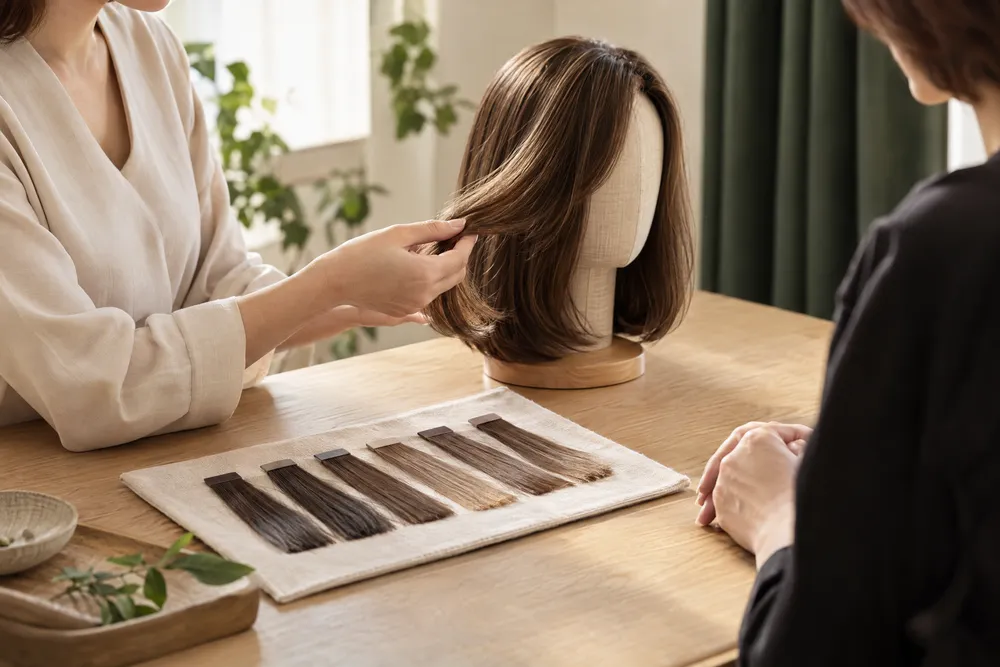
Begin with the decision behind the visit. Are you comparing a new everyday look, looking for a piece for occasional wear, or trying to understand why a current wig feels unlike your usual hair? The answer determines which photos, questions, and checks deserve time. It also prevents a general wish for something “natural” from becoming the only instruction.
Name the one or two outcomes that matter most
Write down two priorities in plain language. One may be a visual priority, such as a soft fringe, a side part, a closer match to your usual length, or a less dense outline around the face. The other may be practical, such as getting ready quickly, being able to tuck hair behind an ear, or feeling steady while commuting. Keeping these priorities separate makes trade-offs easier to discuss.
It is useful to compare a visit with the wider choices described in this wig shop Kowloon guide, but do not treat a guide as a substitute for your own fitting questions. A page can help you frame a route to compare options. Your notes should explain why one cap feel, length, or routine would be more workable for you than another.
Make a small photo and notes pack
You do not need a professional portfolio. Two or three recent, unfiltered images and a short note on your normal styling routine are enough to start a focused conversation. The goal is not to copy a photograph exactly. It is to show proportions, parting habits, and the light in which you normally see yourself.
Use consistent light and ordinary styling
Take one front-facing photo and one three-quarter photo in soft daylight if possible. Keep your usual part and the way you normally wear your own hair, if you have it. Avoid beauty filters, dramatic overhead lighting, and a very close camera angle. Add one inspiration image only if it identifies a specific feature you can name, such as a jaw-length silhouette or a loose curl rather than a vague mood.
Beside the photos, note whether you wear glasses, a fringe, headwear, or a high collar during a normal week. Include whether you usually tuck hair behind one ear, change your part, or tie hair back. Before visiting a wig shop in Kwun Tong, these simple details give a clearer starting point than a single polished reference image because they show which edges and movements you are likely to notice.
- Bring one front view and one three-quarter view taken recently, without a filter.
- Mark the usual part, fringe, hair length, glasses, or headwear that affects what you see around the face.
- Write one sentence on what you want to change and one on what you want to keep familiar.
Record fit and head-shape observations before you go
A photo describes appearance. It does not record where a cap presses, lifts, or shifts during the day. Make a separate fit note so the consultation can distinguish look-related preferences from physical comfort. That note can be short, but it should reflect a real routine rather than an ideal day when you are sitting still.
Start with how your current hair or cap lies
If you already wear a wig, note where it feels loose, tight, warm, or likely to move. If you wear your own hair, state whether it is short, long, thick, fine, or usually flattened under a cap. The Cleveland Clinic's wig-care guidance advises measuring with hair lying flat and learning how a wig's size adjustment works. That supports bringing observations, not self-declaring a final size before an in-person check.
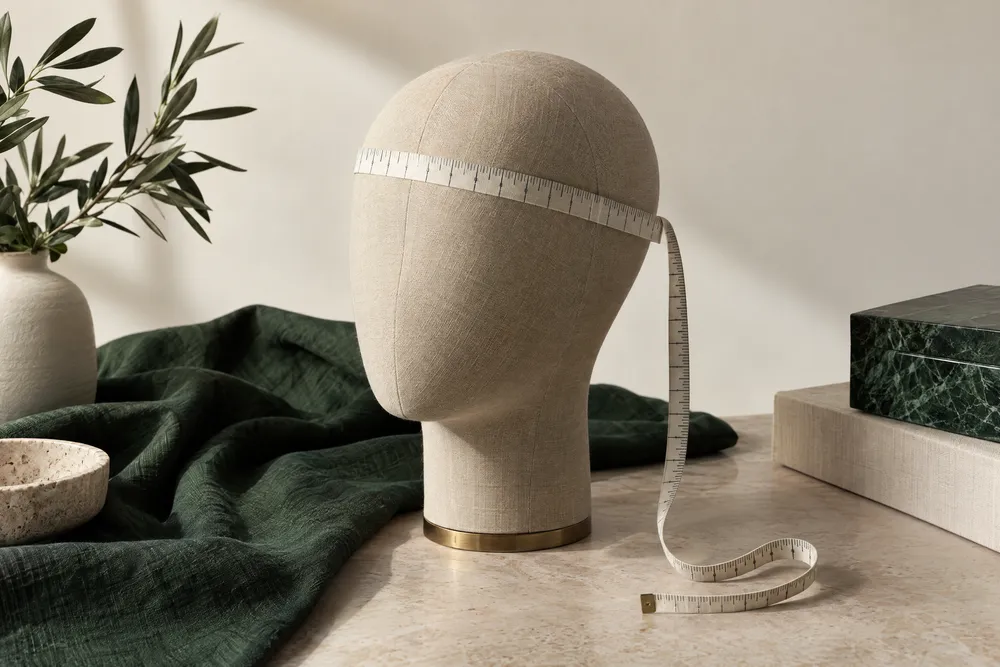
You can make a neutral record of head circumference or the fit of a current cap if that helps you remember, but leave room for the actual piece to be assessed. A tape measure cannot describe pressure around the ears, how a nape sits, or what changes when you put on glasses. Tell the person assisting you which of those areas matter most, and ask which details can only be confirmed with a particular construction.
| Item | Why it is useful | Question it can lead to |
|---|---|---|
| Front and three-quarter photos | Shows the proportions and parting you see most often | Which length and face-framing shape should I compare first? |
| Usual daily routine | Links the choice to work, travel, or social use | Which details should I test for the time I expect to wear it? |
| Glasses or headwear note | Identifies possible contact points around ears and hairline | Can I check this sample while wearing my own glasses or headwear? |
| Current cap comfort note | Separates tightness, movement, warmth, and fit concerns | Which adjustment or construction detail should I inspect in this area? |
| Care and styling habits | Avoids assuming every fibre or cap accepts the same routine | What care instructions apply to this specific item? |
Turn preferences into questions a salon can answer
The most useful questions are specific enough to invite a demonstration. They avoid asking for blanket assurances about naturalness, security, or all-day comfort. Ask to see what a feature looks like under ordinary light, how it is adjusted, and what differs between the exact items being considered.
Ask about the visible edge, the part, and the routine
For a shorter cut, ask where the sideburn area ends and what happens when hair is tucked behind an ear. For a parting, ask whether the shown direction is fixed or can be changed, and whether changing it affects the finish. For a men’s option, the questions in a men's hairpiece Kwun Tong enquiry can be equally direct: which area is intended to be covered, how is the perimeter assessed, and which care or attachment choices need confirmation for that piece?
Make each question observable. Instead of asking whether a wig will look real, ask to view the hairline from the distance at which people normally speak to you, then from the side where you usually part your hair. If you also visit or compare information from a wig shop Causeway Bay, use the same question list. Consistent questions make locations or samples easier to compare without treating a photograph as proof.
- Can I see how this edge sits with my usual part and glasses?
- Which adjustment is on this sample, and what does it change in practice?
- What should I confirm about washing, styling, or heat before I use this exact item?
- Can we separate what I can see today from what would need to be confirmed for a chosen construction?
Plan a realistic wear and care check
Daily use is more than the number of hours a wig stays on. It includes transport, heat, glasses, a changed parting, lunch outdoors, and the time you can genuinely spend on care. Bring these conditions into the conversation early, especially if they are more important to you than a particular curl or colour.
Describe your actual day, not a perfect one
Write a brief timeline: when you would put the wig on, whether you walk outdoors or travel by MTR, whether you wear it at a desk, and whether you need to remove it soon after returning home. That gives meaning to questions about wearing a wig all day. It does not establish that every wig will feel the same for that duration; it helps identify which fit and routine points should be checked before choosing.
Warm weather can make the layer underneath as relevant as the hairstyle above it. If you are considering an under-cap or liner, make a note of when you feel warm and whether your scalp or hair is fully covered. The discussion in sweat absorbing wig liner is useful for shaping a question about materials and routine, but it is not evidence that a liner solves every warmth or fit issue. Ask whether it is compatible with the specific piece you are considering.
Keep care claims tied to the exact material
Care instructions should not be transferred from one wig to another merely because the styles look alike. Cleveland Clinic distinguishes human-hair and synthetic-wig routines, including different heat cautions and washing approaches. Bring a note of whether you expect to wash, brush, blow-dry, curl, or store the wig yourself, then ask for instructions for the item in front of you rather than relying on a general social-media tutorial.
The National Alopecia Areata Foundation's guide to wigs and toppers also describes how caps, grips, and hair preparation can affect stability and comfort. Treat that as a prompt to inspect the cap and ask about the selected product. It should not be used to assume every grip, adhesive, fibre, or cap construction suits every scalp, climate, or use pattern.
Know what photos and samples cannot confirm
Preparation is valuable because it gives a meeting a shared reference point. It has limits. Lighting changes colour, a camera flattens depth, and an untouched sample cannot predict every effect of movement, adjustment, trimming, or a future routine. Recognising these limits makes the final questions more sensible, not less useful.
Separate comparison from a promise
A reference photo can show that you prefer a chin-length bob over a longer layered style. It cannot prove that the same length will sit the same way on your head or remain unchanged in every setting. A sample can help you view density, movement, and an edge at the moment of fitting. Ask what is visible now, what could be adjusted, and what would depend on the selected item or later styling work.
The same distinction helps when you read a wig shop Tsim Sha Tsui comparison article. Use it to organise choices such as online research versus an enquiry about an in-person fitting, not to infer stock, appointment availability, prices, or an outcome. Those details change and need direct confirmation. A well-prepared note saves time precisely because it identifies what must still be asked.
Avoid false signals from light and styling
Common false signals include a yellow indoor bulb making a cool tone appear warmer, a phone camera smoothing a lace edge, and a high camera angle making volume look larger than it does in person. Revisit the same reference in ordinary daylight and at conversation distance where possible. Notice whether your concern is actually colour, density, a hard part line, or the way a style frames your face. Each needs a different question.
If you are travelling from outside Kowloon, a wigs New Territories guide can help you plan what to compare before an enquiry. Keep the comparison focused on your record and questions. Do not let travel time pressure you into deciding that an untested fit, care method, or visual effect has already been confirmed.
Use a compact checklist for the next enquiry
Finish by reducing your preparation to one phone note or a single sheet. This is easier to use than a large folder of images and keeps the discussion centred on what matters. It also makes a second comparison more consistent if you decide not to choose anything on the first visit.
Bring evidence, priorities, and three questions
Your completed note should contain two recent photos, one daily-use sentence, one care or comfort concern, and two visual priorities. Add three questions: one about the hairline or part, one about fit or adjustment, and one about care for the exact product. If you are unsure how to phrase a concern, describe the situation plainly: “I wear glasses all day,” “I need a quick morning routine,” or “I want to compare this side part in daylight.”
This preparation does not obligate you to select a particular style. Its benefit is a clearer, calmer conversation where you can distinguish a preference from a confirmed detail. When you are ready to discuss your photos and questions, OWNSTRAND can be contacted through the enquiry link below. The response should be used to confirm the relevant options for your intended use rather than to assume a universal product feature.
- Two recent, unfiltered photos in ordinary light.
- A one-sentence description of where and how long you expect to wear the wig.
- Notes on glasses, headwear, warmth, movement, and any present cap discomfort.
- Three questions: visible finish, fit or adjustment, and care for the exact item.
| What you notice | Why it matters | A useful question |
|---|---|---|
| You always wear glasses | The area around ears and sideburns is part of daily comfort | May I check this sample while wearing my glasses? |
| You change your part frequently | A shown part may not describe every construction | Is this part fixed, and what can be changed on this item? |
| You commute or spend time outdoors | Movement and warmth may affect what you need to inspect | Which fit and under-cap details should I test for this routine? |
| You want low-maintenance styling | Care methods differ by material and stated product guidance | What washing, drying, and styling method applies to this exact wig? |
| You have one inspiration photo | A photograph captures a look but not your fit or daily use | Which visible features of this image can we compare in person? |
Ask OWNSTRAND on WhatsApp
Tell us the style you have in mind. We can discuss the options, quotation and arrangements before you decide.
Ask OWNSTRAND on WhatsAppBefore you choose
Should I measure my head before visiting a wig salon in Kowloon?
A simple measurement or a note about a current cap can be useful, but it should be treated as a starting point. Bring it alongside observations about ears, nape, glasses, and movement. Ask how the specific wig is adjusted and what needs an in-person fit check rather than assuming one number establishes the final fit.
What photos should I bring to a wig consultation?
Bring a recent front view and three-quarter view in ordinary, unfiltered light. Keep your usual part and styling where possible. One inspiration image can help if you can name the feature you like, such as length, fringe, or curl. Photos support comparison; they do not guarantee the same result on a different head or construction.
How can I ask about comfort without assuming a guarantee?
Describe your real routine and ask to inspect the relevant areas. For example, mention glasses, commuting, warmth, work hours, or a cap that moves at the nape. Then ask what can be tested on the sample, how the exact piece adjusts, and which care or accessory choices need product-specific confirmation.
Further reading
- Cleveland Clinic: Wig Care 101: How to Wash, Style and MoreSupports measuring with hair lying flat, checking available adjustment, and the fact that human-hair and synthetic wigs have different care and heat considerations.
- National Alopecia Areata Foundation: Wigs and Toppers: Buying, Caring for and Wearing Wigs & ToppersSupports using the cap, grip, and hair-preparation discussion to frame product-specific questions about stability, comfort, and care.