

Start the log when a pattern, not one strand, needs explaining
A useful record begins when the same area repeatedly needs attention, when the experience changes after a particular type of day, or when you are comparing lengths. It should describe the wear, not assign blame to the fibre, cap or routine before those details are checked.
Choose a short, repeatable observation window
Use three to five ordinary wears as one observation window. At the end of each wear, look at the lower back section before a full brush-through and write a short note. Record the date, approximate wear duration, whether the hair was loose or gathered, and the first point where you noticed resistance. A log is more useful when the entries are comparable than when it contains a long list of every possible influence from one difficult day.
Length is a sensible field because more hair reaches the shoulder and collar area, but it is not a verdict on which length is right. If you are comparing silhouettes, use the same questions alongside long wigs and a shorter option. The point is to see whether the concern appears only when a particular back length is worn, rather than assuming that every longer style will behave in the same way.
- Write what happened before attempting to detangle, so the first visible pattern is not lost.
- Keep one entry to a few factual fields: date, wear context, first rough point and what happened next.
- Mark an entry as unusual when rain, a new collar, travel or a different routine made the day unlike your normal wear.
Set a simple baseline before looking for differences
Comparability is what turns notes into a useful conversation. Pick one ordinary day, use the same mirror and light where possible, and avoid changing several care steps at the same time. The log can then show what changed without pretending to be a laboratory test.
Record the wear context before the nape check
At the start of an entry, identify the wig only by the details that help a service team distinguish it: fibre type if known, approximate back length, texture, and whether the maker gives specific care directions. Add the day’s context in plain terms, such as office wear, a commute, an outdoor walk or time seated against a high back. Do not write that one of these factors caused tangling; write that it was present when you observed it.
Include the neckline or garment contact as an observation, not a rule. A smooth T-shirt collar, a structured shirt collar, a scarf and an exposed neck can be four different entries. If you are deciding whether a reduced back length may fit your routine better, it can help to compare the same log fields with medium length wigs. That comparison keeps the question on visible nape contact and daily preference, rather than treating a medium cut as an automatic fix.
A quick photo can support the note when it is taken from the same distance and angle, but it is secondary to what you felt and saw before grooming. Use a neutral background, avoid a beauty filter and name the image by date. Photos can show where hair appears gathered. They cannot reliably identify fibre condition, prove product build-up or show how firmly the cap was sitting during the whole day.
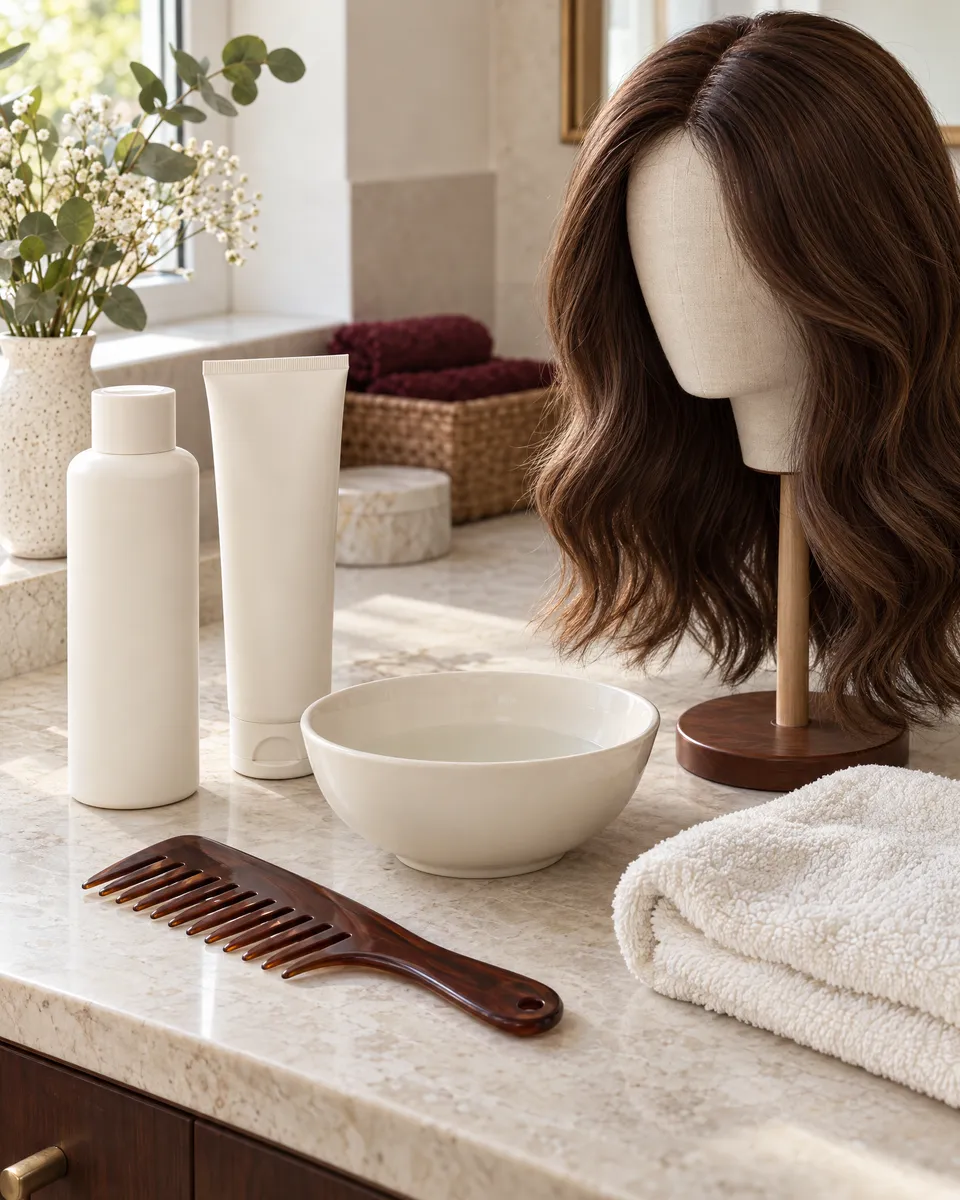
Use visual checks that stay focused on the nape
The aim is to describe location, scale and timing. Looking in a hand mirror or taking a rear photo can make the lower back section easier to revisit, provided you use the same method each time and keep the notes modest.
Describe where strands gather before you smooth them
Divide the lower back into left, centre and right. Then note whether the change looked like a few crossed strands, a small gathered patch, or a wider section that felt less smooth. Add whether it was visible only at the ends, closer to the cap edge, or through the whole lower layer. These descriptions are more actionable than a general note saying that the wig was ‘bad’ or ‘dry’, because they give another person a defined area to inspect.
Check the front separately. A fringe, face-framing layers or a parting may change the style you prefer, but they do not explain a back-of-neck observation by themselves. When the front shape is part of your choice, wigs with bangs can be a useful separate reference. Keep its note separate from the nape entry: ‘front fringe suits me’ and ‘lower back gathered after a commute’ answer two different questions.
It is also helpful to note whether you saw the same effect on a much shorter outline. For a wearer considering pixie wigs, the log can simply show that there is little or no hair reaching the nape area to monitor. That is a design difference, not evidence that a pixie is better for every person or that a long wig is defective. The record should support a length discussion, not prescribe a style.
| What to note | Plain-language choices | Why it helps at an enquiry |
|---|---|---|
| Timing | On putting it on, mid-wear, or when removing it | Separates an immediate issue from one noticed later |
| Location | Left, centre, right, cap edge or ends | Gives a specific area to discuss |
| Scale | A few crossed strands, small patch or wider lower layer | Avoids vague descriptions such as ‘very tangled’ |
| Wear contact | Open neck, collar, scarf, shoulder bag or seat back | Records context without declaring a cause |
| Handling state | Dry, damp, already brushed or not yet groomed | Helps choose the right care question |
| Photo reference | Rear image date and angle, if used | Lets you compare appearance under a similar view |
Review care notes with the wig’s fibre and instructions in view
The same nape note does not justify applying the same wash, brush or heat routine to every wig. First identify whether the item is synthetic or human hair if that information is available, then follow the maker’s instructions for that particular construction and fibre.
Write down the handling state before changing a routine
For a synthetic wig, record whether the lower section was completely dry before you combed it and which product category, if any, was used. CancerCare’s Synthetic Wig Care and Resources advises gently brushing out tangles before washing, using cool water, and not combing or brushing synthetic fibres while still wet. That makes ‘wet, damp or dry at first handling’ a useful log field. It does not make the organisation’s routine a substitute for the instructions supplied with your own wig. For a focused follow-up on product selection by fibre, see shampoo for synthetic wigs.
If the wig is human hair, note the direction and order in which you worked, rather than claiming that one tool or product will suit every item. The American Cancer Society’s wig-care guidance specifically advises a light wig conditioner and starting with the ends when brushing long straight wigs. A recurring lower-back note may therefore lead you to ask about a gentler order of handling. For broader technique context, see human hair wig tangling, while confirming the actual product and process for the wig you own.
Do not infer heat tolerance from a hairstyle photo, fibre appearance or what worked for another wig. Cancer Hair Care advises checking the wig label and following manufacturer guidance for drying and styling, especially because instructions can differ by fibre and product. Record the label direction you were given and ask about that exact item. This avoids transferring a care method from one construction to another.
- Before changing anything, write whether the wig was dry, damp or wet when you first handled the nape.
- Name a product only by its stated wig purpose or the maker’s instruction; do not assume an ordinary hair product is interchangeable.
- Keep synthetic and human-hair entries separate, even when the visible nape pattern looks similar.
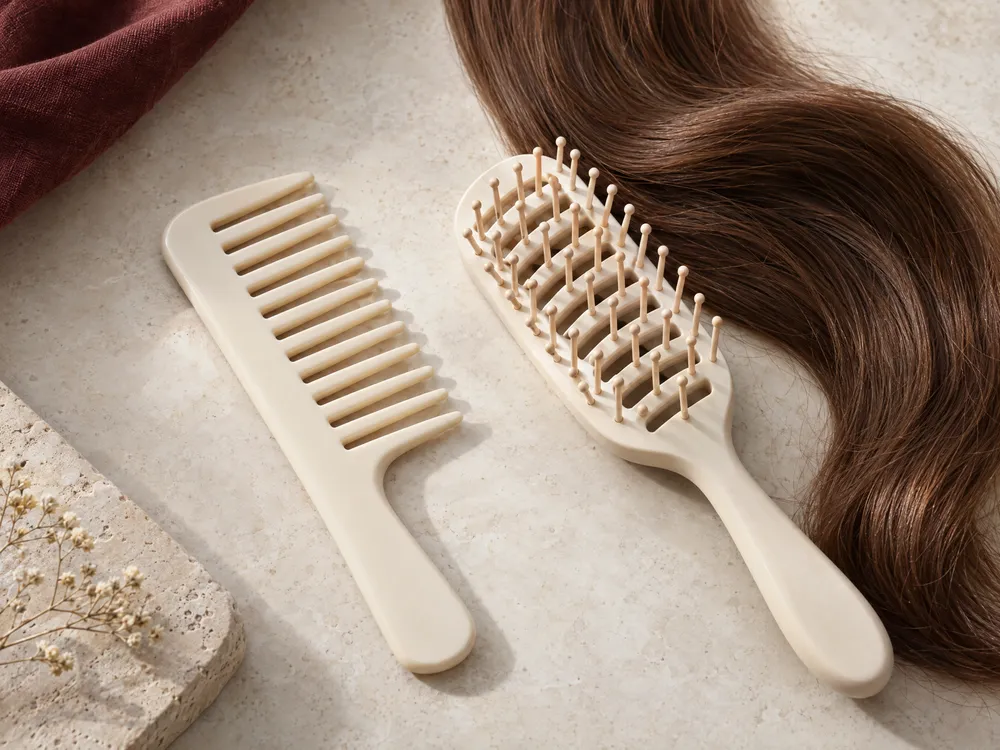
Separate nape observations from fit and accessory questions
A lower-back note can occur on a day when the wig also felt different on the head, but the two observations are not interchangeable. Record each one separately so that a fit question is not mistaken for a fibre-care conclusion.
Describe stability without tightening or adding parts on guesswork
Use simple terms such as ‘sat comfortably’, ‘felt as if it shifted’, ‘needed repositioning’ or ‘nape stayed smooth but the cap felt loose’. Add when that feeling began and whether it occurred while moving, sitting or removing the wig. The American Cancer Society notes that many wigs have adjustable tabs and recommends following the directions that come with the piece. It also discusses wig grips and liners as comfort or holding considerations, which reinforces why a log should lead to an item-specific fit discussion rather than an automatic adjustment.
If the enquiry is about internal holding points, wig clips and combs gives a focused starting point for the vocabulary. Bring the nape note with the separate fit note, then ask which features are present on the style and how they should be used. Do not alter or add clips because a rear photo looks untidy; the photo does not show cap construction, scalp comfort or whether a particular attachment suits the wig.
Accessories should be discussed by purpose: comfort, containment, styling or storage. The options in wig accessories Hong Kong can help you frame the question, but they are not a universal response to nape tangling. Tell the adviser what you recorded, what you already used and what outcome you are seeking. That leaves room to confirm compatibility rather than implying availability, stock or a guaranteed result.
Turn a short log into clear enquiry questions
The finished log should fit on one screen or one sheet. Its value is not the number of entries; it is the fact that someone else can understand the observed pattern, the handling state and the question you still need answered.
Ask about the specific wig, not a universal promise
Start with a factual sentence: ‘On three ordinary wears, I noticed a small centre-nape patch only after the journey home; the wig was dry when I first checked it.’ Then ask one question at a time. For example: ‘What should I confirm about the supplied care routine for this fibre?’ ‘Does the cap position need to be checked?’ or ‘Would a different back length better match the contact I recorded?’ This is clearer than asking whether a style will never tangle.
Bring the latest rear photo only as a visual reference and name any changes in lighting, garments, weather or routine. If an entry followed a wash, state the actual drying and handling steps you took. If no pattern emerged, that is still useful: it means there is no consistent observation to build a strong care conclusion on yet. Continue with normal manufacturer-directed care rather than adding untested changes merely to create a result.
For an OWNSTRAND enquiry, describe the wig type if known, the observations in the table, and the one priority you want checked. A team can then tell you what needs confirmation for that particular style. This approach does not promise an item is available or that an accessory, wash routine or length will produce the same result for everyone; it creates a precise starting point for a practical conversation.
- State the number of comparable wears, the location and the first timing of the observation.
- Separate the nape appearance, the handling state and any cap-stability concern into different sentences.
- Ask for confirmation against the specific wig’s fibre, construction and supplied care directions.
| What your log shows | What not to assume | A focused next question |
|---|---|---|
| A small patch appears only near the end of similar wears | That one product or fibre is proven to be the cause | What care detail for this specific wig should I verify first? |
| The lower back gathers after collar contact on several entries | Every long style will behave identically | Would a different length or styling approach be worth comparing for my routine? |
| The nape looked smooth but the cap felt less stable | The hair condition and fit issue are the same problem | Can the fit and the existing adjustment features be checked separately? |
| The effect was seen once after an unusual day | A permanent change is necessary | Should I first repeat the observation on an ordinary wear? |
| A photo shows gathering but the handling state is unknown | The image identifies the right treatment | What additional detail should I record before choosing a care step? |
Ask OWNSTRAND on WhatsApp
Tell us the style you have in mind. We can discuss the options, quotation and arrangements before you decide.
Ask OWNSTRAND on WhatsAppBefore you choose
How many entries should a nape-tangle log include?
Three to five comparable ordinary wears are usually enough to tell whether there is a repeated observation worth discussing. Use more entries only if your routine changes frequently. A single entry is still useful as a note, but it should be labelled unusual if the day was unlike normal wear.
Should I photograph the nape every time?
No. A rear photo can help compare location and visible gathering when the angle and light are similar, but it is optional. A short written note about timing, contact and whether the wig was dry is often more useful than several inconsistent photographs.
Can this log tell me whether I need a different wig?
It cannot decide that on its own. It can show a repeatable concern and make a more precise enquiry about length, fibre-care instructions, fit or accessories possible. The appropriate response needs confirmation against the specific wig and your actual wear routine.
Further reading
- CancerCare: Synthetic Wig Care and ResourcesSupports the synthetic-wig references to gentle pre-wash brushing, cool-water washing, and avoiding combing or brushing while fibres are wet.
- American Cancer Society: Wigs for Hair LossSupports the discussion of adjustable tabs and following item directions, plus its long-straight-wig advice to start brushing at the ends after a light wig conditioner.
- Cancer Hair Care: Wig washing and stylingSupports the instruction to check labels and manufacturer guidance because drying and styling methods differ by wig fibre and construction.