

Give storage, travel and night care different jobs
The same wig may move through all three settings in one week, but the risks are different. Start with the next use, not a single universal rule: a resting piece needs support, a travelling piece needs controlled packing, and a night routine needs a low-pressure reset.
Ask what will happen to the wig next
At home, ask whether the wig will rest untouched for hours, days or longer. In a suitcase, ask what could squeeze, rub or shift the cap and hair. Before bed, ask whether removal follows its attachment method. The next use, not one universal rule, decides the routine.
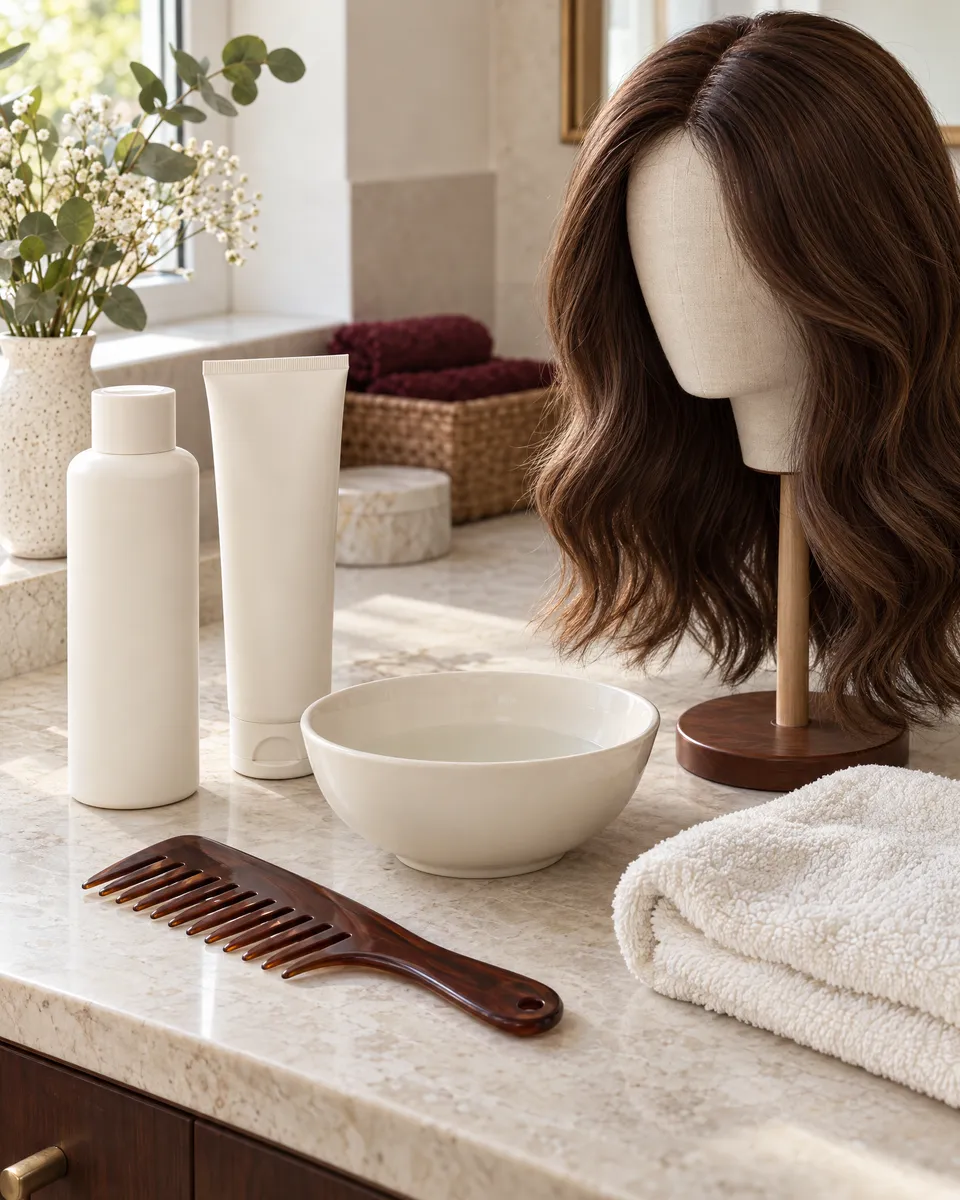
Begin with the item’s own care information, then use a simple reference point for ordinary at-home placement. The American Cancer Society’s wig-care guidance says a wig not being worn for a short period, including overnight or a few days, can be kept on a wig stand. For a home setup that fits your space, see how to store a wig and compare the support method with the maker’s directions.
- Home storage: support the shape during a period of non-use.
- Travel: limit uncontrolled movement and pressure while the wig is in transit.
- Overnight: pause the wearing routine, observe the condition and follow the relevant attachment instructions.
Set up ordinary storage before putting the wig away
A quick home routine should be easy enough to repeat after a normal day. It does not need to diagnose the wig or promise a fixed lifespan. It simply creates a consistent handover from wearing to resting, so tomorrow’s condition is easier to compare with today’s.
Observe first, then support the cap and hair
After removal, look at the hairline, nape and ends under ordinary light. Note whether there is visible tangling, product feel, dampness or a change in shape. Do not turn this brief look into a rule that every irregularity needs washing. Its value is practical: you can decide whether the wig is ready to rest, whether it needs the product instructions checked, or whether the same change appears again after a particular activity.
If the piece is a human-hair wig, cleanser and conditioning choices should follow its own material and construction requirements. Use shampoo for human hair wigs as a starting point for the questions to compare, rather than assuming a product for one wig is suitable for every cap or hair type. The American Cancer Society likewise advises using care products formulated for wigs; that is a useful category check, not evidence of compatibility with a particular OWNSTRAND item.
Pack for travel without copying the storage routine
Travel adds a moving environment, limited space and less control over what presses against the wig. The aim is not to recreate a dressing table inside a suitcase. It is to prepare a contained routine that can be checked when you arrive.
Plan the journey in two stages: pack and reset
Before packing, identify whether you will wear the wig during the journey or carry it. If it will be carried, choose a clean, dedicated container that keeps it apart from items likely to snag, leak or press against it. The American Cancer Society’s wig-care guidance supports using a stand for a wig not being worn overnight or for a few days. Use that guidance to plan what happens at your destination: whether suitable support can travel with you, and where the piece can rest after unpacking. It does not prescribe one packing method for every wig or attachment.
For straight wigs, check the direction of the lengths before closing the container and take a quick photo if a smooth finish is important to you. The photo is only a comparison record; it cannot prove fibre condition or confirm that a style will behave the same after travel. On arrival, open the container, let the piece settle as instructed and note any visible shift before deciding whether it actually needs further care.
For wavy wigs, do not pack the wave pattern tightly into place. Before leaving, note whether a change is at the crown, side or ends; on arrival, compare that same area. A specific location is more useful for a care enquiry than saying the whole wig looks flat.
- Keep the wig and its care items together, but keep liquids and snag-prone objects apart from the hair.
- Take one clear before-travel image when you need a comparison, rather than relying on memory after a long trip.
- At arrival, inspect before restyling; do not assume movement automatically means damage or that washing is necessary.
Protect texture without imposing one styling method
Texture changes what you observe after packing, but it does not authorise an unapproved tool or heat setting. Keep a visible pattern separate from a product-specific care decision.
Describe the pattern instead of trying to erase it
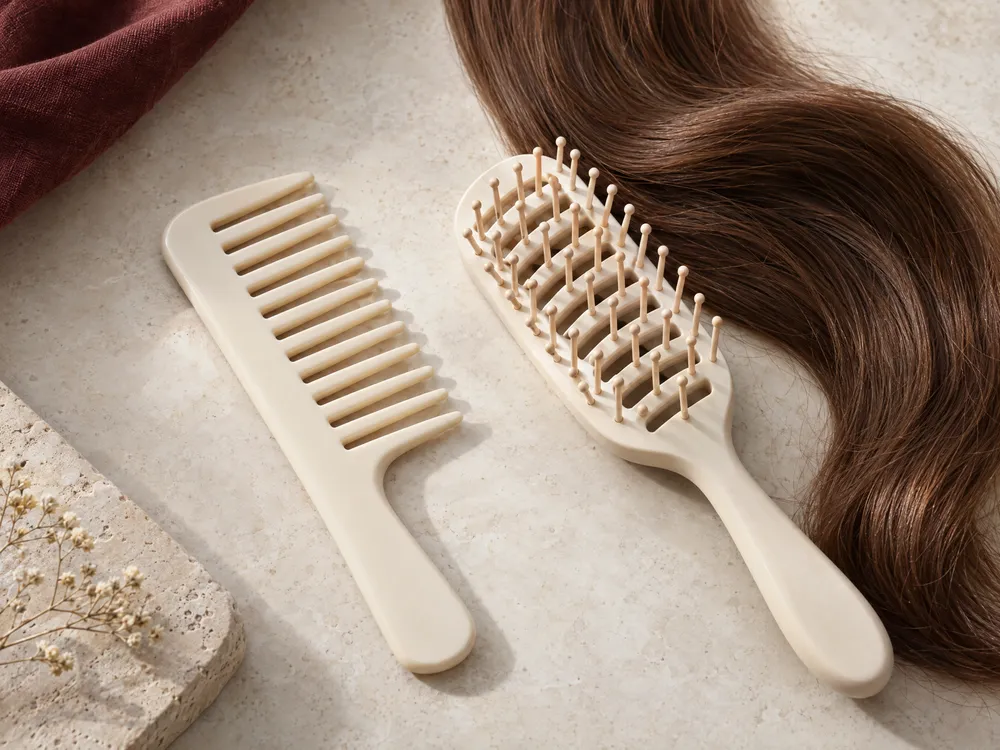
For curly wigs, note whether a change is at one curl cluster, the nape or the whole outline. If the item is synthetic, Headcovers’ Synthetic Wig Care says to detangle while dry with a wide-tooth wig comb, beginning at the ends, and avoid a blow dryer unless it is specifically labelled heat-friendly. Those points apply to synthetic pieces, not automatically to human-hair or unknown wigs.
Create an overnight reset that suits the attachment
Overnight care should reduce decisions at the end of the day. It is not an instruction to sleep in, remove or alter every wig in the same way. First identify the attachment and wear plan; then decide whether the appropriate action is removal, a light observation or a question for the supplier.
Separate comfort, security and removal questions
If a wig is designed to be removed, use its stated process before setting it down for the night. The American Cancer Society’s advice specifically treats overnight as short-term stand storage when the wig is not being worn. It does not establish that every attachment, adhesive or styling situation should be handled that way. Where the attachment is unclear, do not use the night routine as an experiment or pull at the cap to see what happens.
A wig grip band concerns how a wig feels and stays positioned during intended wear. It does not by itself answer whether a particular piece should remain on overnight, nor does it replace the wig’s own fitting and care information. Record the attachment type, any pressure point and the time it was worn. Those details turn a broad comfort concern into a question that can be answered without guessing at the construction.
- Confirm the attachment method before removal; never turn resistance into a test.
- Use the same small set of observations each night: hairline, nape, ends and overall comfort.
- Write down repeated pressure, slipping or tangling so the next enquiry has a time and location.
Turn observations into useful selection and care questions
A note is most useful when it separates what you can see from what you cannot confirm. You can describe where hair moved, where the cap felt different and what happened before it. You cannot reliably infer a cap’s construction, an attachment method or product compatibility from a photo alone.
Use four fields instead of a vague problem description
Record four fields: setting, location, known material or product name, and action already taken. ‘Travel; nape; material unknown; unpacked and allowed to settle’ lets you ask an answerable question. It also stops several care actions obscuring which setting created the change.
A style choice can make the description clearer without turning appearance into a fixed rule. If you are comparing balance around the face after wearing or travelling, wigs for face shape can help you name the silhouette you prefer. The point is to say what you want to see when the wig has settled, not to claim that face shape determines a single correct style or a care method.
Colour observations work in the same limited way. When a dark shade appears different under hotel lighting, compare it under the same ordinary light before changing products or assuming colour has altered. The black wigs page can provide vocabulary for comparing shades, while your note should stick to visible facts such as ‘looked warmer by the window’ or ‘seemed flatter after packing.’ Lighting alone cannot confirm fibre or colour condition.
| Record | Example observation | Question it supports |
|---|---|---|
| Setting | Stored on the stated support for two nights | Is this the appropriate short-term storage method for this piece? |
| Travel condition | Nape looked more tangled after unpacking | Which approved tool and method should I use for this material? |
| Overnight attachment | Unsure whether the front should be removed | What removal or overnight routine applies to this attachment? |
| Visible styling change | Parting looked different under different lights | Should I simply compare it again in normal light before making a care change? |
| Repeated comfort issue | Pressure appeared at the same side after several wears | Which fit or attachment detail should be checked? |
Know when to pause, clean or ask for confirmation
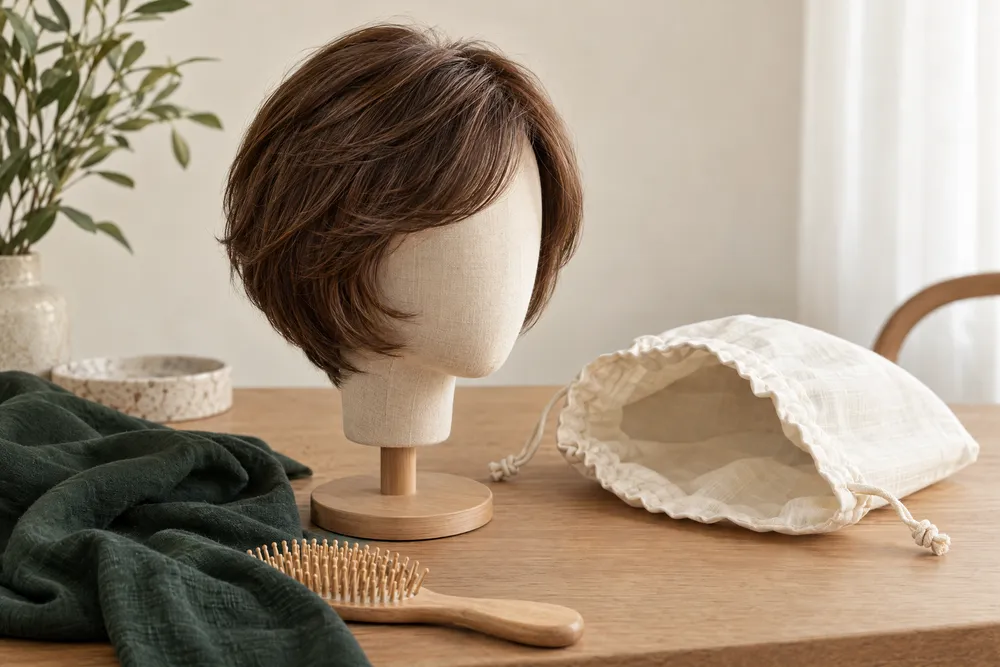
The most careful routine sometimes ends with no immediate action. A wig can be observed, supported and left to settle. When cleaning, detangling or removal is needed, the correct method depends on the known material, construction, attachment and instructions that belong to that particular piece.
Use uncertainty as a reason to ask a narrower question
Pause instead of escalating the routine when you see resistance during removal, a knot close to the cap, a persistent shape change, unknown material or an unfamiliar product on the hair. Do not invent a cleaning schedule from a single journey or one overnight wear. The sources above offer useful general care directions, but neither turns a photograph or a generic sensation into a confirmation of what an individual wig needs.
When you contact OWNSTRAND, include the wig’s known details, the setting and your short record. You might ask: ‘I stored this at home for three nights and the nape now feels different; which care steps are appropriate for this item?’ Or: ‘I am travelling with this wig next week; what should I confirm about its support and approved products?’ A focused question preserves the distinction between safe observation and unverified treatment.
| Setting | Primary purpose | First check before acting |
|---|---|---|
| Short home storage | Give the wig a stable resting place | Is it dry and is the stated support method suitable for this period? |
| Longer home storage | Follow the piece’s packaging and maker instructions | Does the individual care information specify a different container or preparation? |
| Travel packing | Keep hair and cap separate from pressure, snagging and spills | Will the wig be worn or carried, and what can shift against it? |
| Arrival after travel | Observe before restyling or cleaning | What looks different when compared under ordinary light? |
| Overnight reset | Pause wearing and use the correct attachment process | Can it be removed under its own instructions, or is confirmation needed? |
Ask OWNSTRAND on WhatsApp
Tell us the style you have in mind. We can discuss the options, quotation and arrangements before you decide.
Ask OWNSTRAND on WhatsAppBefore you choose
Should I use the same wig stand routine for travel and storage?
Not automatically. A stand can be useful for short-term resting when the wig is not being worn, while travel also involves space, movement and packing conditions. Check whether the stand is practical for the journey and whether the wig can be supported safely in transit. The maker’s directions for the individual piece take priority.
Do I need to wash my wig after every trip or every night?
Do not assume so. A journey or overnight wear alone does not establish a cleaning need. Check the known material, product use, visible condition and the individual care instructions. If you are unsure, record what changed and ask which routine applies instead of setting a schedule from a single event.
Can I decide overnight care from a photo of the wig?
A photo can record visible position, texture or shape under one light, but it cannot confirm attachment, fibre type, cap construction or product compatibility. Pair the image with a written note about the setting, placement, attachment and what you already did, then ask a product-specific question if needed.
Further reading
- American Cancer Society — Wigs for Hair LossSupports short-term storage of a wig not being worn, including overnight or a few days, on a wig stand; also supports using care products formulated for wigs and checking heat resistance before heat tools.
- Headcovers — Synthetic Wig CareSupports the limited synthetic-wig discussion: dry detangling with a wide-tooth wig comb from the ends, and avoiding blow drying unless the wig is specifically heat-friendly.