
How to Wash a Wig Without Tangling the Fibres
Tangles are harder to manage when loose hair, friction and pulling meet water. Before starting, clear a clean surface, read the care directions, and make sure you can handle the piece gently throughout. If it is badly knotted or its label is missing, do not force a brush through it or improvise; ask the maker or a wig-care professional.
How to Wash a Wig at Home: Detangle and Clean Gently
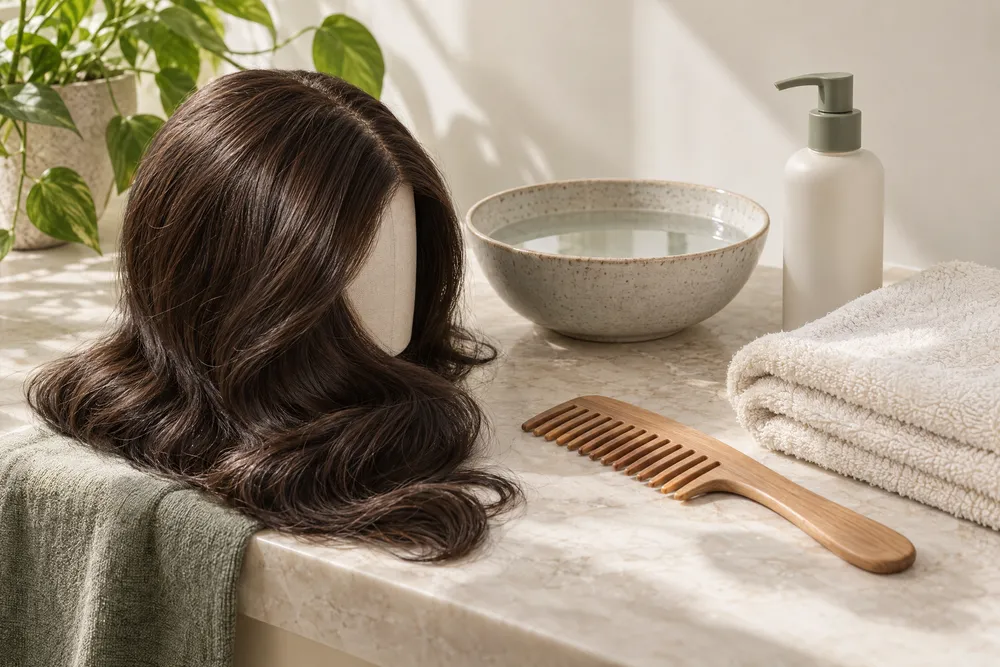
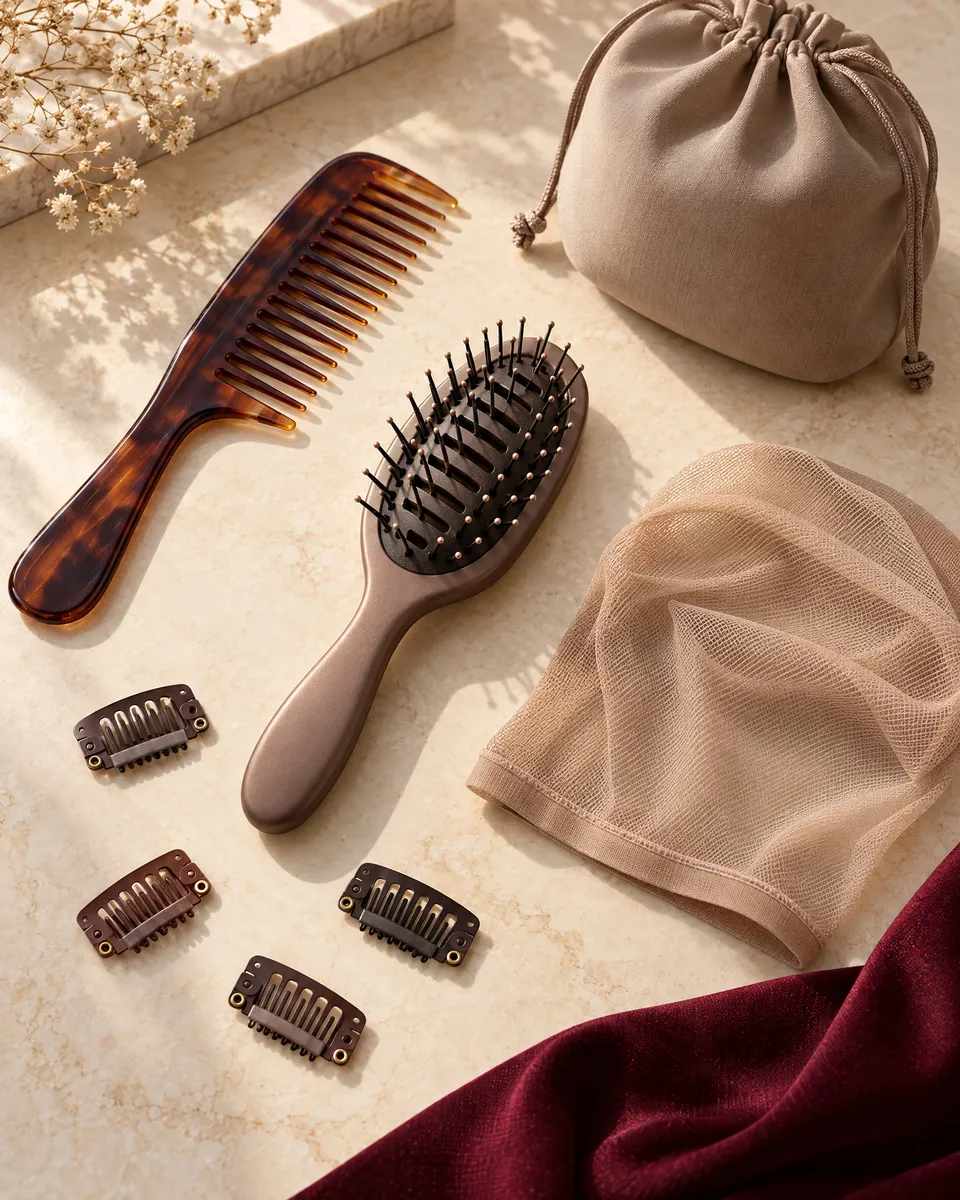
Before washing a wig at home, place it securely on a clean surface or the support recommended for that piece. If brushing is allowed, work in small sections from the ends towards the roots with a suitable brush or comb. Hold the hair above the section to avoid pulling at the cap. Pause at resistant knots instead of dragging a tool through them. See our human hair wig tangling guide for more detangling help.
Follow the washing method supplied for the wig. Where basin washing is permitted, prepare the specified water and product first; handle hair in the direction it falls and let water pass through without rubbing, scrubbing or twisting. Be especially gentle around the cap, lace, knots and attachment points. Rinse as directed while supporting the wig rather than lifting it by a few strands. The aim is to remove residue with minimal friction, not vigorous lathering.
The American Cancer Society’s wig guidance advises gentle combing and appropriate storage. This general care point does not replace the specific washing directions for your wig. If its maker says not to wash at home or gives a different method, follow that instruction.
Use Fibre-Appropriate Products and Water Temperature
Do not assume ordinary shampoo, rich conditioner or a product for your own hair is suitable. Check the maker’s directions for the fibre and cap, and use only products recommended for that piece. Strong cleansers, oils, sprays or treatments can leave residue or affect the finish; no single formula is suitable for every wig.
Use only the water temperature stated in the care instructions. A heat-friendly label does not automatically permit hot washing: styling and washing are different decisions. Read heat friendly synthetic wig care or can you use heat on a human hair wig for styling guidance. Washing is not a colour-correction method; before considering chemical colour changes, see can you dye a human hair wig and follow advice for the exact piece.

How Often to Wash a Wig in Hong Kong's Humid Climate
There is no fixed interval that suits every wearer and wig. Hong Kong’s humidity may be one factor, but wear pattern and the piece itself matter too. Consider what has built up, how the wig feels, and whether its care instructions allow washing.
How Often to Wash a Wig: Factors That Affect the Interval
When deciding how often to wash a wig, consider wear, perspiration, environmental residue and styling-product build-up. Frequent use or sprays may change how it feels; humidity can affect comfort and drying time, but does not by itself mean a wash is due. Look for coating, visible residue or a change in movement, then compare what you notice with the maker’s directions.
Use the care label and actual use to decide when to wash, not a universal number of wears. If the wig looks clean, extra washing adds handling; if it needs attention sooner, check whether spot care is permitted. For local care considerations, see wig care Hong Kong.
Dry and Store the Wig Without Rubbing or Twisting
After rinsing, do not wring, twist or rub the wig to remove water. Use the maker’s method, supporting the cap and lengths. Dry it in the recommended position, away from heat unless expressly allowed. Do not brush, style or put it away while damp unless the directions permit it; avoid shortcuts that rely on unapproved heat or friction.
When fully dry as directed, store the wig somewhere clean where it will not be crushed or caught. See how to store a wig for storage considerations, and how long does a wig last for how care and use affect longevity without a fixed lifespan promise. The American Cancer Society’s general advice on gentle combing and storage supports this low-friction approach; the wig maker’s instructions govern your piece.

Choose Care Steps for Synthetic and Human Hair Wigs
Synthetic and human-hair wigs may look similar but can need different products and handling. Synthetic fibres may be affected by unsuitable products or heat; a heat-friendly designation applies only within the maker’s stated limits. Human hair is not automatically compatible with every shampoo or styling process. Cap construction, lace, knots and attachment also matter. Use this comparison as a prompt, not a replacement for the label. human hair vs synthetic wig care depends on the exact fibre and design. Confirm the approved cleanser, water handling and drying method for the wig you own. If the fibre or directions are unclear, pause and ask the maker rather than borrowing another wig’s routine.

Check the Wig's Care Instructions Before Washing
Before washing, check the label, packaging or written guidance. Confirm the fibre, whether home washing is allowed, products, water temperature, rinsing and drying method, and any limits on brushing. Look for separate directions for lace, a delicate hairline or heat-friendly fibre. If instructions are missing, contact the seller or maker with the wig description and a clear photo of its label; do not guess from another piece. Use 3 checks: identify the fibre, read the exact directions, and prepare a low-friction workspace. If you cannot follow the stated method without improvising, wait and ask for guidance. Colour treatment or restyling can also affect care.


| What to check | Synthetic wig | Human-hair wig | Practical next step |
|---|---|---|---|
| Fibre and construction | Check fibre, heat-friendly limits and cap or lace directions. | Check hair type, finish and delicate cap details. | Follow this wig’s label; appearance is not enough. |
| Product and water | Use only permitted products and water handling. | Do not assume ordinary hair products are suitable. | Use stated guidance; ask if it is missing. |
| Detangling and washing | Detangle gently; avoid rubbing or forcing the style. | Brush from ends where allowed; support the cap. | Stop if a knot resists; do not pull. |
| Drying and storage | Use specified drying position; avoid unapproved heat. | Support the shape and follow directions. | Dry as directed, then store without crushing. |
| When to wash | Consider wear, residue and perspiration. | Consider the same clues and the maker’s advice. | No universal interval suits every wearer. |
Ask about care for your wig
Tell us the style you have in mind. We can discuss the options, quotation and arrangements before you decide.
Ask about care for your wigBefore you choose
How do I wash a wig without tangling it?
Read its care instructions and gently detangle in small sections before washing, starting at the ends where brushing is allowed. Support the wig, avoid rubbing or twisting, and use the specified products and drying method. Stop if a knot resists rather than forcing it.
How often should I wash a wig?
There is no universal schedule. Consider wear, perspiration, product build-up and climate, then follow the directions for that wig. Do not wash more often just to meet a generic timetable.
Is the washing method the same for synthetic and human hair wigs?
Not necessarily. Products, water handling and drying can differ by fibre, finish and cap construction. Follow the specific wig’s instructions rather than assuming one method suits both.
Can I use ordinary shampoo on a wig?
Do not assume it is suitable. Check the instructions and use a cleanser recommended for that fibre and construction. If directions are unclear, ask the maker or seller before washing.
Further reading
- American Cancer Society — Wigs for Hair LossIts general wig-care guidance supports gentle combing and appropriate storage; cited for those specific handling points only, not as an endorsement or as a substitute for the individual wig maker’s washing instructions.
Still weighing up your options?
Follow a related guide to make your next decision with clearer information.
Wig care Hong Kong guidance for washing, storage and daily handling of synthetic and human hair wigs. Check maker instructions or ask us a question.
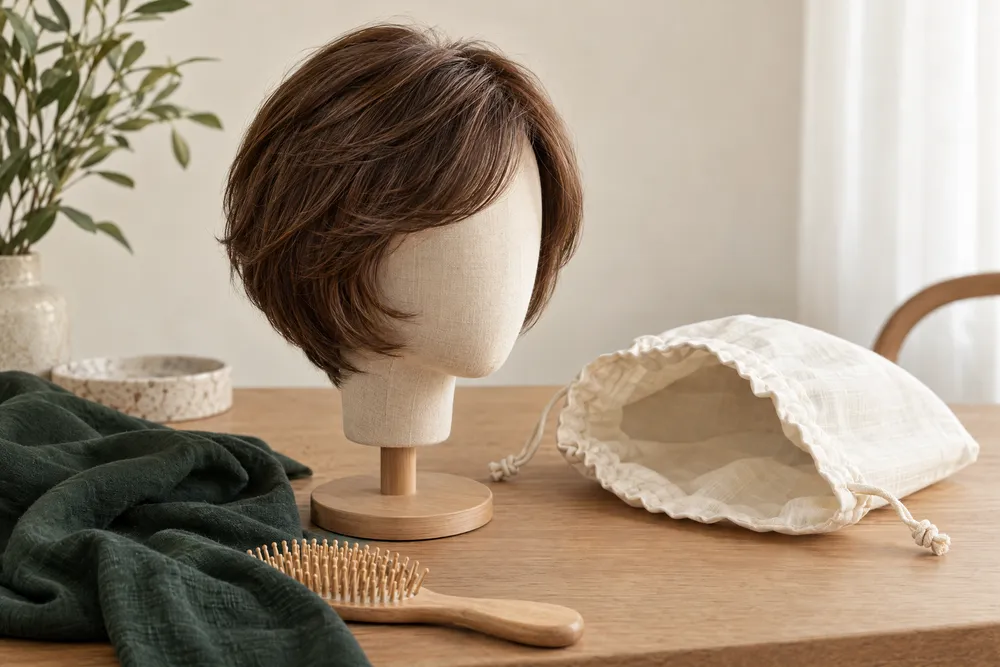
Learn how to store a wig between wears and when a wig stand for storage may help. Compare drying and travel options, then ask OWNSTRAND about suitability.
Browse practical wig care guides from OWNSTRAND Wigs, including washing, storage, detangling and everyday wear considerations for different fibres.
Learn gentle steps for human hair wig tangling, frizz and shedding, including how to detangle from the ends. Ask OWNSTRAND Wigs for care guidance.