

Understanding wig cap sizes
Petite, average and large are useful broad descriptions, but they should not be treated as standard measurements shared by every maker. Use the category to narrow your options, then check the actual chart and construction details before settling on a size.
Petite, average and large wig cap sizes
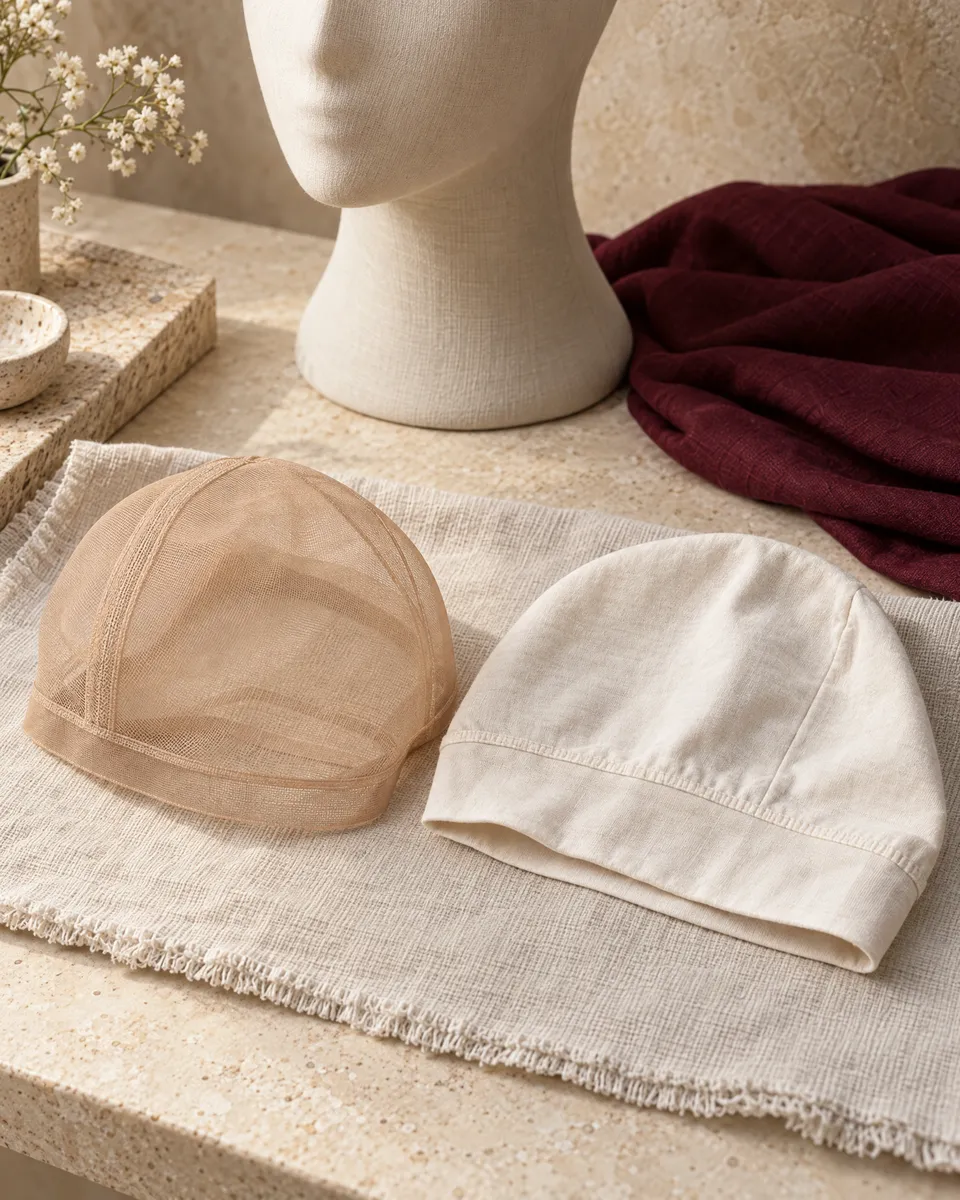
A petite wig cap is generally intended for a smaller overall fit, an average wig cap size is a common middle category, and a large wig cap is intended to provide a roomier fit. These are labels, not a universal scale: the circumference assigned to each can vary, and two caps with the same label may sit differently because their shapes and constructions differ. The American Cancer Society notes that wig sizing varies by brand; its general guidance supports checking the maker’s information rather than assuming labels match. This is general selection guidance, not an endorsement of any brand or a guarantee about a particular product.
If your measurement sits near a category boundary, do not infer that a petite average wig or an average large wig cap must fit in a predictable way. A cap may feel snug at the temples but roomy at the crown, for example, because circumference does not describe every dimension of the head. Look for any available size chart and fitting notes for the exact style. If the chart gives more than one measurement, compare each dimension it specifies instead of relying on the category name.
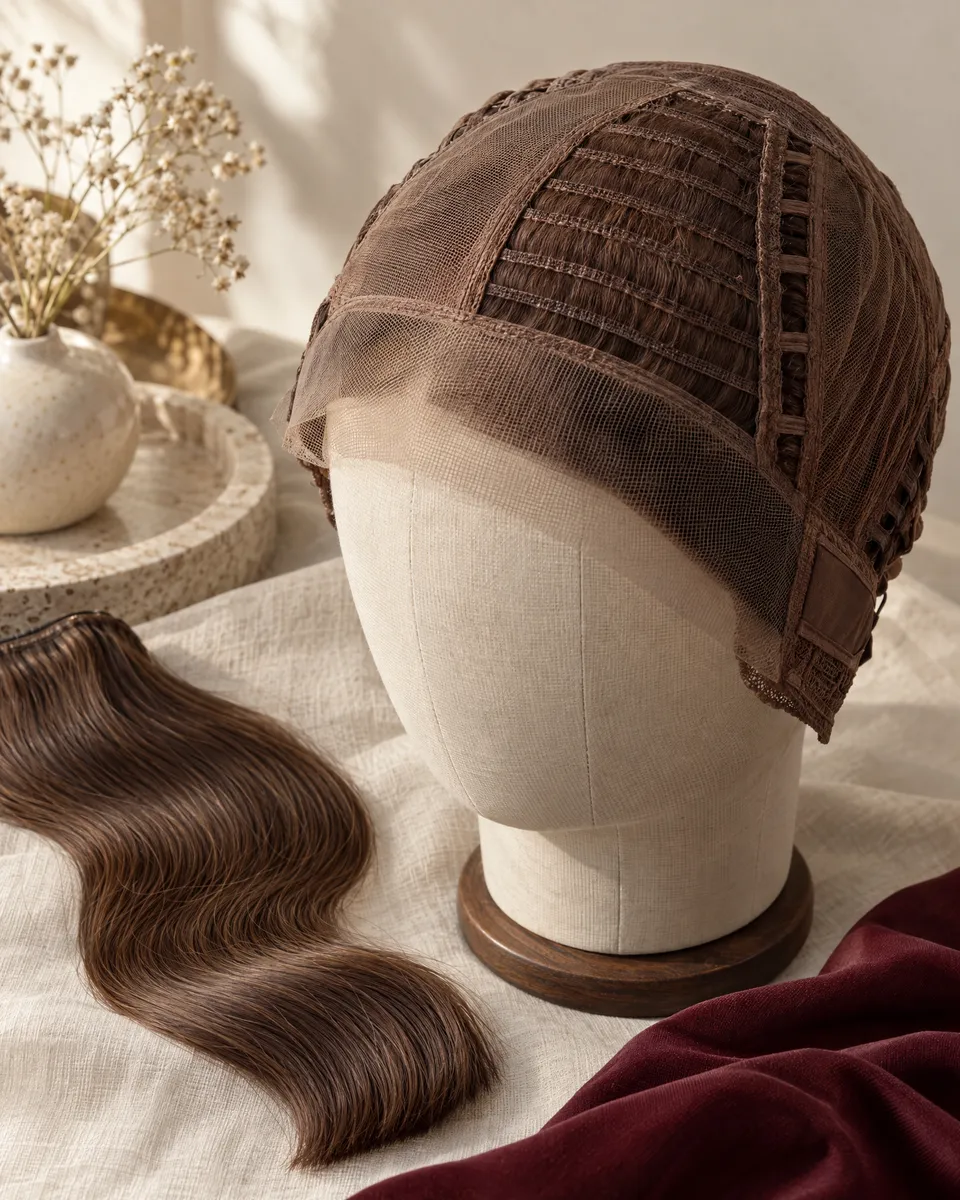
Construction is another useful point of comparison. A PU wig cap describes a different cap feature from an open wefted wig cap; neither name by itself tells you what size to choose. If airflow and coverage are part of your decision, compare the details of a breathable wig cap and consider the practical context of sweating under a wig. These links help you compare construction and comfort questions separately from size, rather than assuming a cap type automatically fits better.
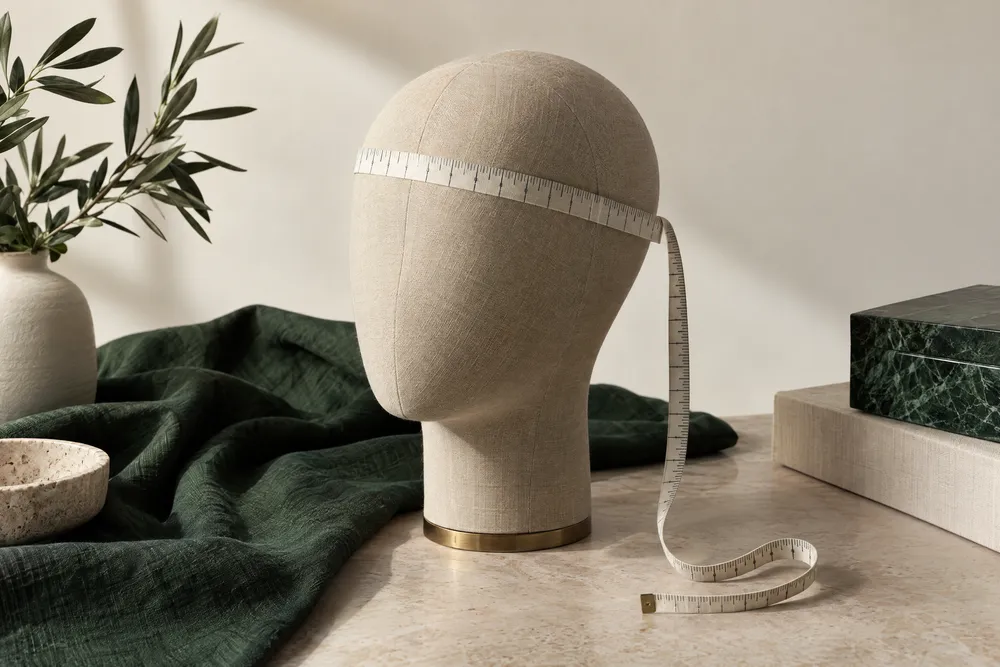
How to Measure Head Circumference for a Wig: A Practical Guide
For a useful result, follow the same route each time and avoid pulling the tape tight. A flexible, non-stretch measuring tape is easiest to position; if you do not have one, ask someone to help you keep a substitute measure level and record it accurately.
How to measure head circumference for a wig at home
Start with your hair arranged as it will usually be under the wig. If you normally wear a liner or flatten your hair in a particular way, take that into account and make a note of it; a bulky bun or a different parting can change the space the cap needs to cover. Remove anything that makes the tape sit unevenly. Stand in front of a mirror or ask another person to check that the tape has not slipped upwards at the back.
Place the tape at the front hairline, then guide it around the head above the ears and around the nape, returning to the starting point. Keep it level and comfortably snug against the head, but do not pull it tight or compress the skin. This is the basic route for how to measure head circumference for a wig. Read the tape where the ends meet and record the unit shown, such as centimetres or inches; do not convert or round until you have checked which unit the brand’s chart uses.
For a dependable wig circumference size guide at home, take the tape away and repeat the route to check that it follows the same line and gives a similar reading. If the readings differ, reposition the tape rather than averaging a result from two visibly different routes. Write down the number, unit and how your hair was arranged. If you are measuring another person, explain where the tape will sit and let them know before repositioning it. A calm, repeatable method is more useful than a tightly pulled measurement that appears precise but does not reflect a comfortable fit.
Circumference is only one possible measurement. Some brand charts may also mention front-to-nape or ear-to-ear dimensions; take those only as the specific instructions describe, and do not substitute them for circumference. If you are measuring for a topper rather than a full wig, the relevant dimension is usually the base area being covered, so consult the separate hair topper base size guide rather than applying a full-cap measurement to a smaller base.

Compare your measurement with the brand’s size chart
Once you have a recorded number, use it to compare options in a consistent way. The chart for the exact wig takes priority over a general size label, and the remaining questions are about how that cap is shaped, made and adjusted.
Why a measurement is only a starting point
First, confirm that your measurement and the chart use the same unit. Next, check whether the chart names a finished cap range, a head measurement, or another dimension; those descriptions are not automatically interchangeable. Finally, look at the wig’s shape and fitting features. This simple three-check approach prevents a common mistake: matching two numbers that appear similar without confirming what each number represents.
A circumference reading cannot show where your head is broader or narrower, how the front edge will sit, or whether the cap’s depth matches your head. Nor does it account for how much hair is underneath. Adjustable tabs can provide some flexibility in fit, but they do not turn one size into every other size or correct every mismatch. Read how adjustable wig straps work and whether that feature is present on the specific style you are considering. Do not assume an adjustment feature exists unless the product information confirms it.
A useful comparison table can help organise your decision without inventing a universal conversion. If two sizes appear plausible, note what the maker’s chart says, how the cap is described and what remains uncertain. For an exposed-front styling question, compare the construction separately using lace front vs full lace wig; that distinction is not a substitute for the size chart. When a chart is unclear, a custom wig consultation Hong Kong can be a place to discuss measurement and fit questions. Enquiries can clarify details, but they do not by themselves confirm stock or an order.
If you are considering an OWNSTRAND handmade custom human-hair enquiry, the confirmed service journey may include viewing samples and head measurement, followed by a return fitting after making. It is a different process from selecting a standard cap label, and any quotation or supply arrangement needs to be confirmed for the particular request. Our Kwun Tong salon is at Unit 2103, 50 Hoi Yuen Road, Kwun Tong, Hong Kong (利寶時中心). WhatsApp +852 5933 4697 is for enquiries, quotations and confirming supply; sending a message does not complete an order.




| What to check | What to do | Why it matters |
|---|---|---|
| Your measurement | Record the circumference, unit and hair arrangement; repeat the same tape route if the reading seems inconsistent. | A repeatable measurement is easier to compare than a number taken with the tape at a different angle. |
| The brand chart | Match units and confirm what each chart measurement describes before comparing a size label. | Petite, average and large are not universal measurements across brands. |
| Cap shape and construction | Read the exact style notes and consider coverage, cap design and the way you will wear it. | Circumference alone does not describe depth, shape or how the edge sits. |
| Adjustment and fit questions | Check whether the specific style has adjustment features; ask about unclear chart details before choosing. | Adjustability may help refine fit but cannot guarantee that a cap is suitable. |
Ask about wig sizing
Tell us the style you have in mind. We can discuss the options, quotation and arrangements before you decide.
Ask about wig sizingBefore you choose
How do I measure head circumference for a wig?
Use a soft measuring tape around your head along the hairline, passing above the ears and around the nape. Keep it comfortably snug rather than tight, then note the reading and its unit. Repeat the route if you want to check that the tape was positioned consistently.
What do petite, average and large wig cap sizes mean?
They are broad size labels, but the measurements and fit they represent can vary by brand and cap design. A petite wig cap, average wig cap size or large wig cap is not defined by one universal circumference. Check the chart for the specific wig instead of assuming the labels are identical.
Does my head circumference guarantee a particular wig cap size?
No. Treat the measurement as a starting point and compare it with the exact brand chart. Cap shape, construction, hair underneath and any adjustment features can also affect how a wig fits, so a circumference alone cannot guarantee fit.
Should I choose a petite or average wig if my measurement is between sizes?
There is no universal rule for choosing between sizes. Confirm what the chart measures, review the fitting guidance and consider the exact cap design rather than relying on a petite average wig label. If the information does not resolve the choice, ask about that style before deciding.
Further reading
- American Cancer Society — Wigs for Hair LossSupports the general statement in the size section that wig sizing varies by brand and that customers should consult brand-specific information; cited solely as general selection guidance, not as an endorsement or a claim that any wig suits a medical situation.
Still weighing up your options?
Follow a related guide to make your next decision with clearer information.
Explore how a breathable wig cap may allow airflow, compare cap coverage and materials, and ask OWNSTRAND Wigs about styles suited to your needs.

Sweating under a wig in Hong Kong's warm weather? Explore practical comfort tips for breaks and care, then ask OWNSTRAND about wig-wearing options.
Compare lace front vs full lace wig coverage and styling, then learn which cap details to ask before choosing. WhatsApp us with questions.
Learn how adjustable wig straps can fine-tune a wig cap fit, what to check at the nape and when adjustment may not be enough. Ask us about cap options.