

Hair Toppers: Understanding Partial Coverage
A topper is best understood by the area it is intended to cover, not as a smaller version of every full wig. Before comparing styling details, identify the part of the head the piece must reach and how its edges will meet your own hair.
How hair toppers differ from full wigs
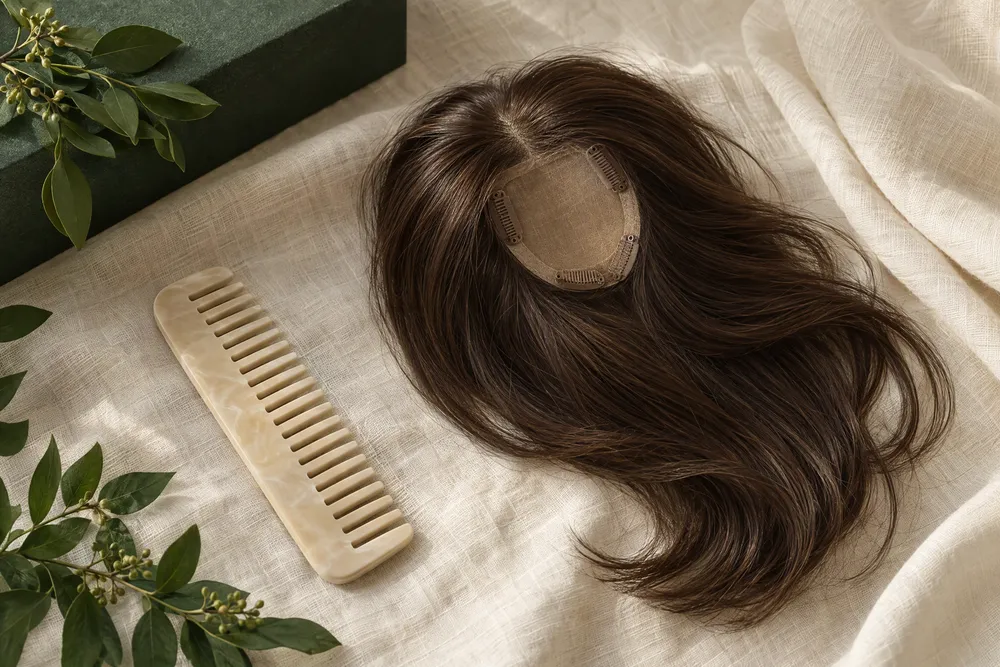
A hair topper is a partial hairpiece that sits over a selected area, such as the crown or parting. It leaves some of your own hair visible around the coverage area, so its base dimensions and placement matter: a piece that does not extend far enough may not meet the area you want to cover, while a much larger piece may be more coverage than you are seeking. By contrast, a full wig is designed to cover the scalp. The choice is about coverage and styling preference, not a diagnosis or a promise that one format suits everyone.
Think about how the topper will transition into your own hair: placement, length and colour all affect how the style blends. Product images and colour names cannot settle this on their own. Where the listing gives base dimensions, use them to assess coverage; do not assume similarly named pieces have the same fit.
If the area you want to address is around a widening part rather than across the crown, compare the hair topper for widening part guidance. For broader coverage, browse women's wigs and compare full-wig formats. In either case, check the exact piece’s stated coverage rather than relying on a category name.

Choosing a Crown Hair Topper for Crown Coverage
For a crown topper, the useful comparison is between your intended coverage and the actual construction details of each model. Fibre, base and attachment are separate decisions: none alone tells you how a piece will look or feel in use.
What to compare in a crown hair topper
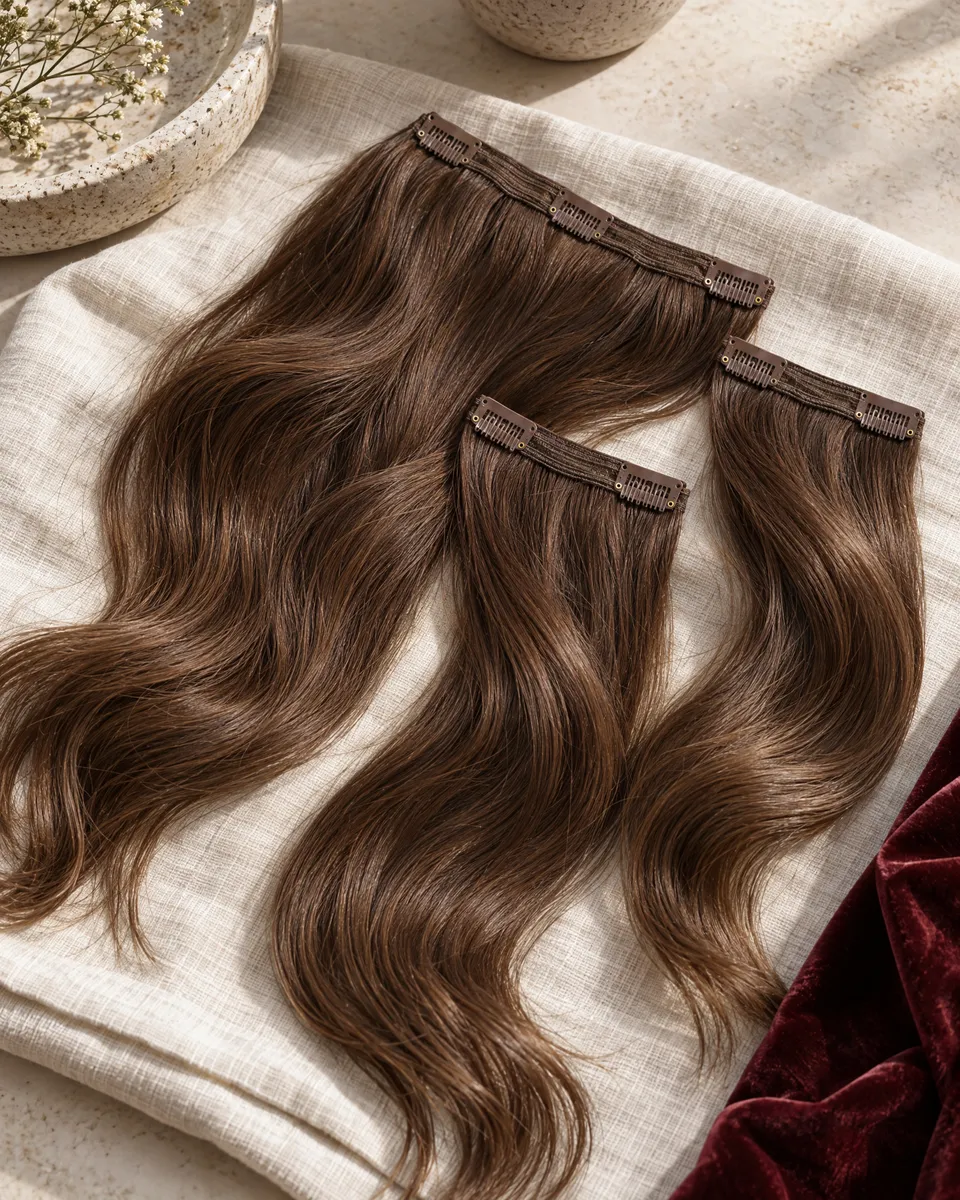
Start with the coverage footprint. Check the stated base dimensions and where the clips or other attachment points sit, if that information is supplied. Consider whether the piece reaches across the area you want covered while leaving enough of your own hair to blend around it. Attachment methods vary by item; a clip-in hair topper is a distinct category to investigate, not evidence that every topper uses clips or that clips are right for every wearer. If you have concerns about comfort, grip or your own hair, ask about the exact item rather than assuming from a category label.
Next, compare fibre. A human hair topper and a synthetic hair topper can differ in appearance, styling considerations and care requirements. Human hair offers styling flexibility subject to the maker’s instructions and the specific construction; synthetic fibres may have their own care and heat limitations. Do not apply a heat tool unless the exact product information permits it. The American Cancer Society’s general wig guidance notes that fibre choice and a product’s heat instructions are relevant when comparing wigs; that general advice does not establish the specifications of any OWNSTRAND or catalogue item.
Base terminology is another comparison, not a guarantee of fit. A monofilament hair topper and a silk top hair topper refer to different base descriptions. Read the exact model’s construction and measurements rather than treating one term as shorthand for a particular coverage size, attachment or result. A base designed to show a parting detail does not by itself tell you whether the perimeter or footprint suits your crown.
Compare listed length and colour with your own hair and preferred style. Lighting can affect how a shade appears, and a catalogue colour is not proof it is available. Ask which options can be confirmed for the exact model.

Compare Topper Details Before You Enquire
A short, model-by-model check prevents a broad category name from standing in for product facts. Use the listed information to narrow down what to ask, and keep confirmed specifications separate from questions that still need an answer.
Check the listed fibre, base and measurements
For each candidate, record its coverage dimensions, fibre, base description and attachment details; add length and colour when relevant. If a listing omits a specification, treat it as unknown rather than inferring it from an image or another model.
For example, the Jon Renau Top Form topper is a catalogue reference titled “12" Top Form | Remy Human Hair Topper (Full Mono)”. Its record lists Remy human hair and a double-monofilament base, and identifies the length as 12 inches. The “Full Mono” wording in the title and the listed double-monofilament base are the supplied details; neither should be expanded into unlisted measurements, attachment information or a fit claim. Its catalogue status is current, which does not mean the item is in OWNSTRAND stock or confirm its current price or supply.
Use the table as a model-by-model checklist, not a ranking. A missing specification is a reason to ask about that item, not to assume it matches another piece.
Confirm model details and supply before deciding
When enquiring, identify the model and ask about the details that affect your choice: base footprint, attachment, fibre, length and colour options. A maker’s catalogue helps identify a product but does not prove OWNSTRAND has it. A current source record is not an inventory update, and listed colours do not guarantee supply.
OWNSTRAND’s approach is to support an informed style choice, not to describe every piece as suitable for everyone. If you are unsure whether the coverage is right, explain the area and look you have in mind and ask about the exact item. For medical, scalp or skin concerns, consult an appropriately qualified professional; a product enquiry is not a diagnosis or suitability assessment.
WhatsApp OWNSTRAND at +852 5933 4697 to ask about a model, request a quotation and confirm supply. A message is an enquiry, not an automatic order. The confirmed location is Unit 2103, 50 Hoi Yuen Road, Kwun Tong, Hong Kong (利寶時中心). Other districts are not separate branches; ask about arrangements instead of assuming delivery charges or timing.



| Detail to compare | What to check in the listing | Why it matters | What to confirm if unclear |
|---|---|---|---|
| Coverage and base dimensions | Stated footprint or base measurements | Shows the area the piece is designed to cover; it does not establish fit on its own | Ask for the exact model’s measurements rather than estimating from an image |
| Attachment | Listed clips or other attachment details | Affects how the piece is secured and how it is worn | Confirm the attachment method for that model; do not assume all toppers are clip-in |
| Fibre | Human hair or named synthetic fibre, if specified | Informs styling and care questions; follow item-specific instructions | Ask what the maker permits, especially before using heat |
| Base construction | The base term and construction stated for the item | Helps distinguish models, but does not alone establish size or suitability | Ask for the construction details rather than translating terms into other cap names |
| Length and colour | The exact listed length and colour options | Helps assess the intended blend and style | Confirm the exact model’s options and supply; catalogue choices are not stock confirmation |
Ask about topper options on WhatsApp
Tell us the style you have in mind. We can discuss the options, quotation and arrangements before you decide.
Ask about topper options on WhatsAppBefore you choose
How is a hair topper different from a full wig?
A hair topper is a partial hairpiece intended to cover an area such as the crown, leaving some of your own hair around it. A full wig is designed to cover the scalp. Compare the area each piece covers with your needs and check the individual model’s measurements and details.
What should I compare when choosing a crown hair topper?
Start with the coverage area and stated base dimensions, then review the attachment method, fibre, base construction, length and colour options for the exact model. If an important detail is not listed, ask rather than inferring it from a photograph or category name.
Is the Jon Renau Top Form 12-inch topper available?
The catalogue reference for the 12-inch Jon Renau Top Form lists Remy human hair and a double-monofilament base. Its current catalogue status is not a stock guarantee. Contact OWNSTRAND to ask about the model, quotation and supply before deciding.
Are hair toppers suitable for every type of crown thinning?
Not necessarily. Coverage needs and product specifications differ, and no category label can establish suitability for every person. Compare the stated footprint and attachment details with the area you want to cover; consult an appropriately qualified professional for medical or scalp concerns.
Further reading
- American Cancer Society — Wigs for Hair LossSupports the general comparison point that fibre choice and the exact product’s heat instructions matter when choosing and caring for a wig; it does not verify any OWNSTRAND model or endorse the business.
Still weighing up your options?
Follow a related guide to make your next decision with clearer information.
Explore human hair topper options, what to check about hair type and base details, and questions to ask before choosing. Contact OWNSTRAND to enquire about a style.

Explore a synthetic hair topper, compare fibre-care questions with human hair, and ask OWNSTRAND Wigs about styles and availability in Hong Kong.

Explore the Jon Renau Top Form topper: 12-inch Remy human hair, a double monofilament base and 6.5 x 6.5-inch dimensions. Enquire to confirm price and supply.
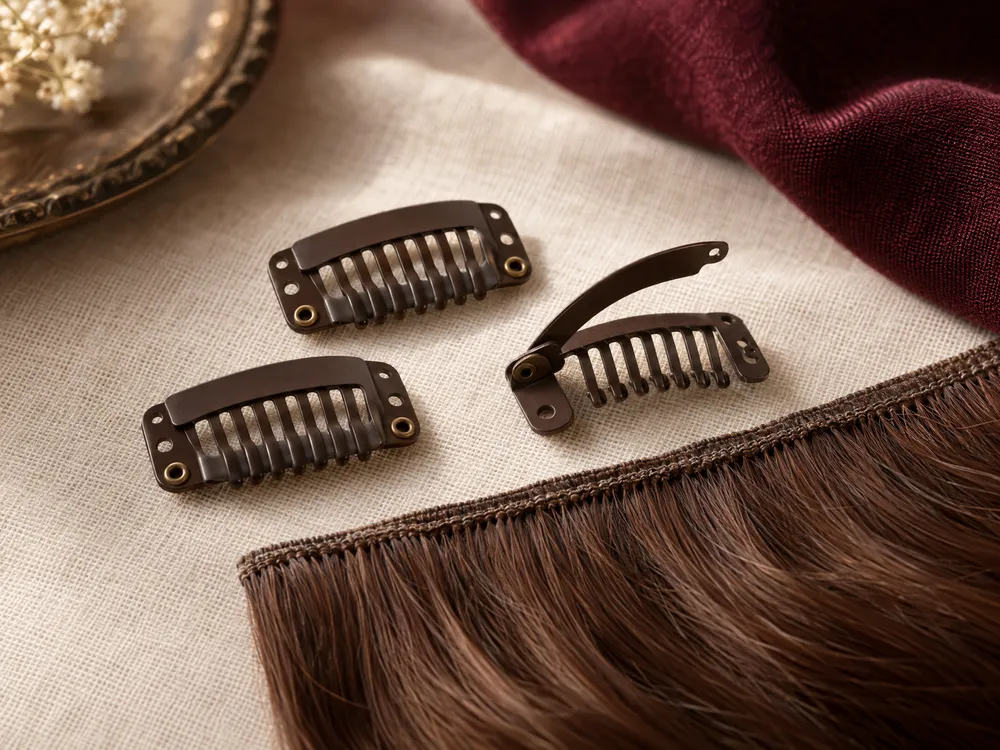
Explore the clip-in hair topper category and check each item's listed attachment method before choosing. Ask OWNSTRAND about product details and availability.