

Start with the natural-hair finish you actually need
For your own hair, Vit So's wash and blow dry information answers a narrow preparation question: do you want refreshed hair and a temporary finish without changing the cut? It does not make pinned details, extra curls or work on your wig automatic inclusions.
Name the feature that must remain useful
Choose one priority you can observe: a fringe staying out of your eyes, a recognisable parting or ends sitting clear of your collar. Saying that you want everything to remain perfect gives you no practical comparison. If your current fringe is already too long, blowing it into position will not remove that length; discuss any cutting separately.
Record how your natural hair looks before practice and after ordinary walking. Note whether the front changes direction or the ends lose their bend. These observations describe appearance, not lasting texture change. Also tell the stylist about recent processing and fragile areas before agreeing on additional tool work. Keep the hairpiece itself out of that natural-hair treatment decision.
Give each material its own permitted methods
Identify which parts are natural hair, human-hair additions or synthetic fibre before rehearsing. Similar-looking lengths do not establish the same care instructions.
Read the wig instructions before reaching for a tool
Macmillan's wig-care guidance emphasises following care instructions and asking the supplier about styling. It warns about heat exposure and notes that blended wigs can need special care because their synthetic component may react to dryers or straighteners. Those material principles are useful here; the source's UK funding arrangements are not relevant to a Hong Kong event.
Use OWNSTRAND's human hair vs synthetic wig care guide to prepare separate questions. Even a human-hair label is not permission for unrestricted heat or chemical work: the particular piece and its construction still need consideration. If you cannot confirm the instructions, rehearse its existing approved shape rather than experimenting with a new styling method.
- List the material of each visible component; write unknown where identification is missing.
- Keep the model details and supplied care instructions with your enquiry photographs.
- Ask which tools, products and shape changes are permitted for that exact piece.
- Do not apply a natural-hair perm, colour or straightening plan to a wig by analogy.
Watch the edge separately from the moving strands
Hair moving away from a boundary may reveal an edge even when the base has not shifted. Conversely, a base can move without immediately ruining the visible hairstyle.
Use three separate observations
Start in a comfortable position with the piece worn according to its existing fitting instructions. Take front, side and back photographs, then turn your head normally, look down and sit against the sort of collar you will wear. With help if needed, compare the position of the base, the visibility of its boundary and the direction of the hair. Do not pull on the piece to simulate wind.
For a topper, check whether your own side hair moves away from the coverage area. A topper blending check adds daylight observation to the movement record. If convenient and safe, compare after a short sheltered outdoor walk, but stop rather than seek stronger gusts. A calm rehearsal cannot establish what will happen in exposed conditions.
Compare loose length with a less mobile silhouette
Vit So's hair styling page helps with the natural-hair outline question: loose, partly gathered or hair up? For a wig or hairpiece, permission to create that silhouette must be checked separately rather than inferred from the salon reference.
Change the outline without treating tension as the solution
Loose length keeps movement visible and may suit an open neckline. Its trade-off is more hair travelling across the face or meeting earrings and shoulders. A less mobile outline means reducing the amount left freely moving, where the material and construction allow it. It does not mean increasing pressure, pulling the hair tighter or assuming more product guarantees stability.
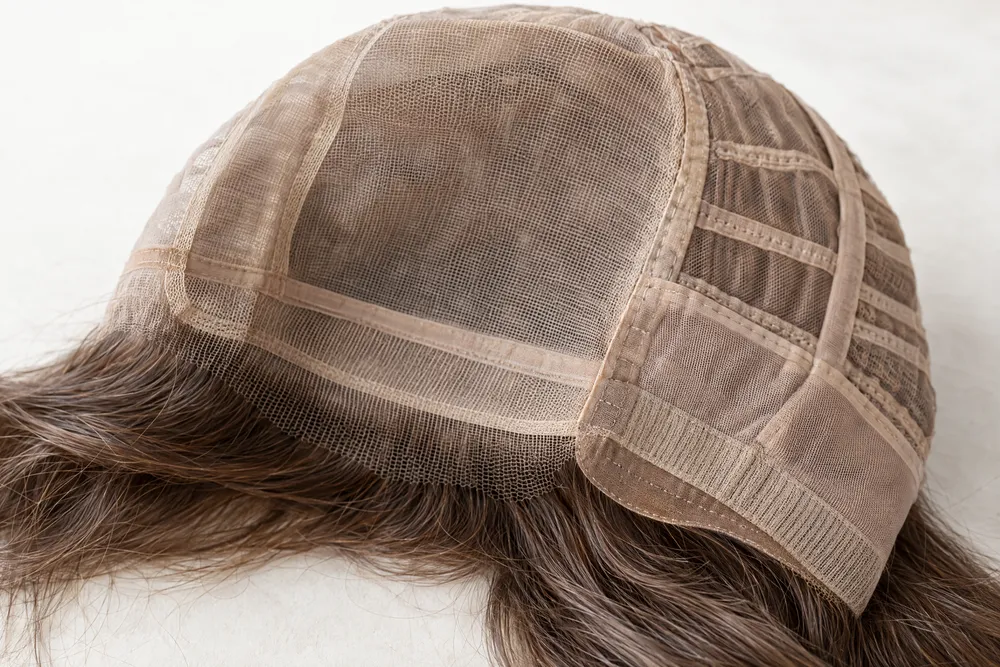
Gathering can also reveal areas previously covered by falling hair. Before choosing it for a wig, use the updo wig fit check to ask about the cap, visible edges and support. Repeat the same head turns with the proposed outline, if it has been confirmed as suitable. Notice whether the collar now meets a gathered section or a previously hidden boundary becomes visible.
Consider finishing natural hair nearer the event
Sometimes the best adjustment is timing rather than another styling product. Moving the final natural-hair finish later can reduce the number of journeys and changes it must pass through, although it cannot eliminate exposure during the event.
Count transitions before you move an appointment
Compare two routes: styling early, returning home to change and travelling again; or completing errands and dressing before the final finish, where an appointment allows. List any required protective headwear, outdoor walking and clothing changes. Keep safety equipment in the plan. A later finish is only helpful if it leaves a realistic travel margin instead of making you rush to the portraits.
This option concerns the final natural-hair appointment, not permission to restyle your wig with a venue or hotel dryer. An unfamiliar appliance still needs a wig heat setting check against the piece's instructions. Do not assume a socket, suitable tools or someone to help will be available at the destination. Confirm any professional assistance instead of building the timetable around it.
Rehearse the small actions the occasion requires
An ordinary movement sequence is more useful than repeatedly recreating the reference hairstyle. Keep the checks comparable and avoid deliberate stress tests.
Choose a version from the first problem you notice
In a hypothetical reception plan, a wearer likes loose length but keeps moving the front away from their eyes when reading a speech. If the base stays positioned and coverage remains acceptable, that points towards discussing the front's direction or a permitted less mobile outline. It does not demonstrate that the attachment needs more force.
Avoid reheating your natural hair for every rehearsal. The American Academy of Dermatology's hair-care advice supports lower heat settings and less frequent heated-tool use. Practise your movements with your usual finish and save the observations; a styling trial, if wanted, is a separate arrangement to enquire about.
- Photograph the starting outline with your event glasses and collar in place.
- Walk normally, turn towards an imagined photographer and look down at a phone or programme.
- Sit, stand and check whether earrings, shoulders or the seat contact the hair.
- Note shape, edge visibility and base position before making any permitted simple correction.
- Stop if there is pulling, pressure or displacement; bring that observation to the appropriate provider.
Send an enquiry that distinguishes the event from the piece
Vit So's event hair styling information answers the schedule-and-outfit question. Send the occasion, photographs and departure deadline; a salon hair enquiry does not establish makeup, venue attendance, later touch-ups or a wig-styling package.
Keep the two conversations clear
For natural-hair preparation, tell Vit So which areas are your own hair and which belong to an addition. Ask about the proposed work, washing instructions, quote and available time. Vit So's address is 252 Hollywood Road, Sheung Wan, with enquiries on +852 5305 7561. This is a separate location from OWNSTRAND's Kwun Tong shop.
For questions about your OWNSTRAND custom piece, ask about custom wig fit and adjustment and bring the movement record. OWNSTRAND is at /en-hk/; WhatsApp +852 5933 4697. Describe any other piece by model and construction before asking whether work is possible, rather than assuming a catalogue item has the custom-fitting service.
- Show the front, side and back, with the observed problem clearly identified.
- Send material details, care instructions and any previous styling or processing history.
- Give the portrait time, salon departure deadline and unavoidable outdoor stages.
- Ask which loose or gathered outline is feasible and what later handling is permitted.
- Confirm the service, preparation, appointment and quote before committing to the route.
| Approach | Useful priority | Trade-off to observe | Decision before the event |
|---|---|---|---|
| Keep a loose finish | Visible length and familiar movement | Front strands cross the face or move away from a hairpiece boundary | Accept the movement only if comfort and coverage remain suitable |
| Discuss a less mobile outline | Reduce freely moving sections | Gathering may reveal edges or contact a collar | Confirm material and cap suitability without increasing tension |
| Finish natural hair later | Reduce journeys and clothing changes before portraits | A later appointment leaves less travel margin and does not remove outdoor exposure | Check availability and route; do not transfer the plan to a wig automatically |
Ask OWNSTRAND about selection and fitting
Tell us the style you have in mind. We can discuss the options, quotation and arrangements before you decide.
Ask OWNSTRAND about selection and fittingBefore you choose
Does seeing an edge after movement mean my hairpiece has slipped?
Not necessarily. Hair may have moved away from the boundary while the base stayed positioned. Compare the starting photographs and record boundary visibility separately from base position. If the base has moved or you feel pulling or pressure, stop the rehearsal and ask for a fitting assessment rather than tightening the attachment.
Should I choose hair up whenever the event is outdoors?
No. A gathered outline can reduce freely moving length, but may reveal cap areas, depend on unsuitable layers or meet your collar. For a wig, first confirm that the construction and material permit the change. A loose look with acceptable movement may be the more practical choice.
What if the weather is much windier than during rehearsal?
Treat the rehearsal as preparation notes, not a forecast of performance. Keep an indoor or sheltered photo option with the organiser where possible, and avoid exposed conditions when unsafe. Ask beforehand about simple permitted corrections. Do not improvise stronger attachments or extra heat to preserve an exact photograph.
Further reading
- 10 hair care habits that can damage your hair — American Academy of DermatologySupports lower heat settings and reducing repeated heated-tool use for natural hair during preparation; does not specify wig-safe methods or predict outdoor hold.
- Wigs for cancer treatment — Macmillan Cancer SupportSupports following wig care instructions, asking suppliers about styling and separating synthetic, blended and human-hair care. UK funding information is not applied to Hong Kong.